Good for the environment.
Good for their aesthetics.
Good for a farmer’s wallet.
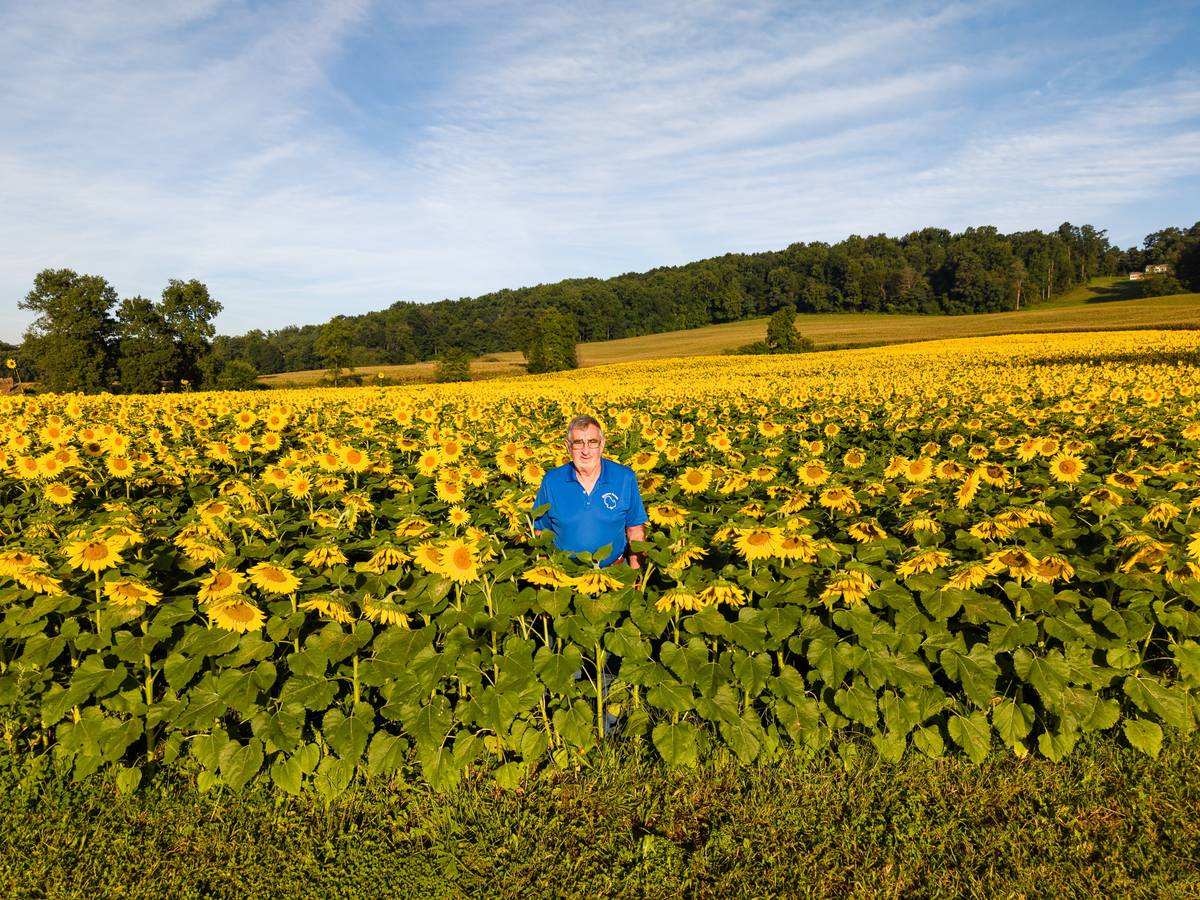
The 60 acres of sunflowers being grown at Werner Acres in Swatara Township is beneficial in many ways, according to farmers Jeff and Sue Werner, who have been in the sunflower business since 2021.
They also grow other crops besides sunflowers, with sons Tim and Chris and daughter-in-law Katie, across 650 acres in the Jonestown/Lickdale area.
Their sunflower story
“We’ve started growing sunflowers, I think it was in ’21. We planted one bag right here,” said Werner, referencing a field adjacent to their home. “Just wanted to see how the maturity would be. It was a rough start. We had a hurricane that fall, so I got cooked. It didn’t come up so well, but it proved the point that they would mature in time.”
Market conditions shifted greatly in 2022 when Russia invaded Ukraine, two large growers of sunflowers, Werner said. Ukraine uses sunflowers primarily to produce and export the oil and seeds, acting as a massive global economic powerhouse for cooking oil production, especially for snack foods like potato chips in Pennsylvania.
“So we planted 200 acres and bought some better equipment,” he said.
Sunflowers are resilient to dry conditions, he noted.

“So I was seeking a reliably drought-tolerant crop. I believe sunflowers originated in America, but I’ll give credit to Russia and Ukraine for being more interested in growing them. And ironically when Russia invaded Ukraine, Ukrainian sunflowers were shipped to France to be processed and then over here,” Jeff said. “They also do grow quite a few around the Dakotas in America, so that’s a competitor.”
Werner plants his sunshine-yellow flowers as a double crop at the height of summer, with the most colorful time coming 60 to 100 days later. This year, he said, they matured into full beauty right at the 60-day mark, over Labor Day weekend. Harvest is in October.
“We’ll plant winter wheat. … We harvest the wheat around July 4th and then we’ll plant sunflowers,” Werner said.
Sunflower markets & profitability
There’s a specific market for their sunflower seeds, Werner said.
“The easy market in this area is for bird food, and it does make good oil processing,” he said. “But it is predominantly the bird food market here. Our grain sorghum goes there, too. Ironically, we sell our corn to people who want it for deer feed. A friend of mine who I graduated with said people will pay for stuff they don’t need. They’ll grumble about the price of their food, but they will (spend money to) feed the birds.”
“There’s a lot of people who like feeding an awful lot of birds out there,” Sue said.
“My goal is to harvest 2,500 pounds (per acre),” he added. “We’ve done more and we’ve done less. One year, deer damage was $30,000 worth of sunflowers. We learned an expensive lesson not to grow in some places because of the deer pressure, so I’m no longer growing them in Monroe Valley.”

A beautiful thing to behold
Both say there are a few other Lebanon Valley farmers who grow sunflowers, with those owners being driven predominantly by agritainment and the beauty of the colorful plants as they reach towards the sky, basking in the glow of the sunshine’s rays.
“I know there was one or two other ones because of the whole aesthetic of it,” said Sue. “They’re a lot of fun, but they advertise, too, that theirs is more agritainment.”
Motorists see the Werner’s fields and mistakenly believe they are growing the sunflowers for reasons other than profitability, she added.

“Do you know how many people think we do this because it’s pretty and we’re just doing it to be nice? And I’m like, ‘Have you met my husband?’” she said.
“What I say to that is, I enjoy people enjoying things. But I think there’s only two purposes to having property, making money or for you to enjoy it. Why else would you trouble yourself with obligating yourself to do it?” he replied. “To do that (agritainment) we should have a place that’s isolated that we control access to and then promote it and then have various plantings and all that.”
“This is once and done,” Sue said, noting the short cycle of the crop. “You have 10 days to get in to see it.”
Their sunflower farm has enjoyed a bit of notoriety for that aesthetic value over the past few years. First, it was honored when an entire wall at Visit Lebanon Valley was plastered with a massive photo of the sunflower fields in full bloom.
In 2025, that same scene was recreated on one of two Liberty Bells crafted in Lebanon County for the quincentennial celebration of the nation’s birth in 1776.

Read More: (October 2025) Lebanon man creates farm scene on Liberty Bell for America250 celebration
Werner said he was honored when the tourism agency decided to put the picture on the wall and again on the Liberty Bell, which was painted this past year by Lebanon artist Jim Rudegeair. Sue wondered, however, why they were chosen when other agricultural commodities are at the forefront of the county’s agricultural industry.
“For me, they should have had cows and chickens on it when you look at the economy of the area,” she said, “but they went for something that was very, very pretty.”
The first year or two that they were in the sunflower business, Sue said she would post a notifice on social media when the bright yellow flowers came into full bloom.
“Back when we first started this, people would be like, ‘When are they coming, when are they coming, when are they blooming,’ and I would put out one Facebook post and say, ‘They’re blooming. You have 10 days. Get out here,’” she said.

Environmental benefits
Aside from the aesthetics, sunflowers are good for the environment.
Sunflowers perform phytoremediation, a process where plants absorb toxins from the earth, including such heavy metals like lead, arsenic, zinc and copper. They also support pollinators – although Werner said they primarily self-pollinate. Sue said that one planted in front of their house was favored by goldfinches for their seeds.
Another benefit is the deep root system of sunflowers help prevent soil erosion.

The bottom line
Ultimately, as is the case for any farmer trying to make a living, the driving force is profitability, and it appears that 2026 is shaping up to be a good year for Werner Acres, which also grows corn and wheat throughout the year.
“This year at this point I’m pleased with the sunflower crop. Usually a person is most critical of their own work, but we have a good stand,” Werner said. “They’re hanging further down, they’re getting heavier. They have a lot of good heads and I’m looking to get bigger as we go.”

Questions about this story? Suggestions for a future LebTown article? Reach our newsroom using this contact form and we’ll do our best to get back to you.

Join our community of local news champions.
Cancel anytime.
Monthly
🌟 Annual
- Still no paywall!
- Fewer ads
- Exclusive events and emails
- All monthly benefits
- Most popular option
- Make a bigger impact
Already a member? Log in here to hide these messages
An informed community is a stronger community. LebTown covers the local government meetings, breaking news, and community stories that shape Lebanon County’s future. Help us expand our coverage by becoming a monthly or annual member, or support our work with a one-time contribution. Cancel anytime.