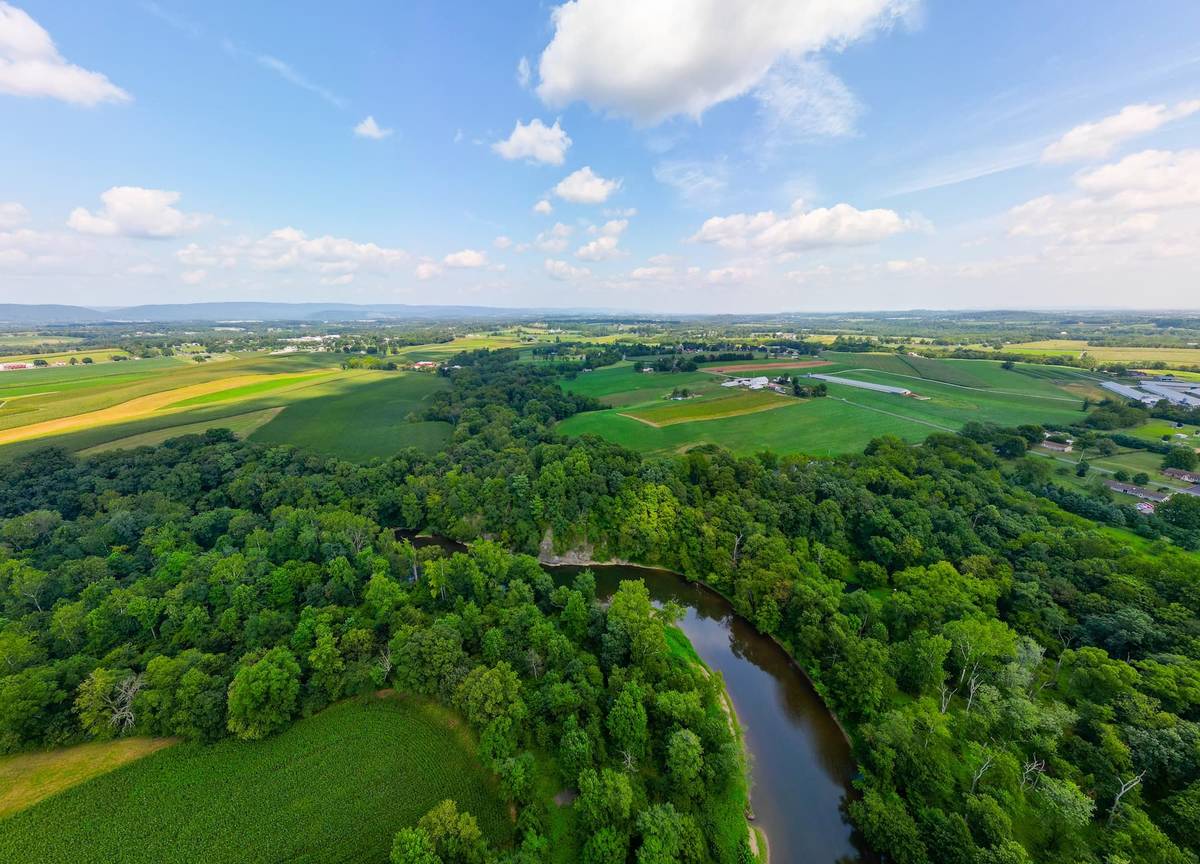
The precipitation received in the Lebanon Valley in late August is being called the “million dollar rains” by a local cooperative extension agent.
The storms that hit Lebanon County late last month and brought over 3 inches of rainfall are being credited for filling out the soybean crops for many Lebanon County farmers, according to Delbert Voight Jr., senior agronomy extension educator with the Penn State Cooperative Extension.
“That was a million dollar rain,” Voight said. “I think we got 3 to 6 inches of rain in that week, and that changed the whole complexion of the harvest right there.”
Field corn wasn’t as lucky, according to Voight.
Ongoing drought conditions earlier in the year and no rain over a two-week critical period of growth in early July have lowered the anticipated field corn yield for 2026, according to Voight.

He and other ag officials recently conducted Lebanon County’s annual 2026 crop assessment report, examining crops across the three distinct climate and soil regions of Lebanon County by visiting five farms in the Lebanon Valley.
“Overall, 2026 Lebanon County crop yields are trending slightly below average, with some areas being significantly impacted by prolonged periods of drought,” said Voight. “There is still considerable yield potential in many fields, particularly where recent rainfall arrived in time to support grain fill.”
As typically happens with summer precipitation, rainfall was spotty the entire season, which means one farmer’s yield could be quite different from another farmer whose fields are right down the road.
“Rainfall was highly variable — especially across northern Lebanon County — and some areas experienced enough drought stress that fields were harvested for silage because of poor or absent (corn) ear formation,” Voight said.
The annual assessment gives county ag officials insight into the year’s harvest and is used as a benchmark against past production.

“The assessment highlighted just how dramatically conditions can vary across relatively short distances, even within the same county. Soil type, rainfall distribution, planting date, and localized weather patterns all played important roles in determining this year’s yield potential,” Voight said.
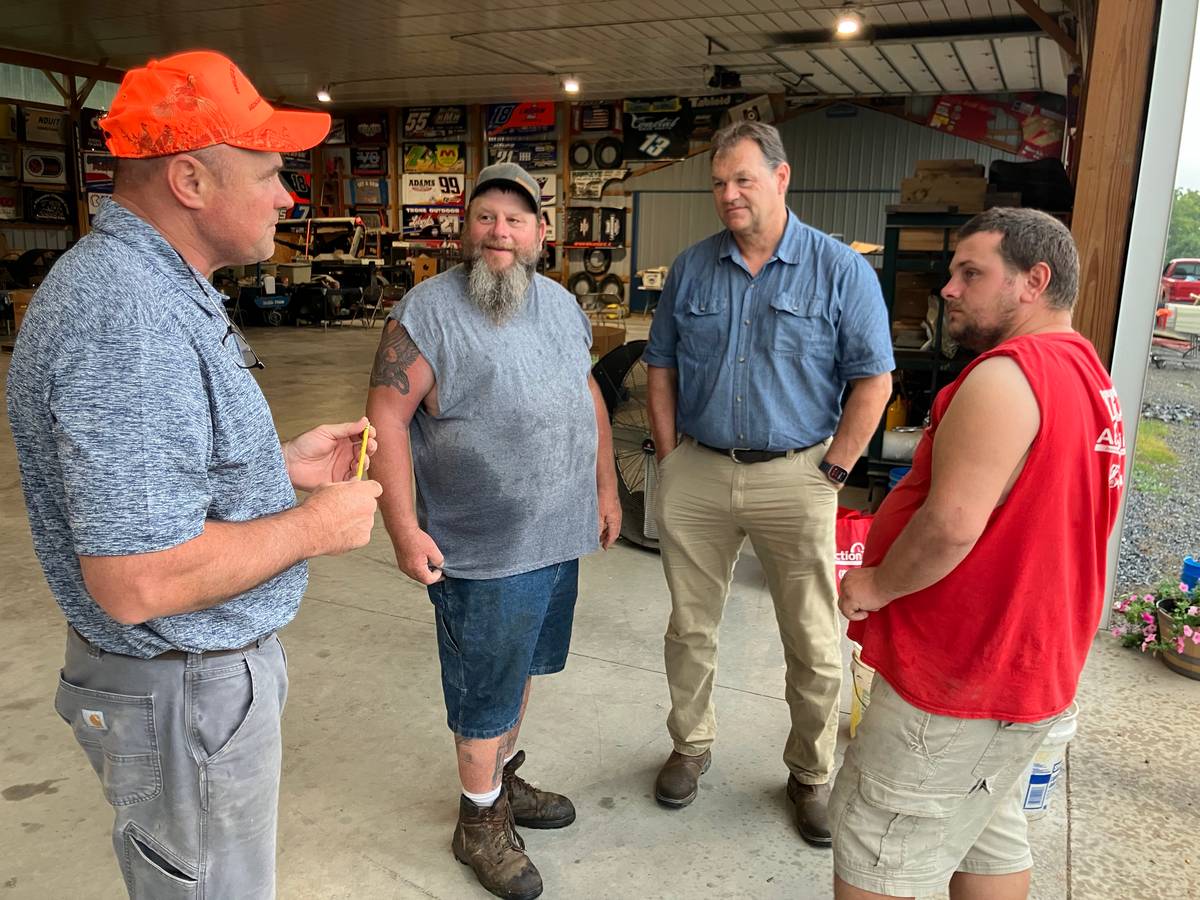
Blue Rock Farms along Yordy Bridge Road in North Annville Township – the second stop on the tour – was on the merry-go-round this year with spotty summer rains.
One storm might bring a quarter-inch while a neighboring farm received 2 inches. One day when they got 2 inches of rain, another farm got 4, according to Mike Jr.
Voight estimated that their rainfall for the year through early September when the assessment was done was about 3.5% below normal.
That disparity in rainfall can make for wildly different production estimates. One farm that received less rainfall was expected to have 5.2 million soybean pods in their plants versus 9.2 million last year. However, on a different farm that received more rain, the 2025 figure of 7.6 million soybean pods rose to 10.2 million this year.

Randy Ziegler and Tim Showers’ operation north of Fredericksburg on Wildflower Lane was especially hit hard by the drought, according to Voight.
Another factor is soil, and those farms south of U.S. Route 422 hold moisture longer than those to the north, which is where shale-type soils are located.
“This Berks Shale location was planted May 30, 2026, following a cover crop. The site received 17% less moisture than the 10-year average while accumulating average heat units,” Voight said. “The lack of moisture impacted overall yield potential. However, despite the dry conditions, corn pollination was excellent.”
Meanwhile, where the rains came and when was evident on these various farms, including in South Annville Township on Darren Grumbine’s farm, Voight said.
“Despite periods of dryness, yield potential remained close to last year. For corn: estimated at 265 bushels per acre, compared with 270 bushels per acre in 2025,” he said.

The varying rainfall patterns contributed to a mixed year for Lebanon County producers, according to Voight.
“Slightly below from last year but with the drought that we received, it’s pleasing news to know that we didn’t lose all that much yield because of that extended drought,” he said. “The recent rains maybe helped make somewhat of a recovery. I think the rains that came helped it fill out.”
Overall, counts for the five farms are about the same or down from their 2025 yields, Voight added.
“It’s down from last year, you know, and down from previous years, slightly below. So it’s still way below,” he said. “If you look at the moisture at that (one) location, they were like 15% behind normal rainfall. So that kind of tells you the story where some of the other locations where we had only 3 or 4% less rain, they’re going to have fairly normal yields.”

Voight said corn and soybean yields are 20 to 30 bushels down where the rainfall deficits were the greatest. That’s not surprising since, until those end-of-August storms, the region was down 6 inches of precipitation for the year, according to ABC27 meteorologist Dan Tomaso.
“Lebanon County is firmly in the yellow in the drought monitor, which is abnormally dry. Perry County was taken out of it and Cumberland County was mostly taken out of it. I don’t know how often you get over to Berks County, but they’re kind of a target for, that is I believe, severe drought – yes, severe drought,” Tomaso repeated after checking data on his phone. “So it’s not that far away from Lebanon County.”
Voight noted there’s still time for the soybean plants to continue to fill out their pods if the Lebanon Valley gets more rain since those will continue to grow, depending on when they were planted, until the first frost.
Farmers stagger their plantings throughout the spring so that they don’t have all of their crops in at the same time since their fields are weather-dependent.
Tomaso said that farmers shouldn’t expect to get any rainfall from tropical storms since it appears the hurricane season in the Atlantic is going to be weak this year. As of Sept. 16, no storms had formed that might bring rain to the Lebanon Valley.
The hurricane season has been so tame that the Atlantic Ocean recently broke a 60-year streak for the latest date without a first hurricane. Tomaso believes that trend will continue through the end of hurricane season, which runs from June 1 through Nov. 30.
Voight sees no tropical storms here as a good thing for this year’s crop.

“We have a slightly below average to average crop, but if we get a hurricane here and it blows it all down, then this is all out the door,” he said. “It would be a bad thing to have a hurricane.”
LebTown asked if that’s the case even though there’s an ongoing deficit and minor drought in the area, of around 10 inches of rainfall over this year and 2025.
“I think most growers right now would say I’d rather have no rain than rain with wind that would blow this over. ‘Cause you know, think about it, you got a half pound here that’s four or five feet up above the ground and you get that back-and forth hurricane kind of winds and it’s just gonna flatten the (corn) crop,” Voight said. “Same with the beans. You don’t want to lay them over when they have full and heavy pods.”
As farmers transition into the fall harvest season, Voight had one request for motorists.
“We’re going to get more traffic on the roads with farm equipment and they’ve got to be more tolerant because it can get ugly when you get equipment on the road and they back somebody up and they try to pass these big pieces of equipment,” he said. “People need to realize that it’s a busy time for farmers for the next couple months and then it (tractors on roadways) will die down.”

Questions about this story? Suggestions for a future LebTown article? Reach our newsroom using this contact form and we’ll do our best to get back to you.
Become a LebTown member.
Cancel anytime.
Monthly Subscription
🌟 Annual Subscription
- Still no paywall!
- Fewer ads
- Exclusive events and emails
- All monthly benefits
- Most popular option
- Make a bigger impact
Already a member? Log in here to hide these messages
While other local news outlets are shrinking, LebTown is growing. Help us continue expanding our coverage of Lebanon County with a monthly or annual membership, or support our work with a one-time contribution. Every dollar goes directly toward local reporting. Cancel anytime.