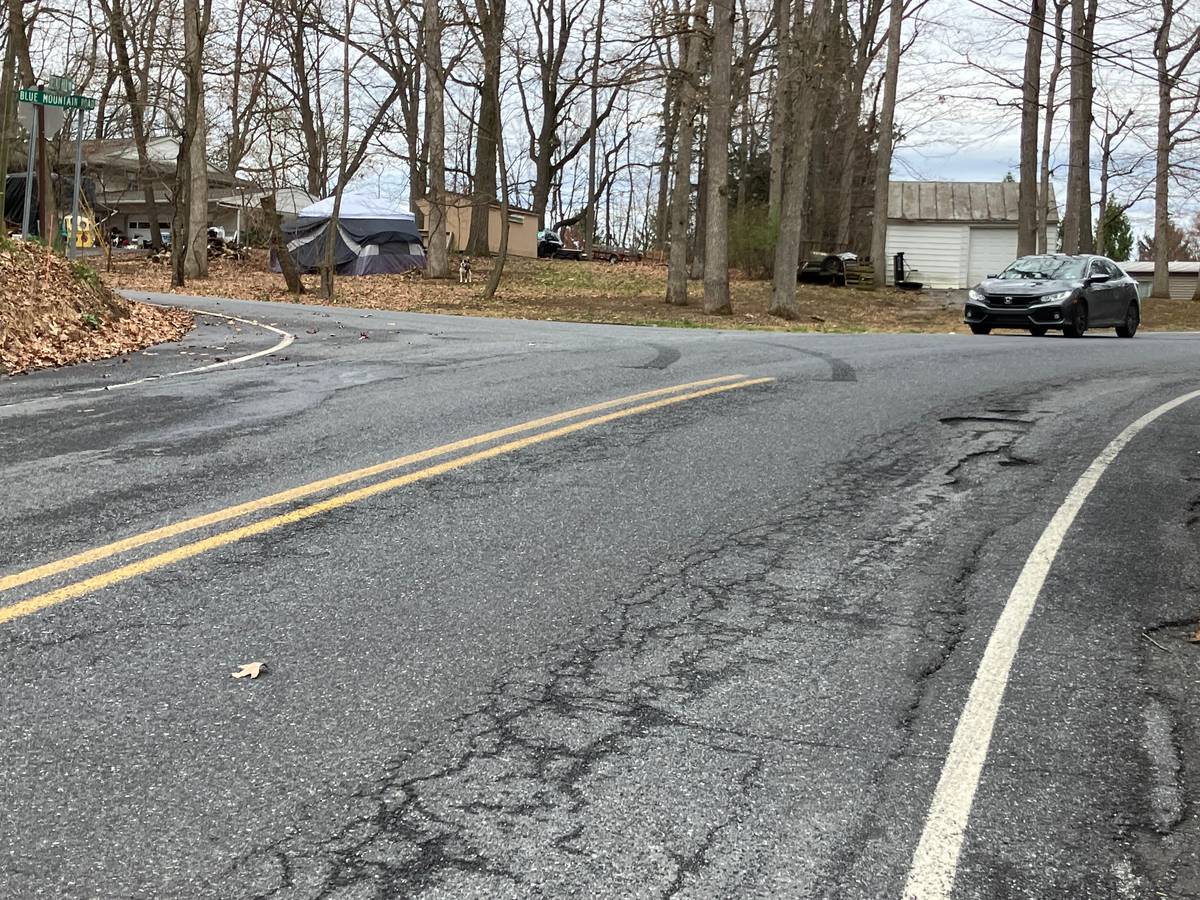

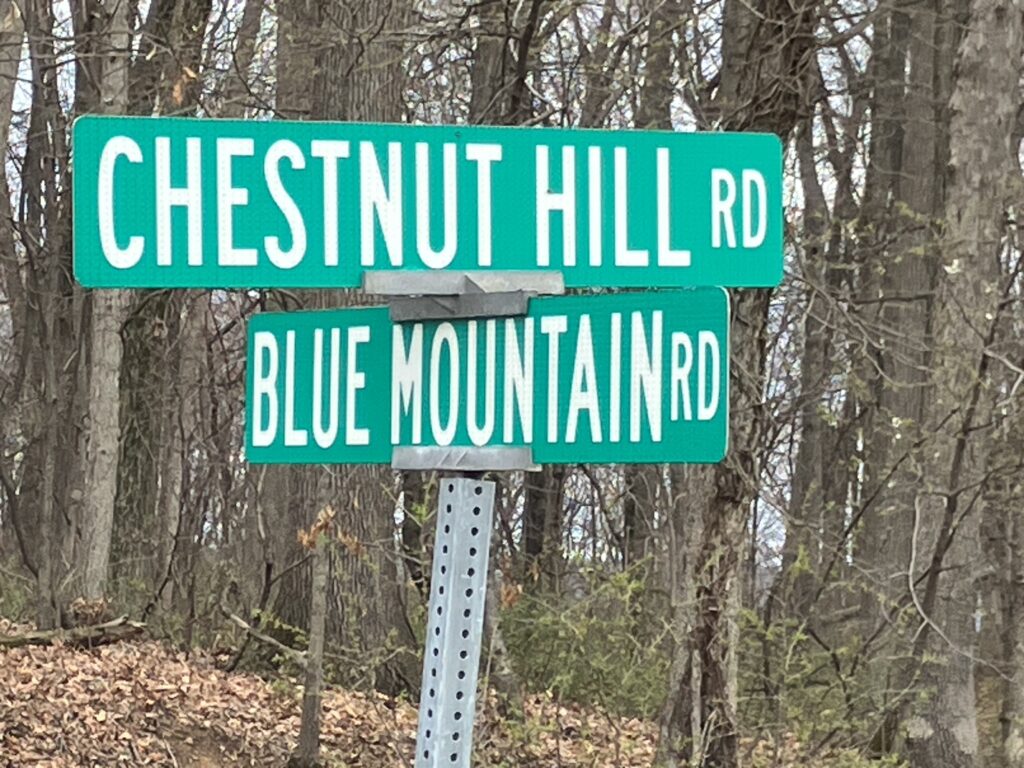
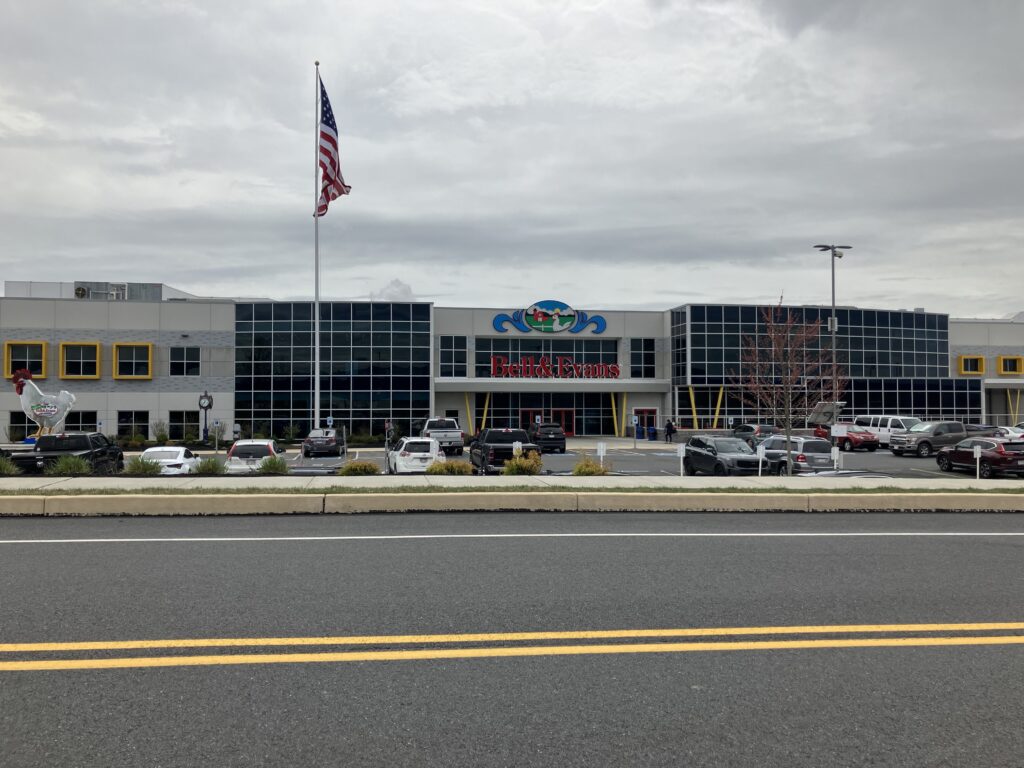
Bell & Evans officials presented two recommended traffic improvement options for Blue Mountain and Chestnut Hill roads to the Bethel Township Planning Commission at a special information-gathering meeting on Friday, April 4.
In addition to those two proposals, the company would like to construct a cul-de-sac on Chestnut Hill Road to limit non-business and non-residential traffic from using that roadway.
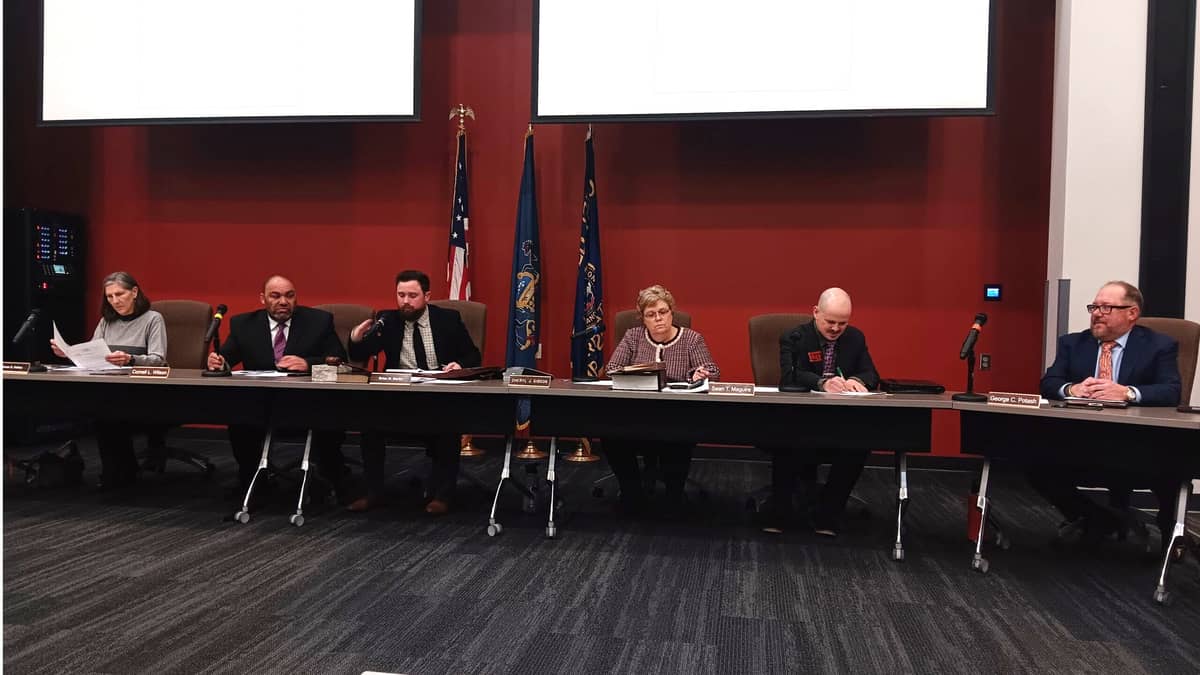
Commission chairman Bev Martel noted the meeting was for discussion purposes and no action would be taken. Members David Brubaker and Dale Snader were also in attendance while Christine Spangler and Bruce Light were not.
The intersection proposals also include a plan for the poultry producer to take over a section of Chestnut Hill Road from the township that runs from the east end of Plant 3 to the west towards Fredericksburg Road. The company-controlled roadway would begin where a cul-de-sac would be constructed to limit traffic from fully accessing Chestnut Hill Road.
The cul-de-sac would still allow residents living along the eastern end of Chestnut Hill Road to access their homes while preventing the high volume of traffic currently using Chestnut Hill Road as an access road from Blue Mountain Road to travel westbound on state Route 22, according to Bell & Evans president Scott Sechler.
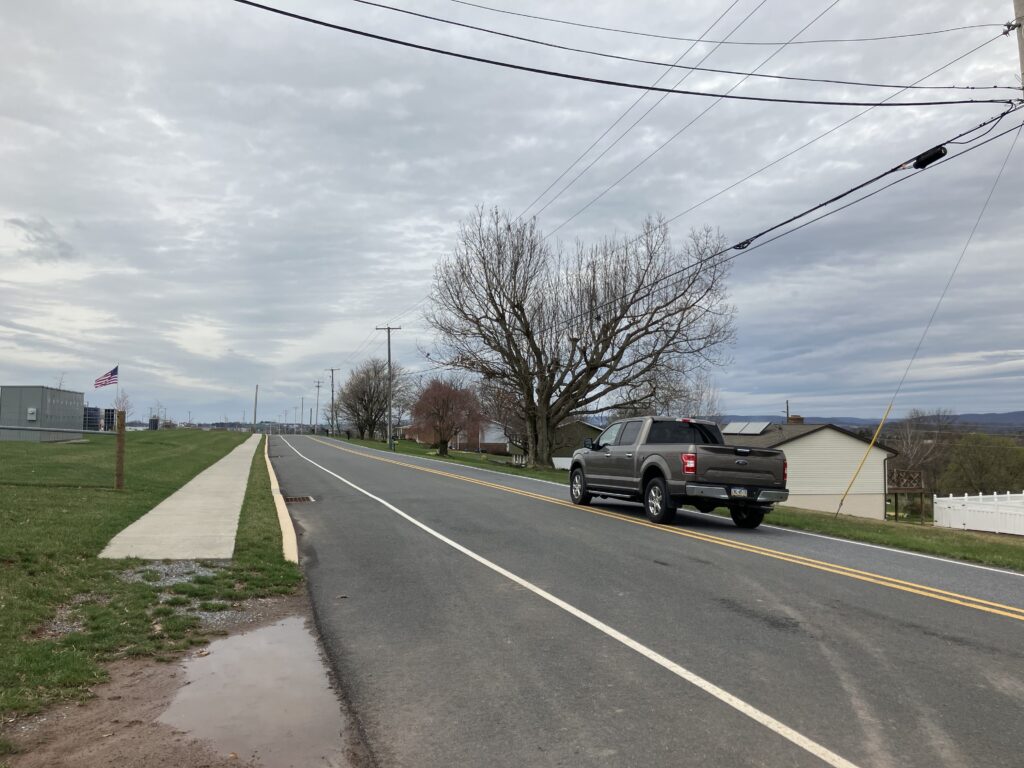
Sechler told planning commission members at the morning session that he watches traffic not destined for the plant using Chestnut Hill Road as a speedway and a detour to avoid the traffic light at the intersection of Blue Mountain Road and state Route 22.
Bell & Evans CEO Mike Bracrella noted traffic is the top concern of Bethel Township residents who live near Plant 3 along Chestnut Hill Road. He also told LebTown after the meeting that the cul-de-sac would be situated near the eastern end of Plant 3.
“When we listen to the residents speak – we agree something needs to happen in this intersection,” Bracrella said. “But we also really feel the need to point out that this whole idea, this cul-de-sac and dead-ending this (Chestnut Hill) road is, we still feel, a valid concept.”
Sechler requested the intersection and cul-de-sac proposals be done as a package since improving the hazardous intersection only would lead to even greater use of Chestnut Hill Road by motorists without a cul-de-sac.
“It’s one thing to fix the intersection, that will probably even invite more traffic. If we could do something like this, one of our things that we want to do everywhere we go, even when we build chicken houses in the neighborhoods, is try to be neighbor friendly,” Sechler said. “Everybody wants to eat, everybody wants jobs, all this stuff, but we still have to be friendly to neighbors. And so this part here, I don’t like the idea of what I see out my window, of the traffic that’s on there.”
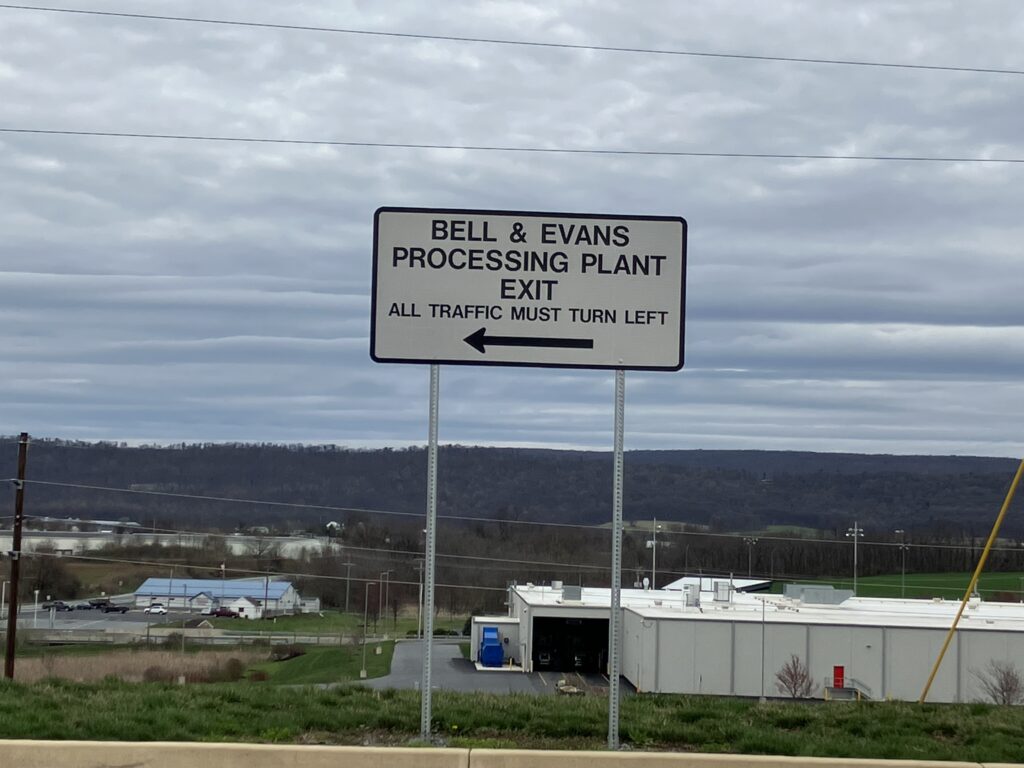
Bracrella answered affirmatively when township engineer Matthew Mack of Mack Engineering asked if traffic leaving Plant 3 would be prevented from travelling west on Chestnut Hill Road.
A sign posted across the street from Plant 3 already informs motorists to turn left onto that roadway to avoid the Chestnut Hill and Blue Mountain intersection.
“It would effectively be the residents on Chestnut Hill Road, those properties would have their own cul-de-sac street they’d live on basically. But no traffic. It would be a dead end. So they wouldn’t even get through traffic from other cars,” Bracrella said.
After the meeting, Bracrella told LebTown that the idea for a cul-de-sac came from a Chestnut Hill Road resident. He also noted that another guard shack would be constructed on Chestnut Hill Road near the company’s rendering plant, which sits on the west side of Plant 3.
“This was a resident’s idea that was floated to us a few years ago,” Bracrella said. “I thought it was a neat idea. I wish I would have thought of it, had the idea first.”
It was noted that the current road that leads from Chestnut Hill Road to the company’s hatchery, which sits along state Route 22 below Plant 3, would be used as an access point for emergency vehicles, and a guard shack would be constructed nearby to control non-authorized vehicles from using it.
“We really feel a concept like this as this site continues to grow that it really forces that traffic in a direction that we want to force it,” Bracrella said. “I know there’s been some concerns on the, I believe it’s the oil tax money that the township gets, and I guess we’re willing to do whatever we have to do to cover that for perpetuity. So I wanted to put that out there … but we really feel that as we continue to move into the future, when we enhance that intersection, if we don’t do something here (on Chestnut Hill Road), that track is just going to continue to increase for years to come.”
A Chestnut Hill Road resident said he believes westbound traffic will continue to use it, and wondered how trucks would turn around after encountering the cul-de-sac. He noted there were ongoing issues throughout the entire time Route 72 was closed for the replacement of the Swatara Creek bridge near Frog’s Hollow Tavern despite numerous warning signs that were posted along both sides of the bridge announcing the closure.
Alex Kinzey, with Steckbeck Engineering, presented Chestnut Hill and Blue Mountain roads intersection design concepts to the planning commission members. Both plans include utilizing four-way stop signs at the intersections with one being described as a more aggressive approach to the intersection than the other plan.
There are actually two intersections for Chestnut Hill and Blue Mountain roads that sit a few hundred feet from each other and the separate plans would align the two roads into one intersection, according to Bracrella.
Next steps
Concerning a timeframe, Bracrella noted that numerous permits are needed, including NPDES (pollution) and PennDOT permits. Mack said next steps should include traffic studies for the area and conversations with Chestnut Hill residents to gauge their opinions.
“We need to get the input from the neighbors, and I think we need to understand where the traffic is coming on this road (Chestnut Hill). How the traffic is being done, that we can see who’s going where, where it’s going so we can make a much more decisive or more informative decision,” Mack said. “Trucks vs. through traffic vs. I think everything else. I think they have to study multiple intersections, figure out basically what they’re looking to do. Again, we’re not supporting or denying anything but to get an understanding of how many trucks are theirs, how much traffic is somebody else and what’s the difference between cars and that kind of stuff.”
Mack added consideration of other traffic impacts, specifically for local delivers and school buses, would have to be taken into consideration concerning the cul-de-sac.
Mack added that stormwater plans would be needed, and there was discussion that Steckbeck would present that information at the next public meeting of the planning commission, which is scheduled for Tuesday, April 15 at 7 p.m.
The commission’s regularly scheduled public meetings are the third Tuesday of each month at 7 p.m. in the township’s municipal building, 3015 S. Pine St., Fredericksburg.
Questions about this story? Suggestions for a future LebTown article? Reach our newsroom using this contact form and we’ll do our best to get back to you.
Support Lebanon County journalism.
Cancel anytime.
Monthly Subscription
🌟 Annual Subscription
- Still no paywall!
- Fewer ads
- Exclusive events and emails
- All monthly benefits
- Most popular option
- Make a bigger impact
Already a member? Log in here to hide these messages
Strong communities need someone keeping an eye on local institutions. LebTown holds leaders accountable, reports on decisions affecting your taxes and schools, and ensures transparency at every level. Support this work with a monthly or annual membership, or make a one-time contribution. Cancel anytime.