
This article was funded by LebTown donors as part of our Civic Impact Reporting Project.
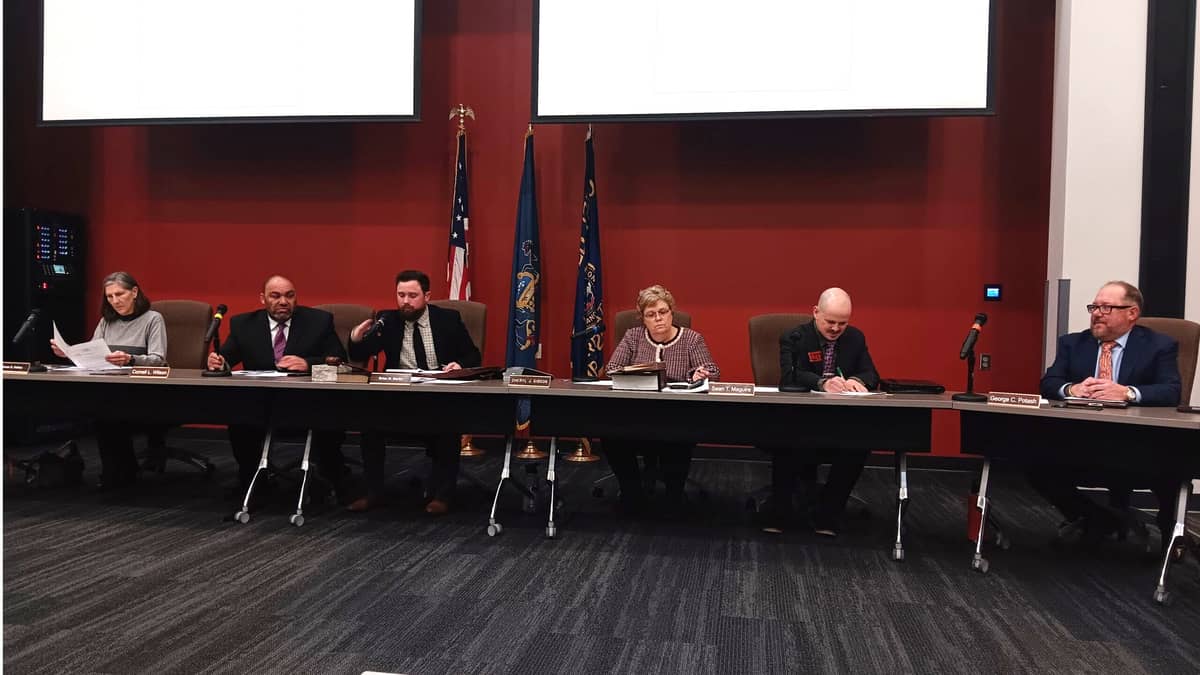
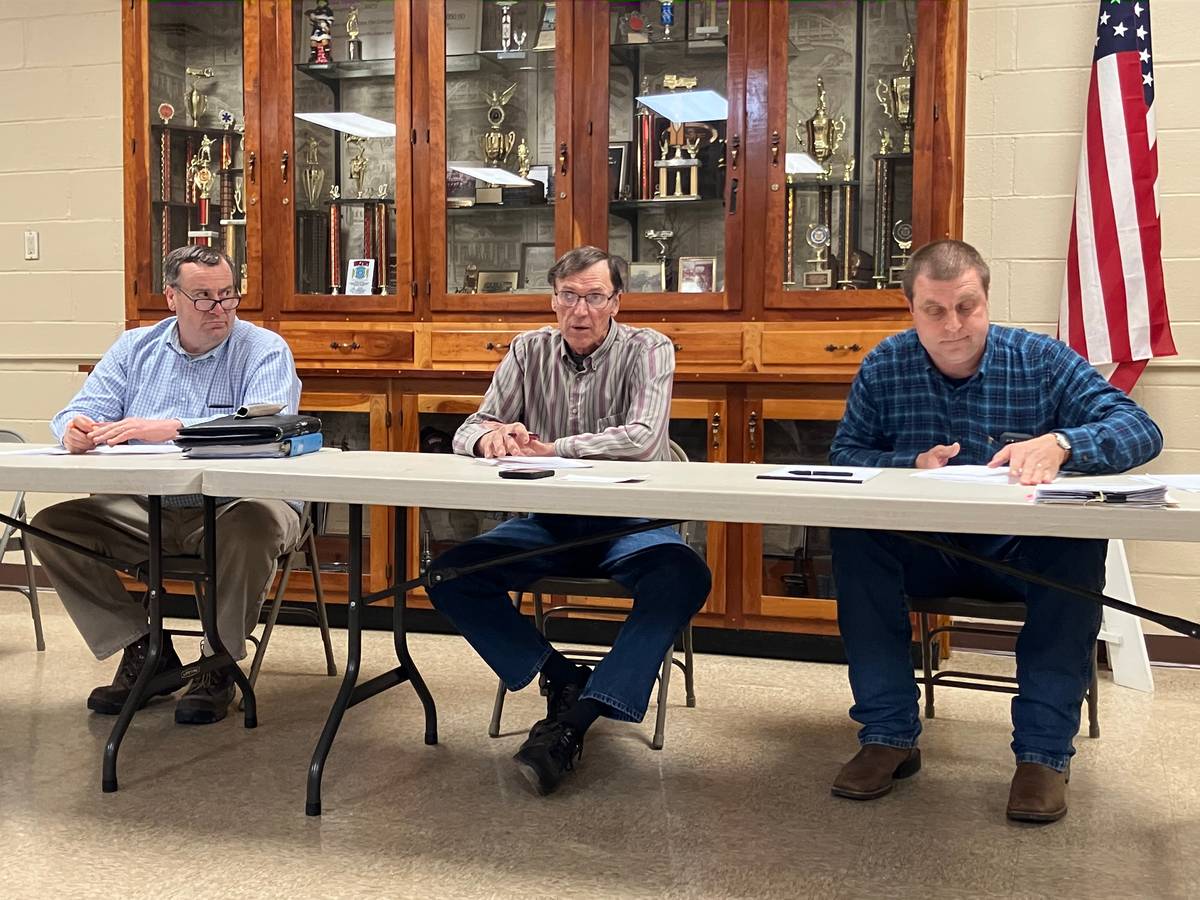
The April 14 meeting of the North Annville Township supervisors was heated.
At issue was a proposal to levy a 1-mill real estate tax for a fire apparatus replacement plan for the North Annville Fire Company.
The two vocal sides were the firefighters, who consist of the recently merged Bellegrove and Union Water Works fire companies, and the residents they serve. There were over 45 meeting attendees, according to the township’s sign-in sheet.
While no residents said they opposed the tax increase during the hour-plus debate, most wanted to know the finances of the fire company and how the sale of existing assets would be applied to the plan. The proposed plan calls for the immediate replacement of two engines and a utility/brush vehicle and a long-term schedule for future replacements of other vehicles.
At the March meeting of township supervisors, a revised plan was presented for an eight-man, 2,000-gallon engine to be stationed at Bellegrove Fire Company’s firehouse, which would cost $1.2 million; a new five-man cab, 1,200-gallon fire engine to be stationed at the Union Water Works’ location, which would cost $475,000; and a four-man, 500-gallon utility brush truck costing $175,000.
The revised plan was created so that only 1,000 gallons of water capacity was lost instead of 3,000 gallons, as discussed at the supervisors’ February meeting. Officially launched as one unit on Jan. 1, the fire company still awaits official finalization of the merger by state officials, it was announced on Monday.
Read More:
- Traffic project, fire company needs highlight N. Annville Twp. meeting
- North Annville Township residents air concerns on highway intersection project
During the March meeting, Mark Sallada, deputy fire company chief for North Annville Fire Company, requested supervisor support for the revised plan at their April meeting. He stated in March that the company wanted support for the new engine at Bellegrove from the township while the fire company would purchase the other two pieces of equipment.
Sallada also said then the fire company would sell one engine and one tanker, and needs the township to supply $200,000 per year plus the yearly stipend and also to float money for the purchase of new apparatus, which would then be paid back.
Sallada noted that orders needed to be placed by the end of May due to pending implementation of new emissions standards that would immediately raise the cost of new vehicles by $200,000.
At Monday’s meeting, the first question for Sallada asked what the residual value of the vehicles are. Sallada listed the value of all three vehicles individually to be sold with the total being $250,000 of the $800,000 needed for the company’s proposed two purchases.
“And then keep in mind, we are also getting rid of two (other) high dollar pieces of equipment. So the $1.4 million forever savings will always be there for the township and the residents that we’re trying to save forever by getting rid of those high dollar pieces,” he added.
The meeting became contentious over how the financial information was disseminated. Sallada said the finances had been distributed to the supervisors “via a full bones red sheet that has all those valuations on it, on what stuff is worth, what stuff will be valued at, and with all the options of the replacement plans.”
Township secretary and supervisor Adam Wolfe requested the latest data, noting they’ve “got 10 versions of it.” When later it was stated that the latest information had been presented in time for it to be posted on the township’s website, Wolfe denied the statement. He said he only received the current information late that day and didn’t have time to get it posted before the meeting.
One resident suggested selling some of the real estate the company owns and was told that insurance premiums for residents would rise if that were to occur, a statement that has been made at prior meetings.
Supervisors chairman Clyde Meyer responded that information wasn’t true, adding he’s asked his insurance agent if homeowner insurance premiums would increase based on location of existing fire stations.
“She told me they deal with half a dozen different carriers. She said anything up to five miles in a rural area, there’s no problem. When you go between eight and ten miles, she said some companies will balk and won’t want to cover you,” Meyer told the audience. “But she said in the rural areas up to five miles. Adam has checked the mileage from Bell Grove down to Middle Street to the scrap yard there before the railroad tracks. That’s exactly five miles.”
That statement led to a comment from the audience that supervisors had already decided to sell one of the stations, but Meyer said there is no intention of selling.
“We didn’t make any decision. I’m just telling you we’ve done some investigating in some of this. You also told us that if we don’t order this now the increase would be 100 to 200 thousand. What we dug up, it’s 20 to 30 thousand,” Meyer added.
The statement about increases led to additional disagreements between a fire official who said he had attended a national fire convention and the stated $100,000 to $200,000 was accurate. Wolfe said their research showed different results.
“We know the information we found was that the industry standard on the increases for emissions related factors was 20 to 30 thousand. We couldn’t find anything that said 100 to 200 thousand for emissions,” Wolfe said.
Resident Nelson Heagy asked about procedures to ensure that citizens have representation on the fire company governing board, “because you can’t tax without representation,” or if one of the supervisors planned to sit on the fire company’s board.
Other questions around taxes included who would collect it, how it would be distributed and where the revenue would go. It was said the tax would be collected by Keystone Collections or the county treasurer’s office and the revenue would be distributed to the supervisors.
Heagy then requested that supervisors consider this new tax levy to be on structures only and not their land so “we’re not paying an unfair amount on these big land bases that are never gonna catch on fire.”
Other conversations centered around monetary assets like certificates of deposits and how neighboring fire companies handle fire service. It was suggested that North Annville Township contract for fire services, with additional discussion about North Annville responding to other municipalities and not being compensated for their efforts.
Sallada said he’d put the dedication and service of North Annville up against any other in Lebanon County. It was noted that North Annville has 42 volunteers to serve the community, that neighboring communities have an agreement to provide services to each other, and fire companies are prohibited from individually charging someone for the calls they make.
Later, following more discussion about the numbers, Sallada asked supervisors what they wanted in terms of the vehicles. Meyer said the board felt just one new engine was needed.
Following a discussion that went back and forth, Sallada said the fire company would come back with a new plan in May and if township residents don’t like it, they can take issue with the plan with township supervisors.
As numerous discussions broke out on multiple subjects, township solicitor Paul Bametzreider slammed his hand on the table to restore order. Supervisors ended discussion on the topic.
Speeding on Hill Church Road
In other business, supervisors received an update on speeding on Hill Church Road. Cleona Borough police Chief Jeff Farneski reported the following tallies after 13 days of data collection:
- 41-45 mph – 4,959 vehicles
- 46-50 mph – 5,341 vehicles
- 51-55 mph – 2,340 vehicles
- 56-60 mph – 588 vehicles
- 61-65 mph – 116 vehicles
- 66-70 mph – 26 vehicles
- 70-plus mph – 7 vehicles
The township purchased data-collection equipment to monitor vehicle speeds since some residents who live along that highway have called it Hill Church Road speedway. The chief noted after presenting the data that the average speeds are normal and within an acceptable range.
Residents who live there have called for the speed limit to be lowered as part of a traffic improvement plan for the intersection of Hill Church Road and Thompson Avenue as proposed by the Pennsylvania Department of Transportation.
Other board actions
In other business, supervisors voted unanimously to:
- Accept the low bid of $25,500 from Hackman Paving of Newmanstown for paving the Bellegrove Fire Company social hall parking lot. The other two bids were from Ronnie Folk Paving of Shoemakersville for $30,845 and Schuylkill Paving of Schuylkill Haven for $44,870.
- Table a presentation for insurance policy renewals after the agent failed to attend the meeting.
- Inform attendees that street sweeping has occurred and a paving project on Clear Spring Road has been completed.
- Announce that Commonwealth Court has agreed to decide a matter pertaining to Lebanon Solar I LLC’s proposed solar project via briefs filed by the company and the township’s solicitor.
- Read and pay monthly bills.
- Approve the March 10 meeting minutes and treasurer’s report.
- Announce an Arbor Day celebration on Friday, April 25, from 4 to 6 p.m. at Gloninger Woods Park, 115 S. 22nd St., Lebanon. Rain date is May 2.
North Annville Township supervisors meet the second Monday of the month at 7:30 p.m. in the Union Water Works social hall, 2875 Water Works Way, Annville.
Editor’s note: This article was updated after publication to correct the size of the tank on the utility brush truck, which is 500 gallons, as well as correcting the cost of the engines and utility brush truck.
Questions about this story? Suggestions for a future LebTown article? Reach our newsroom using this contact form and we’ll do our best to get back to you.
Support Lebanon County journalism.
Cancel anytime.
Monthly Subscription
🌟 Annual Subscription
- Still no paywall!
- Fewer ads
- Exclusive events and emails
- All monthly benefits
- Most popular option
- Make a bigger impact
Already a member? Log in here to hide these messages
Strong communities need someone keeping an eye on local institutions. LebTown holds leaders accountable, reports on decisions affecting your taxes and schools, and ensures transparency at every level. Support this work with a monthly or annual membership, or make a one-time contribution. Cancel anytime.