
An ongoing wildlife restoration and grasslands rehabilitation project is beginning to take root on nearly 225 acres in Swatara and Memorial Lake state parks in Lebanon County.
The work is being conducted under the Pennsylvania Priority Grasslands Project in cooperation with several state agencies.
“This essentially is an agreement between the Pennsylvania Game Commission and DCNR state parks that allows us to develop and improve habitat, wildlife habitat, on certain state parks and Swatara is one of those,” said Justin Clark, who is wildlife habitat group manager for the Pennsylvania Game Commission in Dauphin and Lebanon counties.
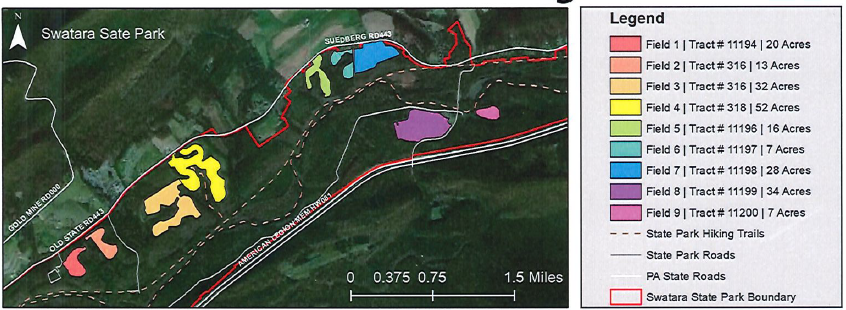
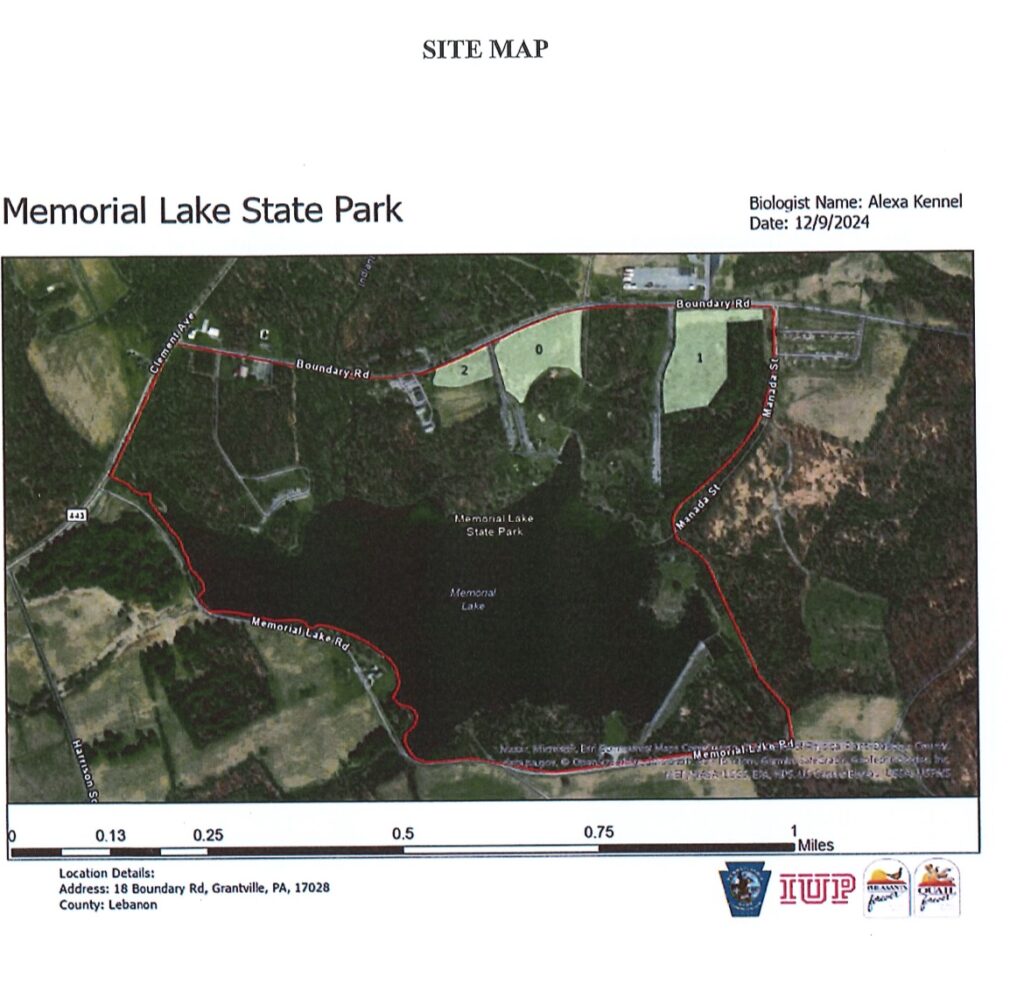
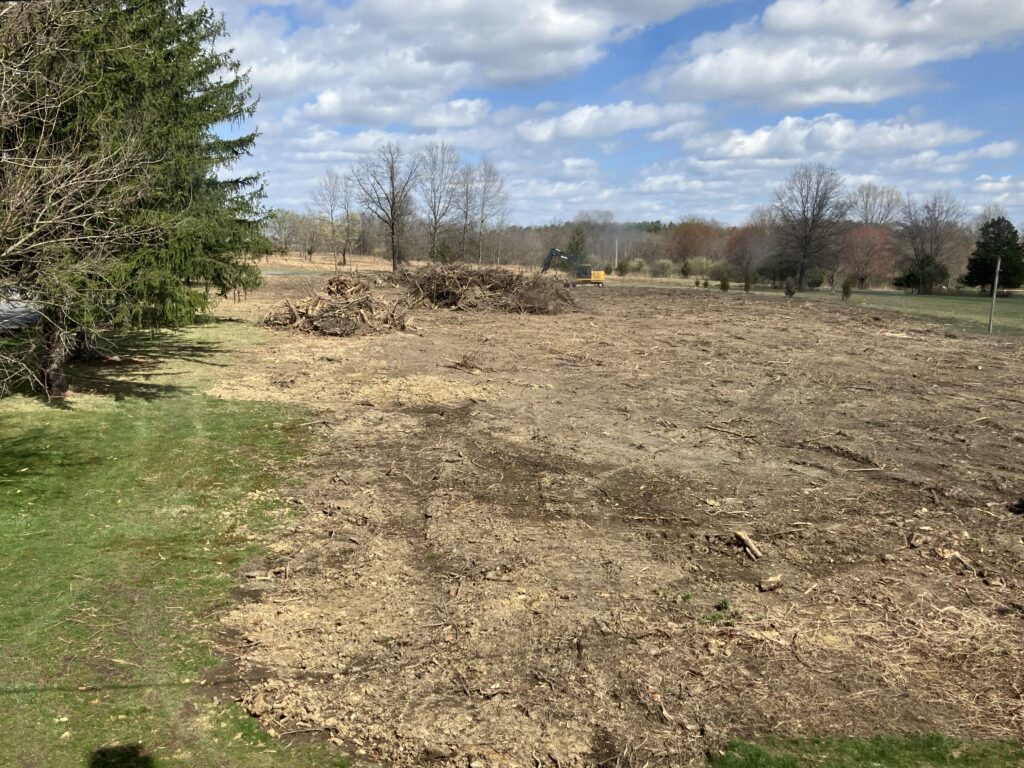
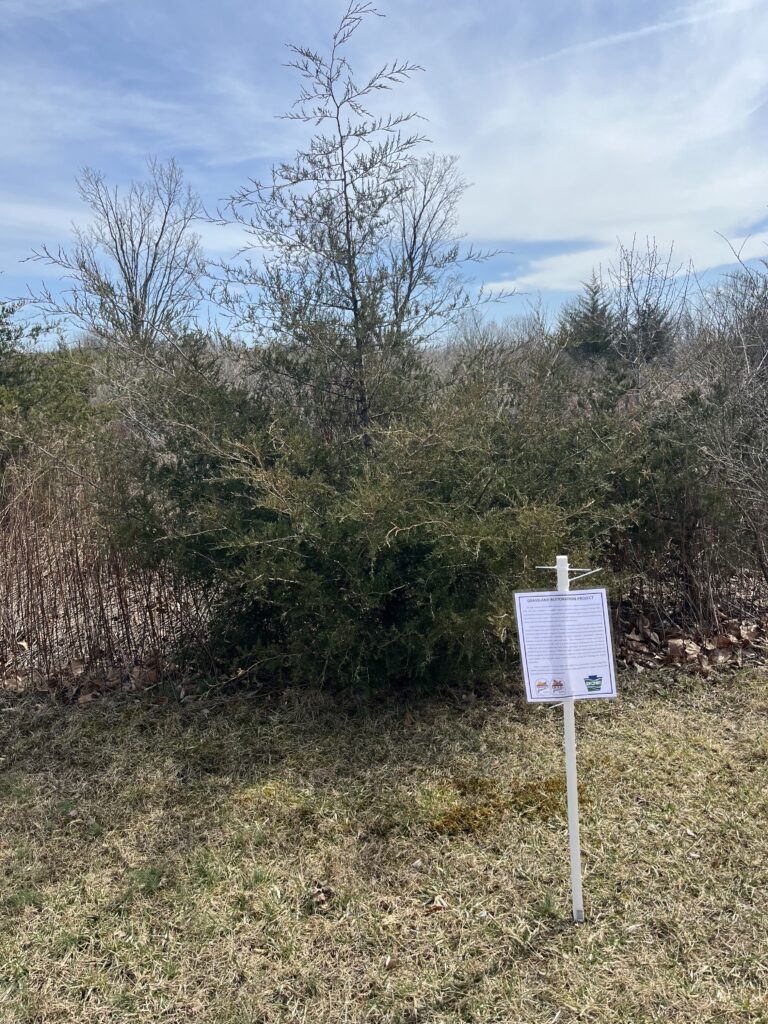
Clark said the PGC is working to convert 210 acres of agricultural land to grasslands in Swatara State Park. Additionally, Memorial Lake State Park officials are converting 13 acres over three plots near the park office to grasslands.
Clark said phase one work at Swatara State Park began around 2011 or 2012 with a woodcock habitat restoration project.
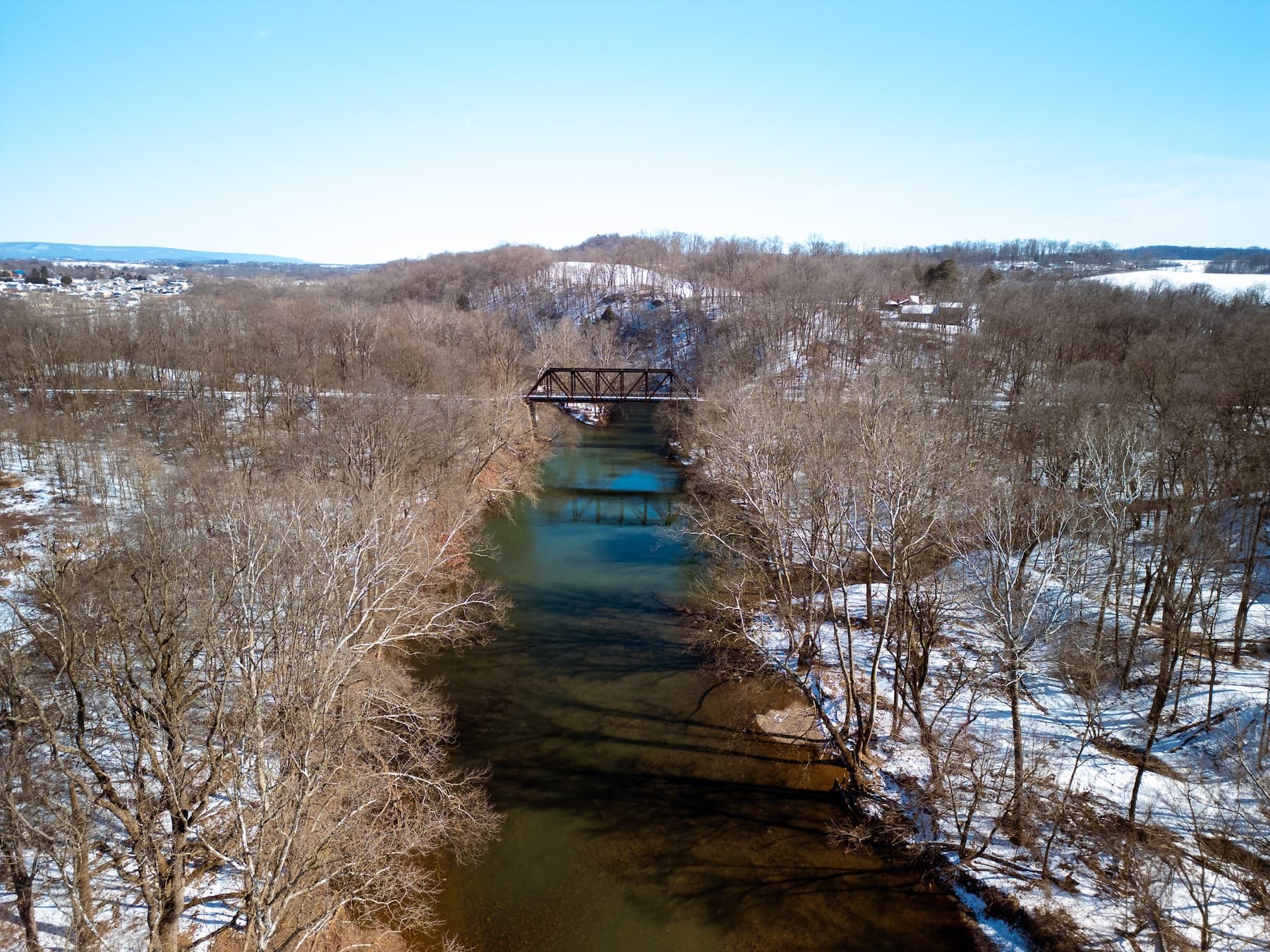
“That has been focused on a lot of the riparian zones directly around Swatara Creek proper there that are kind of in the flood zone of the Swatara Creek. What that is doing is mostly invasive shrub species control to restore the open nature of some of these flood zone areas and create proper structure for woodcock both as a stopover habitat for migration and also breeding grounds,” Clark said.
PGC officials are now in the grasslands rehabilitation phase of this long-term project.
“Over the past two years, we have engaged in agricultural field rehabilitations, if you will, essentially we’re converting former ag land on Swatara into high quality native meadows and grasslands,” Clark said. “So that’s going to be approximately 210 acres of agricultural land that is going to be converted into native grasses and forbs (herbaceous flowering plants other than grass) over the next about four years.”
Department of Conservation and Natural Resources park manager Courtney Troutman said the project is being completed by DCNR staff who work at Memorial Lake State Park.
Troutman is park manager for Memorial Lake and Swatara state parks, Boyd Big Tree Preserve Conservation area in Harrisburg and Joseph E. Ibberson Conservation Area in Halifax, Dauphin County. Grasslands restoration is also being completed at the two non-Lebanon County locations under Troutman’s direction as park manager.
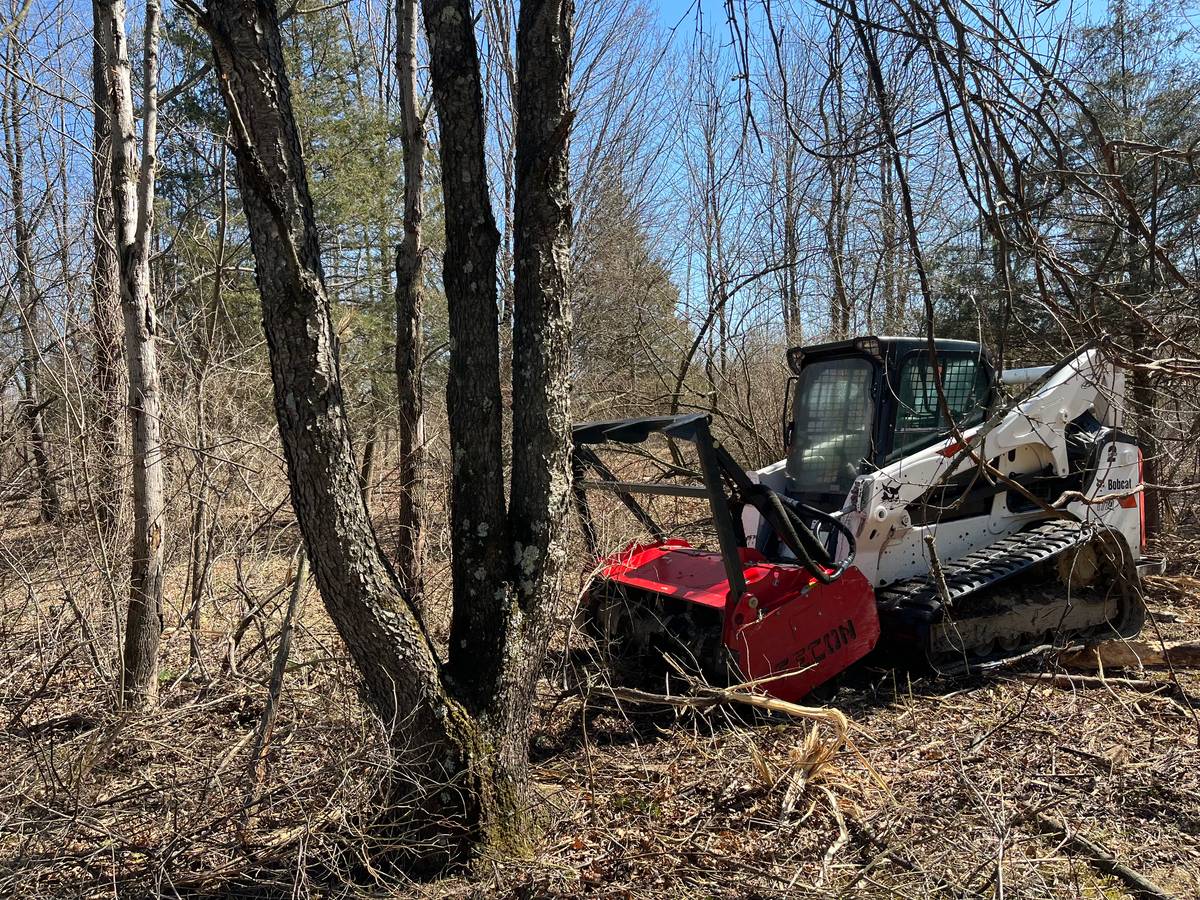
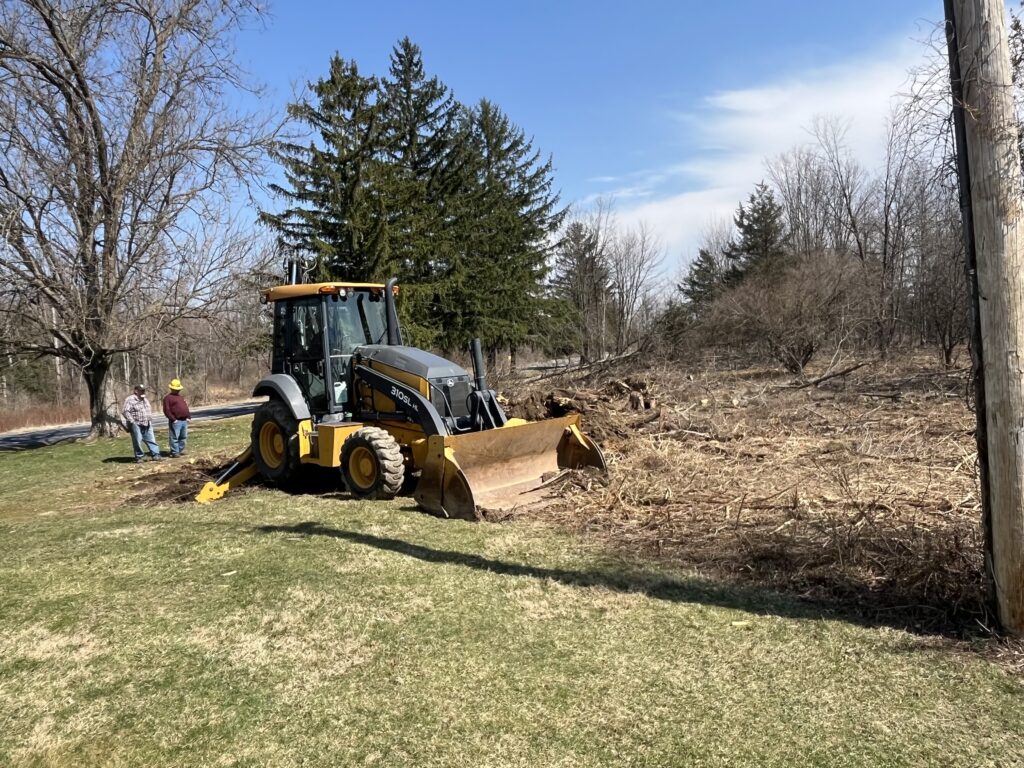
Troutman told LebTown that the park office has received complaints about the removal of trees in the 13 acres to be converted to grasslands. She noted there are reasons why this work was required as part of the grasslands project.
“Some of the trees were tree of heaven, which you had talked about the spotted lanternfly earlier,” said Troutman, who added that the tree of heaven is in that invasive species’ diet. “So that’s a non-native tree that’s an invasive species.”
Some other trees weren’t necessarily invasive or non-native, he added, but had to be removed “in order to create that grasslands prairie habitat.”
There’s another reason the trees had to be uprooted.
“Ultimately, a lot of times, when it comes down to tree removal, we do have certain species of trees that we try and retain. I won’t say at all costs, but when it’s feasible, we try to retain them. Mostly our hard mass producers like oaks and hickories,” Clark said. “But oftentimes, when it comes to grasslands and prairies, the structure is the important aspect there.”
Clark clarified that trees and grassland environments aren’t a good mix.
“Oftentimes, trees don’t play well with the desired structure of a grassland prairie. So a lot of the obligate grassland songbirds that I had mentioned earlier, they have pretty specific site requirements, of which there are sight line requirements to where they (birds) don’t do well in areas with obstructions,” Clark said. “Big open hilltops with no site obstructions. No tree lines. That’s really the area that those species key in on.”
While hardwoods like black cherry, black walnut or black locust trees may provide benefits for a few species of wildlife, as a whole, that’s not the case for the grasslands ecosystem, according to Clark.
“They probably provide some benefit for a couple species of wildlife and they may provide a little bit of nesting habitat, but their impact on that habitat type as a whole is more of a negative than they are a positive,” Clark said. “That’s one of those things that we just weigh out whenever we’re making these decisions to clear certain areas. We look at the net impact on a certain habitat type and sometimes there’s winners and sometimes there’s losers.”
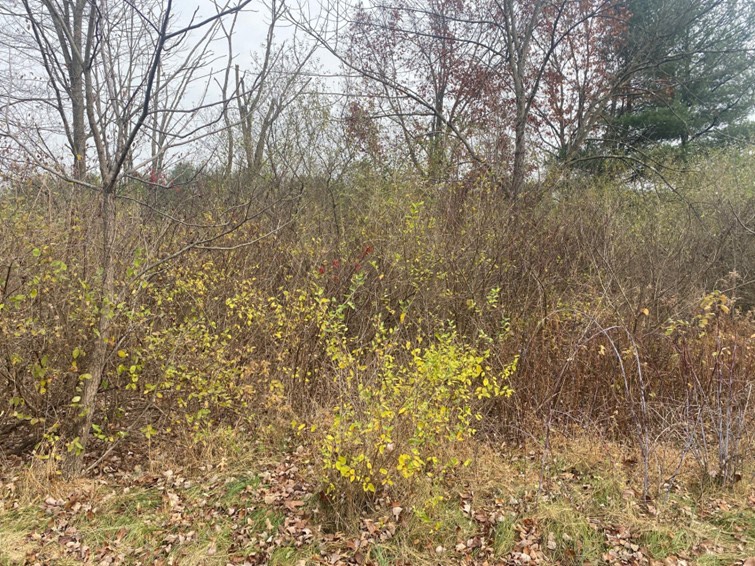
There are specific native grass species being planted this spring by the game commission at Swatara Park to target specific birds and other wildlife.
“They certainly will have wildflowers and native forbs in those seed mixes, but the idea is to cater to grassland nesting birds. There is a guild of grassland obligate birds and what that means is they are exclusive to wide open grasslands, they don’t nest anywhere else besides that habitat type,” Clark said.
He added the project’s goal is to restore native grasslands that have been lost over time to development and farming.
“This project allows us to key into open hilltop type topography that we can restore into high quality grasslands and it’ll benefit those those songbird species like eastern meadowlark, bobolink, grasshopper sparrow and potentially vesper sparrow, northern harrier, which are a hawk species bird of prey, short-eared owl and American kestrel, so there’s a lot of bird species that utilize those open habitats,” Clark added.
The benefit of grasslands is extended to other avian wildlife.
“In their final form those meadows will serve as excellent wild turkey brooding cover,” Clark said. “So the structure will be really great to conceal turkey poults but still allow female hen turkeys to be able to see predators. So the structure will be perfect for that.”
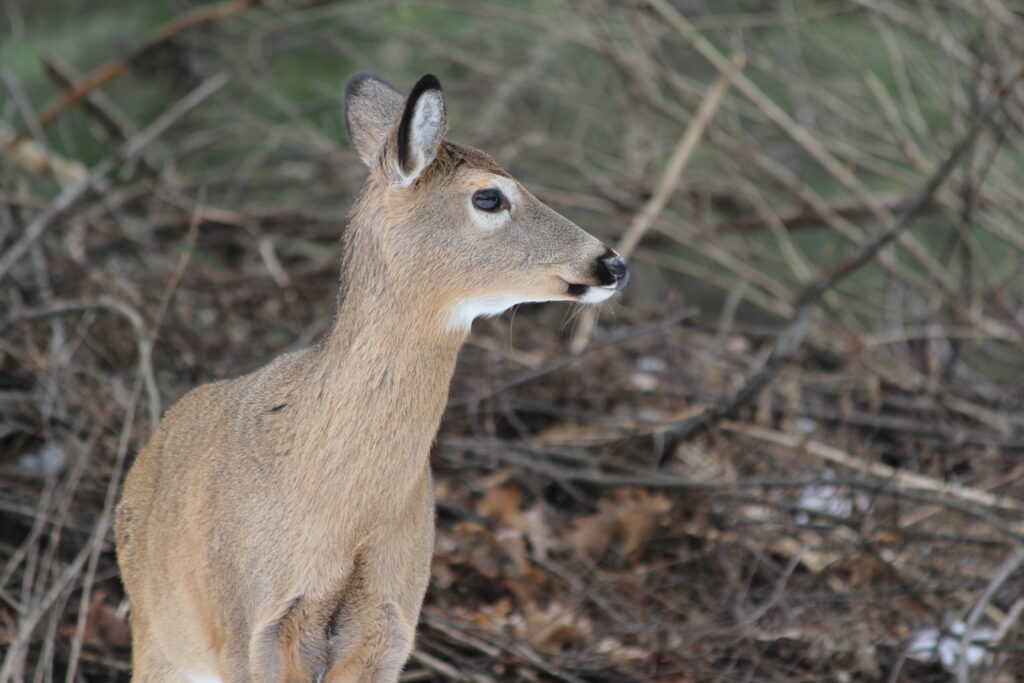
Other non-avian wildlife species will benefit, too.
“It’ll also be a really great white tail deer fawning cover for the same reason (as turkeys). It’s just a perfect cover structure to conceal white tail fawns from predators, and the list goes on and on. This project will end up benefiting literally dozens of species of wildlife,” said Clark.
Another beneficiary is the new grassland ecosystem, which is important to the area’s ecology, according to Alexia Kennel, coordinating wildlife biologist for SE Pennsylvania, Pheasants Forever Inc. and Quail Forever. Kennel’s project area includes Lebanon, Berks, Lancaster and Lehigh counties.
“Often, we place a lot of value on forests and wetlands. This value is not misplaced, but the lack of public understanding of grasslands can often lead to the loss of what little we have left,” Kennel said. “Over my career, I have seen multiple grasslands developed into housing, plowed under for farming, and transitioned into forests. I would ask the public to remember that a large number of endangered species rely on grasslands to survive, so although they may look uninspiring at first glance, they are teeming with life.”
Kennel told LebTown that Pheasants Forever is serving as the project manager and technical adviser for the habitat restoration at these sites.
“The money for the project is from a NFWF (National Fish and Wildlife Foundation) grant that was written by the Pennsylvania Game Commission. PGC partnered with PF to establish relationships with interested land owners and rank potential projects,” said Kennel.
“As pheasants are not native to North America, PGC’s intention is to create habitat primarily for native grassland songbirds, which wild pheasants could also benefit from. These native meadow habitats support songbirds, turkey, deer, pollinators, and other insects,” Kennel said.
She noted the Priority Grasslands Project focuses on these native birds rather than pheasants specifically. Grasslands are some of the most endangered ecosystems in North America, and grassland birds have seen a massive 53 percent decline since 1970, larger than any other group of birds.
“We must work hard to not only preserve what we have left but also establish new grassland ecosystems that can support these birds,” Kennel said.
Once the ecosystem is completely established, there will be occasional maintenance, according to Clark.
“They won’t be mowed throughout the growing season, the nesting and young wildlife season, but they will undergo some maintenance treatments periodically,” Clark said. “So grasslands and meadows rely on some form of disturbance periodically, whether that be prescribed fire or mowing or mechanical removal of trees and shrubs.”
Those actions are for the betterment of the grassland ecosystem.
“Eventually, if it’s left completely unmanaged, those fields will want to start to become shrub lands. And then further down the line, forests, trees and shrubs tend to move into those fields, and unless you create some sort of disturbance there, they’ll revert back into forest,” Clark said. “So generally speaking, every three to five years, we’re looking at some sort of treatment, management treatment there to simply maintain herbaceous diversity and then also limit the woody encroachment into the field.”
Troutman said the park will extend its educational mission to grasslands habitat once they are established.
“We have Memorial Lake with the highest, has the highest visitation of the four parks in our complex. So we see the most visitors annually and it’s easily accessible, easy to navigate,” Troutman said. “And then we have the trails that go along the grassland habitat. So great education space. We’ll be continuing to work with Pheasants Forever on self-guided interpretation, education opportunities, and then with our environmental educator position, developing programs based on the results of what we see coming from this.”
Clark said the game commission’s involvement in this project is to provide more hunting opportunities.
“Some of these projects may be geared more towards non-game species just because they at times have very specific habitat needs. But ultimately in the end, this, the projects that we’re working on are in a place and in a fashion that will ultimately benefit hunters and game species as well,” Clark said.
Questions about this story? Suggestions for a future LebTown article? Reach our newsroom using this contact form and we’ll do our best to get back to you.
Support Lebanon County journalism.
Cancel anytime.
Monthly Subscription
🌟 Annual Subscription
- Still no paywall!
- Fewer ads
- Exclusive events and emails
- All monthly benefits
- Most popular option
- Make a bigger impact
Already a member? Log in here to hide these messages
Quality local news takes time and resources. While LebTown is free to read, we rely on reader support to sustain our in-depth coverage of Lebanon County. Become a monthly or annual member to help us expand our reporting, or support our work with a one-time contribution. Cancel anytime.