
It’s a pathway nearly 140 miles long, stretching across the most populous region of the state, and is – and has been since its beginning – meant to cater to not one but two groups of outdoor enthusiasts.
And you may not even know it’s here.
Rob Smith didn’t. When he moved to Lebanon County about seven years ago and started looking for places to hike, he’d never heard of the Horse-Shoe Trail. He’s come to know that’s not as uncommon as might be expected.
“I’m an Appalachian Trail hiker. I’m obsessed,” said Smith, one of the Horse-Shoe Trail Conservancy’s trail maintenance co-chairs, with responsibility for its western half, including the portion through Lebanon County. “And the amount of people in Pennsylvania that I’ve met that don’t even know about the Horse-Shoe Trail kind of blows my mind a little.”
It’s not that the trail is new. Far from it.
According to the history page of the conservancy’s website, Henry Woolman founded what was then the Horse-Shoe Trail Club 90 years ago, in 1935. He was a horseback rider who years earlier had ridden the Appalachian Trail, which was allowed at the time, through the Smoky Mountains. When he returned home to southeastern Pennsylvania, he wanted to recreate that opportunity locally.
Specifically, he envisioned a riding and hiking trail connecting Philadelphia to the Appalachian Trail in Dauphin County.
To bring his vision to life, he set out on his horse, riding “from farm to farm” talking to landowners and asking permission to route the trail over their property, said conservancy president Ingrid Cantarella-Fox. She lives in Chesterbrook, not far off the trail near Valley Forge.
“It was all done with handshakes,” Cantarella-Fox said. “Which of course is not as useful today. But at the time it got him pretty much to Hershey.”
Along the way Woolman teamed up with people from each of the five counties the trail passes through – Dauphin, Lebanon, Lancaster, Berks and Chester, going west to east – including Charles Hazlehurst, the seventh man to walk the entire Appalachian Trail. Together, they developed a logo for the club that features a horseshoe with a moccasin atop it. That was to represent the two groups – horseback riders and hikers – expected to use it.
Both still do today, though not in the same proportions as before.
“When it started out it was probably 90 percent horses and 10 percent hikers. It’s now probably 90 percent hikers and maybe 10 percent horses,” Cantarella-Fox said.
No one’s sure quite why that is, she said. The Horse-Shoe Trail is, after all, the longest equestrian trail in southeastern Pennsylvania.
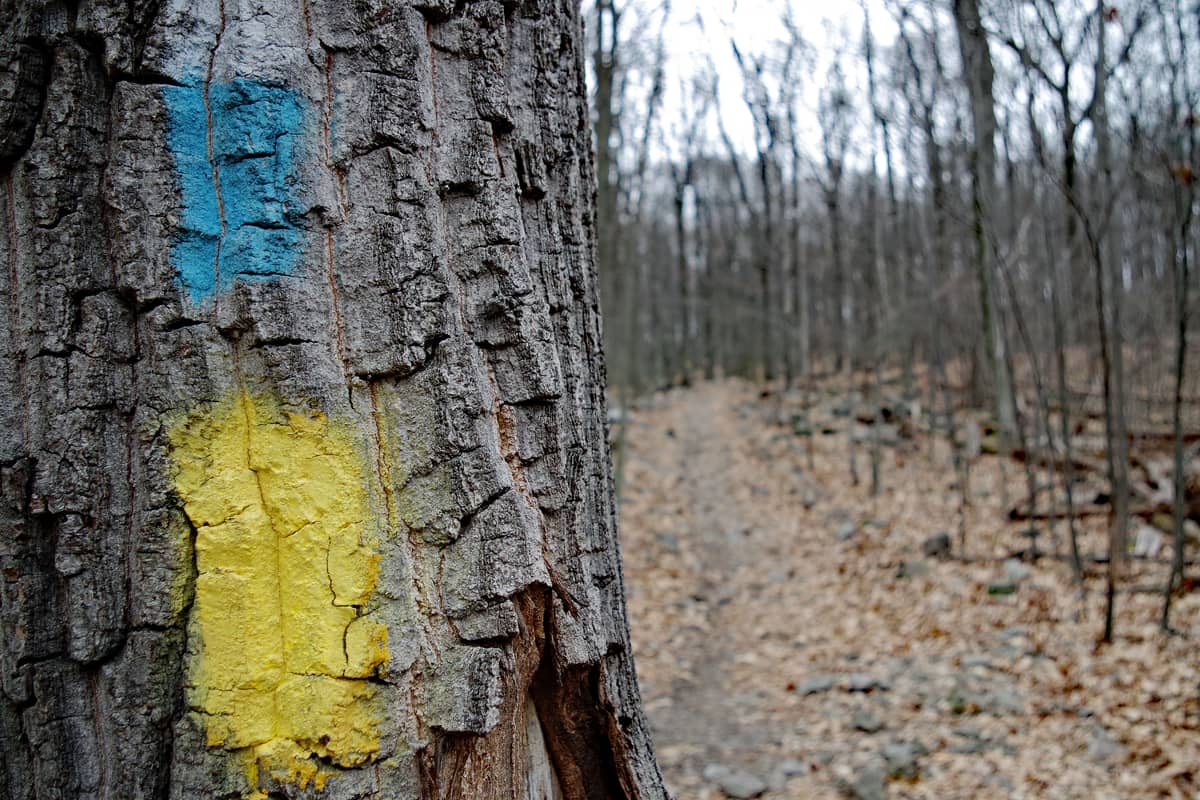
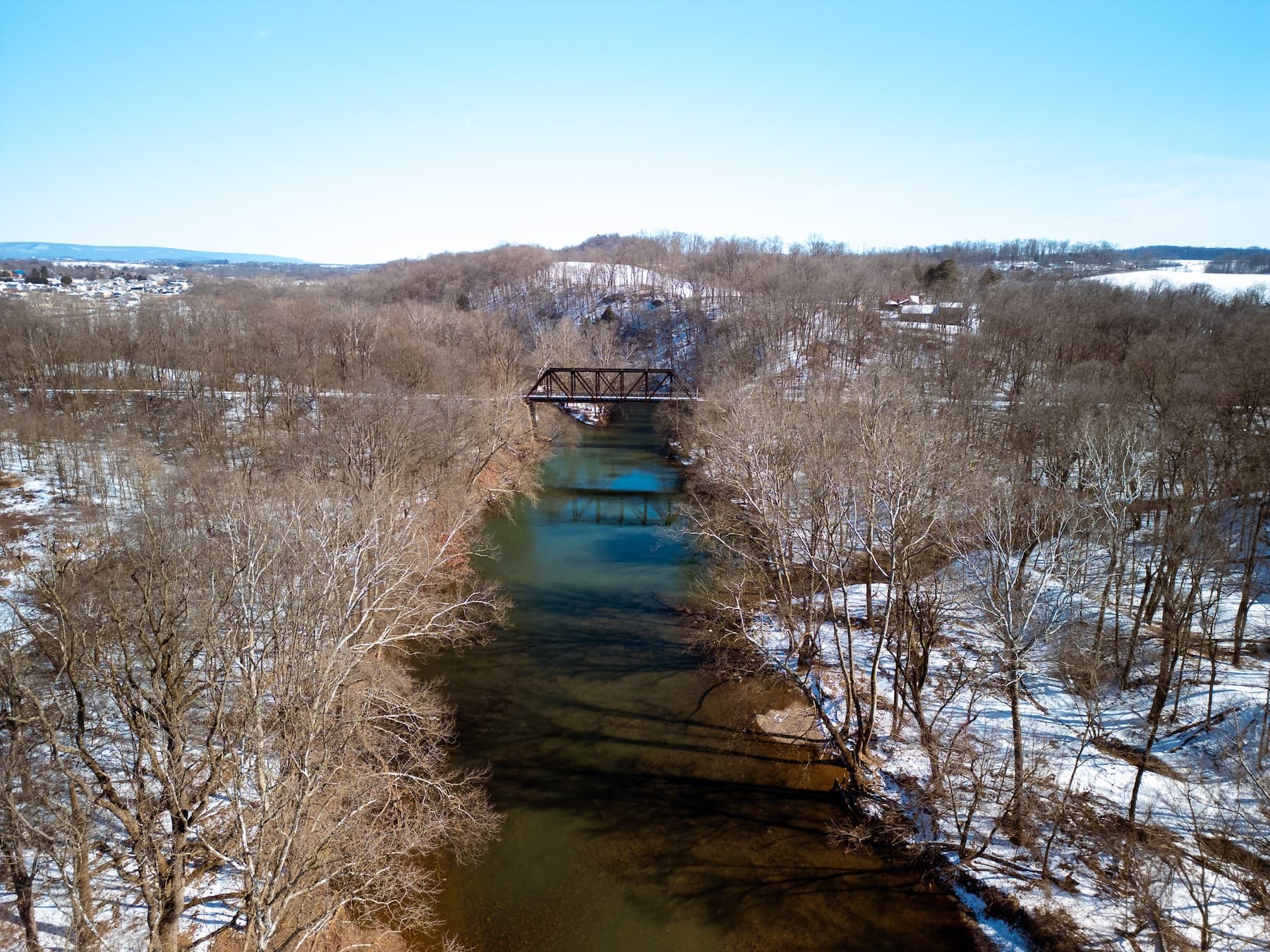
However they access it, though, those who travel the yellow-blazed trail can have different experiences based on location. About 80 percent of the trail passes through fields and woods, some publicly owned, some privately. The other 20 percent follows roads.
The conservancy – it changed from being a “club” years ago to better advocate for the trail and its mission – has spent a lot of time in recent years trying to secure the trail’s long-term future and get it off the road in more places. That’s an ongoing challenge, Cantarella-Fox said. Some landowners, she noted, are OK with the trail crossing their property, but don’t want to formalize that via anything like an easement, for example. In other places, land hosting the trail gets lost to development.
“So it’s a continuing effort, as if maintaining it,” she said.
That maintenance falls to volunteers: 37 section maintainers in particular, who might work a little or more often a lot, depending on what’s needed, Smith said. Last winter’s weather left lots of blown-down trees behind, for example. Those have to be removed, with the path sometimes needing different maintenance than some might expect to accommodate people in the saddle.
“With horses, you need higher clearance to get a horse and rider under a tree limb, let’s say. And a little wider clearance on the sides because of a rider’s legs,” Cantarella-Fox said. “That adds to maintenance a bit.
“Those are things you don’t really think about until you start doing it.”
But the trail offers users real variety, Smith added.
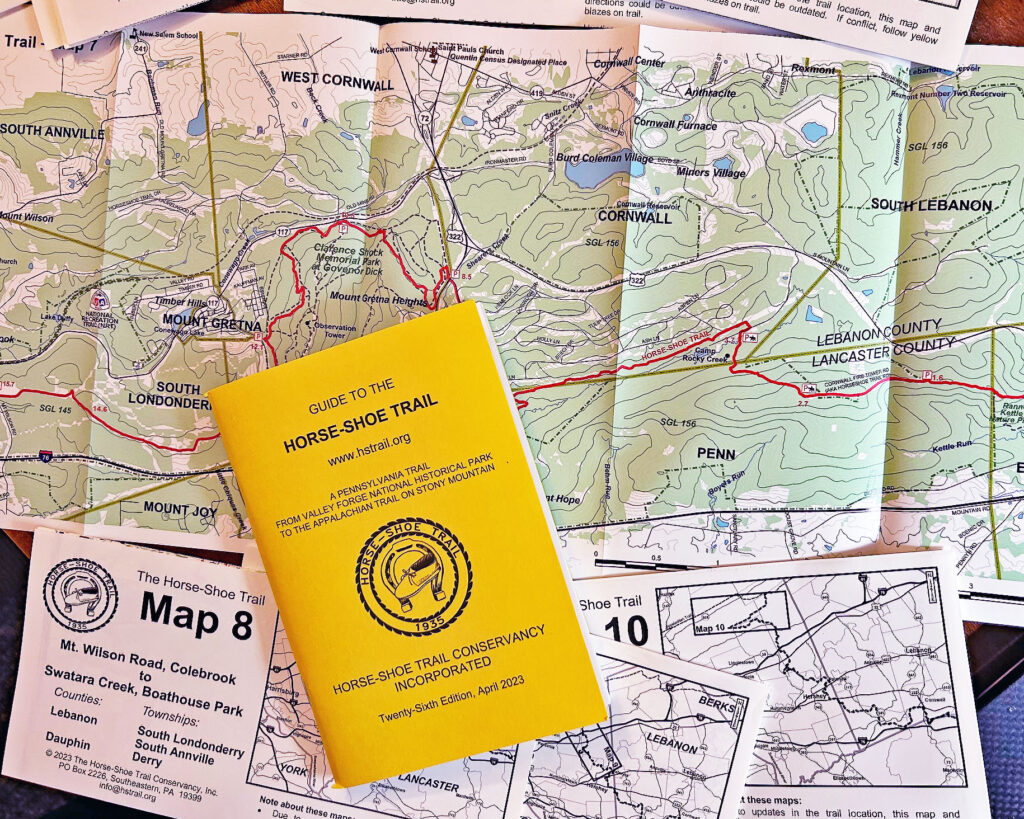
He described the Lebanon County portion of the trail as “green tunnel,” meaning it passes through woods almost the entire way. It goes from Middle Creek Wildlife Management Area to Pumping Station Road on U.S. Route 322. From there it crosses into Lancaster County, before returning to Lebanon, to pass through Mount Gretna, Camp Kirchenwald, and on toward Hershey properties near Palmyra.
“Interestingly enough, it’s wilder in Lebanon County,” Smith said. “Going east to west, it starts out very urban. You’re pretty much walking between backyards, out in the King of Prussia area. The further out you come this you, you definitely start getting into more natural preserves. There’s a lot of game lands it goes through here in Lebanon County which is nice because that’s all protected.
“The beautiful part, I think, especially with Lebanon County, it it’s very accessible. There’s definitely an opportunity to do some nice sections. There are some nice elevations, so it’s not just flat. Which I think is a good thing.”
The trail becomes its remotest from Fort Indiantown Gap onward, he noted. It takes hikers and riders to Clarks Valley, then out of the forest via the Appalachian Trail.
He recommended day hikers and riders might want to try a couple of different stretches of the Horse-Shoe Trail in Lebanon County (note mileages are one-way):
- Middle Creek to Pretzel Hut, about 6.9 miles.
- Pretzel Hut to Pumping Station Road, 2.5 miles.
- Pumping Station Road to Fire Tower Road, 1.69 miles.
- Fire Tower Road to Spring Hill Acres, 5.73 miles.
- And the Governor Dick Park area. The trail can be accessed off various roads – Route 72, Route 117 and Pinch Road – that surround the park.
Wherever hikers and horseback riders get on the trail, though, it’s worthwhile, Cantarella-Fox said, as is the job of keeping it open. Caring for a trail this long running thorough so many jurisdictions and across so many properties of so many kinds is not easy; it’s sometimes a job unto itself, she said.
Getting word of the trail out so that more people might enjoy it is another, Smith added.
“It feels like there’s a lot to do outdoors in Lebanon County, in the Lebanon Valley, yet fewer people know about those opportunities than I ever expected. We need to change that,” he said.
Cantarella-Fox agreed and said people have started to better realize the economic and health benefits of outdoor recreation, be it hiking, riding, paddling, biking or whatever, in recent decades. That gives her hope the trail will continue to be a part of all that for a long time to come. It’s a survivor, after all.
“It’s been around for a long time, seen a lot of change,” she said.
Get involved and more
The Horse-Shoe Trail Conservancy is always looking for members and volunteers. Those who pitch in are doing more than they might realize, said trail maintenance co-chairman Rob Smith.
“You’re not just out there trimming briars back or helping to remove blowdowns or rerouting a section. You’re keeping the trail open for the next generation,” he said.
Learn more about the Conservancy and the trail on the group’s website, https://cart.hstrail.org/; send an email to info@hstrail.org; or check out the group’s Facebook page.
Memberships – there are various levels – start at $25. The Conservancy also sells some items, including a very handy guidebook with accompanying maps that detail the location of the trail, including access points and things to see along the way. Those new to the club can get the guidebook and map at a discount by selecting the “first-time membership” option.
The Conservancy website also has a “trail etiquette” section worth checking out. It contains a lot of information on what to do – and what not to do – if you encounter horses on the trail that’s worth considering, among other things
Questions about this story? Suggestions for a future LebTown article? Reach our newsroom using this contact form and we’ll do our best to get back to you.
Support Lebanon County journalism.
Cancel anytime.
Monthly Subscription
🌟 Annual Subscription
- Still no paywall!
- Fewer ads
- Exclusive events and emails
- All monthly benefits
- Most popular option
- Make a bigger impact
Already a member? Log in here to hide these messages
While other local news outlets are shrinking, LebTown is growing. Help us continue expanding our coverage of Lebanon County with a monthly or annual membership, or support our work with a one-time contribution. Every dollar goes directly toward local reporting. Cancel anytime.