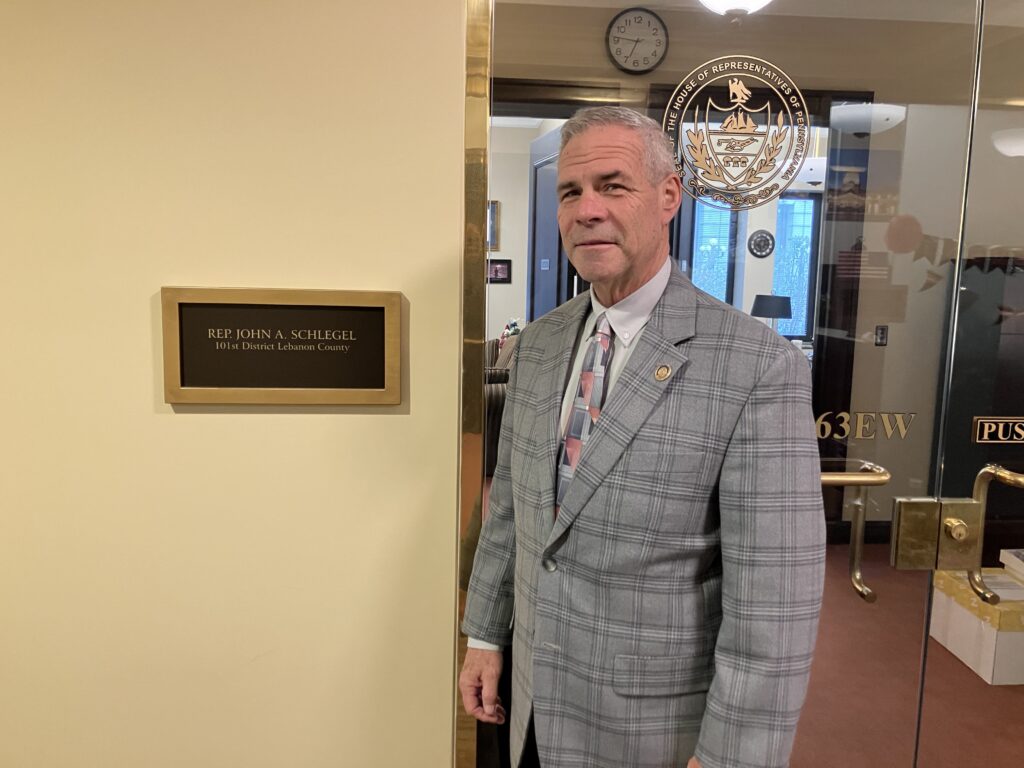
Rep. John Schlegel (R-101) spent his life working in public education as an educator and an administrator.
Now, the “retired” Schlegel is serving his second term on the House Education Committee as a state representative and was recently named chairman of that committee’s Subcommittee on Career and Technical Education.
A press release noted that House Majority Leader Jesse Topper and Education Committee chairman Bryan Cutler “selected Schlegel to chair this important subcommittee for his knowledge, leadership and appreciation for vocational education in the commonwealth.”
Schlegel told LebTown a priority for him is ensuring that every secondary school student who wants a vocational education in Pennsylvania gets one.
“In this day and age, things are changing. What has changed is that most career and technology centers have a waiting list. Throughout Lebanon County, I believe the waiting list for our career and technology center last year was around 200 students who could not get in,” Schlegel said. “That’s a challenge.”
He added that getting access to a vocational education is an issue in many school districts. Schlegel’s subcommittee will closely examine policies and issues concerning vocational education and how to make it more available across the commonwealth.
Another priority is addressing the need to renovate existing career and technology centers in Pennsylvania while also examining participating school districts reclaiming some vocational education courses offered to students.
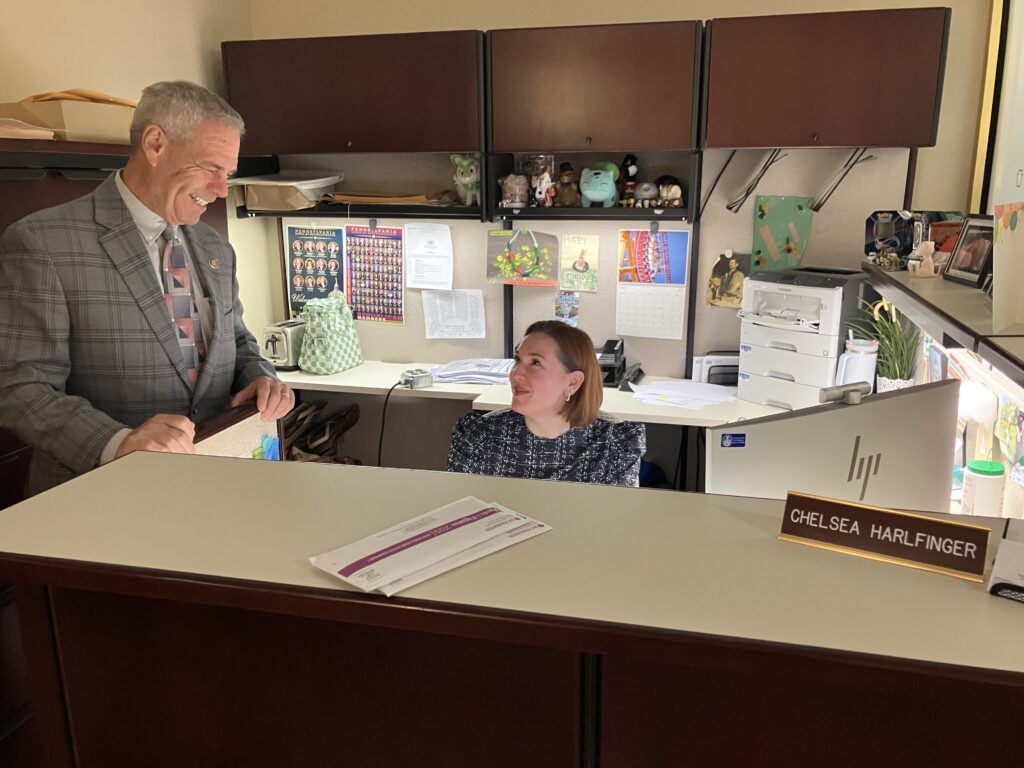
“Another challenge I see on the horizon is as schools look to renovate and career and technology centers look to work with the school districts to upgrade, revise and revitalize programs, there’s a different model that has the potential to come into play,” Schlegel said. “And that’s schools taking back, maybe, first level types of courses that were typically offered at career and technology centers.”
There is, however, a potential benefit if that happens, according to Schlegel.
“Those (courses) would be kept at the high school and provide opportunities for more courses at the high school but also give them (freshman students) a real good taste of career and technology education for them to realize then, is this something that I really want to do,” he added. “Then students would ultimately be attending the program of their choice at the career and technology center.”
Schlegel told LebTown he’s not aware of that conversation happening within Lebanon County’s six public school districts, but said it does happen elsewhere. He cited Dover School District as one that provides vocational education classes at its high school.
“They have a model in place that does just what I described. If someone has one in place and it seems to be working, other school districts may want to take a look at it,” he said.
LebTown asked Schlegel his approach to addressing the vocational educational needs of students in Pennsylvania’s 67 counties given the state’s size and diversity.
“First of all, there are 203 members of the House who represent students who have access somehow and in some way, hopefully, to career and technology education, so you listen to those concerns,” Schlegel said. “You have those kinds of discussions and then you find a way to come to some common ground. … It’s a balancing act, like so many other things in life.”
While the committee hasn’t met yet, subcommittee members are watching the budget process to ensure vocational education schools can get a fair slice of the budget pie. Schlegel said he believes Gov. Josh Shapiro’s 2025-26 budget proposal calls for $904 million for K-12 education.
“That we make sure that we have adequate funding for career and technology education because that’s the wave we are in and will continue to be in,” Schlegel said. “We want to have the funding to encourage students to go into career and technology education fields because, number one, we need that workforce. And number two, we need to have expanded opportunities for the same reason.”
Appropriate funding, which Schlegel feels will need to increase for vocational education, will help ensure that the priority goal of ensuring students have access to vocational education classes is met.
“That needs to be a priority moving forward. What do we do to better support career and technology education, and maybe that’s the emphasis there – career and technology education as opposed to just career and technology centers,” he said. “Career and technology education so that we don’t have that waiting list.”
Still another priority is ensuring that vocational education is offered everywhere in Pennsylvania, which currently isn’t the case.
“I just came from a meeting where we had that discussion and a representative whose school district does not have a vocational education center,” Schlegel said, adding that there are times residents wish these kinds of job-training classes existed. “If your air conditioning breaks on the Fourth of July, good luck trying to find someone. Sometimes, it’s good luck trying to find someone when it breaks on Aug. 1.”
Demand, Schlegel added, is outpacing the supply of job-ready workers in vocational fields.

“The demand for people in those vocational fields is much greater now than I think that it ever has been,” he said. “It’s a critical factor and it should be noted that these are good-paying jobs as well.”
Now retired, Schlegel was a career educator and administrator in Lebanon County, which is home to Lebanon County Career and Technology Center. He views LCCTC as a great asset and resource for the students of Lebanon County.
“Interest in vocational education is growing sharply while college costs continue to skyrocket,” he said. “Many of today’s students are looking for choices, and vocational education is a game changer. Our CTCs provide them with the opportunity to acquire a skilled trade in a variety of fields, which can prepare them for a family-sustaining job.”
Schlegel graduated from Kutztown University, then took a job as a social studies teacher and coach at Northern Lebanon High School. He later served as an administrator at Lebanon and Palmyra high schools, and for 10 years as director of secondary education in Cornwall-Lebanon School District.
He earned a master’s degree in counselor education at Millersville University in 1982 and a doctorate at Temple University in 2000. He contributed to a textbook on ethical leadership that is used at Penn State University.
The 101st House district includes 65,000 residents who live in Lebanon city, Cornwall Borough, and North Cornwall, North Lebanon, South Lebanon, West Cornwall, and West Lebanon townships.
Questions about this story? Suggestions for a future LebTown article? Reach our newsroom using this contact form and we’ll do our best to get back to you.
Build the future of local news.
Cancel anytime.
Monthly Subscription
🌟 Annual Subscription
- Still no paywall!
- Fewer ads
- Exclusive events and emails
- All monthly benefits
- Most popular option
- Make a bigger impact
Already a member? Log in here to hide these messages
You know us because we live here too. LebTown’s credibility comes from showing up, listening, and reporting on Lebanon County with care and accuracy. Support your neighbors in the newsroom with a monthly or annual membership, or make a one-time contribution. Cancel anytime.