
This article was shared with LebTown by the Lebanon County Historical Society.
Prologue
Less often told in any community are the stories of people who live—even thrive—with physical handicaps. This is perhaps especially so when those disabilities involve the primary senses.
According to the National Library of Medicine, congenital deafness is the most common birth defect in America. From 0.2% to 0.3% of people (2 to 3 in 1,000) are born with an inherited degree of deafness. 90% of those people born with hearing deficiency, having no other related syndrome, have inherited that condition from hearing parents who each carried a recessive gene for that effect. The physical cause of this deafness is often not the lack of an eardrum, nor the tiny bones of the inner ear, nor the cochlea, nor other principal anatomical parts of hearing, but generally a deficiency in the number of hair cells inside the cochlea that are sound receptors.
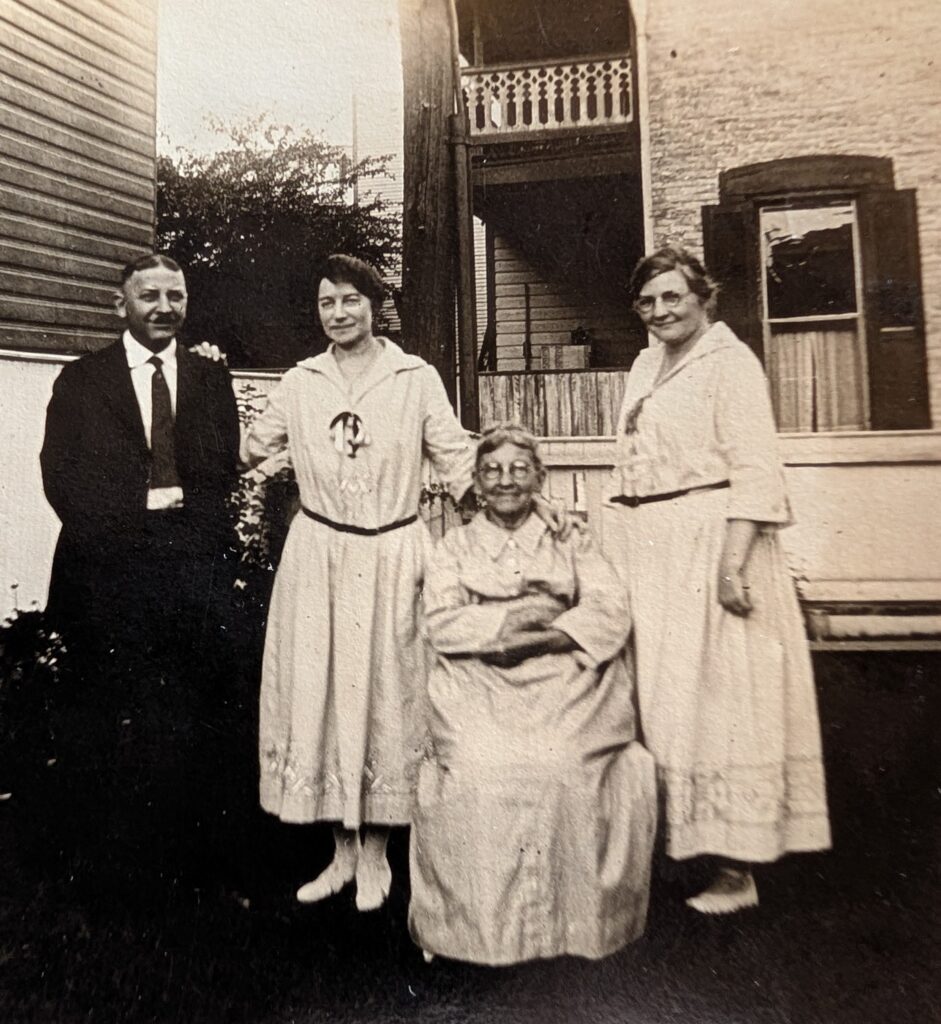
Walter Vincent Tobias (1874-1945) of the City of Lebanon was deaf from at least the time of childhood and probably at birth. Although not formally diagnosed, his deafness was likely the result of having received recessive genes for that trait from both of his parents. They perceived he had been deaf since infancy, and the cause of his condition can be inferred by the deafness of his aunt and two of his living descendants.
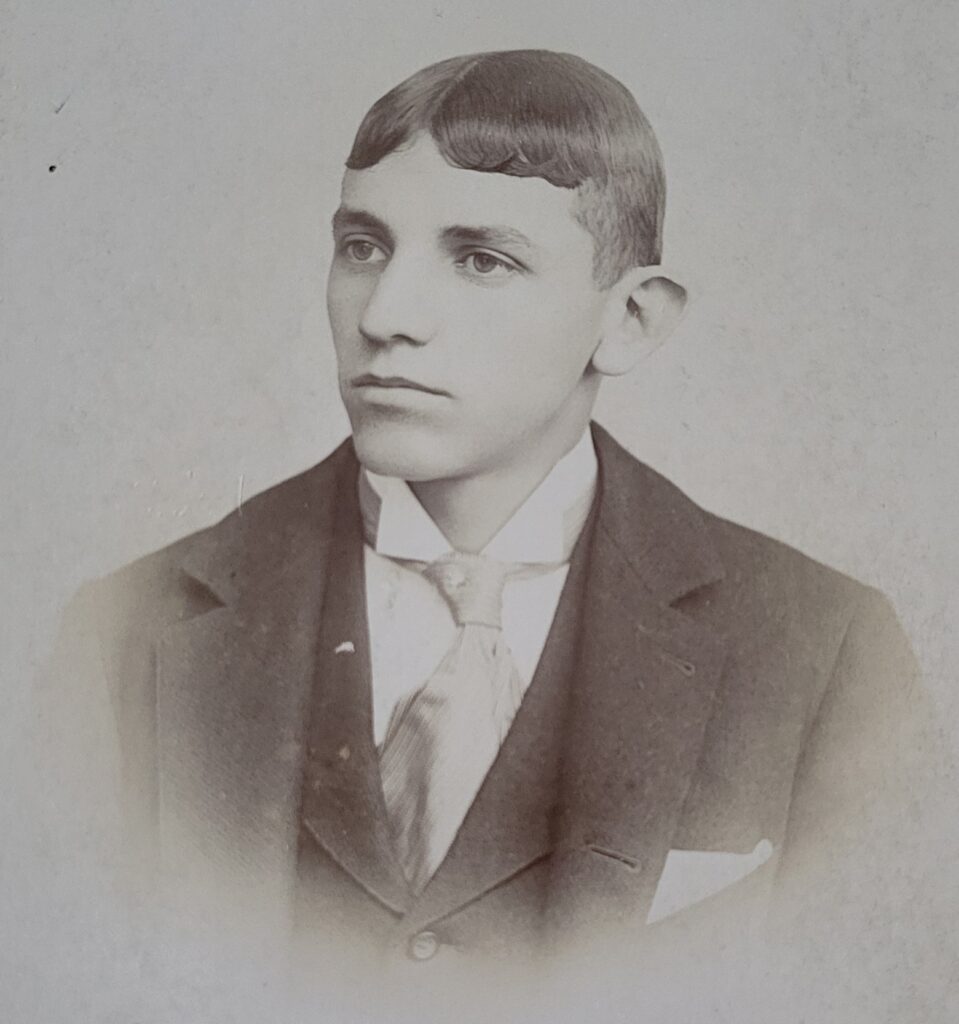
Walter was born 1874 in Swatara Township, Lebanon County, and before the year was out, his father, George Washington Tobias (1845-1913), had moved his young family to 331 N. 8th Street, Lebanon, where he supported them by working in one of the city’s iron rolling mills.
Walter, through his mother, Matilda Eisenhauer (1842-1929), could claim the same great-great-great-great-grandfather as did Dwight D. Eisenhower—Hans Nicholas Eisenhauer (1691-c. 1760), who had settled at Fredericksburg in this county. Although Walter’s Aunt Louise Eisenhauer was also deaf, it is not known today whether any other Eisenhauer relative was hearing impaired.
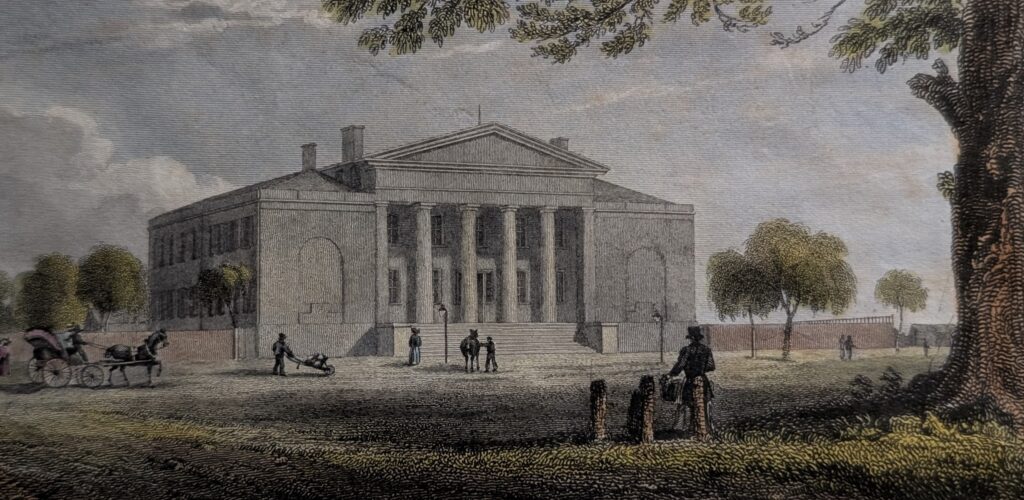
Walter was fortunate that, in 1884, his parents successfully enrolled him at the Pennsylvania Institution for the Deaf and Dumb in Philadelphia under state assistance. Though the program of state funding stipulated applicants had to be between the ages of 10 and 20, the record of his application interview documents that he showed promise, was well qualified, and admitted while still nine. According to the admission interviewer, Walter had “…good natural intellect and [was] very quick in picking up signs, and of good memory and judgement.” Walter attended the Institute through 1895, consistent with its ages 10-to-20 enrollment.
Although his admission interview documented his readiness, it also reflected the profoundness of his silent boyhood: “He can hear the blowing of large steam whistle if nearby at the time of blowing [but,] he can not distinguish the sound of voice [and,] can not utter any intelligible words or possess any power of speech.” To the question of how Walter lost his hearing, the interviewer wrote, “Never had no accident or disease and judge was born deaf.” As to other aspects of Walter’s life, the interviewer noted Walter could write his name, perform errands, and had one other deaf relative.
Sporadic references to Walter appeared in the Lebanon Daily News. In 1886 five students from Lebanon County attended the Pennsylvania Institution, including Walter. The newspaper generally reported when the local students came home for summer vacation and returned to school in fall. Walter is not recorded learning any specific trade at the institute but would have spent 2-3 hours per day learning some manual craft in the “industrial department.”
In the 1890s the Daily News recorded a number of sports activities involving Walter and his friends. Not once, however, did those articles mention his deafness. In June 1891, at age 16, he was scheduled to play left-fielder for Lebanon’s “Academy” club. This organization was probably composed of boys enrolled in private academies or post-secondary schools. In August 1893 it might have been with some of these same friends—including Charles Bright, Charles Dissinger, and George Keller—that he spent a week camping and fishing along Swatara Creek.
In August 1896 Walter pitched for the Lebanon Cycle Club in a baseball game against the Stouchsburg Cycle Club at an “outing and dance,” held in Penryn Park, that nearly 175 attended. Though he “put up a splendid game,” Lebanon lost.
Read More: How a railroad rivalry spurred the creation of Penryn Park, Cornwall’s answer to Mount Gretna
One month later he was among a pioneering group of young men who founded the city’s first football club—the “Lebanon Football Association,” soon thereafter called or regarded as part of the “Lebanon Athletic Association” (LAA). Most the 19 men “had experience as ball players at college.”
Two weeks later, just after his twenty-second birthday, he was named starting center for the first game against Myerstown’s Albright Collegiate Institute “composed largely of older and heavier men than those of the Lebanon team.” Reported afterward, “among the notable features” of the contest was “…the work of the centre man, Tobias, who had a great disadvantage in weight.” The game ended a scoreless tie.
Although Walter played right tackle next game against a strong “freshman eleven” from Franklin & Marshall College that LAA lost, he did not start in the final season victories against the high school teams of Harrisburg and Lancaster.
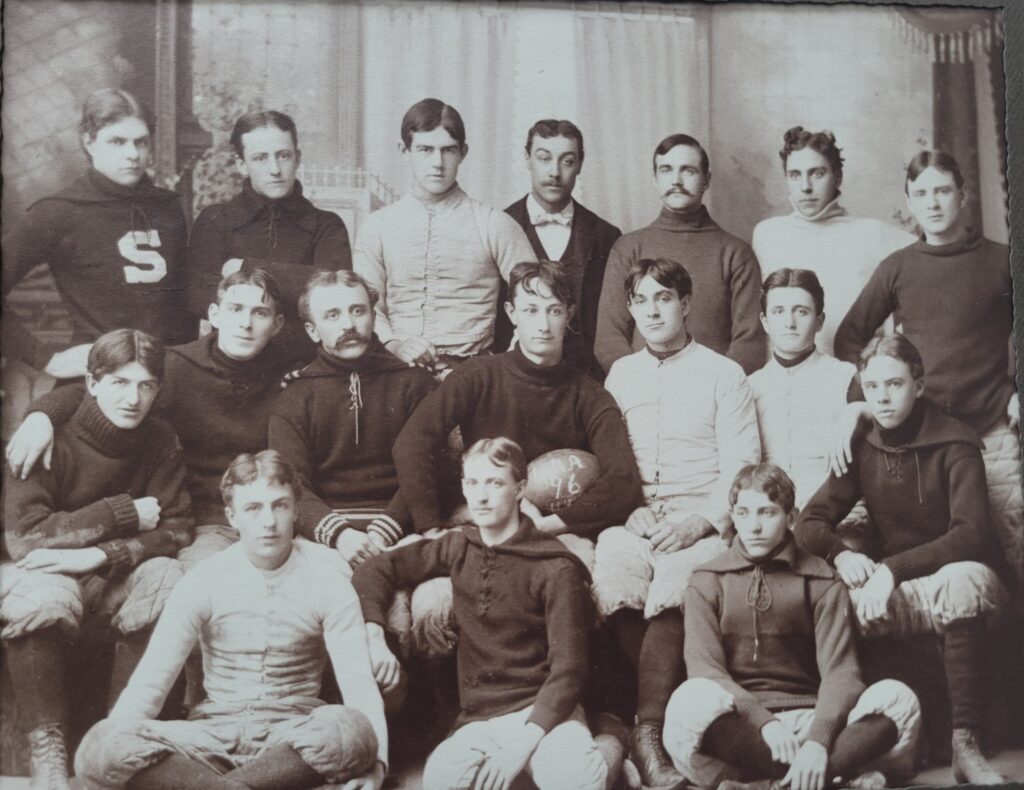
Following the game with Harrisburg, all the LAA players were asked to assemble in uniform on November 17, 1896, at the Lebanon photography studio of Rise & Gates for a team photo. Walter appears seated in the lower right of that photo, and looking into his face, one can sense a degree of his isolation in a silent world.
However, he would be heard of more, and in April 1897 he was among seven young men who assembled near Bismarck (now Quentin) for a two-mile run as part of the L. A. A. track team.
Read More: How Bismarck, PA in Lebanon County was renamed for Teddy Roosevelt’s son, Quentin
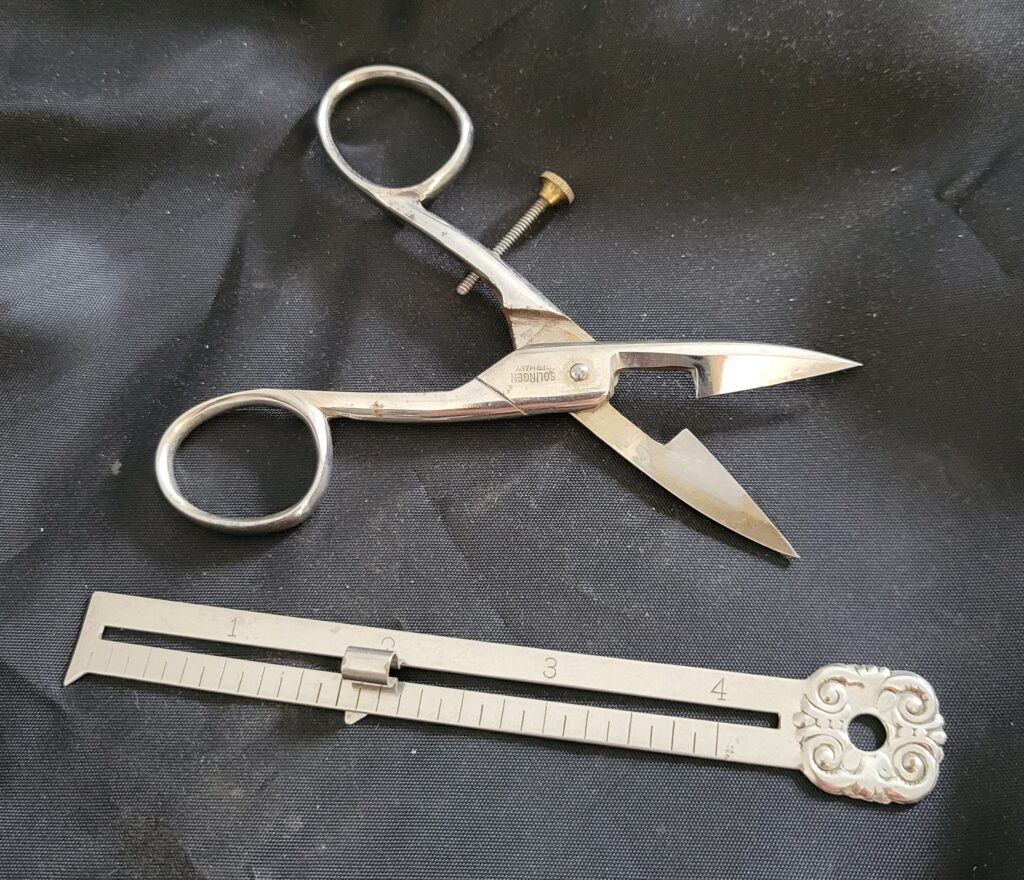
The 1900 Census identified Walter’s profession at 25 as tailor, though he probably had begun working that trade earlier. When, on July 4, 1901, he suffered an accident in which his eyes were hurt by an “exploding cannon-cracker,” Lebanon’s Evening Report, also identified him as a tailor. It is likely, but not recorded, that he had learned tailoring at the Deaf Institution.
In the first decades of the 20th century Walter established himself in that trade, though he never owned his own business. He worked in William H. Kauffman’s shop on North Eighth Street for 28 years—until its closure in 1929—then found immediate work with a grateful William H. Miller, who mentioned Walter prominently in advertising.
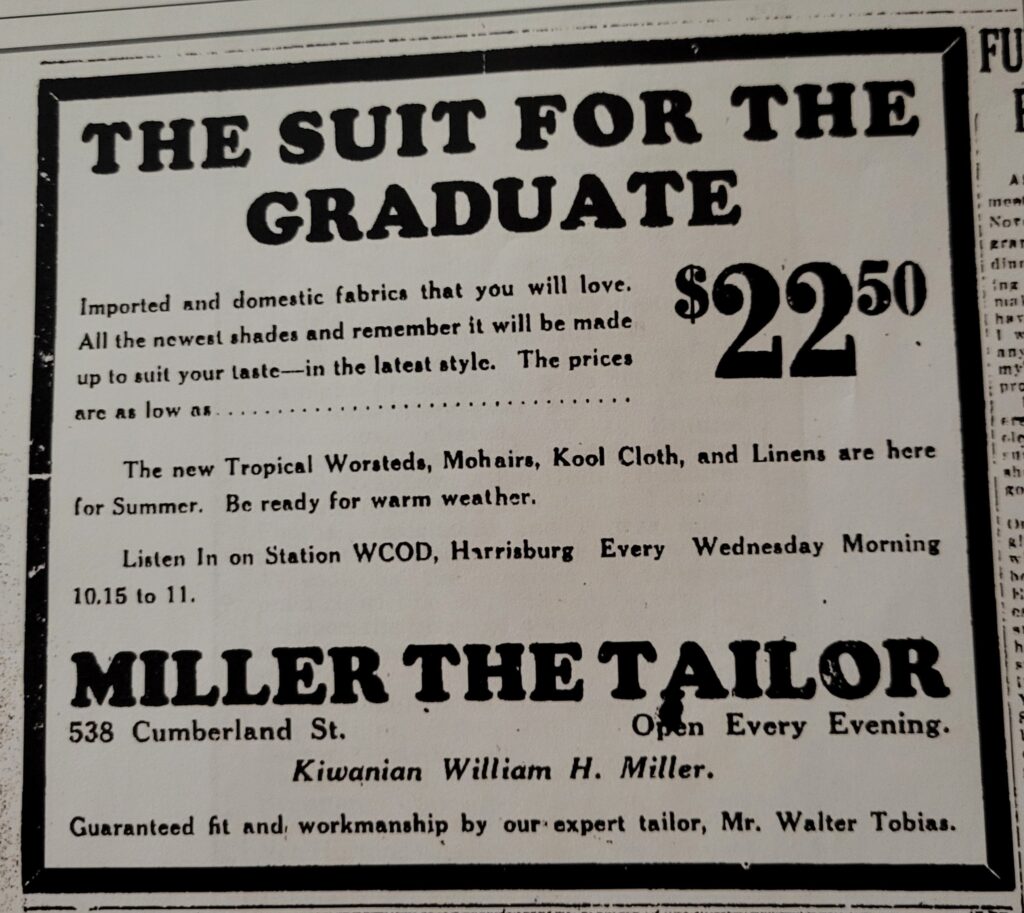
Walter’s daughter, Alta, recalls that in the late 1930s and early 1940s her father and Lebanon’s RCA-Victor-recording band leader Whitey Kauffman had always greeted each other on the city’s streets. It’s quite likely Walter adjusted or even created suits for Lebanon’s dapper musician of the 1920s and 1930s.
During the First World War, Walter was a bachelor of 44 when he registered for the draft. He was 51 in 1926 when, twice, the Colonial Theater advertised free tickets held in reserve for him, and, in each instance, also with a different woman. Was someone, perhaps an old sports buddy, playing matchmaker?
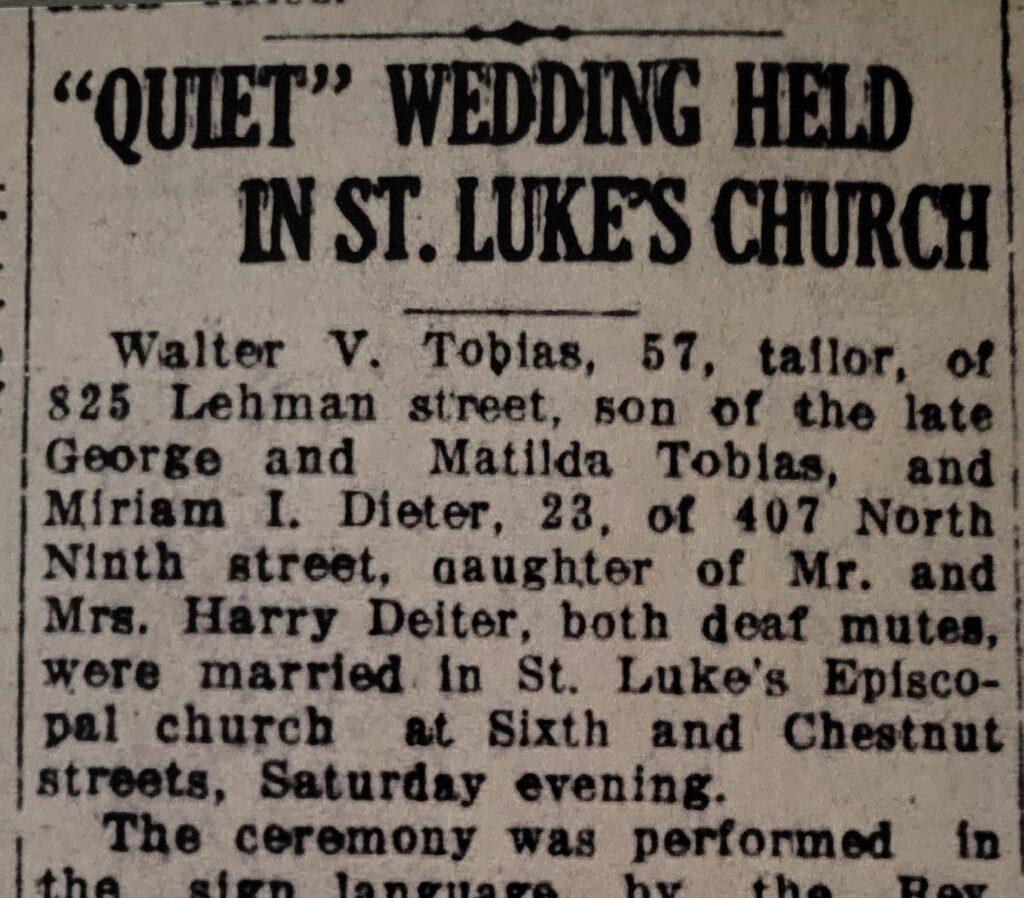
But by 1930, Walter’s name appeared from time to time as the “friend” or escort of a young lady on social calls. She was Miriam Ida Deiter of 407 North Ninth Street. They married before Christmas in 1931 at St. Luke’s Episcopal Church, Lebanon—Walter’s parish—where Rev. Smaltz officiated in sign language. Miriam (1908-2000) was 23 to Walter’s 57, and she was also deaf.
Miriam, the first child of Harry and Beulah Deiter, was not born deaf but contracted rubella, or German measles, while an infant. Placed bundled near a stove because the doctor stressed keeping her warm, she undoubtedly suffered more than necessary, and her hearing did not survive the illness. Miriam, too, had attended the Pennsylvania Institution for the Deaf and Dumb, but “homesickness,” forced her withdrawal before graduation.
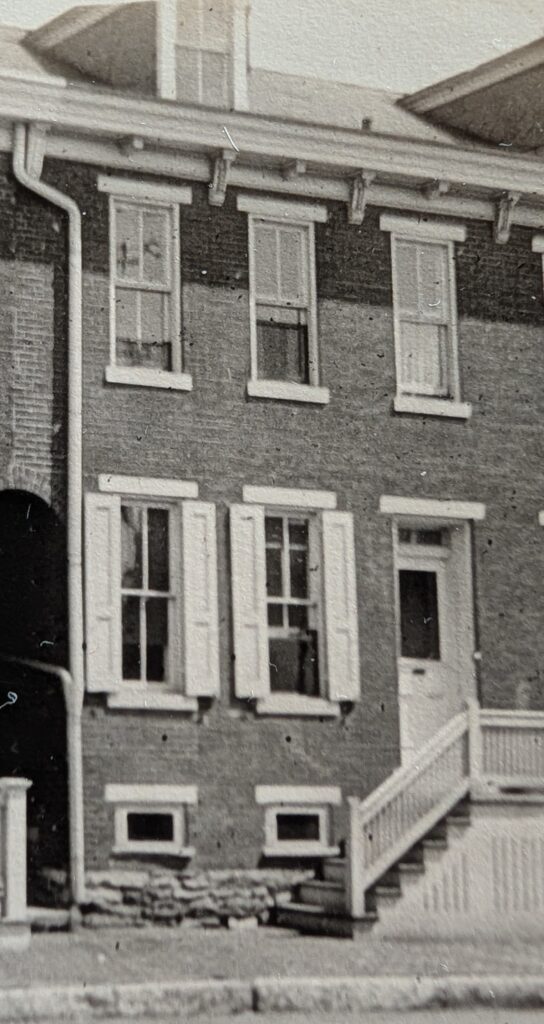
Walter and Miriam’s marriage, while producing offspring, did not survive the meddling of her protective mother. Beulah Deiter (1889-1978) maintained that her daughter could not manage or master cooking and would likely starve—this, despite the presence of Walter’s unmarried caretaking sister Ella (1870-1958) in the Tobias household. At an unknown date, Beulah went to the Tobias home, then at 815 Lehman Street, and snatched her daughter back.
Thus, the marriage unfolded like a pattern of visitation and social outings, and the Deiter grandparents reared Walter and Miriam’s two children, Alta (b. 1934) and Crosby (b. 1943)—both hearing children—in the Deiter household. There Paw-paw Harry Deiter’s living as a Reading Railroad car inspector comfortably supported the extended family and included generous and well-utilized free train fare for his broad family.
As disappointing and atypical as this familial arrangement became, Walter had achieved some social legacy in another sphere—early organization of Lebanon’s small deaf community. In 1896 Rev. Koehler of All Souls’ Church, Philadelphia, conducted a service for Lebanon’s deaf at St. Luke’s, establishing the “Ephphata Guild of Deaf Mutes,” dedicated to conduct charity work for the care of needy deaf persons. He named William Lohse as Lebanon warden, 22-year-old Walter as secretary, and Charles Buchter as treasurer.
In July 1901 a dozen individuals met in Lebanon to form a branch of the Pennsylvania Society for Advancement of the Deaf (PSAD). They elected Walter to be treasurer of that organization. Goals of this chapter mirrored those of Ephphata. The following summer Lebanon PSAD held a benefit “ice cream and cake festival” for which Walter and his aunt Louise were among leading ticket sellers.
In 1905 the Lebanon PSAD hosted the state-wide organization’s 19th annual convention, held at the county courthouse, and 30-year-old Walter played a prominent role. He served on the event planning committee, met a Pittsburgh delegate at the train station, and helped direct local sight-seeing tours during the half-week convention. Evening tickets were sold for an Edison moving picture exhibition, held at the Sons of America Hall, and the final day’s afternoon train ride to Mt. Gretna benefited the Home for Aged and Infirm Deaf in Doylestown.
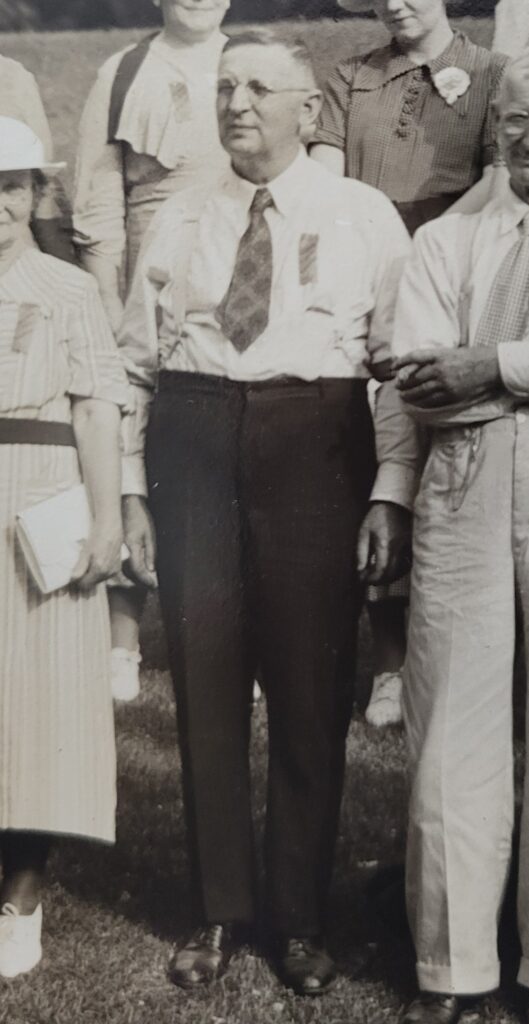
As a measure of Walter’s long-term commitment to this cause, 19 years later, in 1924, he was the first listed among a four-man Lebanon group that had collected $100 toward the Home’s enlargement campaign.
Personal family memories of Walter are few. Daughter Alta recalls going on outings with both parents in the 1940s, usually to visit deaf friends, and, on her own with childhood friends after Saturday movie matinees, stopping by the Miller tailor shop, where her father broke from his work to greet her and supply coins for candy.
Walter died in 1945, “widely known in the city as a tailor.” A victim of congestive heart failure, he was interred in Mount Lebanon Cemetery with other immediate members of the Tobias family.
Alta has clearer and more numerous recollections of her Aunt Ella Tobias—on whose piano she took lessons, practiced, and played, in the Tobias home on Lehman Street. After Walter died, Ella transferred her attention to her niece by paying for lessons and listening to Alta’s practice. But among her Sunday strictures, Aunt Ella tolerated no Sabbath toils, including the labor of sewing.
Epilogue
This article was first published in winter 2024 in the Lebanon County Historical Society’s membership newsletter, Seeds of History. It appears here by courtesy of that organization.
Archival resources maintained at the Lebanon County Historical Society were crucial to writing this short biography on Walter Vincent Tobias. The original records from the Pennsylvania Institute for the Deaf and Dumb, including Walter Tobias’s 1884 admission interview, reside at Gallaudet University, Washington, DC.
The author of this article is Walter’s oldest grandchild.

Normal Hours of Operation
Tuesday-Saturday, 10 a.m. to 5 p.m.
Tours of the Stoy Museum are by appointment during the week, or Saturday at 11 a.m.
Need help with a research project? Get started here.
Questions about this story? Suggestions for a future LebTown article? Reach our newsroom using this contact form and we’ll do our best to get back to you.
Support Lebanon County journalism.
Cancel anytime.
Monthly Subscription
🌟 Annual Subscription
- Still no paywall!
- Fewer ads
- Exclusive events and emails
- All monthly benefits
- Most popular option
- Make a bigger impact
Already a member? Log in here to hide these messages
Free local news isn’t cheap. If you value the coverage LebTown provides, help us make it sustainable. You can unlock more reporting for the community by joining as a monthly or annual member, or supporting our work with a one-time contribution. Cancel anytime.