Overview:
What taxpayer would want local governments forced to choose the more expensive, less valuable option for advertising public notices due to a historical quirk that one title used to be in print and another didn't?
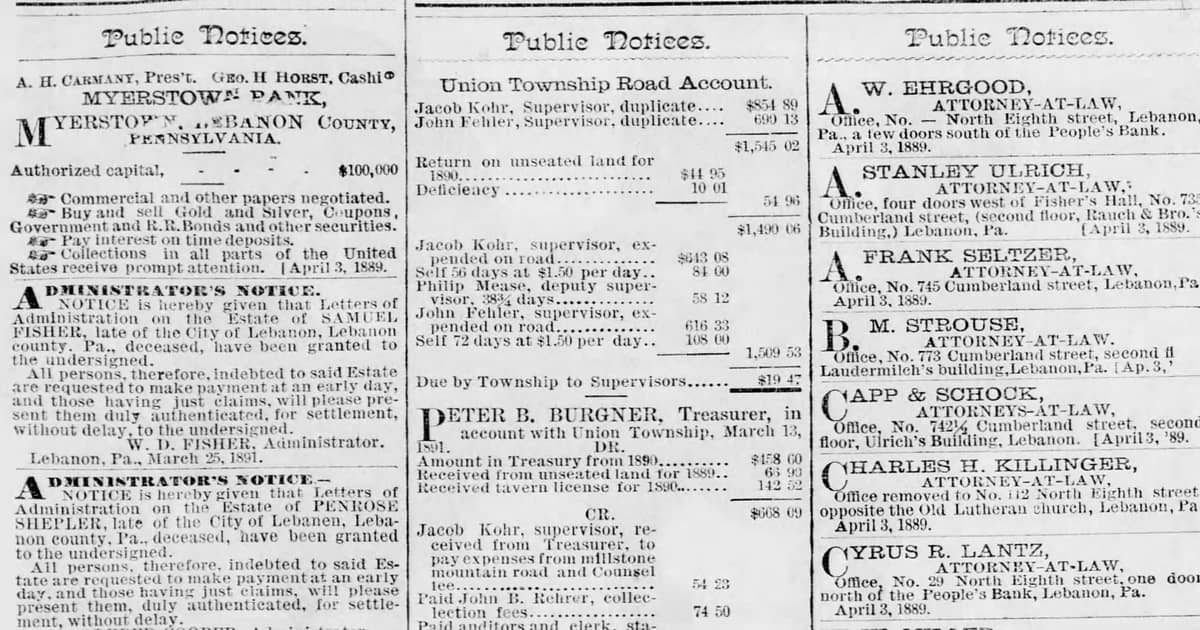
There once was a time when print newspapers held a monopoly over local information needs. In an age before the internet – before Craig had a list, before Larry and Sergey googled, before Mark sent a friend request – it made sense that agencies and other parties were required to post public notice of meetings and significant actions in the local paper.
It’s been nearly 50 years since the commonwealth’s Newspaper Advertising Act was put into law, but the history of public notices goes back much further in our republic. They’ve long been a staple of American democracy, and a robust revenue stream for local papers. This worked for many decades while competition in the print newspaper market remained strong, but today with a greatly diminished printed press, public notices are best known by municipal leaders, lawyers, and residents for price gouging and pitiful customer service.
Now, a new bill backed by the Pennsylvania NewsMedia Association – an organization that LebTown is part of – presents itself as bringing this notice requirement into the digital age.
The PNA-backed bill – HB 1291, introduced by Rep. Robert Freeman – is co-sponsored by 21 other state representatives. Freeman and his colleagues deserve to be commended for their willingness to support legislation that modernizes the Newspaper Advertising Act. But not everything is what it seems. In its current form, HB 1291 would hurt PA taxpayers.
Pure play digital outlets like LebTown have sprung up across the state. In Lebanon County, LebTown invests more in journalism and reaches more citizens than our print rival, Gannett-owned Lebanon Daily News. But the PNA bill is expressly designed to prevent LebTown from ever being eligible to publish public notices, so long as the Lebanon Daily News exists even as the most hollow shell of its former self – even if the LDN ceases print entirely and further guts the newsroom operation where I got my start as a cub reporter 20 years ago.
Competition is an American virtue, and HB 1291 is an affront to this democratic value. PNA spins their bill as increasing government transparency – you can see their argument in an op-ed by PNA president Bill Cotter being shared by the publications that would benefit most from this legislation. But at best the bill would have a negligible impact on transparency. Really, the bill exists to allow print newspapers to cease their printed editions, while maintaining lucrative monopolies over public notices in their local markets.
The goal is to prevent upstart outlets like LebTown from ever entering the market for public notices, despite our reach being wider, our journalism deeper, and our cost structure lower.
It’s not just a Lebanon County issue. I’ve spoken to publishers statewide who are appalled at this brazen attempt by legacy print titles to chisel their monopoly over public notices into law for the digital age. We rarely write editorials, but when presented with an issue that so directly affects our democracy, not to mention our ability to fund journalism, we had to act.
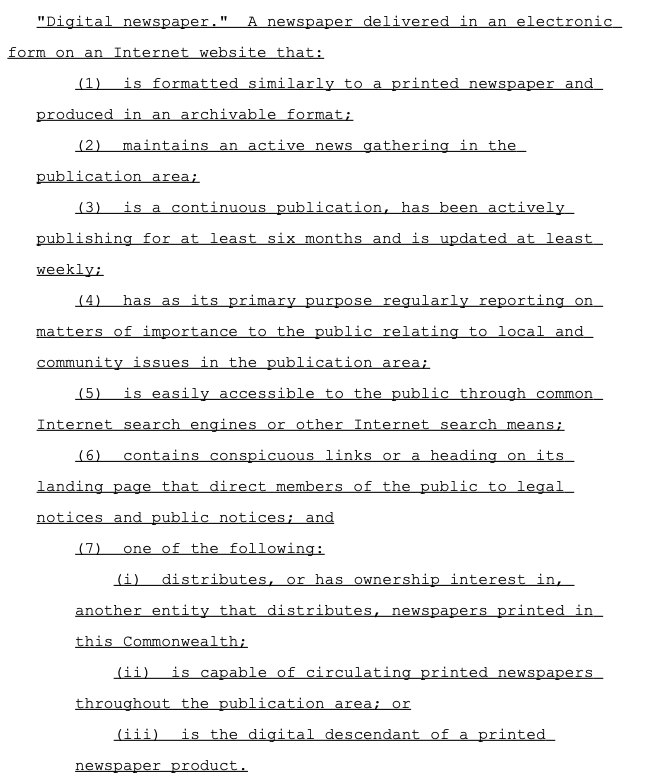
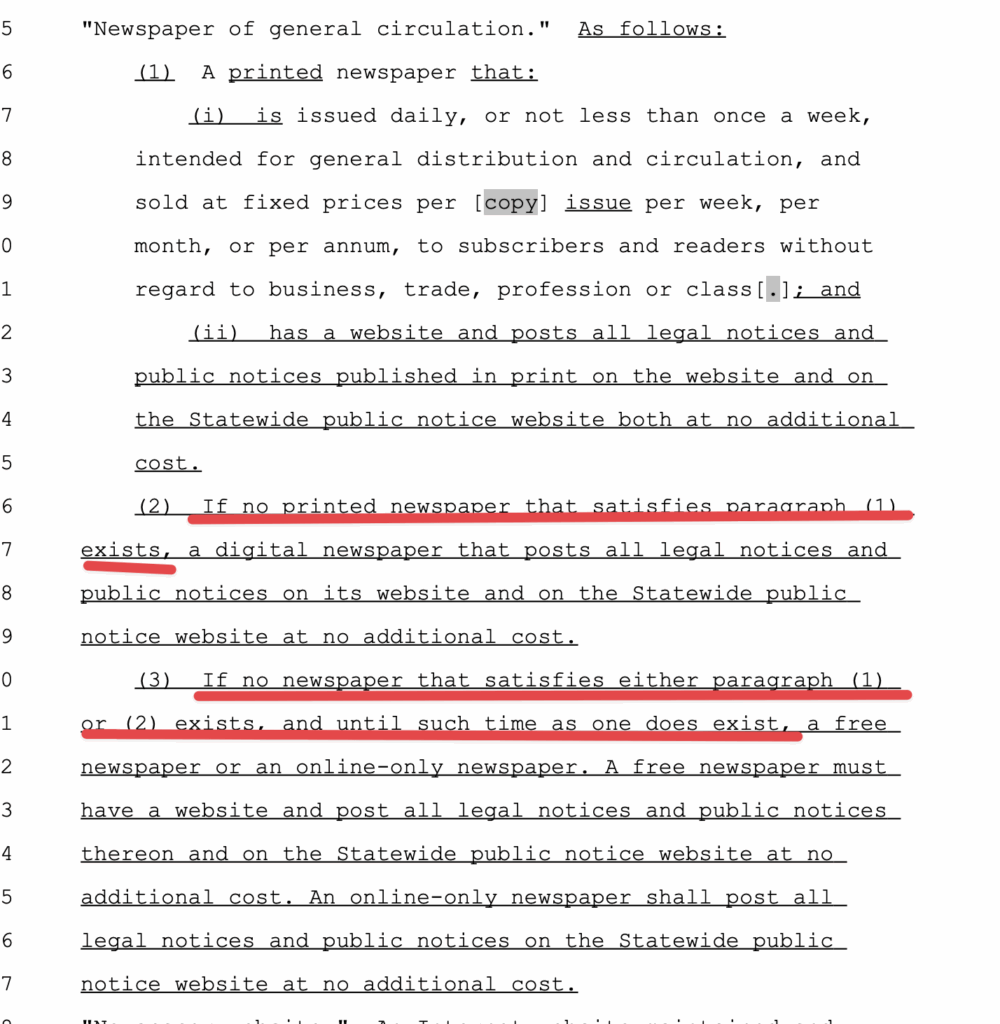
The PNA-backed bill would create a new class of newspapers, one purely protectionist in nature. This new category – the “digital newspaper” – ALMOST describes LebTown and other outlets across the commonwealth that pioneered local journalism in the digital form. Under HB 1291, if a printed newspaper was not available in a local market, public notices could instead be placed in a “digital newspaper.”
But this category of “digital newspaper” has a devious carveout. It only applies to publications that currently or formerly had a printed edition. This grandfather clause would serve only to entrench the monopoly held today by these outlets, and prevent price competition by free newspapers and online-only newspapers for this vital public service.
What taxpayer would want local governments forced to choose the more expensive, less valuable option due to a historical quirk that one title used to be in print and another didn’t?
PNA isn’t being forthright in their explanation of this bill. Taxpayers deserve better. Cotter in his column says “it is your right to know the plan for how your hard-earned taxpayer dollars might be spent.” It is also your right to make sure those taxpayer dollars are spent efficiently. HB 1291 continues to try to protect the newspaper monopoly when there is no longer a reason for it other than for the newspaper lobbyists.
This measure will inflate the price of public notices by preventing competition and propping up archaic companies – many of which are owned by big out-of-state corporations and hedge funds that suck money from local economies as they cut staff and lay off reporters.
Any revision to the Newspaper Advertising Act must embrace the free market principles at America’s core and allow online-only and free newspapers to compete. Our commonwealth would be better for it.
The good news is that with very small changes, HB 1291 could be turned into a fantastic piece of legislation that achieves its stated goals of modernizing public notices. If the bill was amended to allow free newspapers and online-only newspapers to compete regardless of whether there was a printed newspaper or a “digital newspaper” descendent, it would unlock a new era of competition for public notices, increase access, and drive down prices.
The State House Local Government Committee is expected to consider the bill this month.
Legislators, please do not make a costly 50-year mistake by gifting these legacy titles an indefinite monopoly over public notices in their local markets simply because they once used ink while outlets like LebTown have always used pixels. We urge the Local Government Committee to consider the above proposed amendment and if necessary hold hearings so that they can explore the issues at stake and guide policy in a direction that would best serve not only Pennsylvania taxpayers, but our democracy.
You can read the full bill here (PDF).
Questions about this column? Leave a comment or use this contact form.