This article was funded by LebTown donors as part of our Civic Impact Reporting Project.
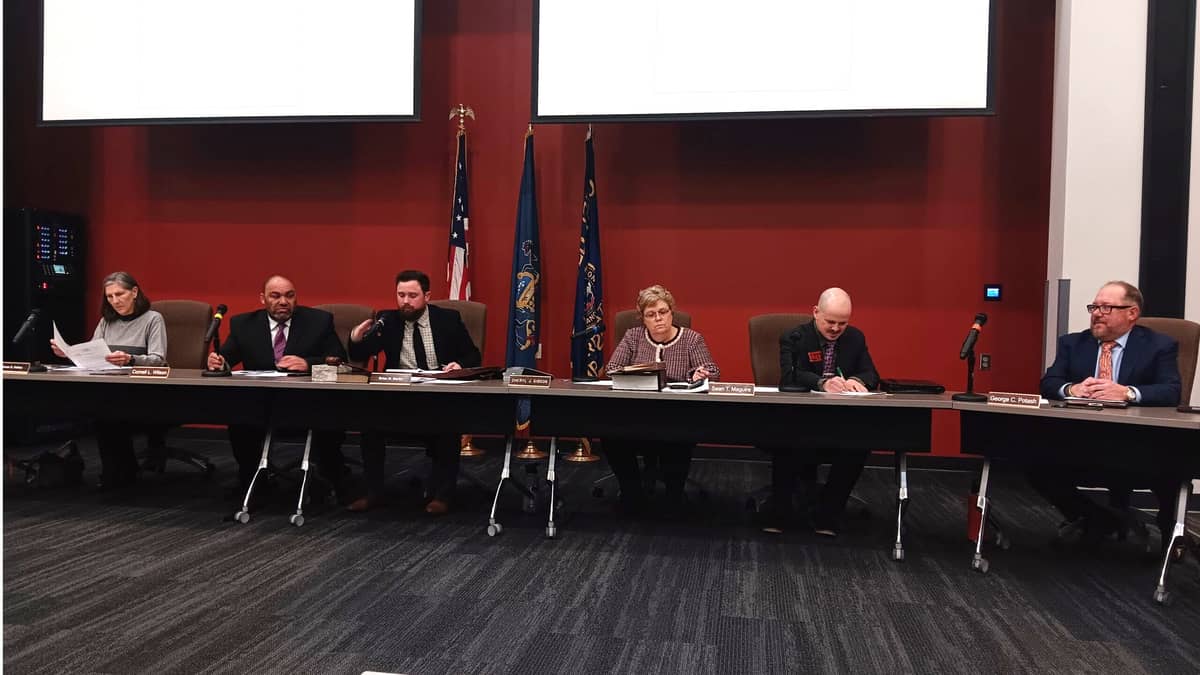
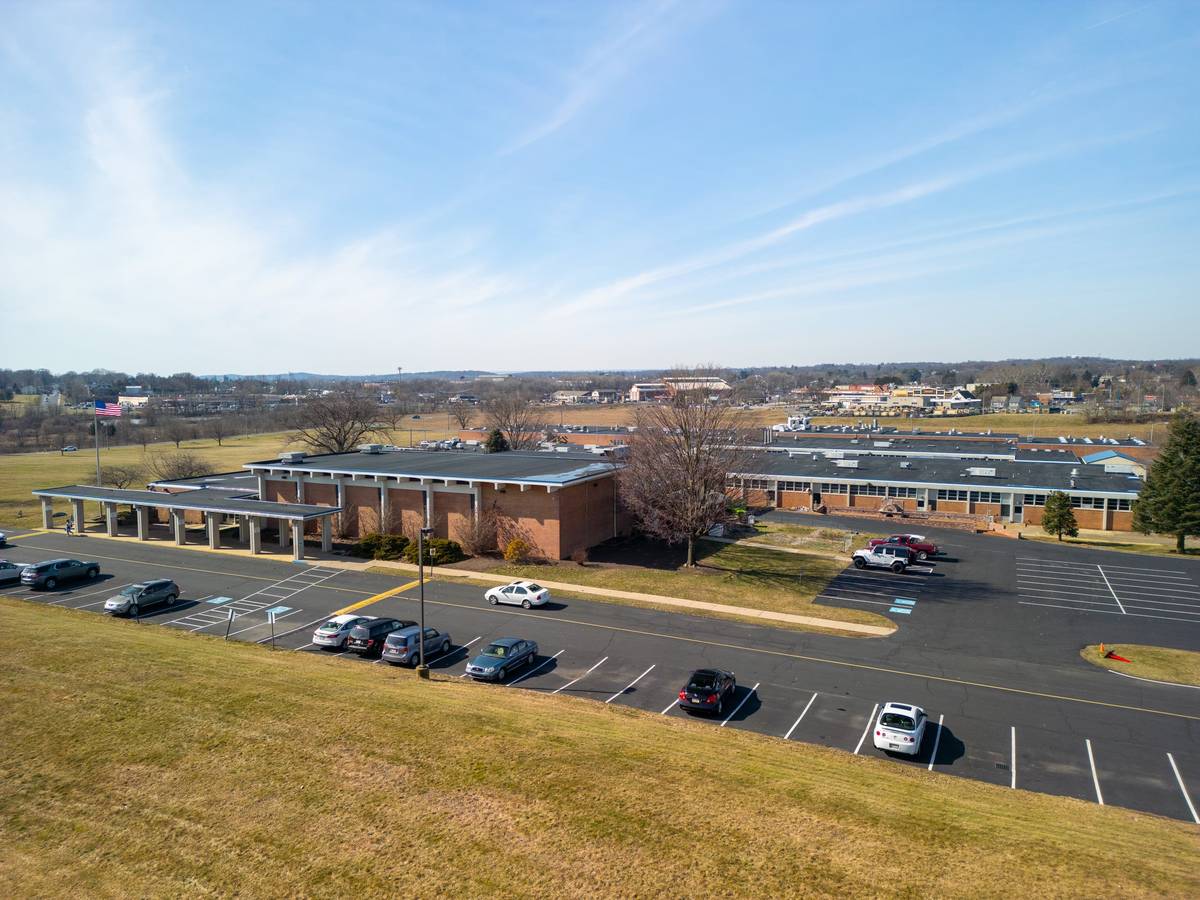
Cornwall Borough Council heard resident concerns regarding runoff from a local development and traffic at its monthly meeting Monday, May 12.
Multiple residents in attendance complained of stormwater runoff from the Rexmont Road subdivision, which recently clear-cut trees throughout the site.
Rexmont Road subdivision plan
The site of Cornwall Properties’ planned subdivision, approved by council July 2024, sits by the intersection of Rexmont Road and Iron Valley Drive. It lies 80 percent in residential low-density and 20 percent in conservation recreation.

The plan consists of 131 single-family detached homes, to be constructed over three phases.


The plan can be viewed in full below.
While access road Iron Valley Drive is privately owned both by Cornwall Properties (north) and the Iron Valley Homeowner’s Association (south), homeowners in the subdivision have the right to use the southern portion of Iron Valley Drive for access, Cornwall Properties representative Mike Swank said.
However, to the disappointment of some council and commission members, the roadway will not be open to the general public. The HOA will place a gate along its portion of the road, which subdivision homeowners will have key-fobs to access.
Cornwall Properties representative Mike Swank explained at Cornwall’s Planning and Zoning Commission meeting last week that trees were cut throughout the site, rather than just the future location of phase one, because the plan requires the movement of soil throughout the property.
Read More: Cornwall Planning Commission fields Rexmont Subdivision questions
However, following heavy rains over the weekend, neighbors claim muddy water in streams, as well as some runoff into nearby yards.
Stormwater runoff of loose soil — such as the soil on a construction site — can cause flooding or property damage to nearby properties or enter waterways, exacerbating erosion and harming the ecosystem. This is why developments are often required to include trees, as canopies reduce erosion from falling rain, roots hold soil in place, and plants use water for growth.
It is a development’s responsibility to take measures to prevent stormwater runoff (such as creating stormwater basins or swails) from spilling onto other properties.
Councilman Tom Burton called the alleged runoff “unacceptable,” noting that the borough had spent $41,000 on creek restoration due largely to sediment eroding creek-beds.
Councilwoman Julie Bowman testified to having seen videos and pictures of muddy water from residents.
Engineer and alternate zoning officer Josh Weaber said that, as work on the site has just begun, Cornwall Properties has not yet constructed basins (though stormwater management plans for the property have been approved and include basins). However, he said he would contact Swank to discuss temporary means of limiting runoff before basins are completed.
In the meantime, Weaber advised residents noticing runoff to take pictures or videos, which can be forwarded to the Lebanon County Conservation District, which may then conduct an inspection.
Council also discussed traffic concerns, as well as potential actions moving forward.
A 92-townhome and one single-family home development, uses allowed by right, planned on the southern side of Boyd Street, by Miners Village, is currently under review by the P&Z.
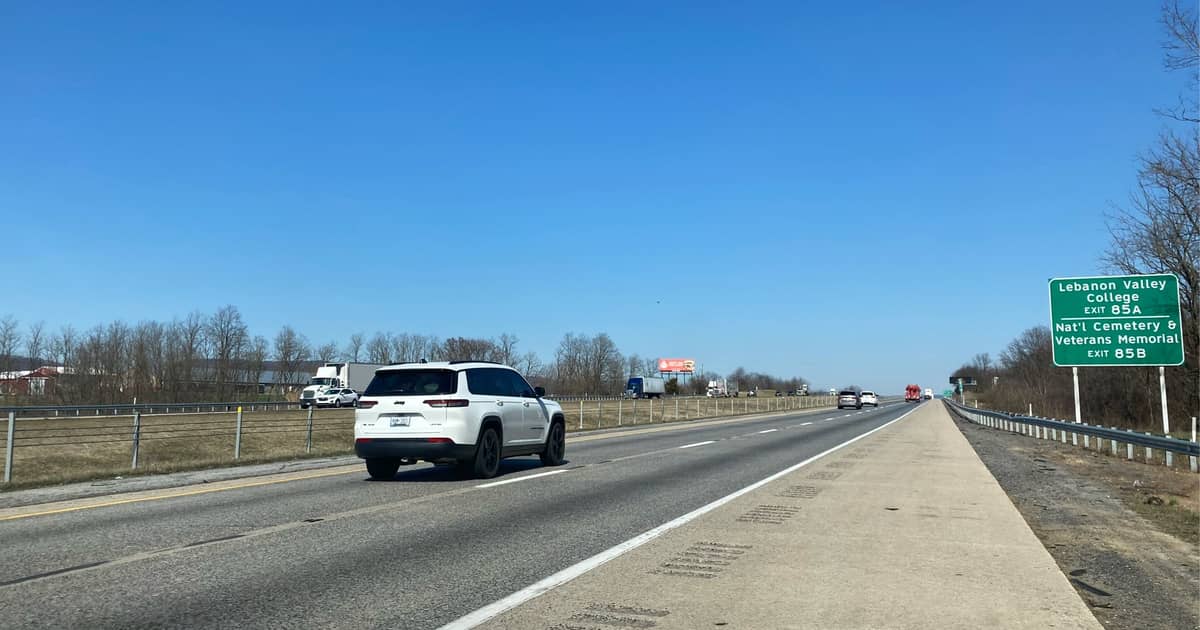
At the most recent P&Z meeting, board members noted that a borough ordinance requires that, for a development of that size, intersections within half a mile should be included in a traffic study. However, the board requested that Weaber see if Cornwall Properties would be receptive to studying the following intersections outside of that radius: U.S. Route 322 and Boyd Street, Iron Valley Drive and Boyd Street, and Rexmont Road and Boyd Street, and the Knoll development.
Monday, Bowman pointed out that the text of the ordinance requires a half-mile radius “at a minimum” be studied, suggesting the borough has legal grounds to require more than the intersections within half a mile.
Solicitor Josele Cleary said that the legality of adding extra intersections as requirements to study depends on how reasonable the developer finds the request. If Cornwall Properties refuses and the borough rejects the plan on that account, she said, the borough would need to prove in court the additional intersections needed to be studied.
Chairman Bruce Harris noted that in language of ordinances, the law tends to support developers over municipalities where there is a dispute over what language may mean.
Zoning officer makes public statement
During Monday’s meeting, zoning officer Jeff Steckbeck made a public comment answering frequently asked questions and concerns about zoning and development.
He explained that, when a use is permitted for a plot of land, governing bodies of a municipality are required by law to approve even unpopular developments, unless they can point to objective problems with the plan according to ordinances as is.
Read More: What officials can and can’t do when it comes to approving land development
Borough engineers peruse plans to find places that do not line up with ordinances, and plans often go through months passing between the borough engineer and a developer’s engineer to resolve these notes. Developers can also ask for some requirements to be waived, and can argue for these waivers based on what is allowed on other properties or the details of the specific plan.
Planning boards recommend whether a governing board should approve a plan and any attached waivers. They also work to negotiate plan details in the best interest of residents.
However, once a plan reaches a point of lining up with ordinances, Steckbeck said, it cannot be rejected. If a solicitor tells a governing body it legally must approve a plan and it does not, Steckbeck says, members can be legally held responsible by developers, in addition to possible legal action against the municipality.
To avoid matters ending up in court, most municipalities try to work with developers to improve plans.
On the topic of rezoning land, Steckbeck explained the “fair share” doctrine, which requires that municipalities contain developable land of all zoning types. A municipality that runs out of Residential 2 land, for instance, could be sued by a developer looking to create that type of development.
Steckbeck said a benefit of the Regional Comprehensive Plan, which was developed over the last two years but has not yet been adopted, is that it spreads out the area included in one plan. So if one municipality in the plan lacks one type of developable land, another municipality within the comprehensive plan could provide it.
He advised residents concerned about future development to attend planning commission meetings and pay attention to the Regional Comprehensive Plan when it comes before Cornwall. During its development, he said, the plan received very little feedback from residents.
In other news, council:
- Heard that PennDOT rejected a request for a traffic sign to be located in Alden Place.
- Approved an ordinance rezoning a portion of Gold Road to match that of adjoined properties, with Burton opposed. Most of the parcel has been used as the backyard for neighboring properties for years, and those parts are being legally handed over to those neighbors.
- Unanimously approved Burton as the voting delegate for the PSAB Conference.
- Tabled discussion on tablets after hearing that Verizon can offer tablets at $230 each, around half the previous estimate. Council asked township manager Cody Rhoads to check whether an internet plan would need to be purchased for the tablets.
- Heard that the privately owned Iron Valley Drive will be adding two speed humps and will be closed for a day during their addition.
- Directed Rhoads to contact PennDOT regarding the potential addition of a sign along U.S. Route 322 warning that Boyd Street does not allow large trucks except local deliveries.
- Unanimously tabled a timber harvest plan for a 96-acre tract along U.S. Route 322, across from Boyd Street after neighbor Karen Groh voiced concern about runoff.
- Unanimously approved minutes and reports.
Cornwall Borough Council meets the second Monday of each month at 6:30 p.m. These meetings are open to the public and do not require prior registration.
Correction: This article has been corrected to note that the Timber Harvest Plan has been tabled. A previous version of the article said the plan was approved. We sincerely apologize for the error.
Questions about this story? Suggestions for a future LebTown article? Reach our newsroom using this contact form and we’ll do our best to get back to you.
Support Lebanon County journalism.
Cancel anytime.
Monthly Subscription
🌟 Annual Subscription
- Still no paywall!
- Fewer ads
- Exclusive events and emails
- All monthly benefits
- Most popular option
- Make a bigger impact
Already a member? Log in here to hide these messages
Free local news isn’t cheap. If you value the coverage LebTown provides, help us make it sustainable. You can unlock more reporting for the community by joining as a monthly or annual member, or supporting our work with a one-time contribution. Cancel anytime.