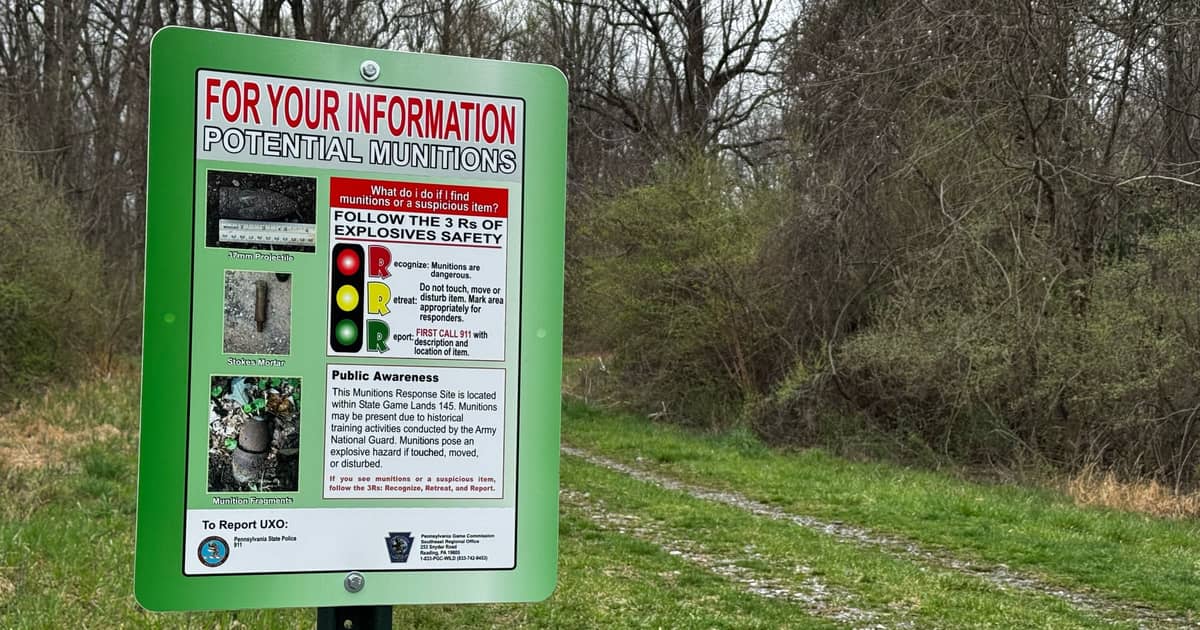

An unassuming linear depression in the woods.
Concrete foundations poking through the underbrush.
Even the occasional mortar shell.
There may be easier ways to peer into the past, such as visit to the PA National Guard’s current home at Fort Indiantown Gap, where a circa-1890 Victorian Range House now stands following its (and the Guard’s) move from Mount Gretna in the 1930s.
But for those who stalk the rolling state game lands from Mount Gretna to Colebrook, these subtle signs of a once-massive encampment provide a unique thrill when discovered.

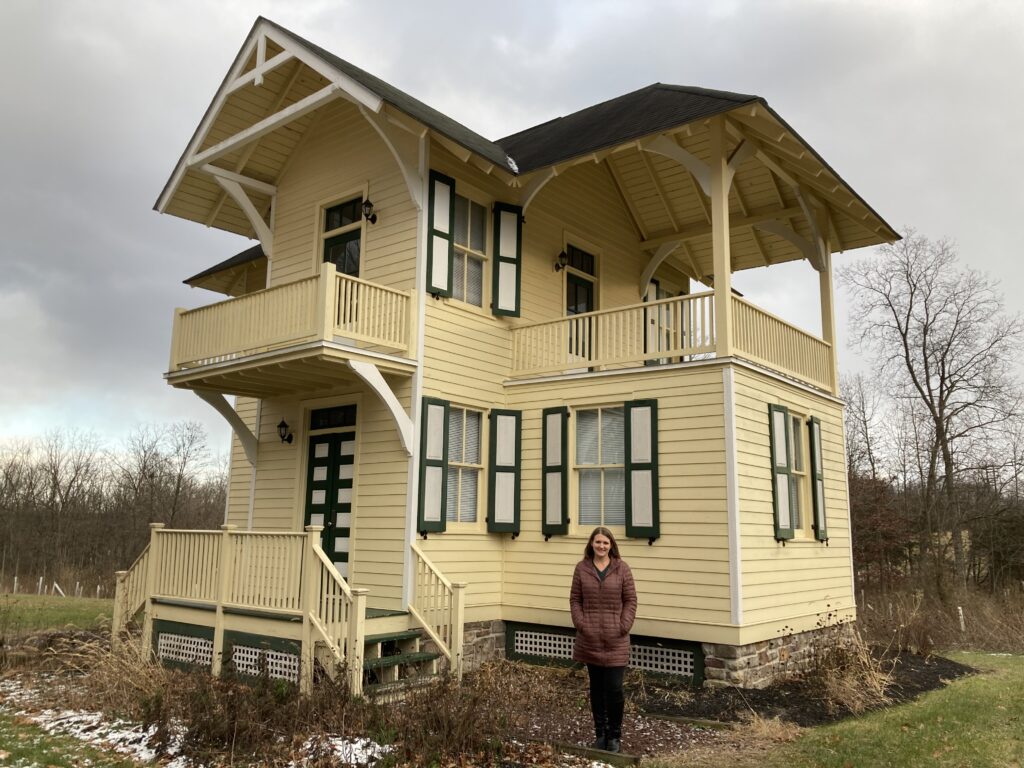
Read More: Mt. Gretna’s role as home to PA National Guard lives on thru historic Range House
Mount Gretna spent five decades as the home for a National Guard encampment, starting in 1885 when Robert Coleman ordered 120 acres cleared as a summer encampment area for the training of the 28th Division of the Pennsylvania National Guard.
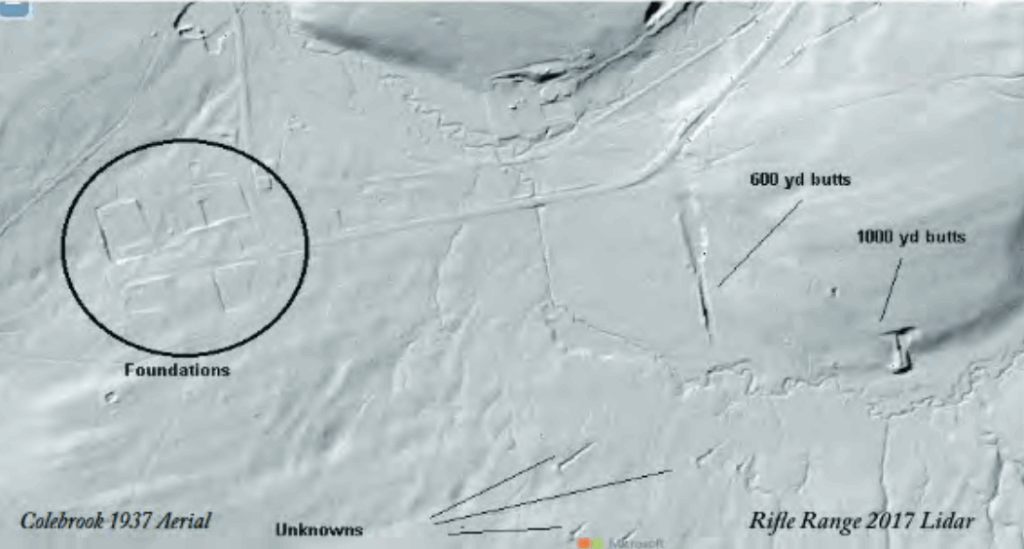
Excitement and interest in the ruins sparked anew following the Mount Gretna Area Historical Society’s summer 2023 article (PDF) by John Garrick about what LIDAR maps – short for Light Detection and Ranging – revealed of the Guard’s local presence.
Guardsmen mustered at the Mount Gretna encampment three times for federal service; in 1898 for the Spanish American War, in 1916 for defense of the American-Mexican border, and in 1917 for World War I. By 1930, the encampment had grown to approximately 3,000 acres, stretching to Colebrook. As artillery ranges increased and motorized vehicles proliferated, the PA National Guard outgrew (and occasionally menaced) the residents of the Chautauqua and surrounding areas. Gov. Gifford Pinchot authorized acquisition of 13,000 acres for a new reservation in 1931; construction and a gradual move followed and by 1937 the guard had left Gretna.
A 20-year resident of Lebanon County’s southern hills, Vince Montano has even longer been intrigued by the various ruins of Gretna, since he began biking the rail trail in the 1990s and saw the remnants of Mount Gretna Park that once stood behind the roller rink but were felled by the blizzard of 1996.
Montano has experience with near-forgotten military reservations, having spent much time tramping around Camp Michaux in Cumberland County – the secret World War II prisoner of war camp – where he uncovered the base of the American flag that used to fly over the camp in the Army days, as well as other portals to the past such as places where prisoners had left their names and serial numbers and even where they were from in wet cement.
Montano said he couldn’t believe that in the 21st century there was this significant piece of American history and it was still abandoned and forgotten. He found himself drawn to what he describes not as a once in a lifetime opportunity, but a never in a lifetime opportunity, to be the first to dig deep on some of these sites.
He’s taken that spirit into exploration of the Gretna area and over the past couple of years has advanced understanding of the encampment with help from Garrick’s LIDAR research.
An example lies below. It might not look like much, but appreciation for the subtle is a prerequisite here.
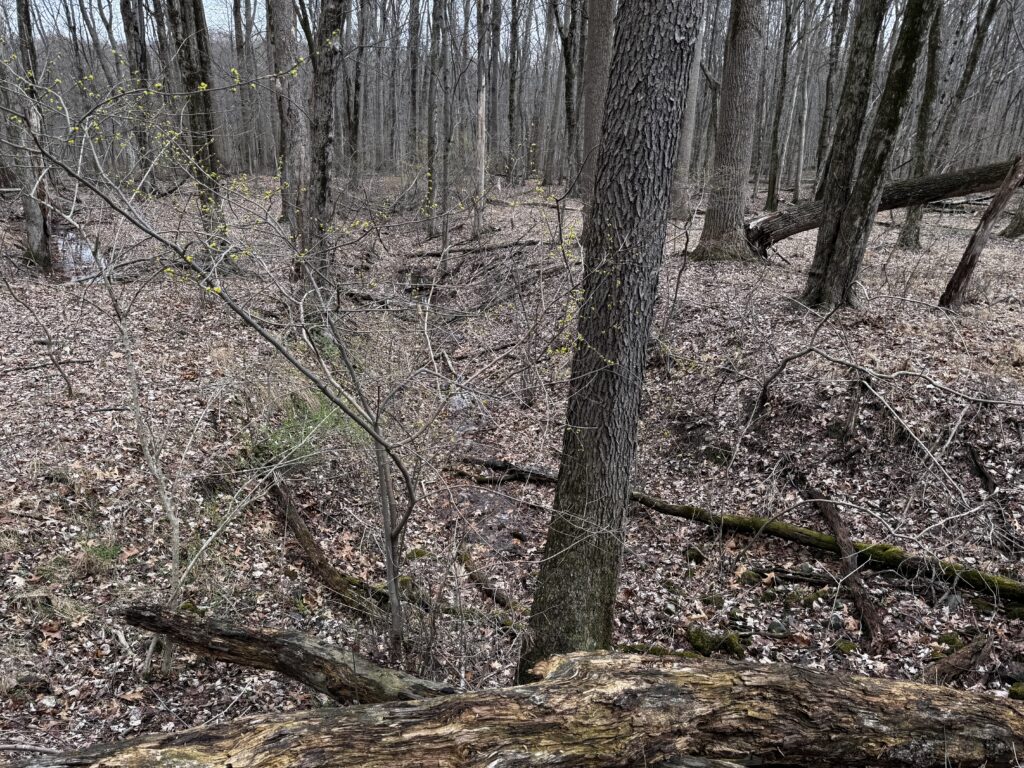
Montano had noticed on the LIDAR maps that Garrick called out several angular and clearly man-made indentations on the former firing ranges. So, he went out with the LIDAR to see what they were and that’s how he discovered the combat trenches.
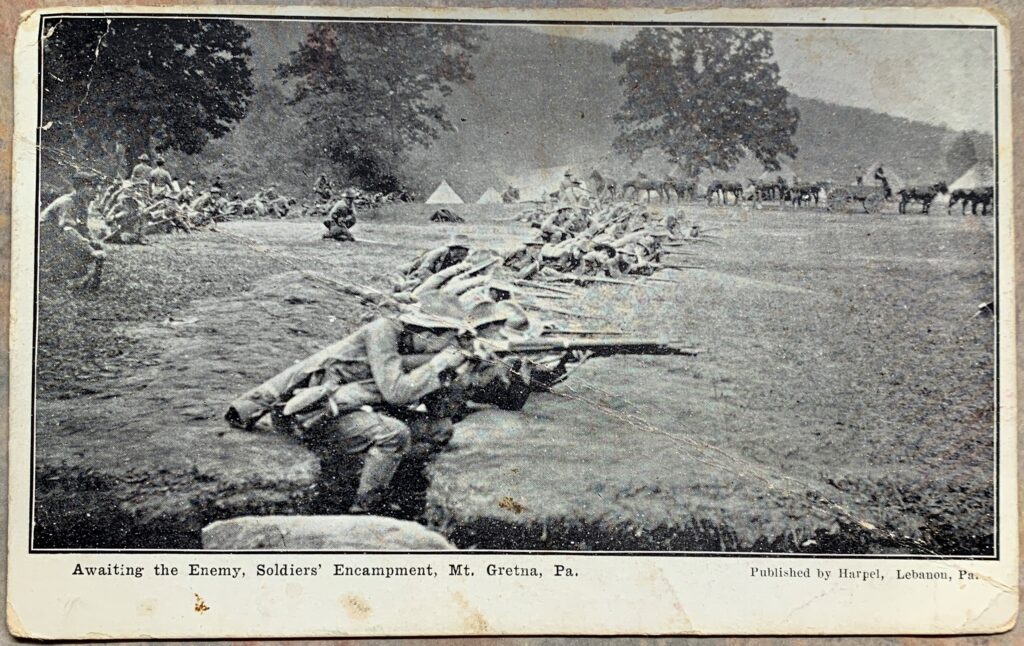
Montano believes more trenches marked the land while the encampment was active but that many were filled and graded as the Pennsylvania Game Commission took over and remediated the land that once held rifle and artillery ranges. In early April, Montano with the Mount Gretna Area Historical Society led a hike through State Game Lands 145 to see the trenches and other extant signs, scant though they may be, of the guard’s 50-year presence.
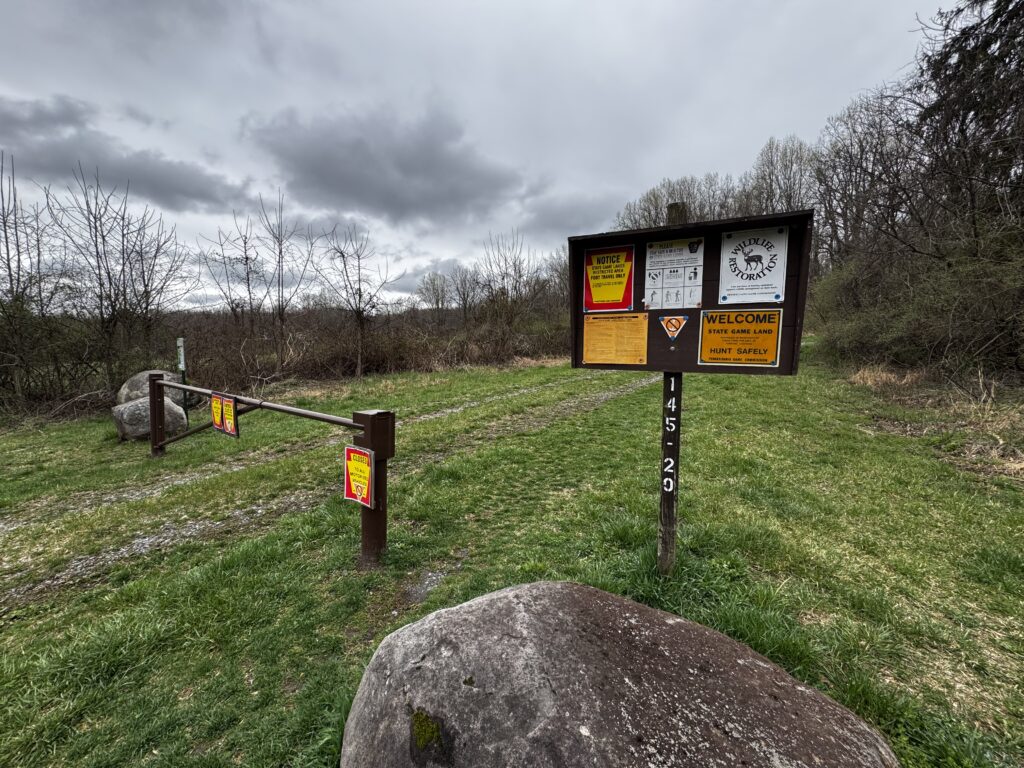
Montano said there’s an euphoria when you are looking for something specific and you find it, but that patience is required because many times you can go out exploring with no results, unless you count the ticks one might find navigating the brush and bramble.
But, he said, what’s the point in finding all of these things if he’s not going to share them?
Mostly, Montano has shared with the Mount Gretna Area Historical Society, which plans to offer these hikes again in the future. The trek is best undertaken between late fall and early spring, off-cycle the forest’s annual growth and concealment of the ruins. And Montano is dogged in pursuit of a greater understanding of the site – his holy grail right now would be a layout map showing what each specific building was at the encampment – and already planning winter outings.
He’s also shared, on occasion, his findings with the Pennsylvania State Police. As the photo at the top of this article shows, warnings are posted at SGL 145 that munition fragments and Stokes mortars may still be present, despite remediation efforts stemming from the Superfund law, and Montano has twice found unexploded mortars on his rambles. In both cases the mortars were likely used for target practice, and only fitted with spotting charges, but the lesson remains: Both times he contacted PSP without touching them – as any members of the public should – and waited for the state police bomb squad to investigate.
Questions about this story? Suggestions for a future LebTown article? Reach our newsroom using this contact form and we’ll do our best to get back to you.
Support Lebanon County journalism.
Cancel anytime.
Monthly Subscription
🌟 Annual Subscription
- Still no paywall!
- Fewer ads
- Exclusive events and emails
- All monthly benefits
- Most popular option
- Make a bigger impact
Already a member? Log in here to hide these messages
You know us because we live here too. LebTown’s credibility comes from showing up, listening, and reporting on Lebanon County with care and accuracy. Support your neighbors in the newsroom with a monthly or annual membership, or make a one-time contribution. Cancel anytime.