
This article was funded by LebTown donors as part of our Civic Impact Reporting Project.
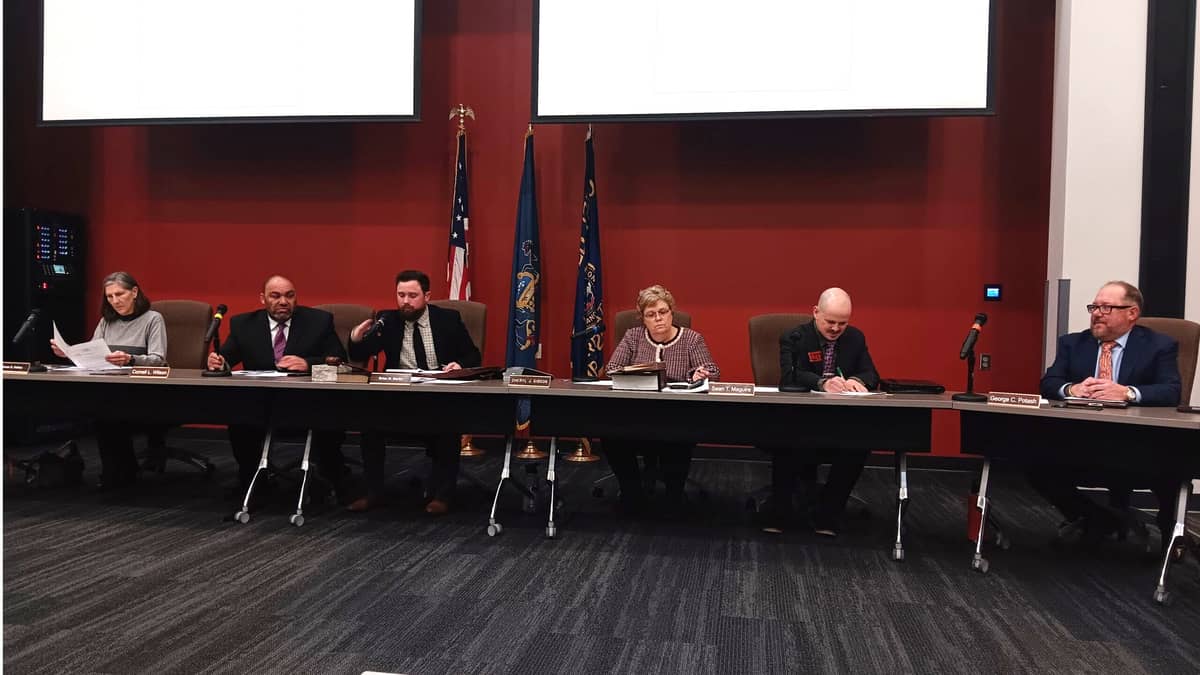
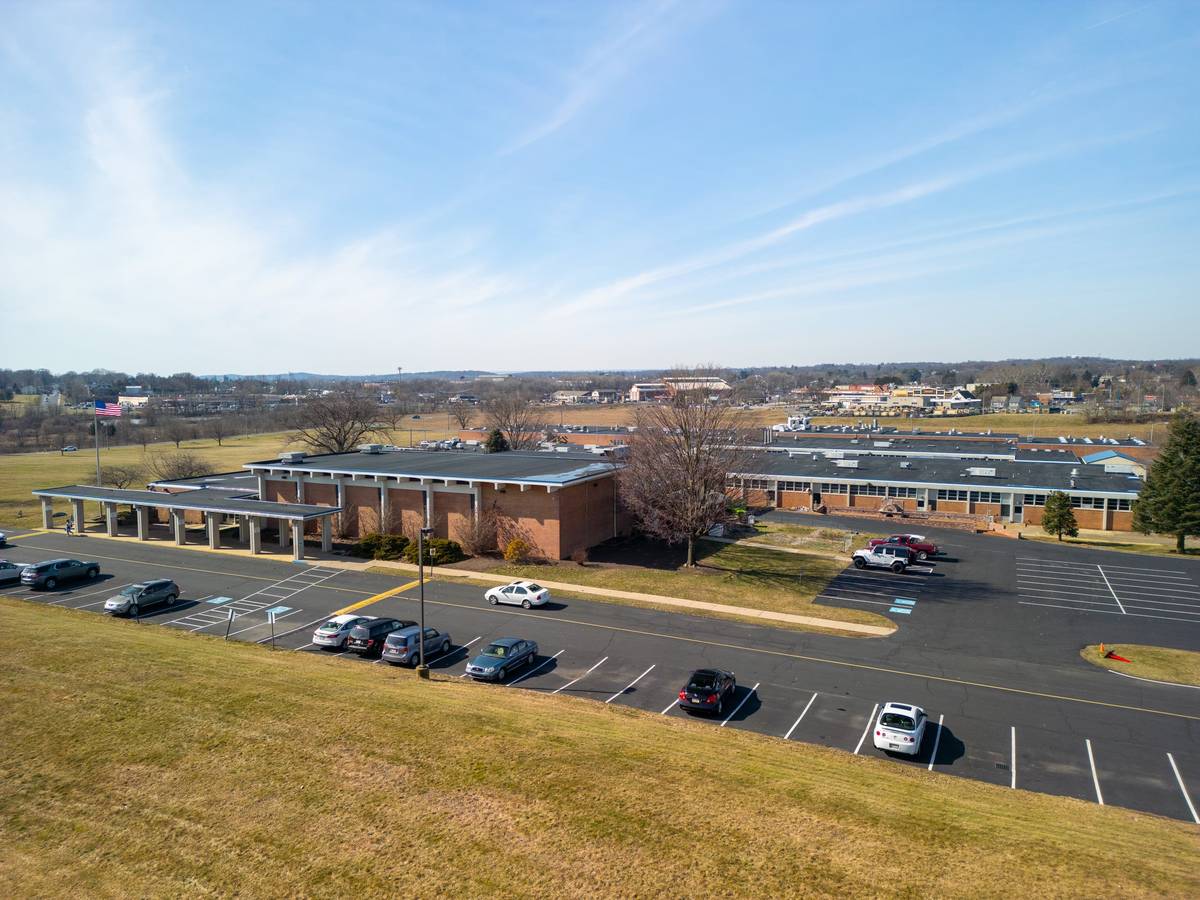
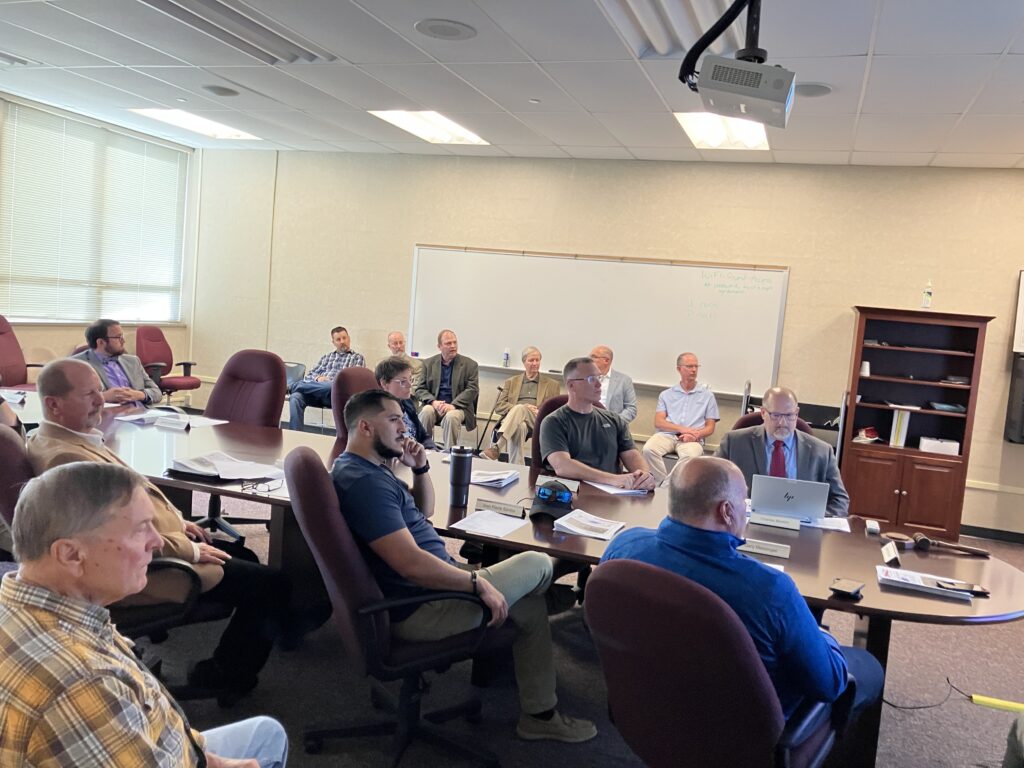
Lebanon County Career and Technology Center board members were presented on May 20 with six conceptual construction options to address current and future infrastructure needs.
Cost for the six plans ranged from a low of just under $80 million for minimum renovations and some new construction to a high of just over $117 million for a completely new building.
Scott Shonk, a principal at Beers + Hoffman, emphasized that all six options are conceptual plans and don’t represent every detail. Beers + Hoffman was hired as project engineer and is conducting a feasibility study to determine building needs.
“This is a big picture conceptual piece,” Shonk said at the beginning of his presentation. “This isn’t drilling down to every brick in detail right now, but it’s looking at the big picture to get you scope of magnitude to understand what project costs at the end here could potentially be.”
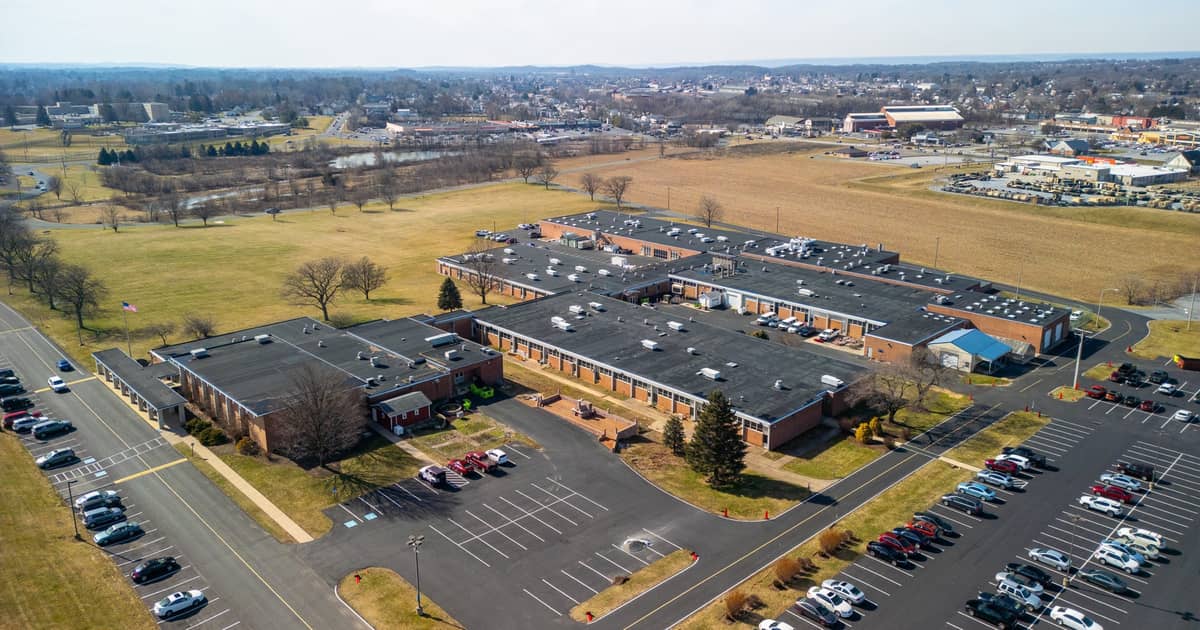
Each option would have the CTC adding a certain amount of space depending on building design to move from 160,000 square feet to approximately 205,000 square feet at the career and technology center. A major consideration in each design is the existing ramp that runs up and down in the main hallway near the front entrance to about the back of the building.
The architectural firm was asked to address the ramp when considering infrastructure options during the conceptual design phase. Administrative director Chuck Benton noted during the meeting that some students have physical limitations that keep some would-be learners from coming to the CTC because of the hilly ramp.
Shonk said all of the layouts being considered try to see “what we can do to reduce that ramp.”
Several of the middle options are so similar that options B, C, and D all have an estimated price tag of $90.3 million. For instance, Shonk said, option C is very similar to B; “We now just twisted things and used 90 degree angles.”
Shonk said option D was the least favorite of the design team because the buildings “really don’t connect that well.”
“There would have to be, you know, movement between the buildings that may not be able to be done necessarily by corridors or covered walkways. So it’s a variation of the other two schemes, moving things on the other part of the site,” he said.

Shonk said option E is interesting because the design “may be the tightest layout” of the plans, calling for a two-story structure that is “the very most compact layout of all the schemes.”
“Again, the movement of students through different spaces, that would be the shortest distance for most of these spaces. So that is, has a two-story scheme which pulls the footprint down. Same square footage of construction that was the same square footage overall,” Shonk said. “But it’s an interesting scheme that says that is the one that really tightens things up, or really pulls things together.”
Option E was estimated to cost $95.7 million.
The final option is a full new build, according to Shonk.
“This is really building everything down the lower portion of the site. This would also have some two-story areas in the middle of that space, as we put the square footage together,” he said. “But this would eventually be demolishing all sections with the current building, not reusing anything from the current building. Again, there’s some more parking and things that get added.”

Shonk said the design team did consider putting the new facility on the higher part of the CTC’s property, but noted “it’s rather tight up there.”
“Between putting the building down on this portion of the site versus trying to squeeze it in the upper portion of the site, it would take a little bit more work to fit up above with all the setbacks and movement through and things like that,” he added.
The new building would be closer to the wetlands across the roadway on the lower end of the CTC’s land. The current site sits on a hill that slopes away from the front of the building to the rear and is the reason there’s a ramp inside the facility.
“Those are the options we’re presenting in general. There could be little variations and tweaks to all these items. But right now, we’re dealing with them all with the same square footage. So, you end up with the same square footage at the end,” Shonk said.
Shonk also presented costs for new roofing since the current one is 15 years old.
“So that’s probably not a project you’re doing the next three to five years, but that is something down the road depending on how many sections. And that’s related to, in each of those schemes, how many existing areas of roof are remaining,” he said.
Future roofing costs were priced at a high of nearly $5.5 million for option A, $3.8 million for options B-D, and nearly $3 million for E. No price was provided for F since a new roof wouldn’t be required for a new building.
Board members noted that next step would be looking at financing options and decided that would be an agenda topic for the board’s June meeting.
Other board actions
In other business, the board unanimously voted to:
- Approve the bills/transfers totaling $781,531.03. Included in this amount are the following Capital Reserve Fund checks: Fidevia, $2,747.50; Beers + Hoffman Architects, $3,803. Both of these payments concern the CTC’s feasibility study.
- Grant a number of personnel moves, including the resignation of Billie Hartman, long-term substitute for the Electro-Mechanical program, effective to April 21; resignation of Richard Harner, maintenance technician, effective to April 23; resignation for the purpose of retirement of Jane Uhrich, purchase coordinator, effective July 11; and termination of Joshua Miller, welding instructor, effective May 21.
- Name Gary Messinger as the superintendent of record for the 2025-26 academic year with a $4,000 stipend.
- Approve Dr. Kristin Johnson as a non-paid intern for CO-OP and administrative projects and as a substitute instructor for the 2025-26 school year pending receipt of required paperwork.
- Appoint board member David Kline as treasurer for a one-year term effective July 1.
- Purchase textbooks for the 2025-26 academic year.
- Permit one student and one adviser to attend the SkillsUSA National Leadership Conference in Atlanta, Georgia, June 23-28. The CTC will cover an estimated cost of $2,100 for the adviser.
- Change the local title for CIP 11.0901 from Network Technology to Computer Networking Technology and Cybersecurity.
- Give permission for administrative director Charles Benton, assistant director Marilyn Lathrop, and principal Alex DiMarzio to attend the PACTA Leadership Conference: Career and Technical Education Leadership for Success, Pittsburgh, July 29-31, at an estimated cost of $4,420.
- Approve Boyer & Ritter LLC to complete the local audit for the school year ending June 30, at a cost not to exceed $24,500.
- Approve the tuition agreement between Commonwealth Charter Academy and the Lebanon County CTC for the 2024-25 school year.
- Grant participation in the National School Lunch Program and the following school lunch program prices for the 2025-26 school year: student paid lunch, $4; reduced lunch, $0.40; adult lunch, $5.50; milk, $0.50.
- Accept the lease agreement between the Lebanon County Career and Technology Center and the Lebanon Valley Exposition Corporation for the use of its facilities on May 21 and 22 for the LCCTC Certificate and Awards Ceremony.
- Approve Policy 903 Public Participation in Joint Operating Committee meetings for final approval.
- Accept the financial, director and cafeteria reports ending on April 30.
Questions about this story? Suggestions for a future LebTown article? Reach our newsroom using this contact form and we’ll do our best to get back to you.
Support Lebanon County journalism.
Cancel anytime.
Monthly Subscription
🌟 Annual Subscription
- Still no paywall!
- Fewer ads
- Exclusive events and emails
- All monthly benefits
- Most popular option
- Make a bigger impact
Already a member? Log in here to hide these messages
While other local news outlets are shrinking, LebTown is growing. Help us continue expanding our coverage of Lebanon County with a monthly or annual membership, or support our work with a one-time contribution. Every dollar goes directly toward local reporting. Cancel anytime.