
With 1 to 2 percent of the population feeding the rest of the world, it’s more important than ever for non-farmers to have an appreciation and understanding of the food they eat.
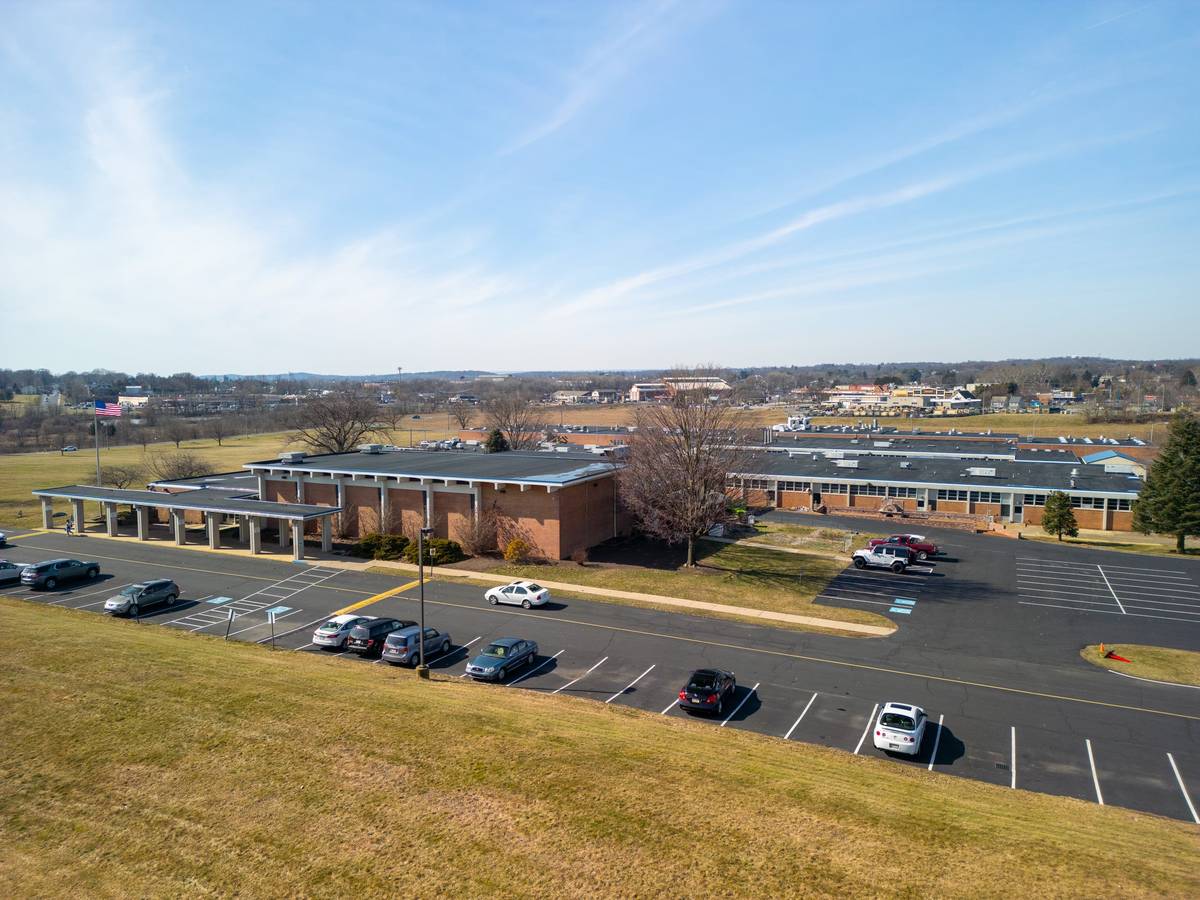
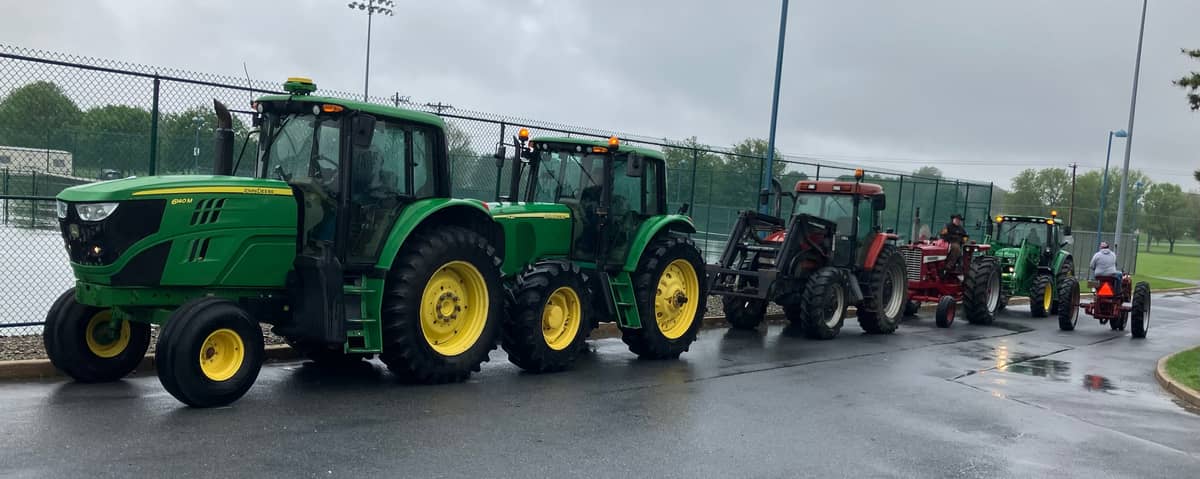
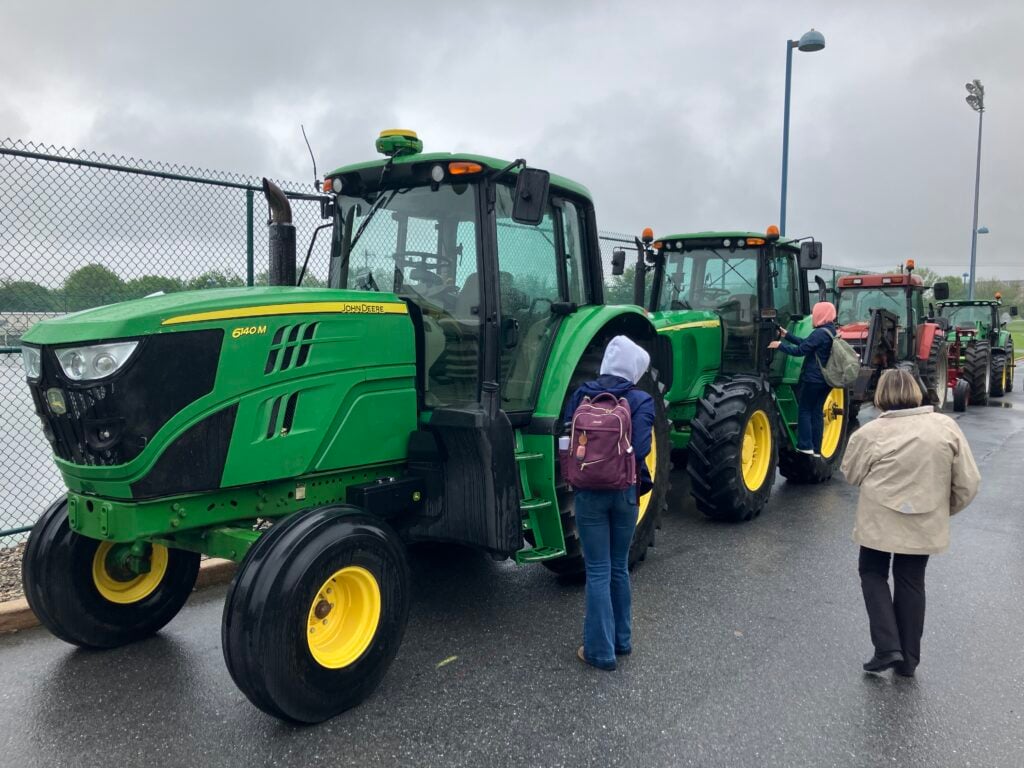
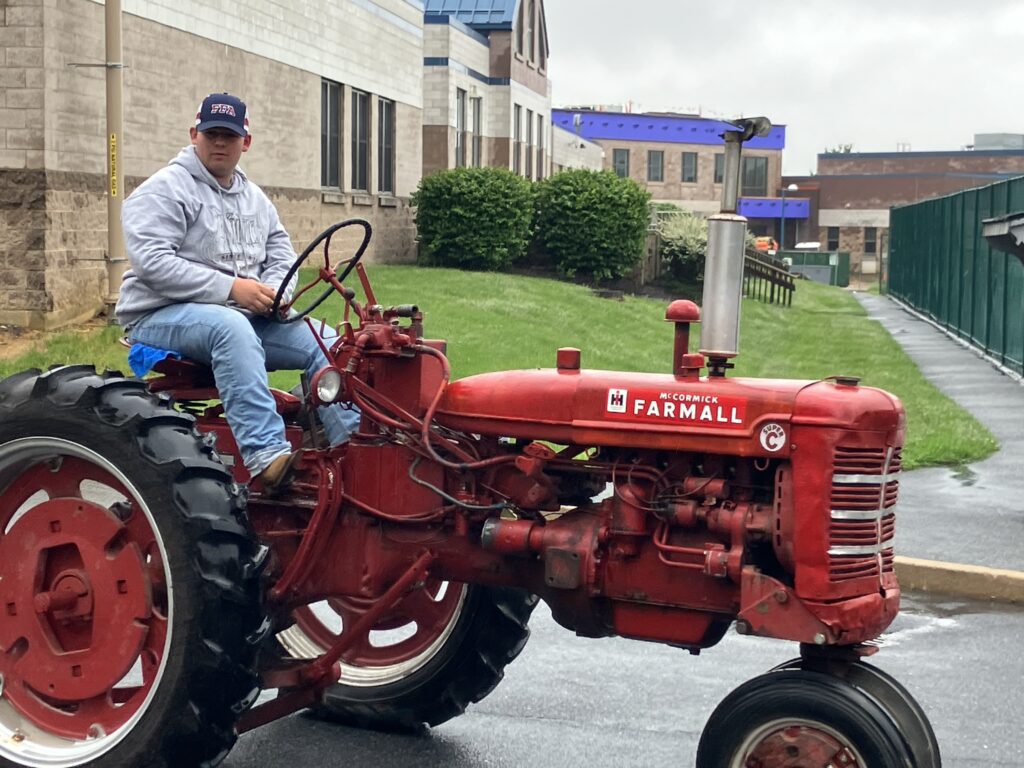
That’s why Cornwall-Lebanon School District runs Drive Your Tractor to School Day for students whose family are farmers to showcase their vehicles to those who aren’t in the industry. On Thursday, May 22, over a half-dozen FFA students chose a tractor as their mode of transportation to and from school despite rainy and dreary conditions.
Sisters Autumn and Jinger Martin participated to spread awareness about modern agricultural practices. They both drove John Deere tractors that were equipped with cabs to protect them from the elements.
“This was a really good opportunity for all the students in this school to see agriculture and have it come to the school since lots of kids don’t ever get to see a farm, get to be on a farm,” said Autumn, a senior and president of the school’s FFA chapter. “Just by bringing the tractors here shows them what’s happening on the farms, and (gives) a little inside glimpse of everything we’re doing within the fields and within the tractors.”
It was the first – and not the last – time Jinger plans to participate in this event.
“It’s fun for every FFA member that participates in this. It’s a great opportunity like Autumn said for our members in our school to see the tractors and even though they aren’t in FFA they are parked outside so when they get dropped off at the buses they’re able to see how everything is used on the farm,” said Jinger, a freshman.
The sisters live on a 200-acre Holstein dairy farm in North Cornwall Township with their parents Andrew and Jamie Martin. They said the family grows field and sweet corn, soybeans, alfalfa, hay, winter wheat, and occasionally rye and triticale.
Philip Haussener, agricultural science instructor and FFA adviser at Cedar Crest High School, said the program was launched within the past 10 years.
“Six or eight years ago or so, a group of students came to me and said, ‘Hey, can we drive our tractors to school?'”‘ And we ran it by the admin and they said, ‘Absolutely.’ So I think we’ve been doing it every year since then other than maybe the COVID year,” Haussener said. “And it’s just an opportunity for kids who are in our ag program, who live on a farm, work on a farm, to be able to drive them to school in the morning time.”
What started out with the blessing of the school district’s administration has turned into a Cedar Crest tradition.
“It’s kind of been a tradition and then we kind of tie our end of the year social into this at the end of the school day just because we want the tractors to stay here a little later so they’re not conflicting with high school middle and school traffic,” Haussener said. “Killed two birds with one stone there by keeping them here a little later and having some fun, some food and games and such after school.”
Haussener said the program gives insight into all 170 FFA students, a high percentage of whom don’t even live on a farm.
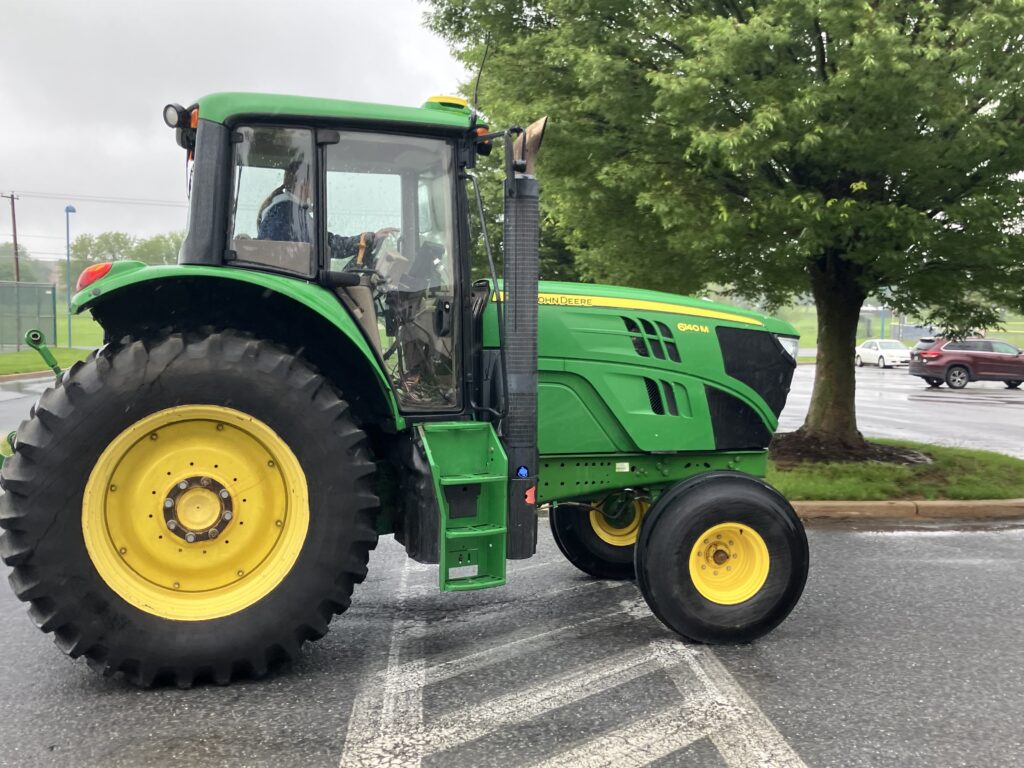
“We get them here before seven, so they’re not interrupting traffic too much. And then we take all of our classes out throughout the day,” Haussener said. “You know, we have about 170 kids in our ag program, many of which are not ‘farm kids.’ So this is something that many of our students don’t have the opportunity to sit inside of a tractor every day.”
Another long-standing tradition is to educate non-farm based students in their ag program about the food they eat.
“A high percentage don’t live on a farm, work on a farm, and know anything about farming, and that’s my job to not only teach the ag kids more about agriculture – if you have a dairy kid, they know dairy and cows but I’m here to teach them about all the other aspects of ag – and I’m also here to teach the non-ag students how food gets to the dinner plate. I mean, we’ve kind of made it our mission over the – since I’ve been here for 12 years – to make the students more educated consumers of agriculture. It’s kind of been our slogan, if you will.”
The program is also popular with the non-farm students.
“Oh hey, that’s cool,” is how those students respond, according to Haussener. “The opportunity to see what some of their fellow classmates are doing. We just have it opened up to our agriculture classes.”
This year’s edition of the event had a little bit of a different educational twist, according to Haussener, as executed by him and his fellow ag teacher Darren Grumbine. The two instructors set up a video demonstration “on the fly” to show their students auto steer technology within Grumbine’s John Deere tractor.
“Since we can’t fit a whole class inside his tractor, we had the video going up front and then through the John Deere Ops technology,” Haussener said. “So we had one screen looking out the front of the tractor and one screen with the auto steer technology and the kids were able to see how he sets a line for the field. This was a line for the parking lot to weave in and out through the parking lot and how the tractor can drive itself with the auto steer technology.”
Another component tied to the technology within Grumbine’s tractor became a learning moment for the students.
“Being able to collect the data, whether it’s the population that they’re planting in the field or different pesticides, fungicides that they’re putting down, being able to collect the data from that, and then did they get a return on their investment when they interpret that data,” said Haussener, who noted a farmer’s return on investment is important to growers.
“Did that make my money back and then some? Just talking some of the numbers with the students of the data collection, the technology that’s there, the data collection, interpreting the data, overlaying that data when you’re planting, when you’re spraying, and then at the end of the year, when you’re harvesting, how many bushels did you get per acre?” he added. “Did it make sense for me to plant this field at a higher population or to spend the money to put down this fungicide or herbicide or whatever it might be?”
That’s how precision agricultural technology works.
“So it’s the whole precision ag and technology thing, and trying to integrate that more and more into the curriculum because that’s where agriculture’s going. Being able to get that data and make an ROI on it,” said Haussener.
Their studies completed on tractor technology and ROI, all of Cedar Crest’s FFA students held an end-of-school-year celebration after the school day ended. Students brought food to share and played some games to celebrate the occasion.
“We’re doing this at the end of the year, but we try to do something every six or eight weeks to bring the kids together. So like we’ll have a movie night. We did a Friendsgiving where everyone brought a side dish and we supplied (the meat),” Haussener said. “Just to bring them all together as often as possible to just build camaraderie. It gets them to know each other a little bit better. It’s neat with the older kids interacting with the freshmen. They can kind of pass on some knowledge (to the younger students).”
As far as the future of the tractor program, Haussener is happy that it’s become a Cedar Crest tradition.
“Traditions are hard to break and this is one that it’s just it’s not something you see every day. For those students to be able to showcase what they’re doing at home day in and day out on their farms with their fellow students I think it’s pretty cool,” he said. “And, you know, just for them to be able to bring that to the other … 99 percent and so it’s kind of their day to shine.”
Questions about this story? Suggestions for a future LebTown article? Reach our newsroom using this contact form and we’ll do our best to get back to you.
Support Lebanon County journalism.
Cancel anytime.
Monthly Subscription
🌟 Annual Subscription
- Still no paywall!
- Fewer ads
- Exclusive events and emails
- All monthly benefits
- Most popular option
- Make a bigger impact
Already a member? Log in here to hide these messages
You know us because we live here too. LebTown’s credibility comes from showing up, listening, and reporting on Lebanon County with care and accuracy. Support your neighbors in the newsroom with a monthly or annual membership, or make a one-time contribution. Cancel anytime.