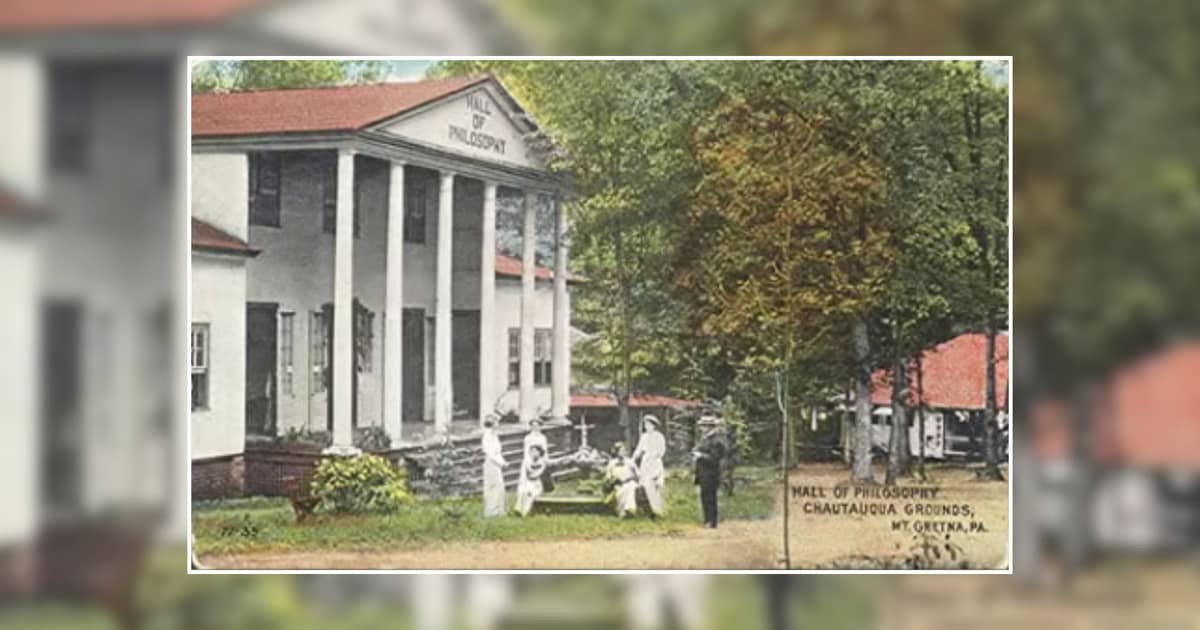

The Pennsylvania Chautauqua in Mount Gretna started in 1892 when a group of Evangelical United Brethren members decided the area would be a good place for a chautauqua modeled after the original one established about 20 years earlier in New York.
“Chautauqua” is an Iroquois word meaning either “two moccasins tied together” or “jumping fish,” according to the Chautauqua Trail website. The chautauqua movement started in 1874 when John Heyl Vincent and Lewis Miller used a campsite as a meeting place for Sunday school teachers.
Chautauquas are focused on expanding knowledge. It has four pillars — education, arts, religion, and recreation. They have educational opportunities for all ages, but they mainly highlight lifelong adult learning opportunities. Despite the religious aspect, they were founded on being non-denominational.
As people traveled from this original New York community, Sue Hostetter, president of the Mount Gretna Area Historical Society, said they brought their ideas with them, including to Lebanon County.
“They would travel. This model was taken on the road, and word just spread however word spread,” Hostetter said. “I do know that they had traveling chautauquas, and eventually, there became permanent chautauquas.”
Robert Coleman, fourth-generation heir of the wealthy Coleman family that gained millions of dollars through the ownership and management of iron furnaces in the area, owned the land and leased it to the organizers from Lebanon and Lancaster counties who were looking for space to start their own chautauqua, Hostetter said.
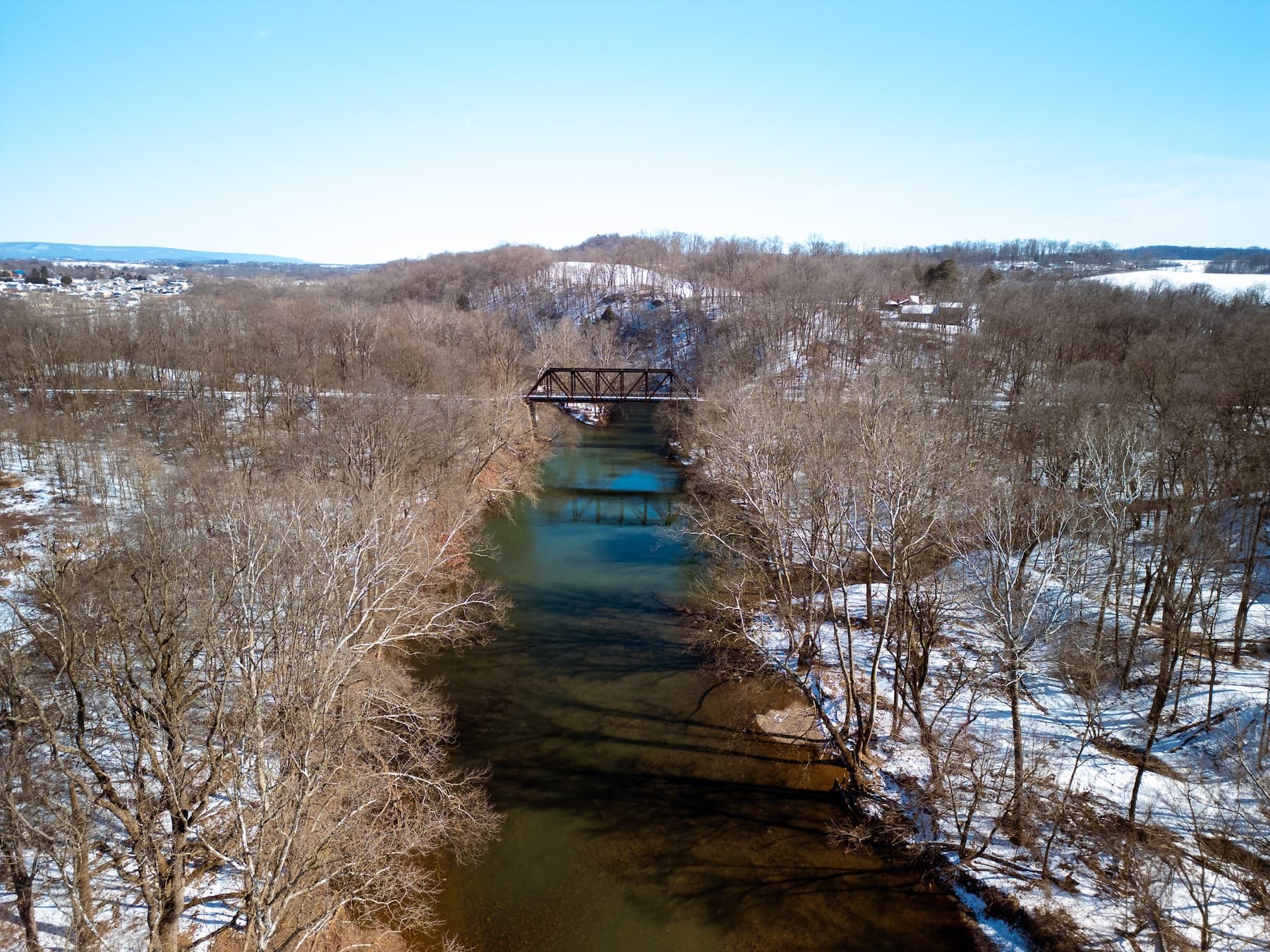
Mount Gretna was also an accessible place for people due to a railway built to support the nearby Cornwall Iron Furnace. The tracks opened in the 1880s, running from Lebanon, through Cornwall, and out to Elizabethtown. It passed through the wooded area in the mountains that would later become known as Mount Gretna.
Read More: When Robert Coleman’s two-foot railway snaked through the hills of Mount Gretna

Mount Gretna’s residents built an auditorium for concerts, lectures, and religious services, and summer cottages cropped up nearby to house people during their summer stays.
Chautauquas were typically only populated during the summer. People would stay in the homes for several weeks while taking part in classes. Through the years, Hostetter said the community realized they could stay longer through the summer and into other seasons to enjoy Central Pennsylvania’s more moderate weather.
The Pennsylvania Chautauqua is covered in historic cottages. They were mostly built in classic architectural styles common in 19th-century religious campmeeting sites.
Read More: [Photo Story] A look at the historic cottages of Mount Gretna
The Mount Gretna area historical society’s building is one of those originals, Hostetter said.
“It would have been built without any kitchens or bathrooms,” she said. “They were just there for the summer for about two to three weeks. Eventually, people started staying longer and longer, and someone got the idea that they could stay year-round.”
Today, the population is under 200 people.
Mount Gretna’s chautauqua is one of the few remaining. There used to be over 200 at the height of the movement, but there are now fewer than 20. Most of the remaining chautauquas are along the East Coast.
The rapid decrease came in the mid-1930s. Historians credit the decline to cars, radio, and movies, though other causes include an increase in fundamentalism and evangelical Christianity. The non-denominational chautauquas were no longer in demand, and many became campmeetings or church camps.
The Pennsylvania Chautauqua is evolving with the times but also maintains its pillars of education, arts, religion, and recreation. They bring lecturers and speakers during the summer, hold the large Mount Gretna Art Show, show plays and musicals in the historic playhouse, and offer many outdoor leisure areas.
Hostetter said they still focus on religion, but it doesn’t “infuse everything.”
“It doesn’t infuse as much of the curriculum as I guess it would have in 1892,” she said. “We’re becoming more secular, and we do have a heavy emphasis on the arts.”
Mount Gretna still runs a Sunday worship service in the playhouse. Hostetter said they have become more inclusive over the years.
“We’re just trying to reflect what’s important to our audiences,” she said. “We have audiences who are well-traveled, they’re well-read, well-educated, and they sort of expect a more inclusive curriculum.”
Questions about this story? Suggestions for a future LebTown article? Reach our newsroom using this contact form and we’ll do our best to get back to you.
Support Lebanon County journalism.
Cancel anytime.
Monthly Subscription
🌟 Annual Subscription
- Still no paywall!
- Fewer ads
- Exclusive events and emails
- All monthly benefits
- Most popular option
- Make a bigger impact
Already a member? Log in here to hide these messages
Quality local news takes time and resources. While LebTown is free to read, we rely on reader support to sustain our in-depth coverage of Lebanon County. Become a monthly or annual member to help us expand our reporting, or support our work with a one-time contribution. Cancel anytime.