
As the summer storm season starts to simmer and temperatures begin to climb, now is the perfect time to create or update an existing emergency preparedness plan.
Lebanon County’s Department of Emergency Services (DES) is launching an awareness campaign to inform local residents about the importance of being prepared for any emergency situation.
While the campaign is geared for all county residents, there is a special focus on the more vulnerable populations within the Lebanon Valley, according to Devyn Iozza, emergency management specialist for Lebanon County DES.
“The project that I’m working on right now is trying to reach our vulnerable population, so our low-income children, older adults, (limited) access and functional needs and anybody with a disability to just provide them with preparedness tips and information,” said Iozza.
“We have a bunch of printed resources, digital resources that I’m trying to hand out at community events just to give them activities to do at home like evacuation plans, emergency supply kits and just share that information as we go into the summer season with flooding, hurricanes, severe weather so they can be prepared before anything happens.”
Being fairly new to the position, Iozza said she’s been conducting outreach to local organizations to share the resource kits that have been created.
“I’m trying to learn about the different organizations that we have and agencies. And I am working to contact people that would be interested in receiving the disaster preparedness information,” she said. “I am also looking and researching community events that I would be able to go to and interact with community members.”
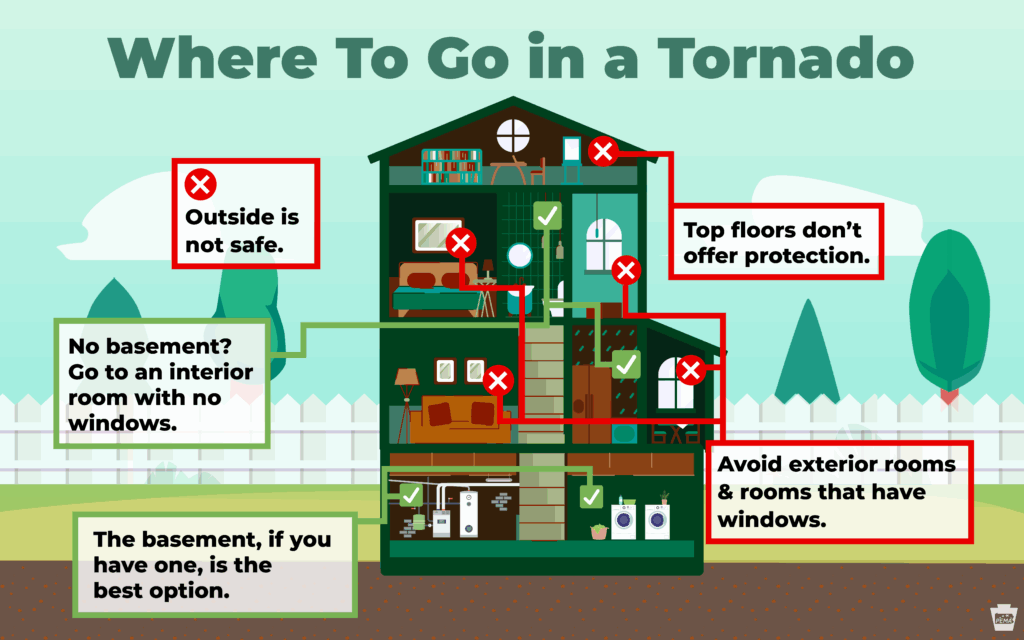
While Iozza said severe weather can strike any season, summer is an especially volatile time of year.
“There is always severe weather, a chance for it year-round. But the spring and summer season bring very severe thunderstorms that have, like, a domino effect,” she said. “You could have tornadoes, you could have hail, strong winds.”
Additionally, June 1 through the end of November is hurricane season. Iozza said the National Oceanic and Atmospheric Administration (NOAA) announced in late May that they are expecting an above-average tropical season.
“With hurricane season, because of our location in the Northeast, we have the potential to have all the remnants of tropical storms and that brings heavy rains, strong winds and flash flooding and regular flooding impacts to pretty much any area. If it rains, it can flood. So that’s kind of the big thing that I wanted to share,” she said.
Iozza noted NOAA is forecasting similar strong storms like the area experienced late last summer and into early fall.
“They said it (hurricane season) has a potential to be similar to last year’s which towards September and October brought really bad weather to the northern part of PA and any kind of tropical weather can impact our area as well,” she added.
One of the easiest preparedness steps anyone can take is right at their fingertips.
“The National Weather Service is a great resource that we use pretty much every single day and they offer what I find to be the most accurate and helpful watches and warnings for severe weather,” Iozza said. “And then Ready PA offers their emergency alerts and that comes from the state.”
Residents can also follow Lebanon County DES on social media via Facebook and X to receive timely weather alerts. “We just try to share important information there as well as weather updates too as they come in if they are severe,” Iozza noted.
Gary Verna, deputy director of emergency management at Lebanon County DES, said the 2024 National Household Survey on Disaster Preparedness Findings noted that 83 percent of the respondents reported having taken at least three preparedness actions in 2024 compared to 57 percent in 2023.
“Now that might reflect the difference, might reflect the influence of COVID. Or other factors like the disasters that have been really in the news lately. North Carolina and Florida recently are the two big ones,” said Verna, who added that those statistics come from the Federal Emergency Management Agency (FEMA).
A majority of those who have taken some steps are overlooking many others, having only implemented 25 percent of what comprises a complete preparedness plan.
There’s a 12-step preparedness guide,” said Iozza. “It’s just a little one-sheeter. But it’s mainly like setting up your alerts and weather warnings and then doing your emergency supply kit, your evacuation plan, just those little things that end up helping you in the end.”
Iozza said another reason summer was selected to do an awareness campaign is due to another hazardous and potentially deadly situation.
“The other reason I wanted to discuss summer was extreme heat and heat waves just based off of last summer and the summer before,” she said. “We’ve had a little bit of a trend of heat waves occurring more often with less breaks in between and just kind of getting people to prepare in the way that they limit their outdoor activity when those weather warnings come across.”
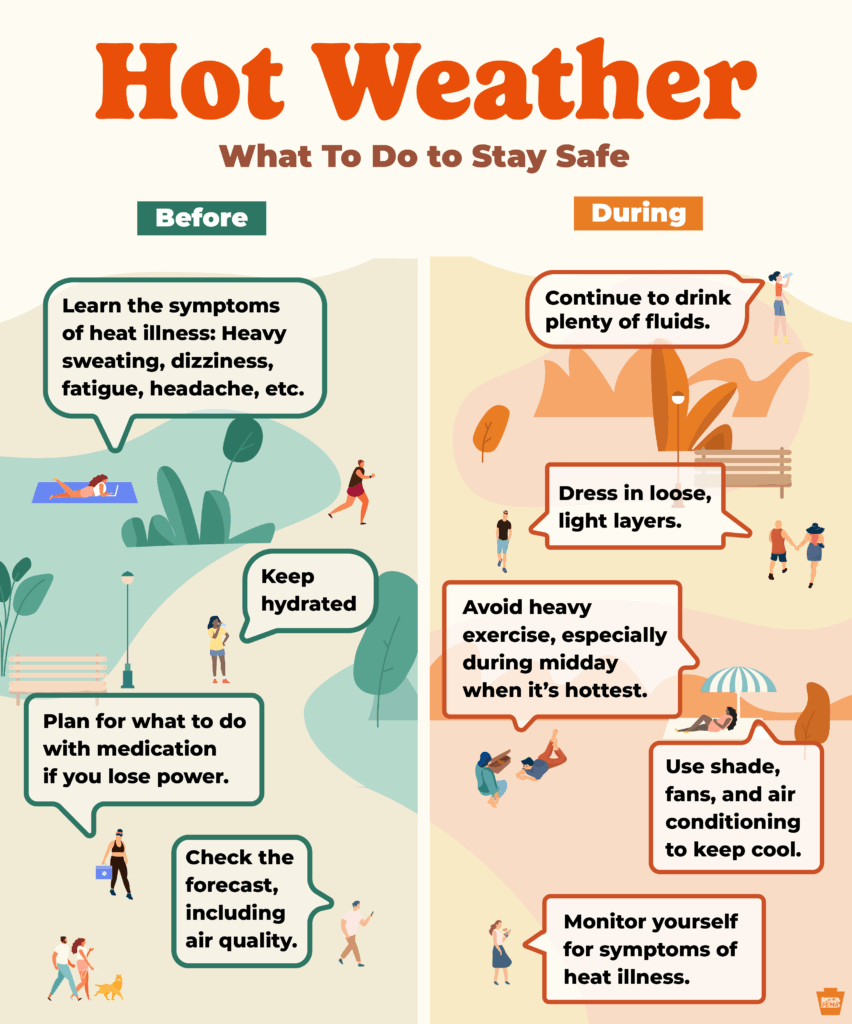
A key is to remember to drink plenty of replenishing fluids. Alcohol, of course, does not restore vital fluids and is actually detrimental since it is a diuretic.
“Make sure to obviously hydrate as we’ve always been taught to do and just kind of be cautious if you have any family members, children, older adults, that they’re not outdoors for a prolonged period of time,” Iozza added.
It’s also important to remember not to leave a child or pet unattended in a vehicle – especially in summer when temperatures inside can soar in minutes, according to Verna.
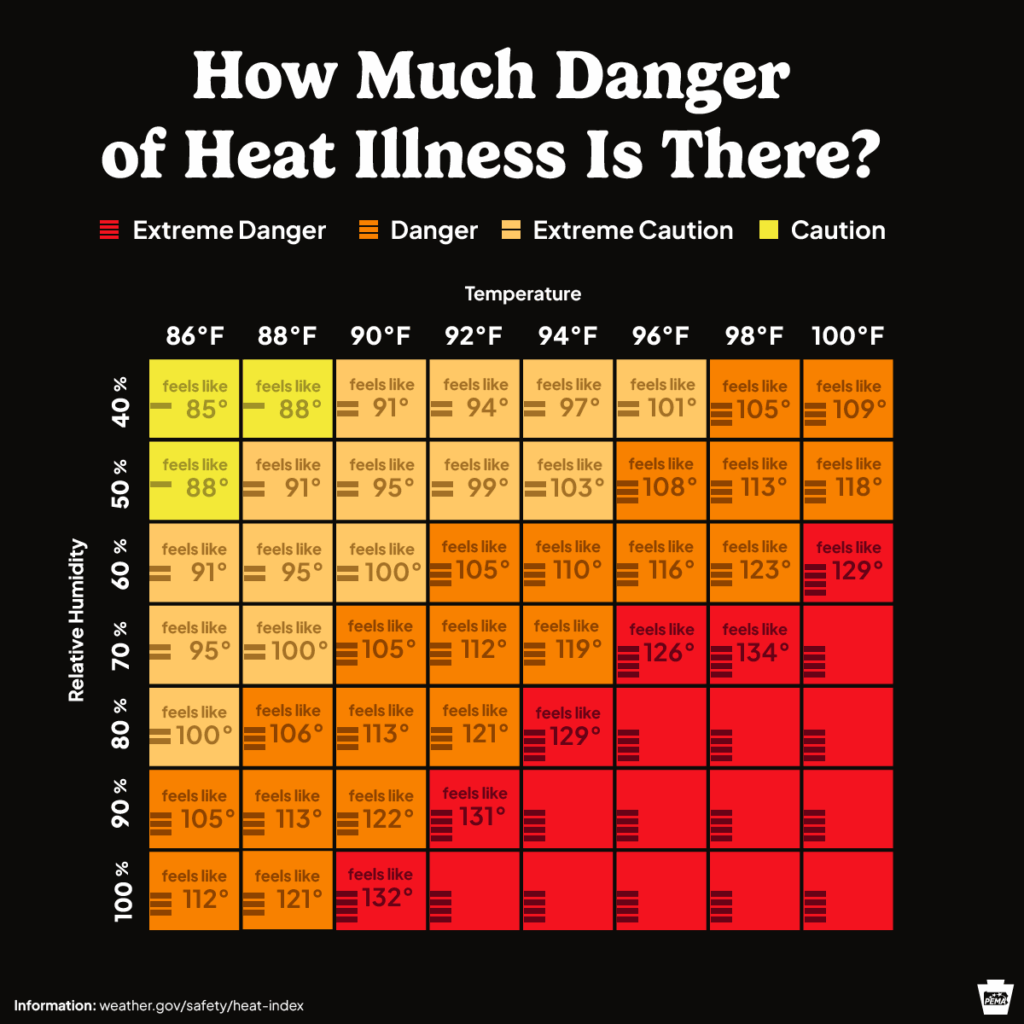
“After just about 10 minutes, the temperature inside a vehicle is 19 to 20 degrees higher than outside the vehicle during the summer. And that difference can reach up to 43 degrees Fahrenheit after an hour,” Verna said. “So if it’s 80 degrees outside, the inside of a car can reach up to 109 degrees after just 20 minutes and 123 degrees after an hour.”
Iozza said it’s common for people not to focus on what happens next when a disaster does strike.
“When a disaster does happen or an emergency happens, they don’t know the next steps. So they don’t know who they’re going to call after first responders have shown up,” she said. “They don’t know who they’re going to stay with or anything like that.”
Taking time in a non-emergency situation to be prepared can pay dividends when the unimaginable does occur.
“I think sitting down with your family and preparing before the disaster happens can help to put focus on the recovery aspect of it. They can make their contact list of family and friends, neighbors, and where they would go if they’re out of state or in another country, and just those after (an emergency) impacts,” Iozza added.
When crafting a plan, don’t forget to include furry family members.
“This month is pet preparedness month. We do have resources on that. For pet preparedness, I think one of the big things and you can see some of the stories that happened this past hurricane season down in Florida and North Carolina was people just leaving their pets behind,” said Iozza. “We have community resources where you can take your pets so that you don’t leave them behind. And similar to the family emergency supply kits, you can also make a pet one as well if they have any medication, dog food, water.”
Another pre-emergency preparation includes a review of your insurance plans, according to Verna.
“That’s one of the biggest ways that you can protect yourself and be prepared for disasters or emergencies and that also helps you get to recovery faster, ,knowing what’s in your insurance policy,” said Verna. “For a case of a fire, does your insurance company cover hotel stays until you find suitable housing? Knowing that not all insurance covers flooding. So getting the flooding rider or the National Flood Insurance program being involved in that where it’s at a subsidized rate for insurances.”
Verna added he believes the average cost per year in Pennsylvania as of 2023 was around $1,200 for flood insurance, and the National Flood Insurance Program is even lower.
The ultimate goal of the preparedness outreach is to help community members as a resource to them.
“I think our goal here is using the resources and knowledge that we have to empower the local communities because at the end of the day, we’re here to help protect and serve them and the only way we can do that is if we’re sharing everything that we have and guiding them to have their own individual preparedness,” Iozza added.
Questions about this story? Suggestions for a future LebTown article? Reach our newsroom using this contact form and we’ll do our best to get back to you.

Keep local news strong.
Cancel anytime.
Monthly Subscription
🌟 Annual Subscription
- Still no paywall!
- Fewer ads
- Exclusive events and emails
- All monthly benefits
- Most popular option
- Make a bigger impact
Already a member? Log in here to hide these messages
Quality local news takes time and resources. While LebTown is free to read, we rely on reader support to sustain our in-depth coverage of Lebanon County. Become a monthly or annual member to help us expand our reporting, or support our work with a one-time contribution. Cancel anytime.