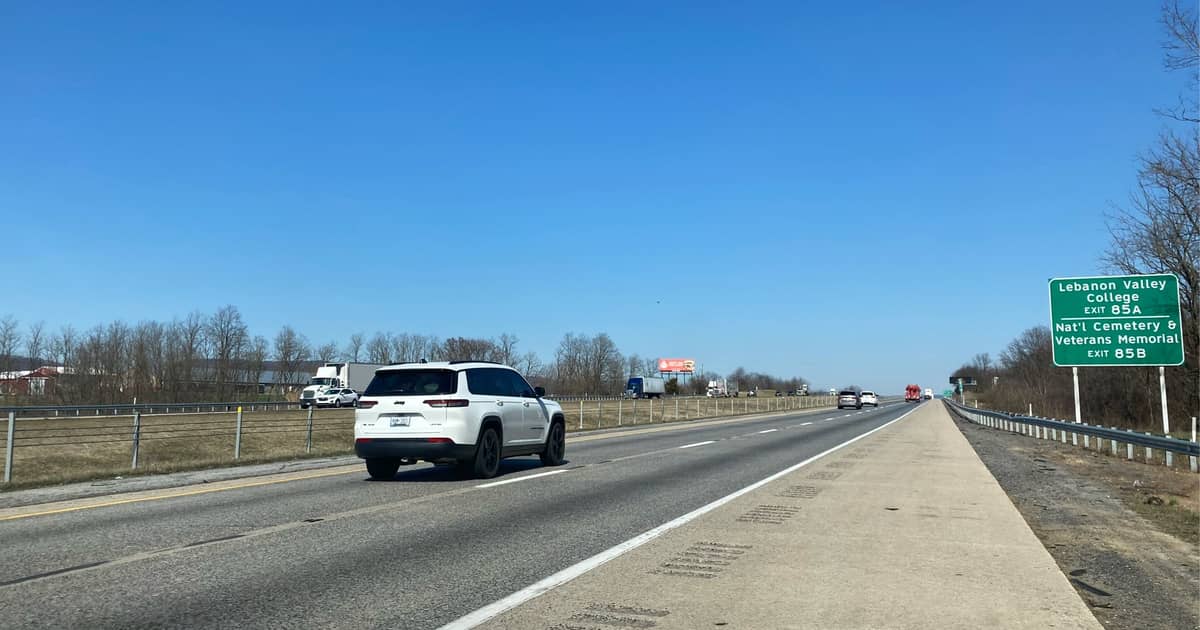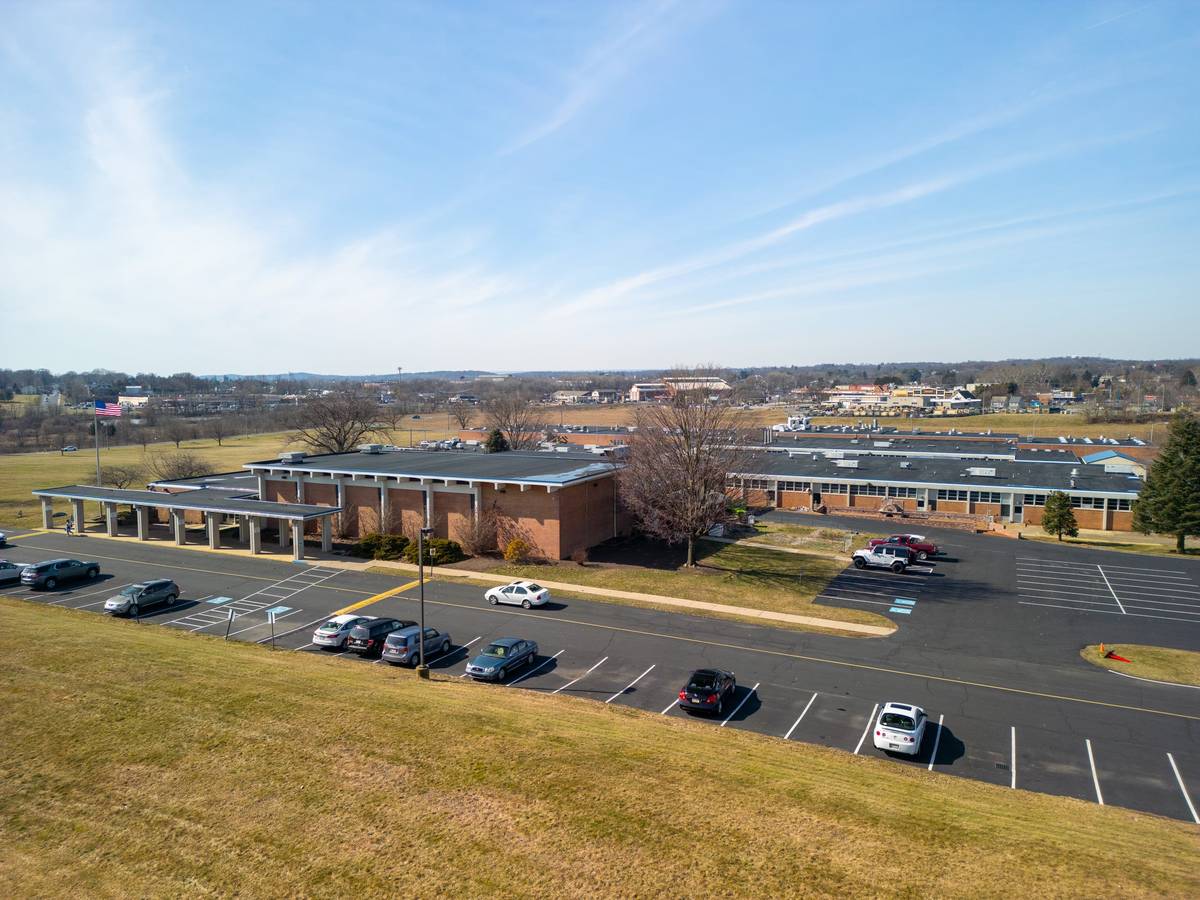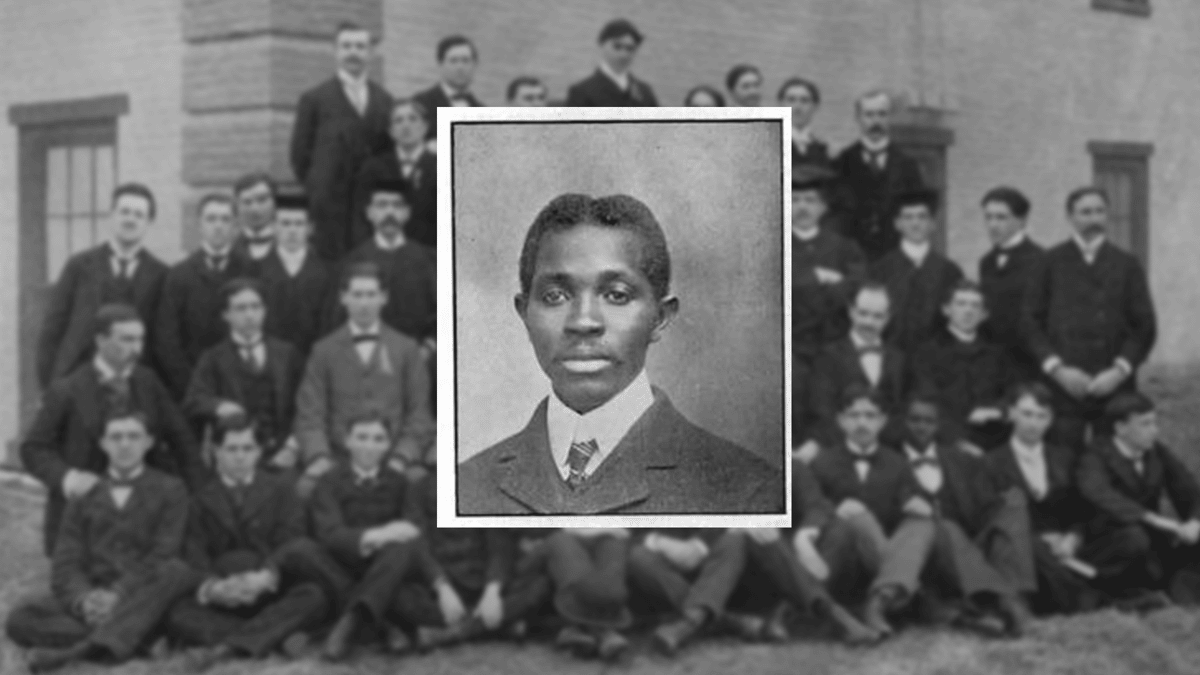

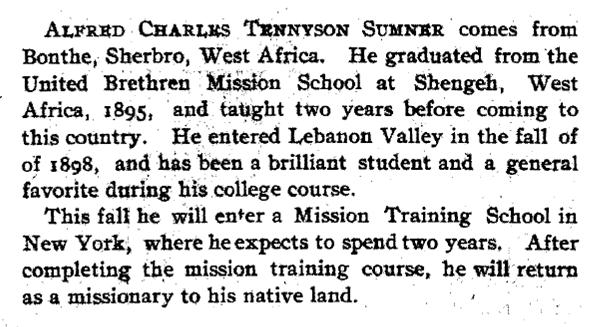
In 1898, Alfred Charles Sumner traveled from his home of Sierra Leone to Lebanon, Pennsylvania, to enroll in Lebanon Valley College.
He would soon become the first Black graduate of the college.
Early life and career
Sumner, born in Bonthe, Sherbo, West Africa, in 1874, was brought up by missionaries of the United Brethren church, which first sent missionaries to Sierra Leone in 1855. A fall 1898 edition of LVC’s College Forum said his parents were “among the first mission children of the U.B. Church.” Sierra Leone is the largest mission field for the United Brethren church, with over 50 churches established in the country.
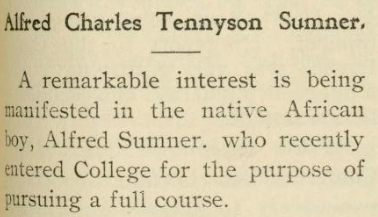
Before coming to the United States, Sumner graduated from the Rufus Clarke Training School in 1894 and subsequently taught for two years at the U.B. School at Bonthe.
In an account published in the 1898 edition of the College Forum (PDF, page 27), Sumner wrote about his time living in Africa. He noted he was not a traveler and could not speak completely to African cultures other than that which he grew up around.
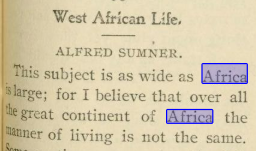
“The subject is as wide as Africa is large; for I believe that over all the great continent of Africa the manner of living is not the same,” wrote Sumner. Referencing the colonization of Africa that took place through the late 19th century (and early 20th), he said, “Some sections are under English influence and would consequently adopt the English mode of living; some under German; some under Portuguese, and others under French influence.”
A mission child who lived his formative years under British colonization (which only ended in 1961), Sumner wrote of African life and its features (including relationships between tribes, religious beliefs, and social practices) in the third person.
“The enjoyments of natives are many,” wrote Sumner. “The dances connected with their secret societies, the Samgba, Kogay, Bimbee, Gbokah are the principal ones. Children take part in these dances, although they have their own enjoyments, consisting of hide-and-seek, tug of war, the leopard and the goat, etc., which are played by moonlight and by fire light when the nights are dark.”
College years
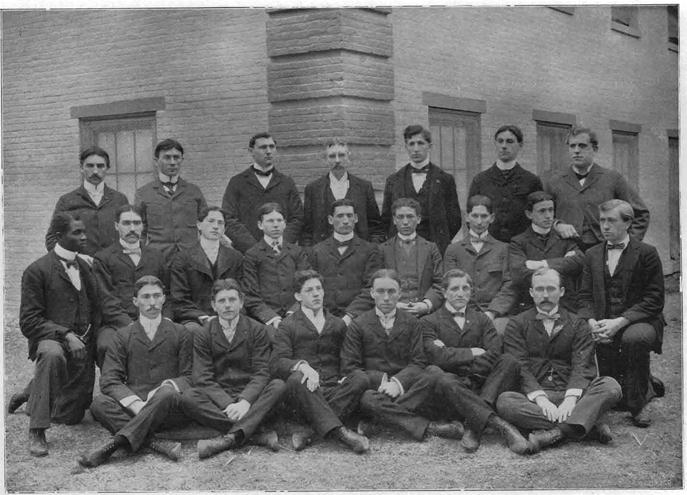
Though LVC never explicitly banned Black students, Sumner was described by the Valley Magazine (Christine Brandt Little and Dr. Tom Hanrahan, Spring 2016) as the first student of color on campus.
Soon after starting school at LVC, an author of the fall 1898 College Forum said, he was well-liked by peers for his intelligence and friendly demeanor.
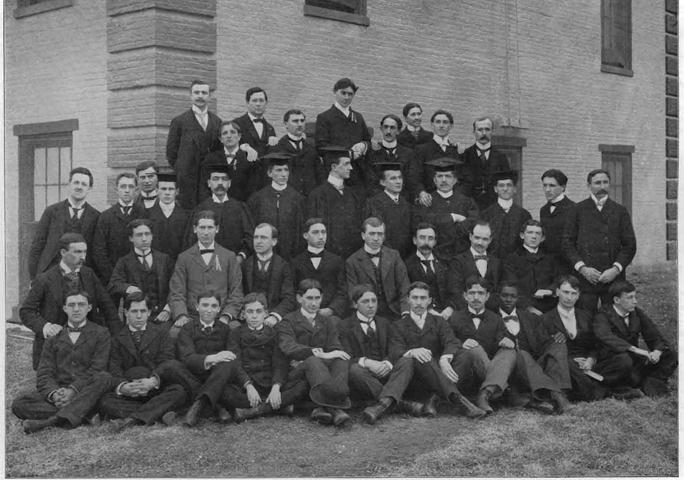
“He has won for himself a host of friends by his genial and manly disposition,” reads the article. “He enters college as a conditioned Freshman, where he shows signs of more than ordinary ability in the aptness and brilliancy with which his class work is attended.”
During his time studying at LVC, Sumner spoke publicly at multiple community events about African life and culture.

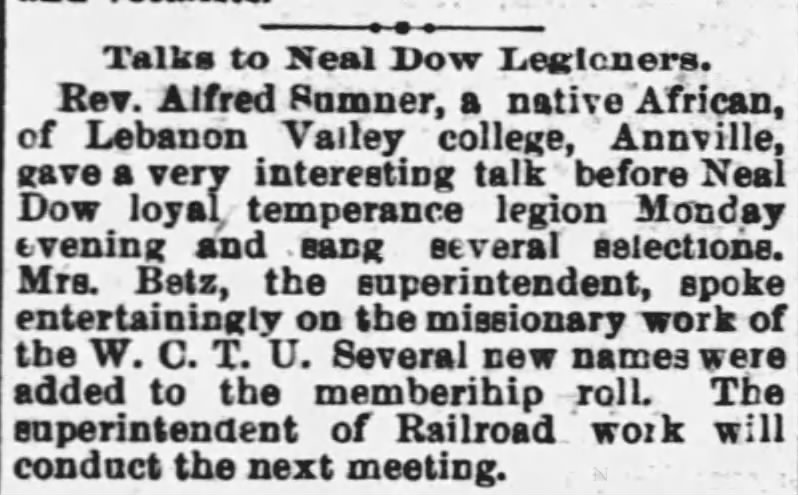
Alfred Sumner spoke to Neal Dow Legioners in August 1899. (The Daily News, Aug. 8, 1899) 
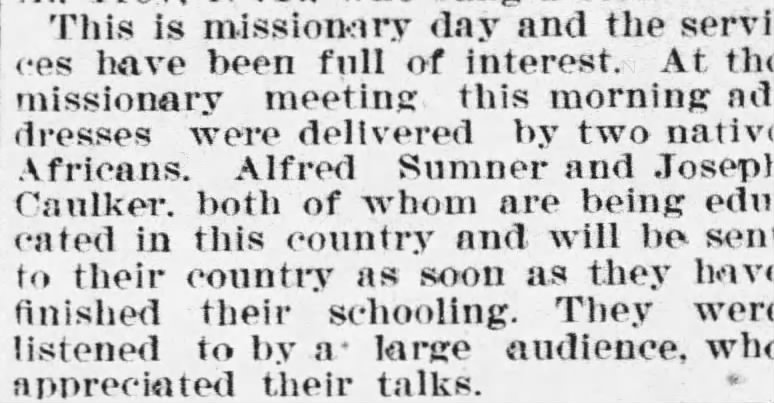
Alfred Sumner delivered a morning address at the Mount Gretna Camp in 1900. (The Daily News, Aug. 11, 1900) 
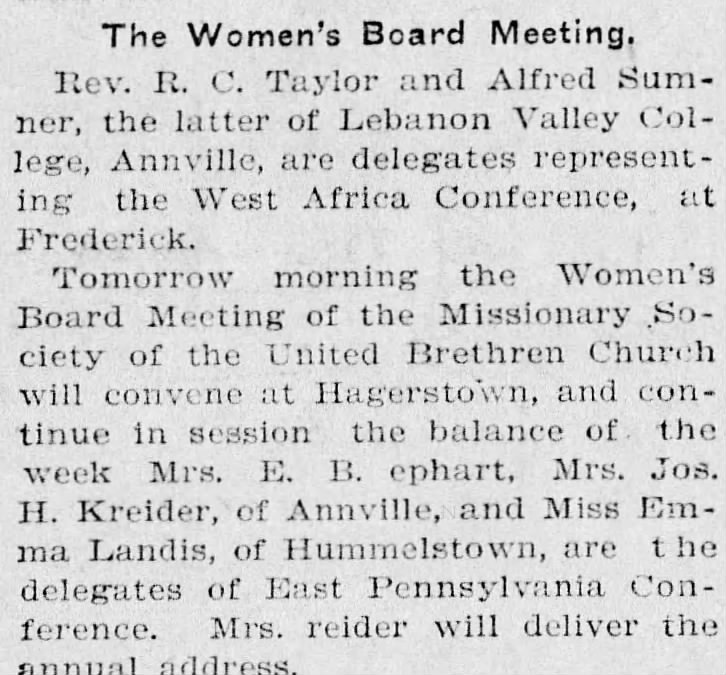
Alfred Sumner served as a delegate representing the West Africa Conference at Frederick in 1901. (The Evening Report, May 8, 1901) 
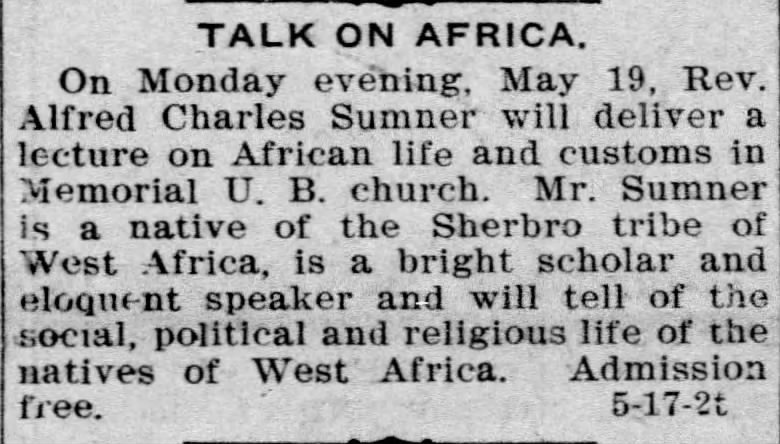
Alfred Sumner spoke at a U.B. church in May 1902 about African culture, described by this Lebanon Daily News advertisement as a “bright scholar and eloquent speaker.” (The Daily News, May 19, 1902)
Sumner was also involved in LVC clubs, appearing in photos of the school’s Philokosmian Literary Society (listed as an organist) and Glee Club/Conservatory. He was also listed as an associate in the College Forum.
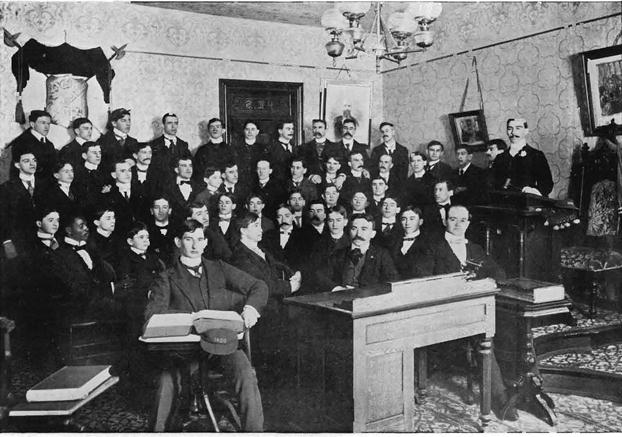
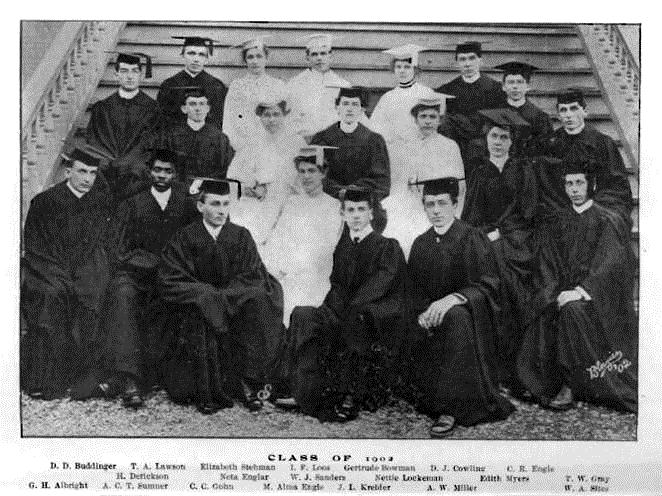
Though LVC records identify 1886 student and Sierra Leonean James Morris Lesher as studying at the school, he did not appear in future yearbooks, making Sumner the first African graduate of the university.
After graduation
Sumner graduated in 1902, with a College Forum biography explaining that he planned to study at a Mission Training School in New York for two years after graduation. An Annville Journal article, reprinted in LDN, explained that Sumner hoped to learn about medicine, “as that is such an important factor in successful missionary work.”
However, when Rev. Ira Albert, a missionary working in Africa from Lebanon County, died in November 1902, Sumner volunteered to take Albert’s place.
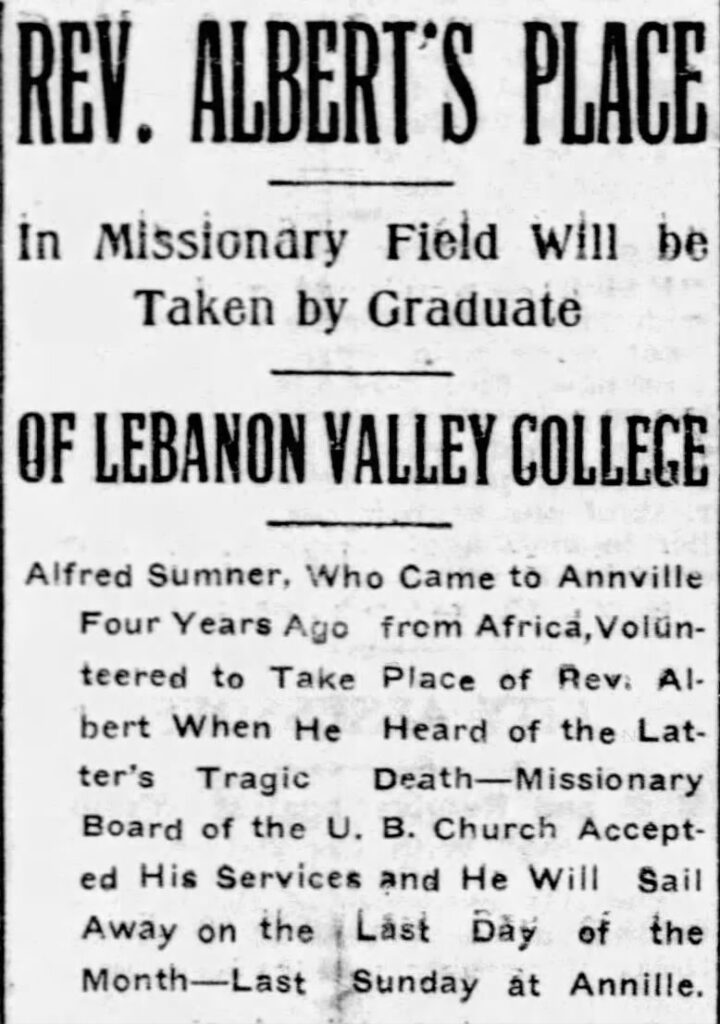
“When news of Rev. Ira Albert’s sad death reached him, he felt it a loud unmistakable call from God; that he was needed at once, to carry the Gospel to his own people; to take the place, so far as he could, that is thus sadly left vacant,” reads the article.
After tearful goodbyes to friends in Annville, the place the Annville Journal called his second home, Sumner made his way back to Sierra Leone.
In the following years, Sumner wrote “a grammar and dictionary that [would] be used in all [the British Government’s] schools in West Africa,” according to a 1918 LDN article.
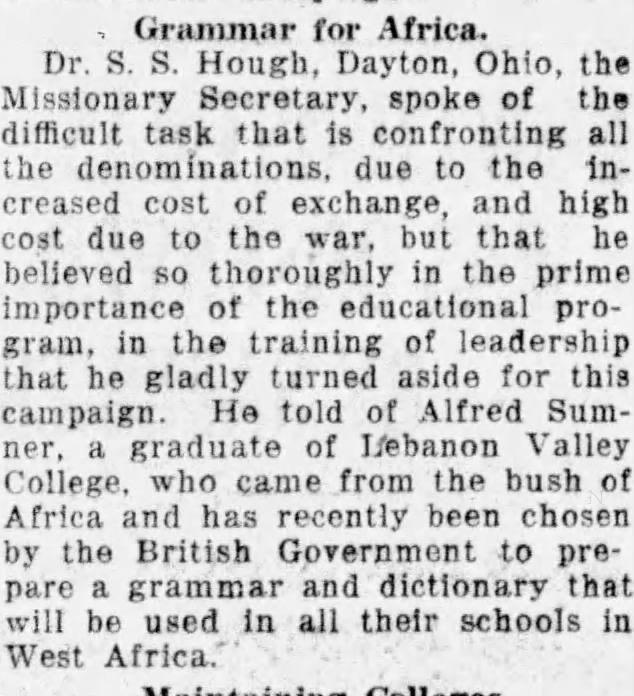
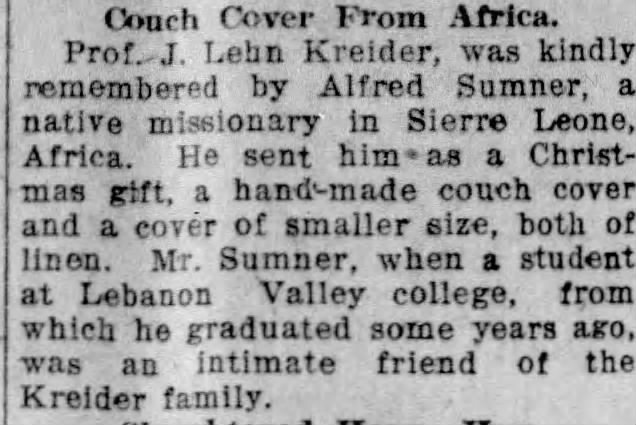
Though there’s no evidence Sumner ever returned to the U.S., he did not forget his time in Annville; in 1918, he mailed a former professor a hand-made couch cover, which was reported on by LDN.
At age 69, Sumner died June 29, 1943. His son Doyle Sumner followed in his footsteps, attending LVC from 1936 to 1938. Doyle then became the Minister of Natural Resources in Sierra Leone.
Questions about this story? Suggestions for a future LebTown article? Reach our newsroom using this contact form and we’ll do our best to get back to you.

Support Lebanon County journalism.
Cancel anytime.
Monthly Subscription
🌟 Annual Subscription
- Still no paywall!
- Fewer ads
- Exclusive events and emails
- All monthly benefits
- Most popular option
- Make a bigger impact
Already a member? Log in here to hide these messages
Free local news isn’t cheap. If you value the coverage LebTown provides, help us make it sustainable. You can unlock more reporting for the community by joining as a monthly or annual member, or supporting our work with a one-time contribution. Cancel anytime.