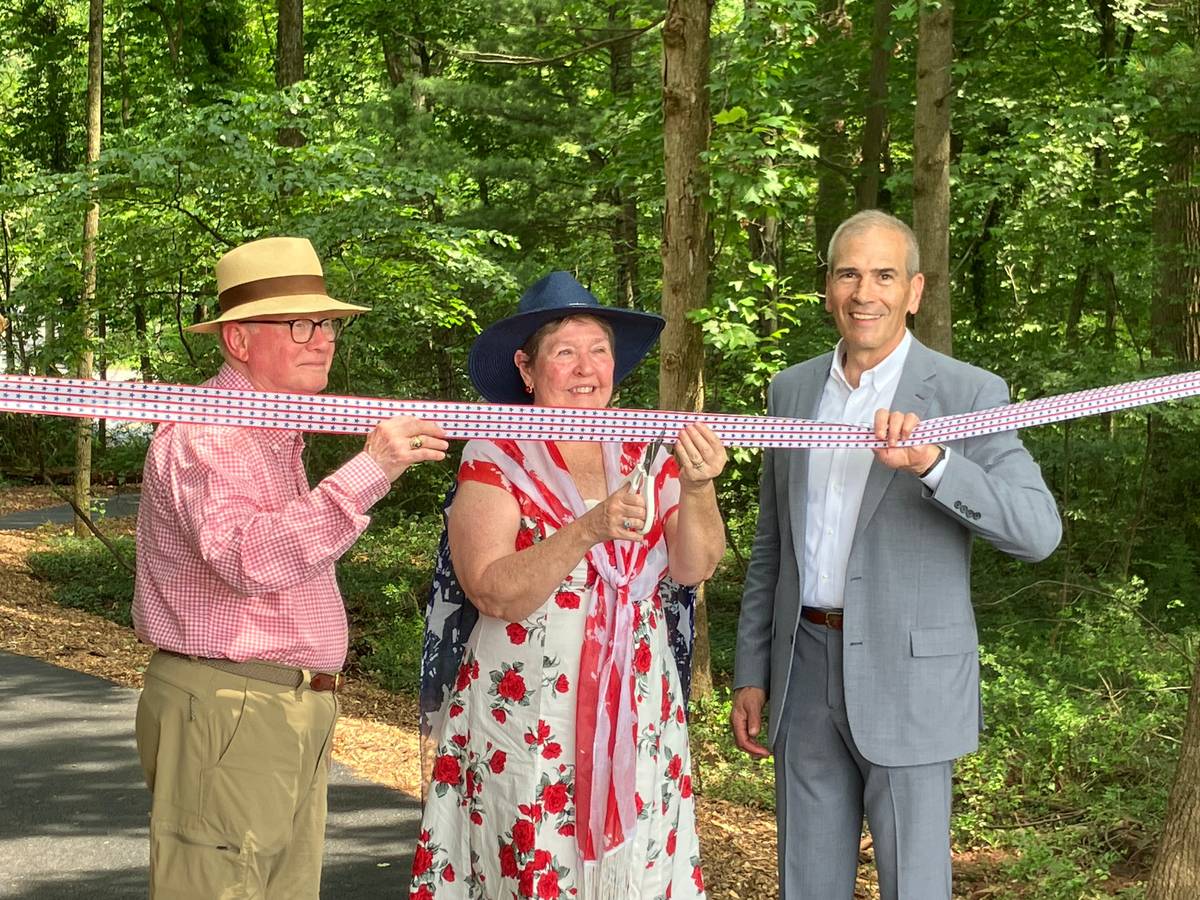

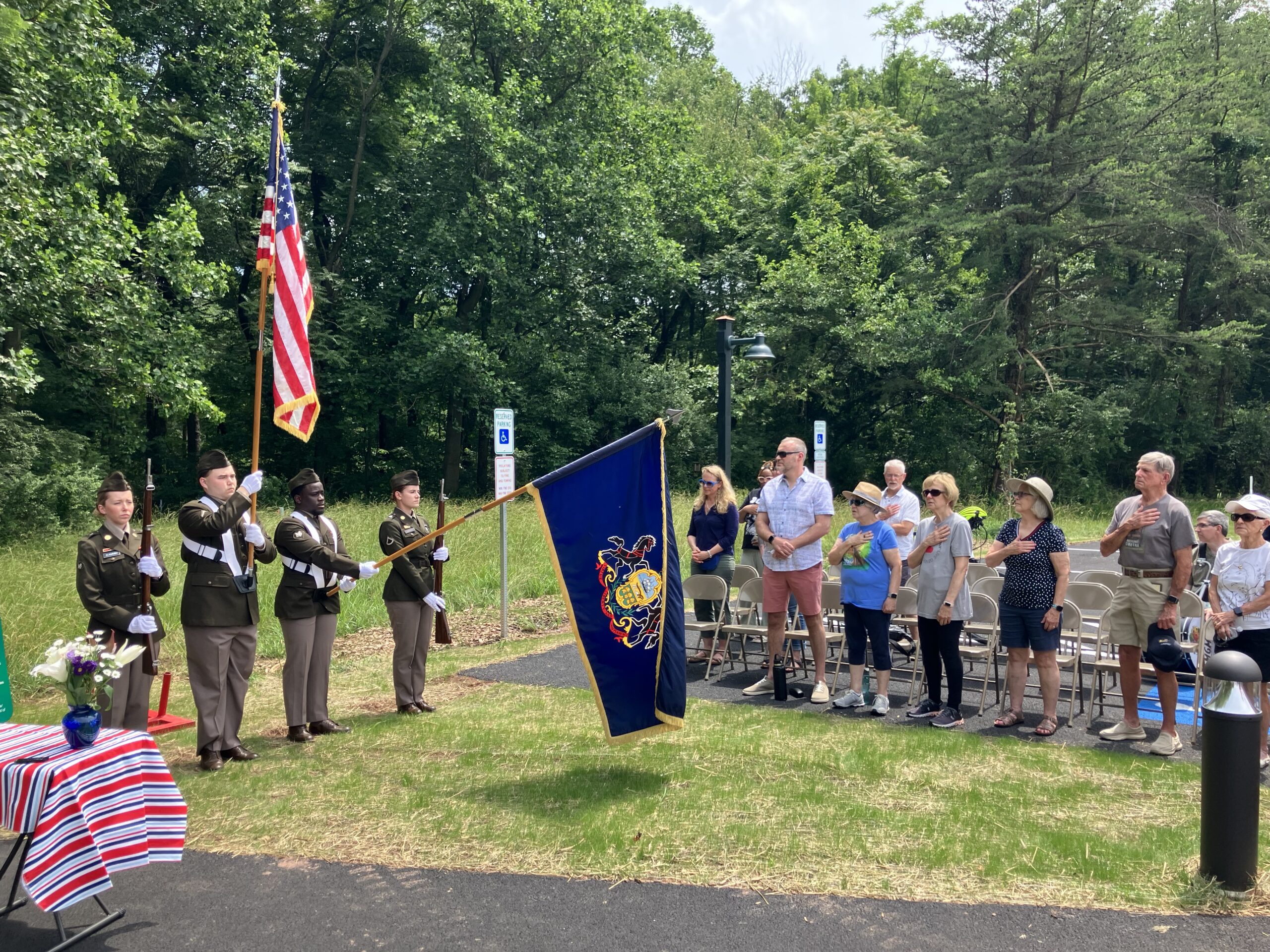
The newly named Soldiers Field at Mount Gretna and the 28th Iron Division Bridge were dedicated at a ceremony on Saturday, June 21.
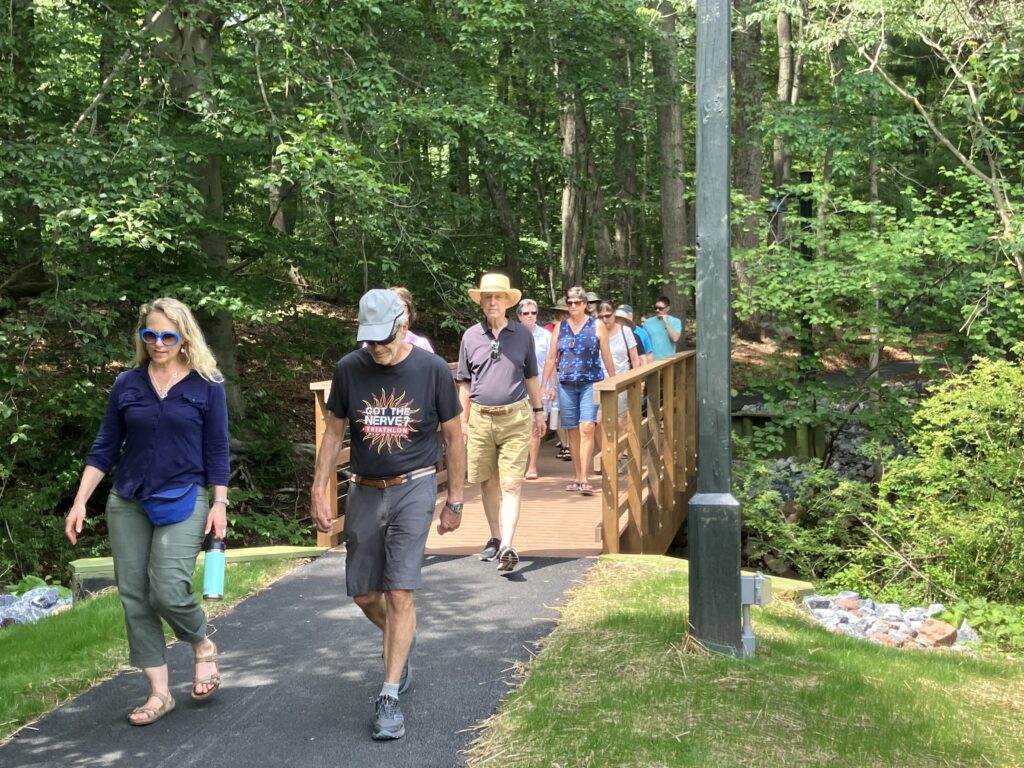
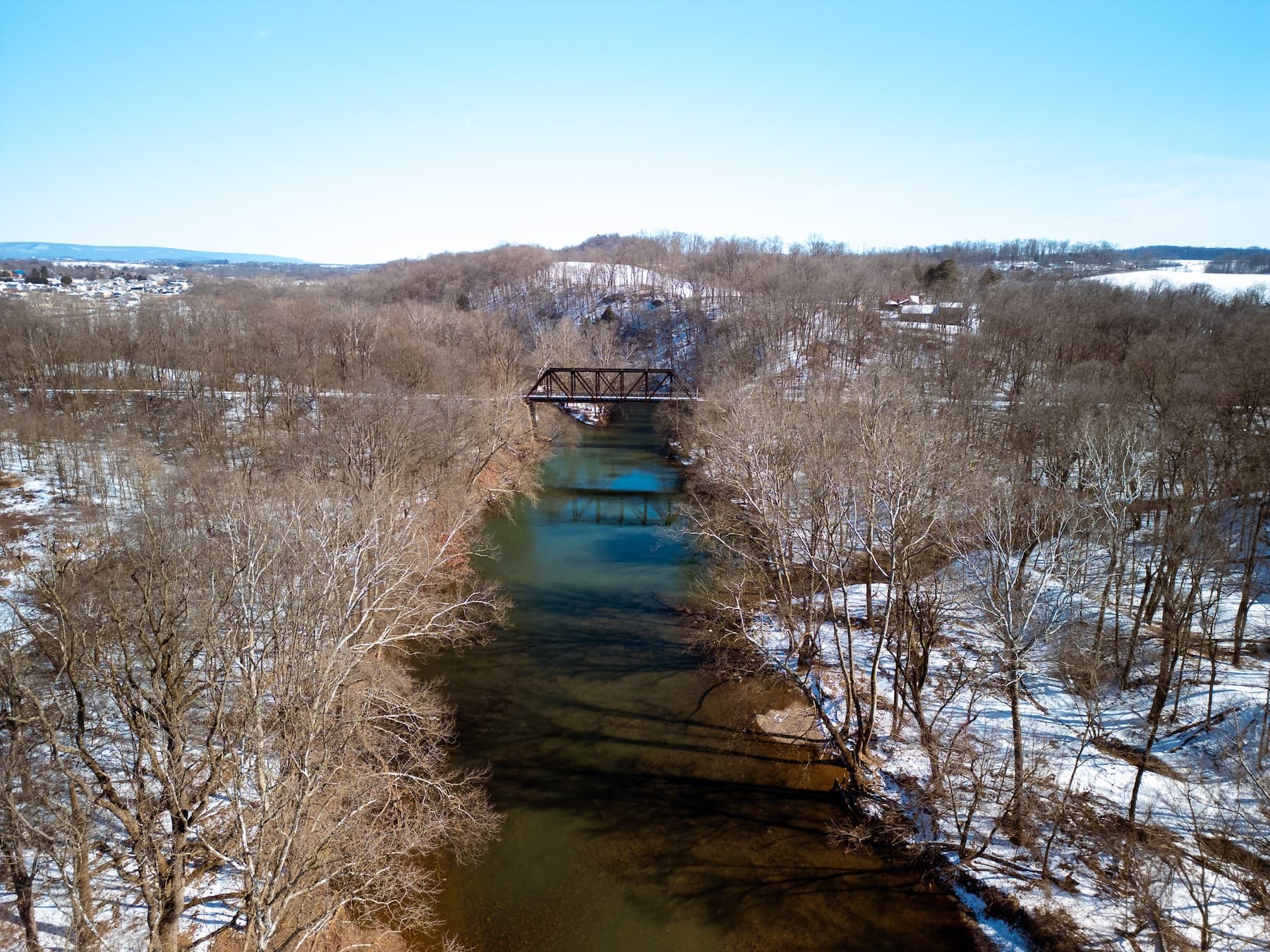
The bridge, which crosses Conewago Creek along State Route 117, connects Mount Gretna to Soldiers Field via a newly paved path that runs from the park into town.
“For 50 years, this very site served as the Pennsylvania National Guard encampment, where the brave men of the 28th Iron Division trained for the Spanish American War, the Mexican border war, and World War I, and also trained in years in between to be a ready and able fighting force,” said master of ceremonies John Weaver. “These soldiers prepared here to serve their country and our community opened its hearts and homes to their families. That partnership between our community and those who served created the foundation that allowed Mount Gretna not just to survive but to thrive.”
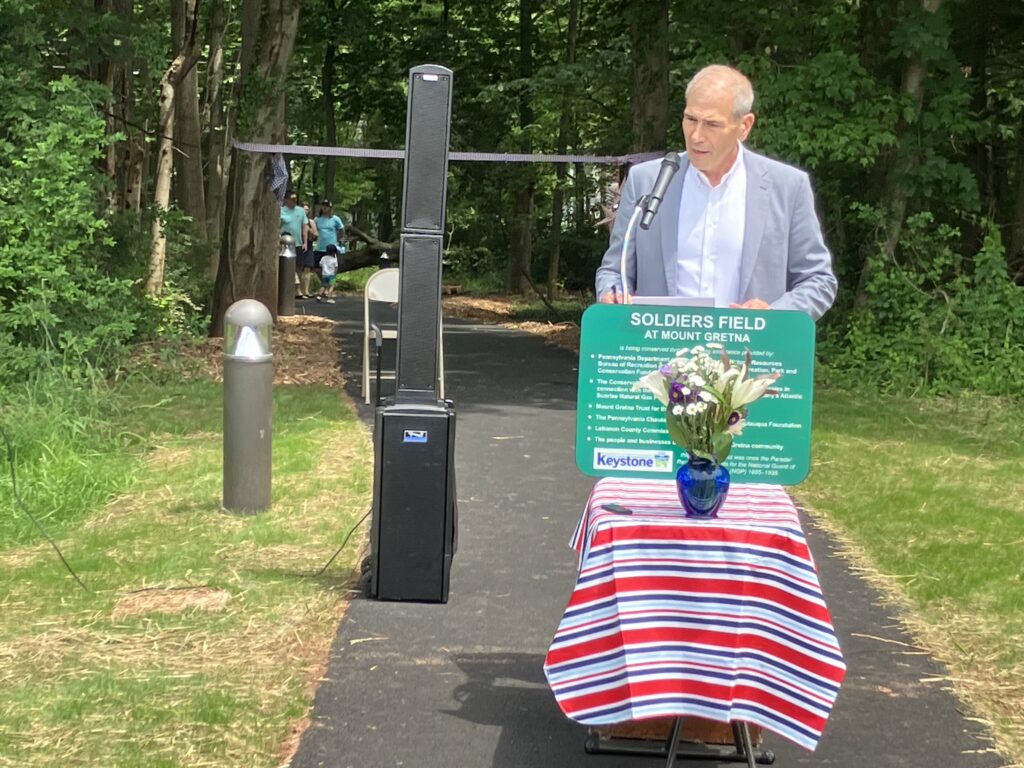
Weaver noted that the Guard’s presence then helped make Mount Gretna what it is today.
“When so many similar turn-of-the-century communities faded away from that foundation, we built our very vibrant camp meeting and we’re one of the last 20 or so Chautauquas in America,” Weaver said. “And we have a flourishing arts community and we attribute the National Guard presence here and all the visitors that we had in those early years to where we are today.”
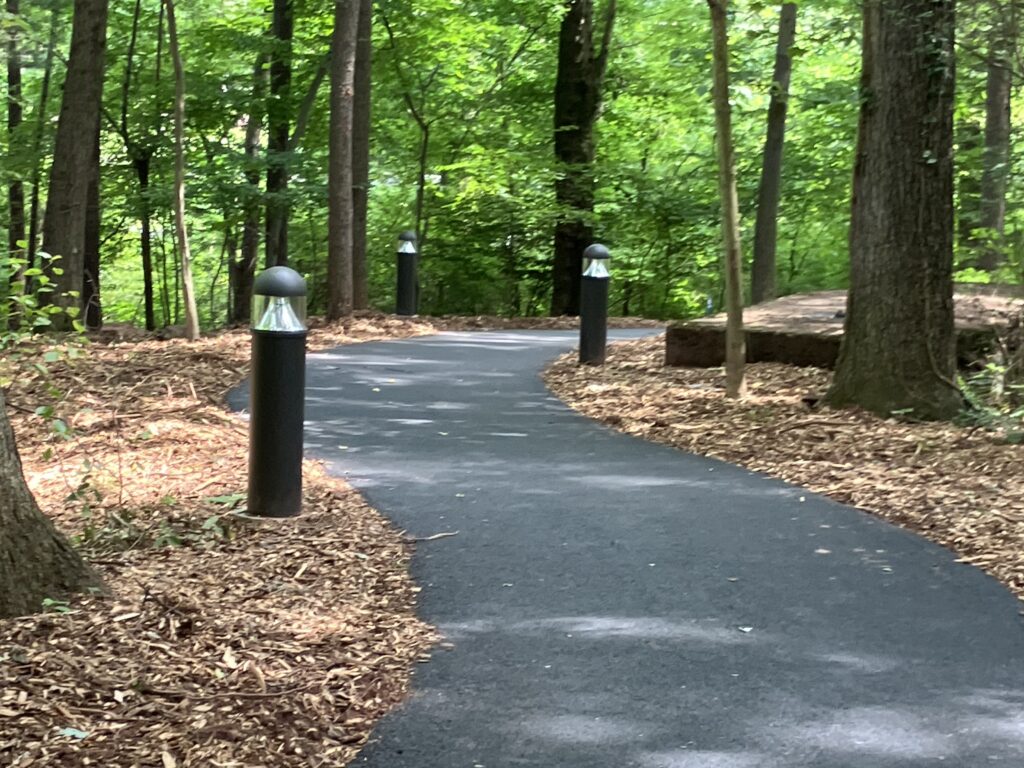
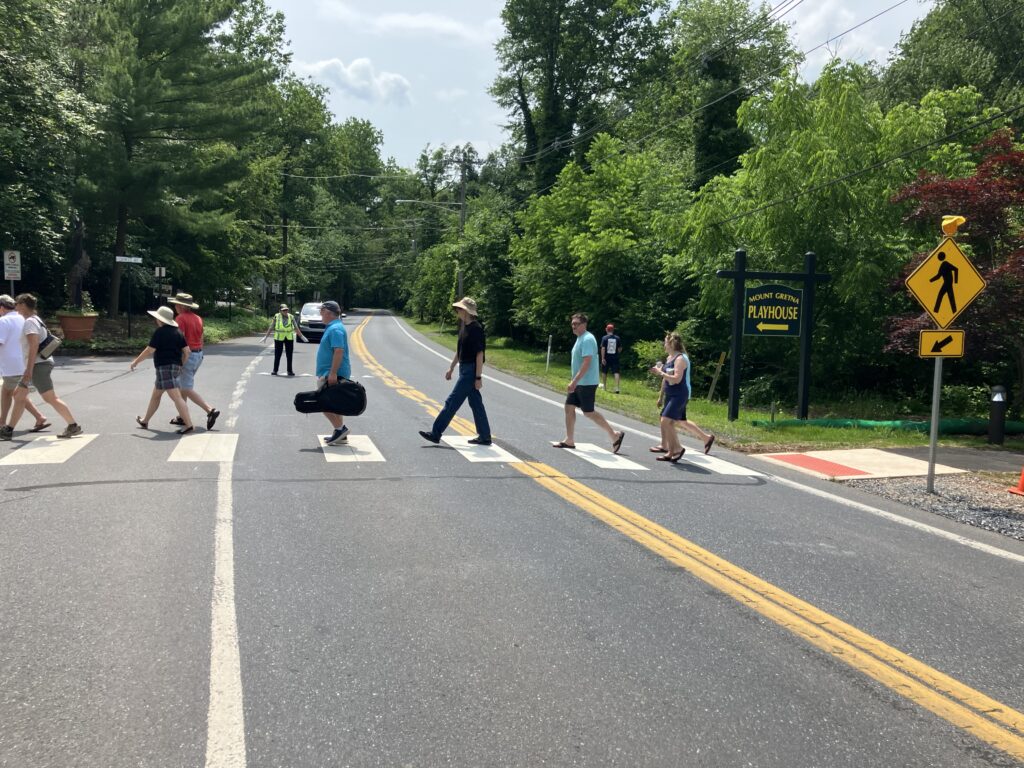
A parking lot with 12 paved parking spaces (including several handicap-accessible) and 37 pervious (grass) parking spaces are at the entrance to Soldiers Field, and an ADA-compliant paved walking path winds through the woods to the bridge, which ends at a newly installed crosswalk with nearby roadway signs noting pedestrian traffic.
There are other benefits, according to Weaver, who addressed a crowd of about 100 people.
“This project protects the riparian buffer along the Conewago Creek, a high quality stream and trout stocked waterway, increases access to the Lebanon Valley Rail Trail, preserves trail remnants from the historic narrow gauge railroad, and protects Soldiers Field, recognizing it as an important part of Pennsylvania’s historic military heritage,” he said.
Weaver noted an educational component will be added to the park in the coming months.
“Our vision for the future here is we want to honor the military history of this site with commemorative plaques that will tell the story of the 28th Iron Division and include QR codes to provide deeper education for our visitors,” said Weaver. “Our historical signs are currently in the design stage and will be installed later this year. Most importantly, we wanted this area to be accessible to all residents and visitors. We want everyone to be welcome here.”
John Feather, who has been involved with the project since day one, presented an overview of the plan 12 years in the making to buy the land to keep it from being developed. (Mike Sherman also worked with Feather to make the project a reality.)
“I suggested to the Pennsylvania Chautauqua board of managers that the Chautauqua purchase the tract known as Soldiers Field, this tract,” said Feather. “This would protect it from residential development and provide open and recreational space and preserve historic sites.”
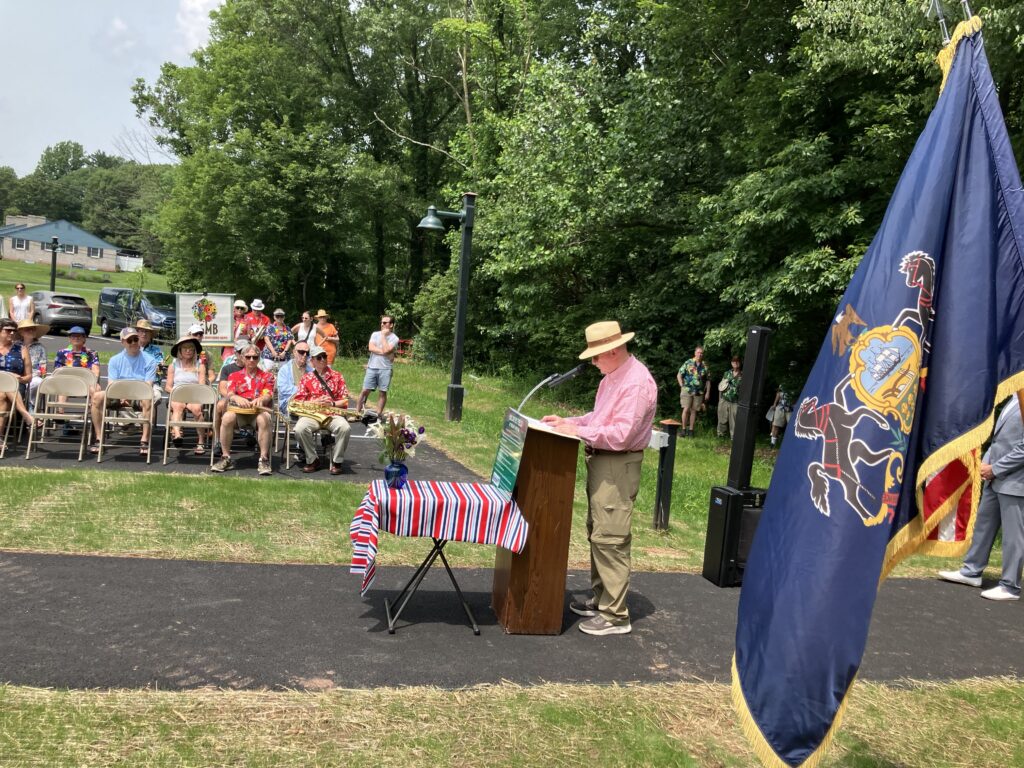
The nearly 18.5 acres were purchased in 2018 for $975,000, he added.
“At the community information sessions, we describe the reasons for buying Soldiers Field. They included preservation of open space, recreational connections, and uses like the restoring of the beach path and restoring the Mount Gretna narrow gauge railroad bed as a walking path,” Feather explained. “Provide historic information about the National Guard of Pennsylvania’s use of Soldiers Field and the use of the narrow gauge railroad which Robert Coleman built. Provide educational opportunities and information about the flora and fauna of the field and the wooded areas. Provide parking for these activities and for overflow parking for the Mount Greta activities. … The community responded generously to the capital campaign.”
Numerous funding sources were cited for helping to complete the vision to preserve Soldiers Field while paying tribute to the military personnel who trained there. Lebanon County Commissioners were among the funding sources, providing $150,000 in American Rescue Plan Act funding, which was distributed to states to stimulate economic development during the pandemic.
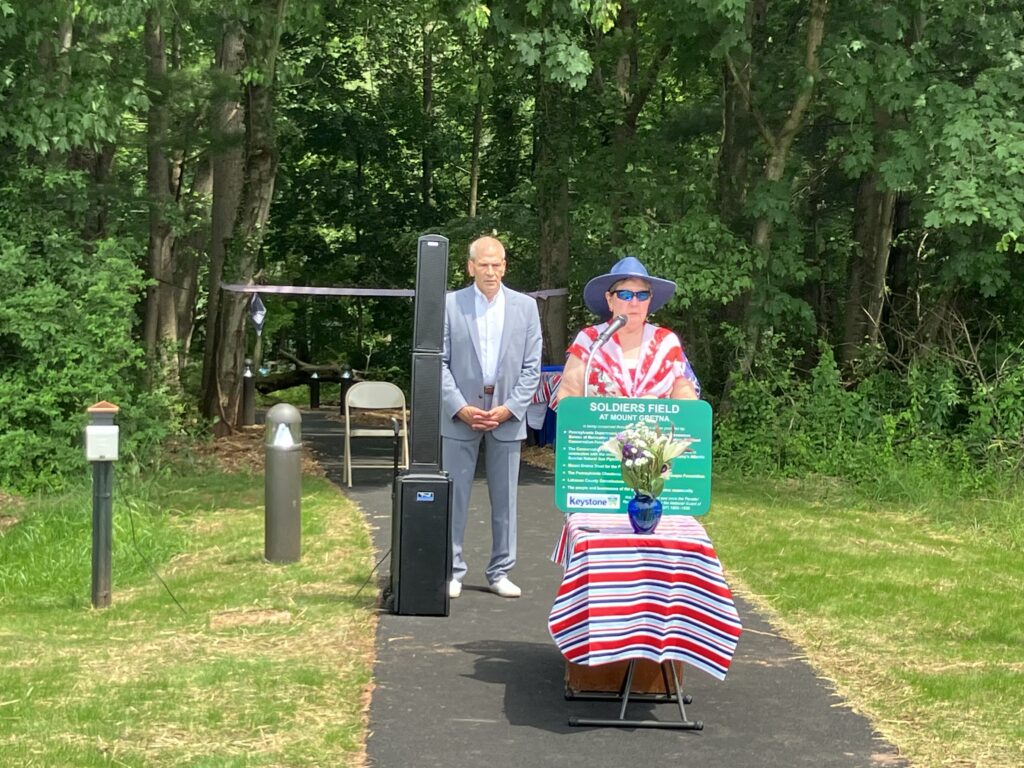
Lebanon County Commissioner Jo Ellen Litz spoke on behalf of her colleagues.
“What I see today is awe-inspiring. I can tell you that you’re bringing together, and you already know this, but the history of the area and the recreation. And you know, you can be proud,” Litz said. “Some of you have been here all your life like me. Others have not. We are a very conservative community and we do things frugally in Lebanon County. But when you get people like Mr. Sherman here and the Conservation Fund helping to put the money in that, the big money that really made this possible. How fortunate can we be?”
Pennsylvania Chautauqua president Jim Cassel said the Gretna community got behind the project by helping to raise money and volunteering their time and talents.
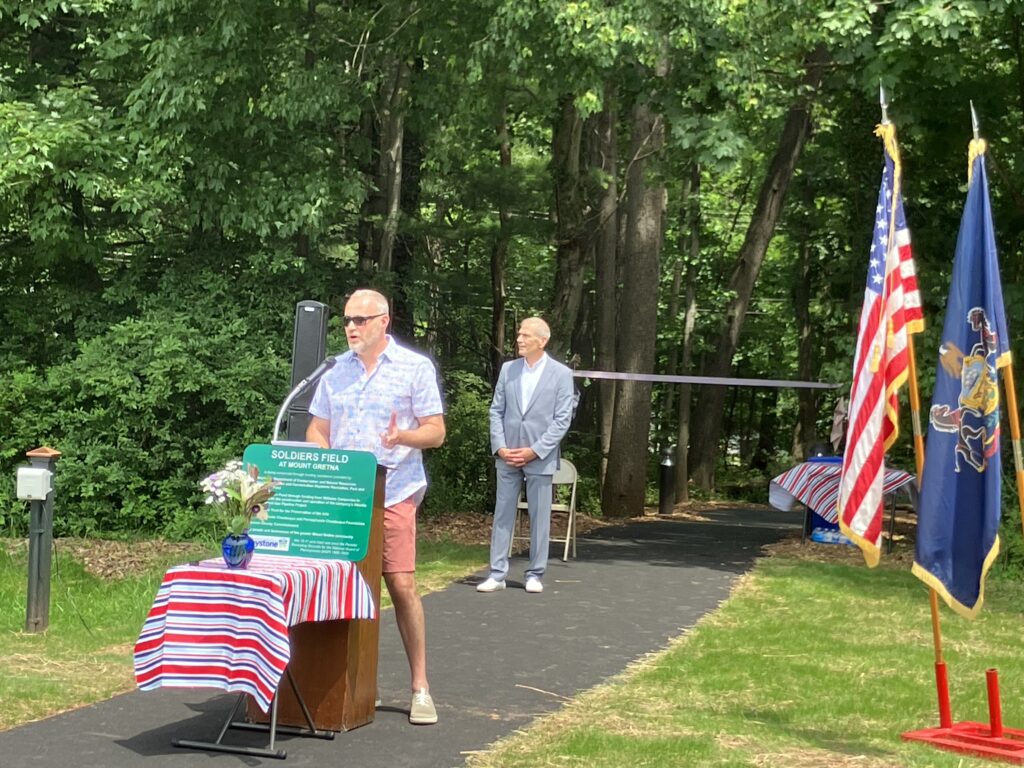
“One of the good and the bad of my job as the president of the board of managers is I hear a lot of feedback from the town. And as this project progressed and has gotten closer to completion, the feedback that I’ve had has been overwhelmingly positive and that’s from within and outside of the Chautauqua.”
Positive feedback covered a variety of topics related to the project, including the diversity of not one but four communities located within the Mount Gretna area.
“People are excited that we have 20 acres of land that’s going to be preserved as open space for the community in perpetuity. They’re excited about, just behind me, the work that’s being done to remove invasive species from the woodlands,” said Cassel. “Just behind everyone here approaching Timber Road, a wildflower meadow has been installed with all native wildflowers. People are excited about the restoration of the beach path, that’s helping to bridge and bring together different communities, the camp meeting, the heights, Timber Hills, and the Chautauqua. And finally, folks are excited about the path that I’m standing on that leads to the bridge that will take everyone into the center of town, again helping to better connect our different communities.”
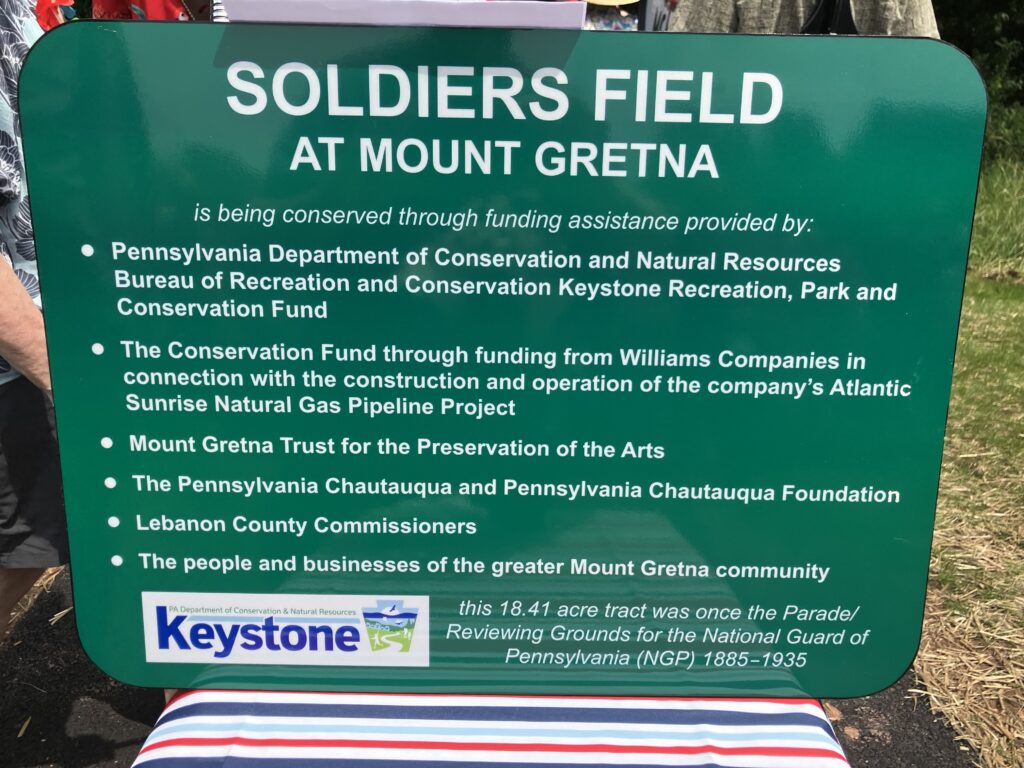
Not everyone, however, is pleased with the land being turned into a park that contains parking.
The NGP Project, a 501c3 nonprofit that explores the history of the National Guard of Pennsylvania from 1866-1917, in a social media post from last December stated their dissatisfaction with the inclusion of a parking lot on land they were told would be preserved for future generations. NGP leader Jim Ables did not immediately respond to requests for comment.
“We are disappointed to learn of the recent outcome of one of the preservation efforts that we supported and promoted,” reads the Dec. 13, 2024, Facebook post. “Moving forward, The NGP History Project will have more stringent reviews of entities that we choose to support to ensure that their views and goals of conservation and preservation align with ours.”
Weaver told LebTown last week that NGP will work with town officials on the text to be placed on the historical markers.
Mount Gretna resident Michael Spondello said he has been and still is opposed to the project, citing a number of reasons.
He said after the land was purchased, residents had no say in its development, noting the “committee” that was formed to explore ideas to use the park didn’t really matter since the lot plans were “already set in stone by the Johns” (John Feather and John Weaver).
Spondello called the parking lot “an eyesore” and said it won’t relieve parking issues in Mount Gretna since there is reportedly a plan to ban parking along Route 117 through town. Concerning NGP, Spondello said their participation is being sought to alter public perception of the project.
Read More: Mount Gretna Borough Council discusses parking ban on Route 117
“If the NGP is allowed by the Johns to erect historical markers, it is only because the Johns were frantic when NGP publicly denounced their actions and the Johns are allowing this to alter public perception,” Spondello wrote.
Weaver disagreed with Spondello about NGP’s involvement moving forward, citing numerous emails between that organization and Chautauqua concerning the historical markers.
“I talked to Jim Ables, or I’ve emailed back and forth with him, and he wants to use what’s happened to memorialize what has happened there,” said Weaver. “Jim said he couldn’t be here this weekend, he had another commitment. But he’s looking forward to working with us as we develop our historical markers.”
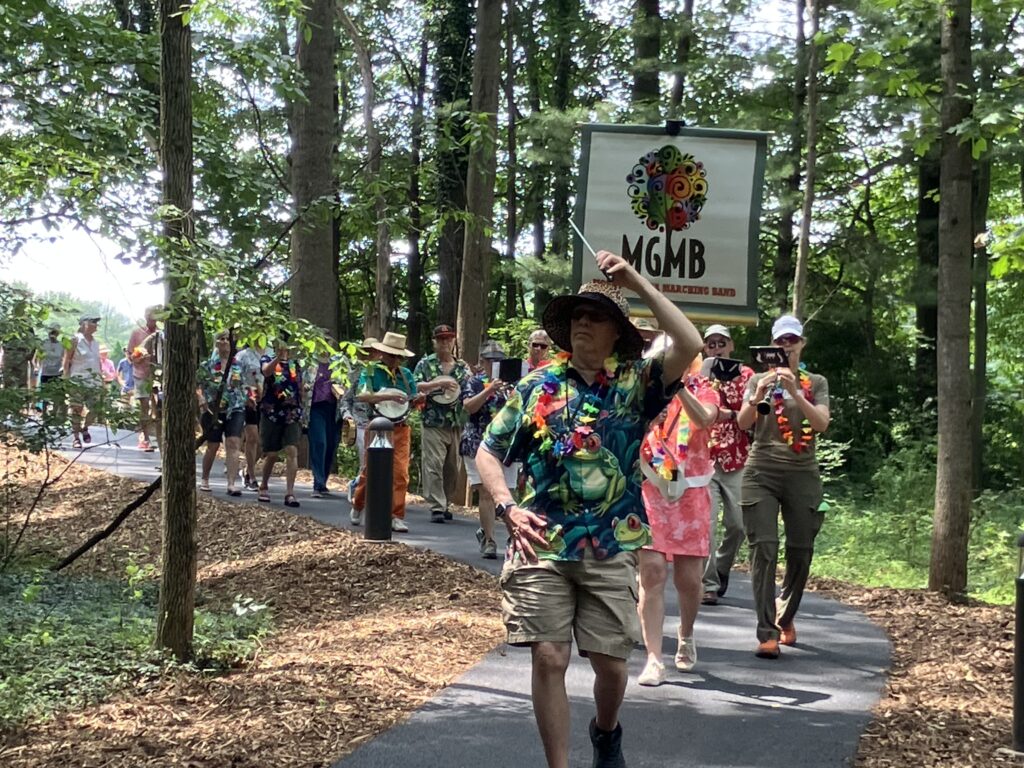
Following dedication comments, Litz cut the ribbon that was placed at the entrance to the path leading from Soldiers Field into town. The recently formed Mount Gretna Marching Band led the processional down the pathway through the woods, across the bridge, and over Route 117 at the crosswalk, ending the parade at the Chautauqua’s Hall of Philosophy.
During the procession into town, the band played “This Land is Your Land,” “Tequila,” and “At the Hop,” the latter after arriving at the HOP building in town. Trumpet player Earl Beyer of Palmyra jokingly said that song is a tongue-in-cheek reference to the building, which is where post-ceremony refreshments were served.
Questions about this story? Suggestions for a future LebTown article? Reach our newsroom using this contact form and we’ll do our best to get back to you.
Support Lebanon County journalism.
Cancel anytime.
Monthly Subscription
🌟 Annual Subscription
- Still no paywall!
- Fewer ads
- Exclusive events and emails
- All monthly benefits
- Most popular option
- Make a bigger impact
Already a member? Log in here to hide these messages
Strong communities need someone keeping an eye on local institutions. LebTown holds leaders accountable, reports on decisions affecting your taxes and schools, and ensures transparency at every level. Support this work with a monthly or annual membership, or make a one-time contribution. Cancel anytime.