
Surveys and license sales trends show that trout consistently rank as the most popular fish species in Pennsylvania, accounting for more angling trips than any other.
But they’re not necessarily a year-round draw.
For many anglers, trout fishing starts and ends in spring. It’s an ice-out-to-Memorial-Day activity, a stretch of weeks centered around the season’s opening day – the first Saturday in April each year – and that time when the Pennsylvania Fish and Boat Commission’s stocking trucks are crisscrossing the state to release fish in lakes, streams and rivers.

After that, more than a few pack their rods away until the next year.
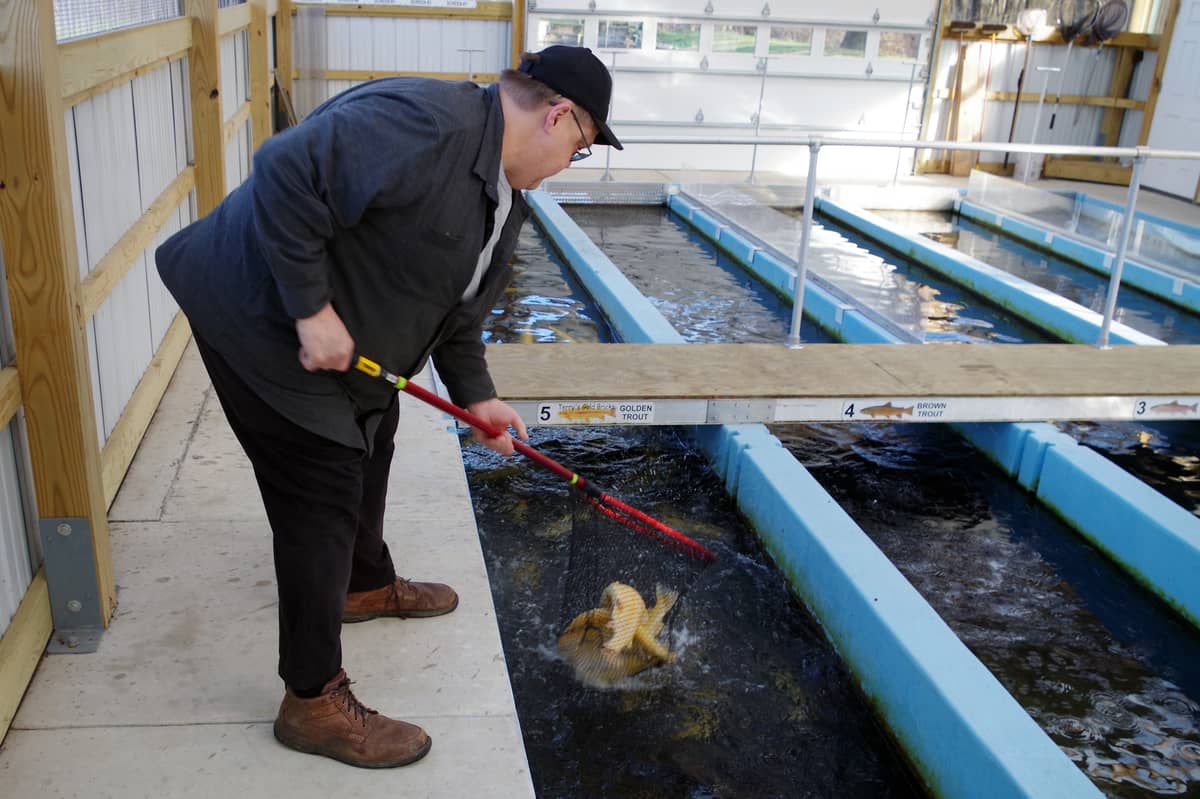
Fish and Boat Commission officials want to change that, though, and keep more people fishing longer into summer. So they’ve relatively recently begun stocking channel catfish – a species that remains active and bites readily when summer drives water temperatures beyond what trout tolerate – in a number of waterways, including Memorial Lake and Stoever’s Dam in Lebanon County.
“At Stoever’s, for example, we stock trout,” said Bryan Chikotas, an area fisheries manager for the commission. “But once the trout fishing season is over and the lake warms up, we thought we might be able to kind of keep it rolling with a warmwater species like channel cats. So we’re trying to develop a fishery for them.”
This, though, is a long-term effort.
Stocked trout are an instant-gratification kind of fish. Most of those put out by the commission each year are released as adults, typically a little longer than 10 inches (they must be at least 7 for legal harvest). The thought is that a large percentage of the trout will be caught within weeks or months.
Read More: Trout stockings underway all across Lebanon County ahead of opening day
When it comes to channel catfish, the commission is releasing yearling fish that average 5 to 8 inches, with the thought that they’ll take root in each lake, grow, and reach suitable sizes in three to four years. If that seems like a long time, it’s not necessarily, at least by comparison. There was a time when the Fish and Boat Commission stocked channel cats as “fingerlings,” or fish raised in a hatchery for less than a year. They were typically released at 3 or 4 inches.
They take longer to mature, delaying good fishing. But they present another problem.
Namely, few last very long.
“Studies done in previous years showed that when we stocked smaller fall fingerlings, there was a considerable amount of predation,” said Walt Yetter, manager of the commission’s Pleasant Mount hatchery.
Largemouth bass in particular are a significant predator of young catfish. That’s a potential issue in both of the Lebanon County lakes in the program, but especially Stoever’s, which has an unusually high density of bass too small to be jaw dropping but just big enough to eat a lot, Chikotas said.
The move to stock fewer but larger catfish, as yearlings, is an attempt to boost survival by getting a greater percentage of them past those bass so that they end up on the end of an angler’s line sooner and more often, he added.
“By moving to these larger-size fish, we think that we can create more of an instantaneous catfish fishery in a few years in these lakes,” Chikotas said. “And we’re picking lakes that are kind of on the fertile side, that are productive, that are fairly shallow, so they have nice, warm water in summertime. Channel cats like that warmer temperature regime.”
Just how big the yearling catfish released in any given year are, and when they leave the hatchery, depends on weather. Nicholas Yaroszewski, manager of the commission’s hatchery in Linesville, said channel cats can be stocked in spring “if water temps and feed conditions are idea throughout winter.
“If conditions are not ideal, then they will be given the summer to grow out and then be stocked in early fall. This would be hatchery dependent,” he said.
Last year, he noted, the commission stocked 80,910 yearling channel cats that weighed a collective 5,177 pounds. In 2023, the commission stocked fewer fish – a total of 67,593 yearlings – but they were bigger, weighing 7,271 pounds.
This year’s goal, according to one Fish and Boat Commission report, is to stock 93,575 yearlings, along with 7,200 fingerlings, in 47 waters across 30 counties.
This catfish stocking is all pretty new. It began in waters in southwestern Pennsylvania less than a decade ago and moved here more recently. Memorial Lake got channel catfish fingerlings in 2021 and 2022 and yearlings in 2023 and 2024. Stoever’s Dam got fingerlings in 2021 and yearlings in 2023 and 2024. Both are to get yearlings again this year.
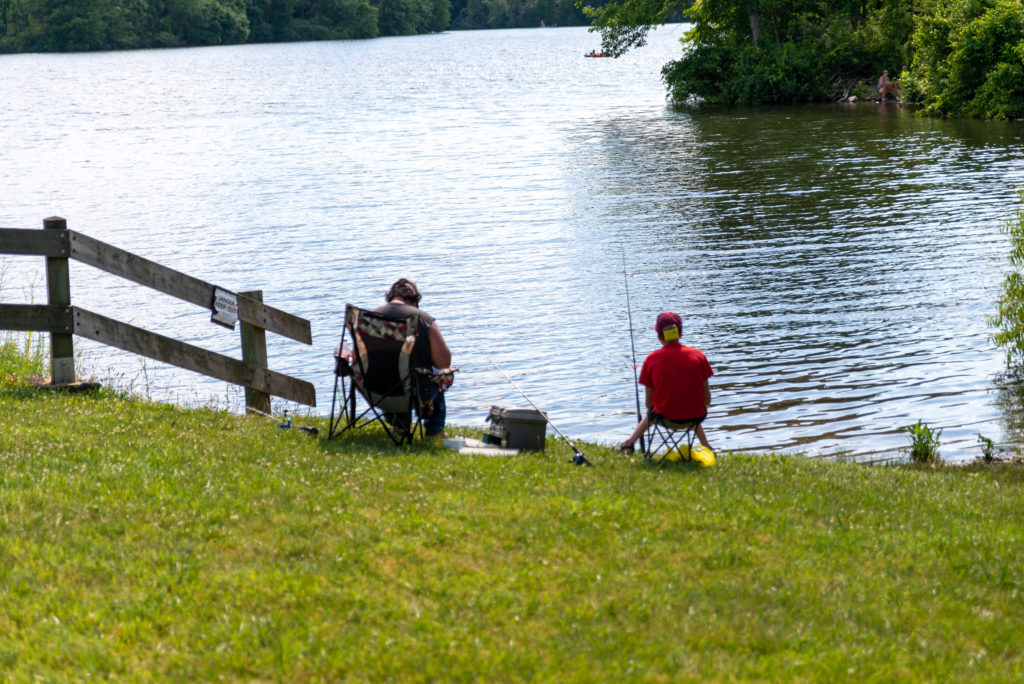
How well the catfish are faring in the two lakes is so far is a bit of a mystery. As they do when assessing fish populations in waters all around the state, commission biologists will eventually sample both lakes using a combination of trap nets and hoop nets, which fish swim into but can’t escape. That allows biologists to collect, identify, count, and measure them before releasing them back into the lake.
But catfish aren’t easily caught when they’re juveniles, Chikotas said. So the commission is going to give them some time before trying to figure out how they’re doing. The plan is to survey both lakes in 2028 or 2029.
If the fish do as well as hoped, though, anglers will notice them long before then.
In other lakes stocked with yearling channel cats, it’s only taken three or four years for some of those fish to reach 18 inches long, Chikotas said. By then, they’ll weigh about 2.5 pounds, on average. Fishermen could potentially begin to see channel cats of that size in Memorial Lake by 2026 and in Stoever’s by 2027, he added.
“So that’s a decent-sized channel catfish,” Chikotas said. “And it’s a good eating size.”
Much bigger ones could result longer-term, though. Pennsylvania’s state record channel catfish, caught in 1991 in Lehigh Canal, weighed 35 pounds, 3 ounces. The world record, caught in South Carolina in 1964, weighed 58 pounds.
Those are exceptional fish. But, according to a presentation once given by Mike Depew, a Fish and Boat Commission fisheries biologist based in Somerset County, to the agency’s board, it’s reasonable to expect channel cats up to 25 inches and 4 to 5 pounds in plenty of places, with some 10-pounders mixed in.
If, in time, Memorial Lake and Stoever’s Dam can offer those kinds of opportunities, the commission will have met its goal of providing anglers with another reliable fishery at another time of year, Chikotas said.
“There are occasional catches of some channel cats in the lakes that have been managed with fingerlings,” he said. “But the yearling program is really designed to create a fishery where anglers can have a higher expectation of catching fish and targeting fish in the summertime with more success than just a random catch here and there.”
How, when and where
Anglers don’t have to wait to fish for channel catfish locally. Though they are not stocked in any other waters in the county, there is a population present in portions of Swatara Creek. Those fish are likely ones that moved upstream from the Susquehanna River.
As for how to fish for them, the Fish and Boat Commission suggests using chicken or beef livers, cut bait (chunks of baitfish, essentially), minnows or commercially-available stink baits, all fished on the bottom with a single- or treble-hook slip rig. Channel cats also sometimes hit spinners or lures tipped with a minnow or nightcrawler, the agency adds.
Use size 4 hooks on 10-pound-test line on a medium-action rod. They often hit after dark, but are commonly caught early and late, too.
Read More: Getting hooked on fishing in Lebanon County with free fishing gear program
The season on channel catfish, meanwhile, is open year-round. There is no minimum size that must be met before a fish can be harvested. The daily creel limit is 50 fish.
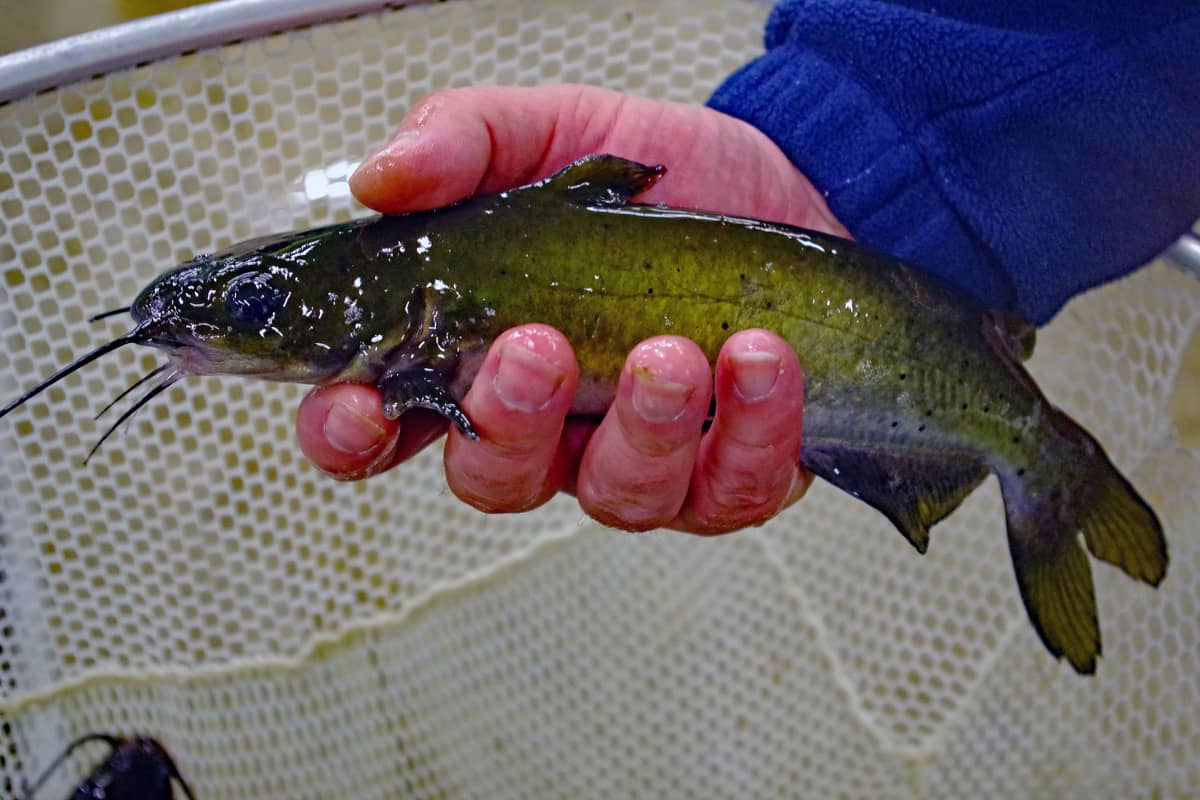
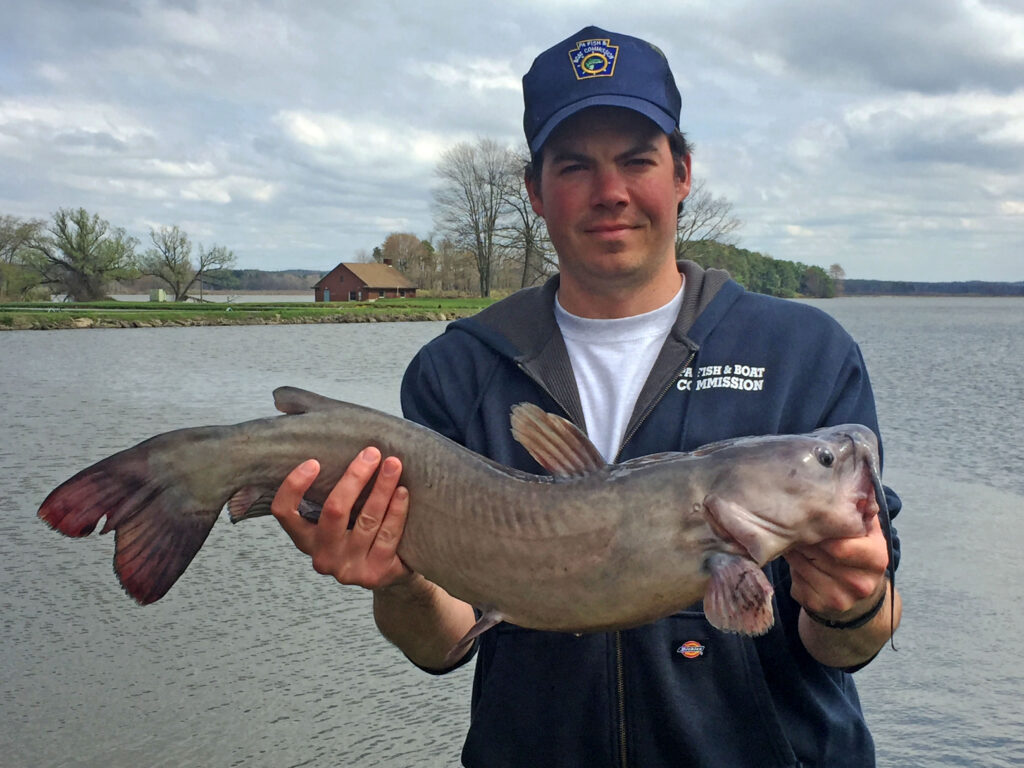
And how will you know if your catfish is a channel cat? There are several other species of catfish that live in Pennsylvania, from monstrous flatheads to smaller brown and yellow bullheads. One giveaway is the tail: channel cats have a deeply-forked tail with pointed lobes. The fork gets a little less noticeable – it can even disappear – when the fish get really big. But in most cases, it’s easy to spot.
Otherwise, channel cats are typically blue-gray to slate-gray or bluish olive on the back, with silvery-gray sides and white bellies. Their barbels are long and black, and they have small, irregular spots on the sides and back that no other catfish species has.
Questions about this story? Suggestions for a future LebTown article? Reach our newsroom using this contact form and we’ll do our best to get back to you.
Support Lebanon County journalism.
Cancel anytime.
Monthly Subscription
🌟 Annual Subscription
- Still no paywall!
- Fewer ads
- Exclusive events and emails
- All monthly benefits
- Most popular option
- Make a bigger impact
Already a member? Log in here to hide these messages
An informed community is a stronger community. LebTown covers the local government meetings, breaking news, and community stories that shape Lebanon County’s future. Help us expand our coverage by becoming a monthly or annual member, or support our work with a one-time contribution. Cancel anytime.