
This letter was submitted to LebTown. Read LebTown’s submission policy here.
To: Dr. Malinoski and the Lebanon School Board of Directors
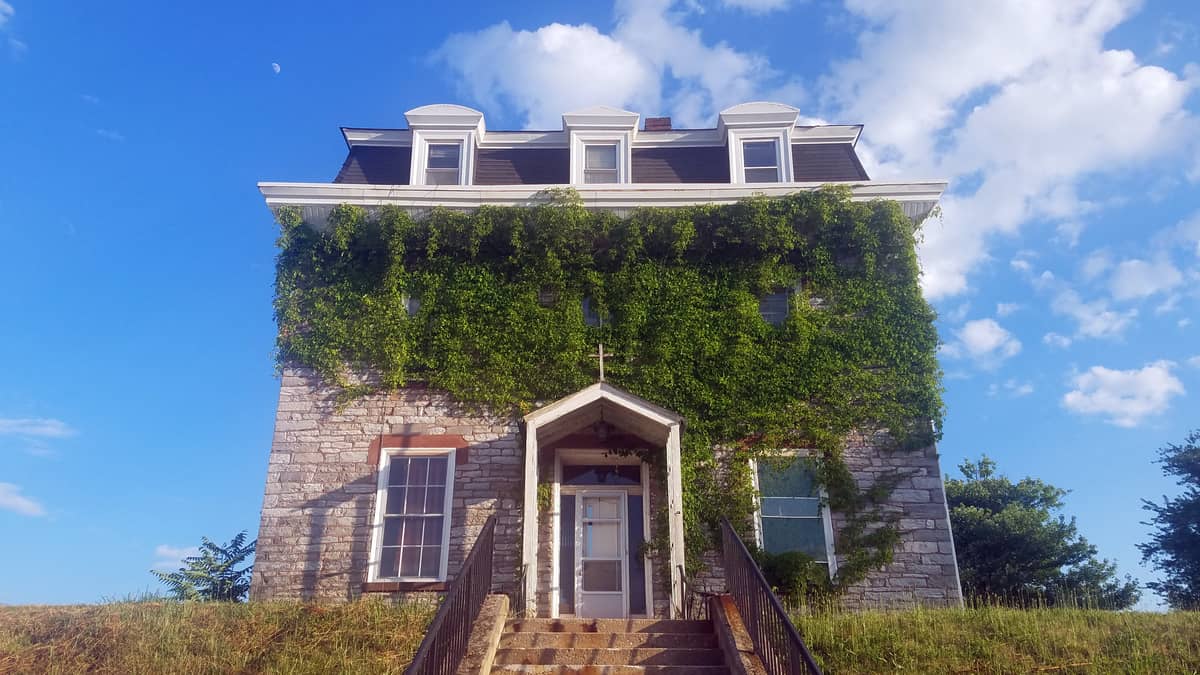
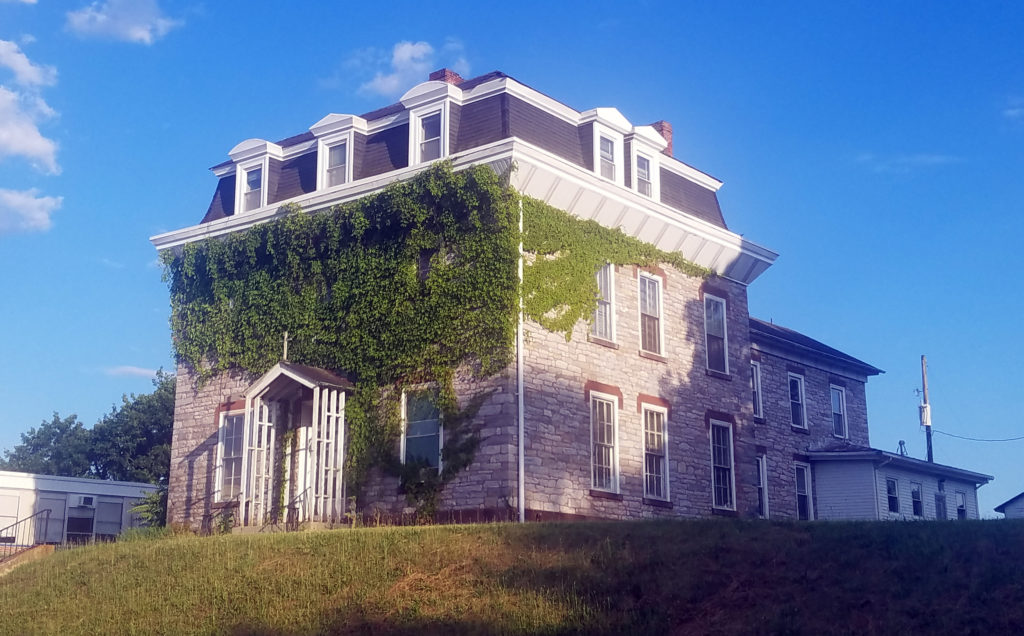
My name is Alex Patch, and I am a direct descendant of Capt. Alexander M. Patch and Annie Moore Patch. I was made aware of the sale and plans for redevelopment of the Lebanon Catholic School property in 2022, and was very encouraged to hear that as part of the plans was a sincere effort by residents of Lebanon to save and restore the Donaghmore Mansion, home of Capt. Patch, and his family. As you can understand, our family has a very strong interest in preserving the home where Gen. Alexander “Sandy” M. Patch was raised.
As to conversion of the entire property for other purposes, not being a citizen of Lebanon or Pennsylvania, I will refrain from entering that debate except to say that my wife, Nancy, and I participate locally in our city and county activities as interested and concerned citizens. Unfortunately, we find here that when the local government becomes determined in their efforts to make changes affecting the community, the voices of the residents are heard, but all too often not sincerely listened to. I only hope that you will make every effort to listen to your citizens. And on that point, I want to express my thanks to Laura Kise for her May 2nd, 2025 letter in the LebTown edition for clearly stating the overwhelming value to repurposing the Donaghmore Mansion. To retain the historical value of the building while restoring it for adaptive reuse is a win-win for both Lebanon SD and the heritage of the city.
There are multiple reasons to preserve and restore Donaghmore which I would like, as briefly as possible, to discuss.
First and foremost is the honor the city of Lebanon shows for one of America’s foremost WWII military commanders whose record stands for itself.
Sandy, who with great modesty and dedication to his troops went about his duty as a division and then a Corp commander in the Pacific theater, where his troops relieved the 1st Marine Division and went on to win the battle of Guadalcanal, all while he personally struggled with dysentery and repeated bouts of pneumonia. Army Chief of Staff commander General George C. Marshall had future plans for Sandy.
Following his recovery, he became one of only three US general officers in WWII to serve in both theaters as he was transferred to North Africa where he worked to organize Operation Anvil Dragoon, the Allied invasion of southern France. He received command of the US 7th Army following its success in Sicily after which it spearheaded the invasion in August 1944 “up the gut of Nazi held Europe.” The surge continued through the snow-covered Alps and across the Rhine in March 1945 to join in the victory with other US and Allied forces. For his efforts he was awarded both the US Army and Navy Distinguished Service Medals after having previously received the Bronze Medal for gallantry. Unfortunately, his life came to an end in November of ’45 when he died of yet another bout of pneumonia.
Read More: [Letter] Alexander M. ‘Sandy’ Patch, the most underrated general of World War II
Second, the history of the military in the Patch family touched all its members. Of over three generations serving from 1877 to 1978, five went to the USMA at West Point, while others enlisted. All but two served in combat.
- Capt. Alexander M. Patch: Capt. Patch as he has been known by his family members, was originally from southwest Pennsylvania, graduated from West Point in 1877 and was assigned to the Oklahoma Territory. There he was injured while leading a cavalry of troops against raiding Comancheros and lost his leg. Not wanting to lose someone from the army that General Philip Sheridan stated, “is one of the best young officers in the Army”, he was appointed as Quartermaster of the 4th Cavalry at Ft. Huachuca. After starting a family there, he and Annie eventually moved back to Pennsylvania to settle in Lebanon.
- Maj. Gen. Joseph (Dorst) D. Patch: Dorst was the oldest child of Capt. and Annie Patch. After graduating from Carnegie Mellon, he went on to complete OCS training at Lehigh University after which he was commissioned as a 1st Lieutenant in the Army. He was then deployed to a military support command in Panama during the building of the Canal, served under General Pershing during the Poncho Villa Expedition in 1916, then served in the newly formed 1st Army Division which was shipped to France in early 1917 where Dorst served valiantly until he was wounded at the Battle of Soissons in July 1918. Among his many awards he received the Croix de Guerre and the US Armed Services second highest award, the Distinguished Service Cross (DSC), for leading the division’s infantry attack at Soissons against the Germans. Due to the severity of his wound, he was no longer fit for combat duty, yet he continued on in the army through WWII achieving the rank of Maj Gen where he was assigned the Caribbean command. He retired after thirty-six years of service.
- Maj. Gen. William A. Patch: Bill was the youngest child of Dorst and Minerva Patch and a grandson of Capt. and Annie Patch. A 1948 graduate of West Point, Bill served in Korea where he was wounded and received the Silver Star for gallantry. In the Vietnam War, he served first as a battalion commander in the US Special Forces assigned to the Vietnamese highlands sector, then returned in 1967 as a brigade commander where he was awarded a second Silver Star for his combat leadership during the Tet Offensive. He also received the Bronze Star for gallantry. He retired after thirty years of active duty with his final assignment being Commandant of the Ft. Dix US Army Training Center, NJ.
- Capt. Alexander M. Patch: Mac as he was called, was the son of Sandy and Julia Patch and a grandson of Capt. and Annie Patch. He was a 1942 graduate of West Point. He first served in the 79th Division in WWII in northern France where he was wounded while leading his company against an “entrenched enemy position”. Despite “bleeding profusely”, he continued to lead his men until the objective was taken. Like his Uncle Dorst, for his gallantry he was awarded the DSC. Following his recovery in England, he returned to the front to serve under his father’s 7th Army command in Alsace-Lorraine. His commitment to serve his country and lead his troops to victory never wavered. He was killed in October 1944 near the village of Embermenil, France. He was also awarded the Silver Star.
- Capt. Richard K. Patch: Dick is a grandson of Capt. and Annie Patch and a son of Dorst and Minerva Patch. He was shipped to France in the fall of 1944 after graduating from West Point. In February of 1945 as a company commander, he came up against a German Panzer tank squad in the Ardenne and was forced to have his infantry unit withdraw from their position to the cover of nearby woods. As he was bringing up the rear helping a wounded soldier evacuate, an armor round struck nearby. His wounds were debilitating and following a long recovery he had to give up his lifelong dream of service in the Army. He suffered from “shell shock” (PTSD in today’s terms) and never fully recovered. He died in 1963 at the age of 40.
- Corporal Joseph D. Patch: Joe is a grandson of Capt. and Annie Patch and a son of Dorst and Minerva Patch. He enlisted in the US Marine Corp following Pearl Harbor and was sent to the Pacific Theater. He was part of a Marine detachment assigned to the USS Lexington. Fortunately for Joe and his detachment, they were transferred from the Lexington before it sunk at the Battle of the Coral Sea. Joe returned to civilian life after the war but struggled with what he experienced until his death at the age of 52.
Finally: I could continue to detail Sandy’s career – and that of his father, son, and nephews – but suffice it to say if you would consider honoring the memory of this soldier by preserving his Lebanon home, you would also be honoring the legacy of his family members who served their country for over a century.
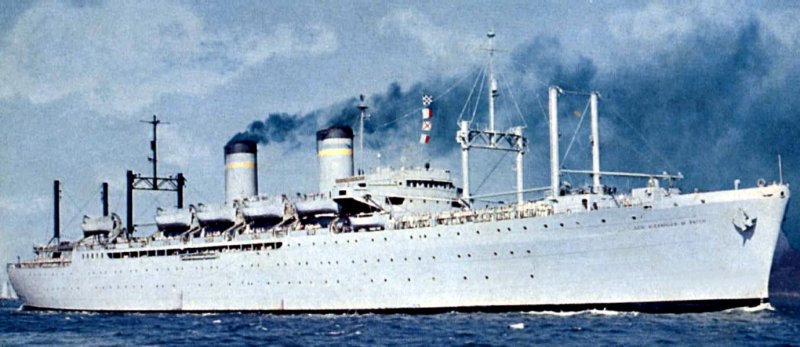
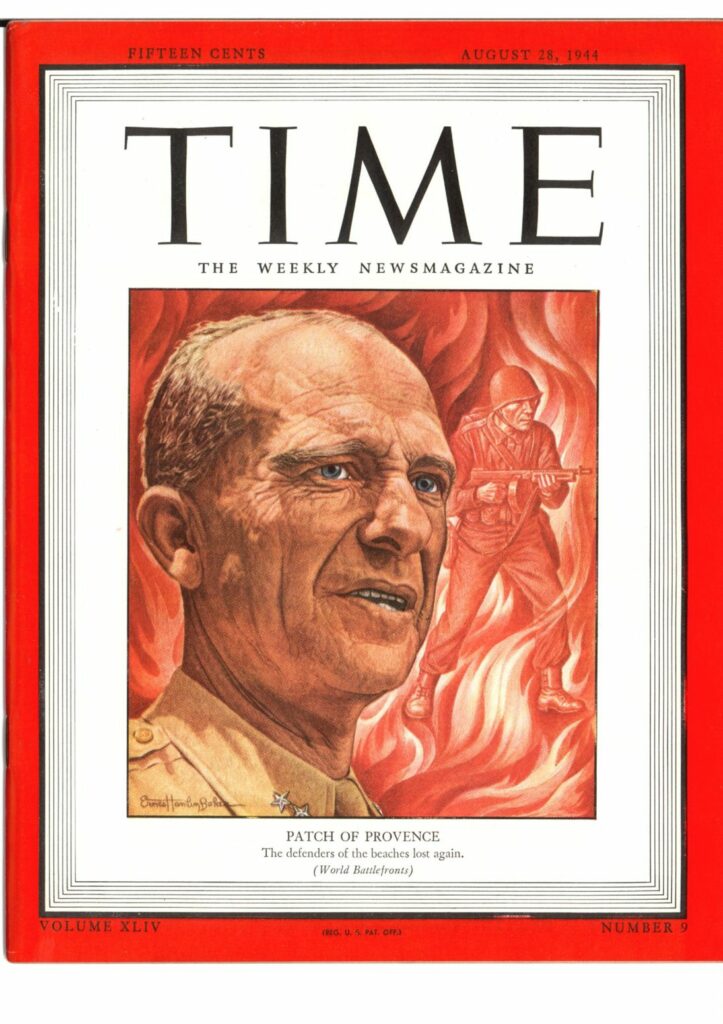

In addition, you would be participating with the cities of Marseilles and Luneville, France who have memorialized General Patch by placing his name on a boulevard in the former and set a memorial for him in a city square in the latter, with the US Military installation at Stuttgart, Germany where his name was given to the soldiers barrack, and at the US Army Garrison in Hawaii where the entry gate to Fort Shafter is named in his honor. To this day Luneville continues to celebrate the liberation of the city in 1944 by the 7th Army through historical reenactment of events in that area of Lorraine. And as my brother and sister-in-law witnessed this May when the owner of a well-known restaurant in Marseilles, upon overhearing their last name, explored to see if they were related to Gen. Patch. What following were hours of conversation to the thrill of the restaurant owner. France still celebrates the accomplishments of Sandy and the 7th Army. The city of Lebanon has the opportunity to do the same by preserving and restoring the Donaghmore Mansion.
Thank you for considering this appeal.
Respectfully,
Alexander (Alex) M. Patch