There’s big interest, not to mention big money, in little – and sometimes not so little – birds in America.
According to the U.S. Fish and Wildlife Service’s 2022 National Survey of Fishing, Hunting and Wildlife-Associated Recreation, 96 million Americans participate in birding each year. That’s 37% of all the people 16 and older living in the nation. In the process, they spend almost $108 billion on everything from binoculars to birdhouses.
Most birders, the report adds, predominantly watch birds in their own backyards. But close to half of those people regularly travel a mile or more – to local parks, nature preserves and other sites – to see more and a greater variety of birds.
People like the members of the Quittapahilla Audubon Society.
Lebanon County’s Chapter of the National Audubon Society was chartered in 1980. Today it has about 400 members, 100 or so active on the local level, studying and enjoying nature in all its forms. The chapter hosts field trips year-round, as well as programs – featuring speakers on various conservation topics – from September through April. All of those trips and programs are free to the public. There’s an annual banquet each year in May, as well.
Many of those events focus on birds. Many, but not all.
“I always think of our focus as being on flora and fauna, everything that we see out here, whether it be plants or animals,” said Fritz Heilman, one of the chapter’s field trip co-chairmen and a board member since 1982. “We do some trips on specific topics or objectives, like butterflies or wildflowers.
“But even when we’re doing that, at least me, I’m always looking around at everything else, and if there’s something of interest, I’ll point it out to people.”
The group’s next outing, for example, is its annual Lebanon butterfly count, set to be held at Quittie Wetlands Preserve near Home Depot in Lebanon starting at 10 a.m. Aug. 18. Anyone with an interest in butterflies or conservation is welcome to attend, Heilman said.
Details on that trip – as well as all of the group’s field trips and programs through August 2026 – are available online. The Quittie chapter’s field trips span the county east and west, north and south, and beyond, taking in places like Tunnel Hill Park, Middle Creek Wildlife Management Area, Swatara State Park, and other natural areas in Lebanon County or on its fringes.
Trips typically draw between a half dozen and two dozen or more people at a time. Just how many attend varies based on factors including timing, weather, and location. It’s public programs, meanwhile, often draw 50-plus, sometimes to the point of standing-room-only crowds.
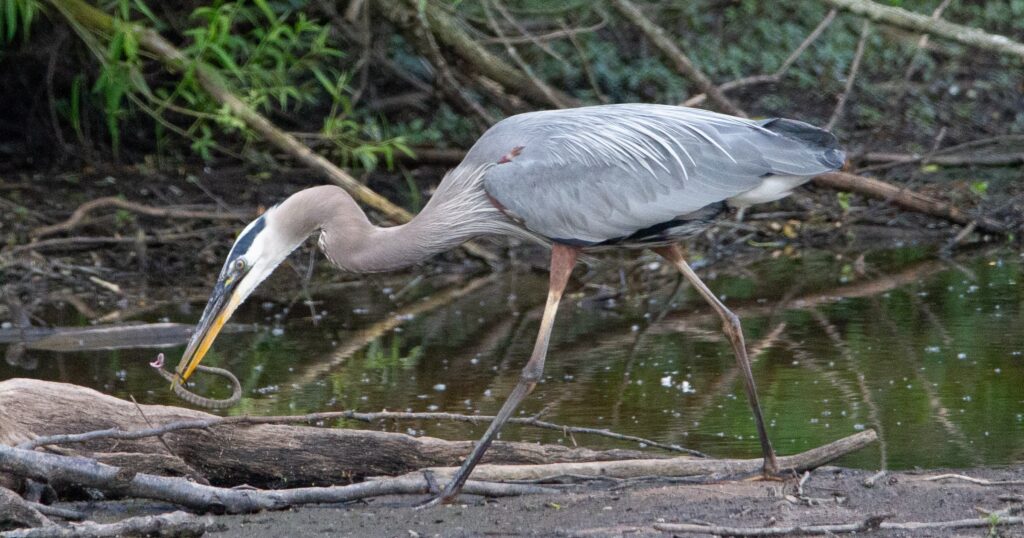
“They’re almost always environmentally-oriented people,” said Bob Peda, the Quittapahilla chapter’s conservation committee chairman. “They either know butterflies, birds or plants. They have their interests.”
There’s always room for more, though, said Terry Weaver, who produces the group’s newsletter and chairs its banquet committee. No particular level or experience or expertise is needed either.
“One of things about the club’s field trips that I really appreciated when I first started 10 years ago was that it doesn’t matter if you’re a beginner or an expert,” Weaver said. “The trip leader and everyone else who may be participating, they always make sure that you see the birds that are there and identify them. I really like that about this club.
“That’s why I encourage anyone to come to a field trip. They’re very welcoming and the people who have knowledge are very willing to share that information.”
“We always even have spare binoculars for anyone who shows up without their own,” added Jim Logan, the group’s membership chairman and coordinator of its annual bird feed sale.
As much as chapter members enjoy getting out and birding and enjoying nature for their own sakes, though, they have a larger mission: promoting birding and conservation overall. The chapter does that in multiple ways.
One effort members are “really excited about,” Weaver said, involves supporting Red Creek Wildlife Center’s raptor program.
“If there was a raptor that was injured and can’t go back into the environment, they use them as their bird ambassadors,” Weaver said. “They have programs where they go to schools and whatnot.”
Keeping those birds – owls, hawks and vultures – and traveling around with them costs money, of course. So the chapter has funded Red Creek raptor programs at Northwest and Southeast elementary schools in Lebanon School District, Weaver said. It hopes to get the program into some other schools soon, too, he added.
The chapter also provides speakers and programs at libraries and elsewhere for children and adults, has an Audubon Adventures curriculum for elementary school teachers to use in classrooms, provides scholarships for young people to attend various nature camps, and awards grants for conservation projects.
“We have a focus on education,” Peda said. “Schools, for example, will apply for grants if they want to do something like a native species garden for butterflies and establish native plants.”
Members participate in Audubon’s Christmas Bird Count, too. That’s a continent-wide effort to identify every species of bird seen within a designated area, year after year after year, to document changes in bird abundance and distribution. Audubon’s been doing the count since 1900. The Quittie club has been responsible for a 15-mile-diameter circle in Lebanon County since 1980, said Heilman, who’s coordinated the count locally since 1993.
Local birds have demonstrated, among other things, that tufted titmouse populations took a hit for a while – one theory links the species’ trouble to West Nile virus – even as bald eagle populations soared.
The group funds all of its work through its annual bird seed sale. Orders must be placed in advance, then picked at Lebanon Expo Center. Details on this year’s sale will be on the group’s website, but orders are typically taken through mid-October, with the first weekend in November set for pickup.
“We’ve sold already, in some years, 15,000 pounds of bird seed,” Logan said. “More people feed birds than many in the general public know.”
More kinds of people, too. According to the U.S. Fish and Wildlife Service, America’s average birder is 49 years old. But participation spans all ages, with particularly strong numbers among those aged 55 and older. Birders are equally likely to be male or female, and while 75% identify as white, Asian Americans have the highest participation rate at 47%. It also noted that Americans spent a combined 7.5 billion days birding in 2022, with backyard birders averaging 67 days and those traveling from home averaging 34 days.
Those numbers won’t surprise members of the Quittapahilla Audubon Society like Heilman, Logan, Weaver, and Peda. They all agree birding participation got a boost during the COVID-19 pandemic and has remained strong since. It’s no mystery why either, they agree. Looking for birds, Heilman said, is fun in its own right, but serves as a gateway to time spent outdoors overall.
Audubon, and the Quittapahilla Chapter, both feed that desire.
“Audubon is not just a bird club,” Heilman said. “It’s a club for environmental issues and conservation and birds and everything else that falls in line with that.”
Getting involved
Becoming a “chapter supporter” member of Quittapahilla Audubon Society costs $20 per year. Checks can be mailed to: QAS Chapter Membership, c/o Jim M. Logan, 810 Hill St., Lebanon, PA 17046.
The $20 fee goes directly to support chapter activities. It does not include a subscription to National Audubon magazine. That’s available online here.
Members and non-members alike can sign up for the chapter’s email list to get news of programs and field trips; newsletters; information about the annual bird seed sale and other special events; and updates to the web site. Sign up by emailing QAS@QASAudubon.org.
For other information about the chapter, visit https://qasaudubon.org.
Questions about this story? Suggestions for a future LebTown article? Reach our newsroom using this contact form and we’ll do our best to get back to you.
Support Lebanon County journalism.
Cancel anytime.
Monthly Subscription
🌟 Annual Subscription
- Still no paywall!
- Fewer ads
- Exclusive events and emails
- All monthly benefits
- Most popular option
- Make a bigger impact
Already a member? Log in here to hide these messages
You know us because we live here too. LebTown’s credibility comes from showing up, listening, and reporting on Lebanon County with care and accuracy. Support your neighbors in the newsroom with a monthly or annual membership, or make a one-time contribution. Cancel anytime.