A historic Pennsylvania National Guard flag made in the 1920s has found its way home to Fort Indiantown Gap.
The silk flag is believed to have been flown over Guard headquarters in Philadelphia and Harrisburg and probably used in Mount Gretna when the grounds at Soldiers Field were used for training exercises. It is a piece of the Gap’s storied past that top FTIG brass are glad to have back on the base.
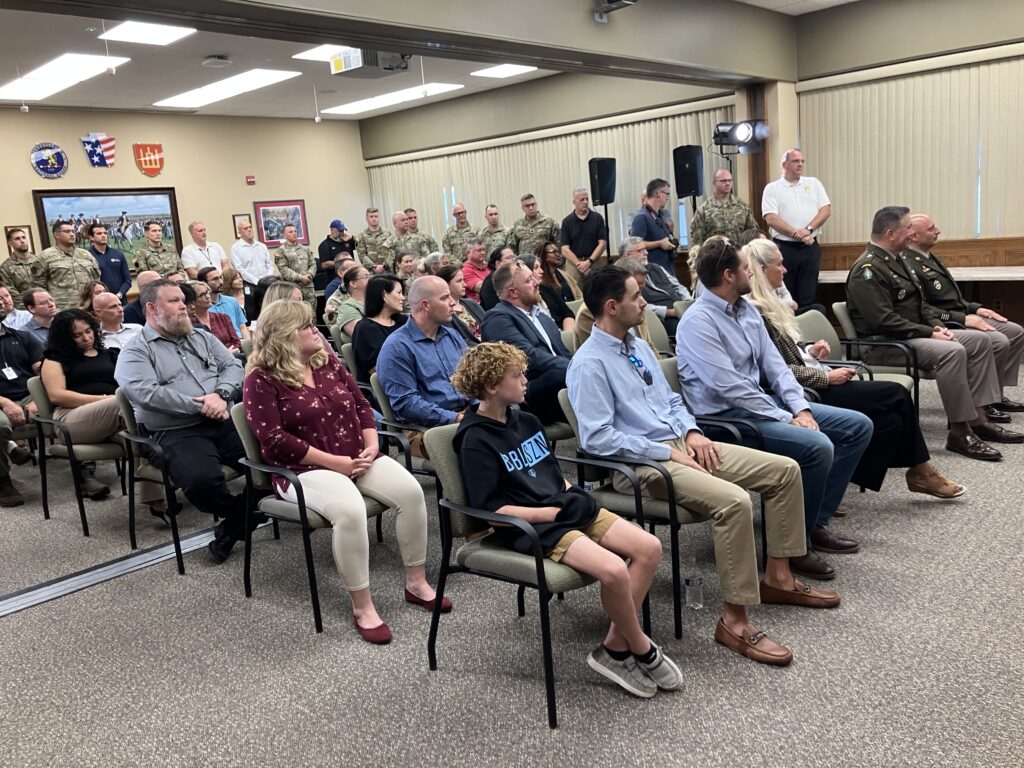
The flag was officially accepted at a dedication ceremony on Monday at the department’s military affairs headquarters located on the installation in northern Lebanon County.
“So this means a lot to us. It’s really important for us to not only remember the past, but to honor it and then dedicate ourselves to living a life worthy of that past,” said Major Gen. John Pippy, adjutant general of Pennsylvania and head of the state Department of Military Affairs. “So I just want to thank you today for helping bring a piece of our identity back to Fort Indiantown Gap.”
The significance of flags to the Guard is important to its history, beginning in 1747 when Ben Franklin created the Associators of Pennsylvania, the forerunner to the PA National Guard, according to Pippy.
“Since 1747, when Benjamin Franklin called up these crazy associators to protect Philadelphia, our Pennsylvania Guard has always been there. And then this was mentioned, I’ve been to Mount Gretna. And it’s the history of this flag and the concept that we always evolve as an organization, but our flags, our colors don’t change. That’s what we grab onto.
“That concept has remained the same, no matter the circumstances or period in our state’s history. During the Civil War, you hear about units rallying around the flag. We still have that sense of ‘esprit de corps’ and honor within us. We’ve had a lot of different names over the years, and we’ve had different flags.”
Pippy also expressed his gratitude on behalf of the men and women currently serving in the Pennsylvania National Guard.
“On behalf of the 18,000, probably 18,000 soldiers and airmen that proudly wear a keystone of some type on their uniform and serve in this Guard, thank you very much,” he said. “And then also on behalf of the over 4,000 DMVA employees, many of whom are veterans themselves, our veterans in our six veterans homes. This means a lot to us.”
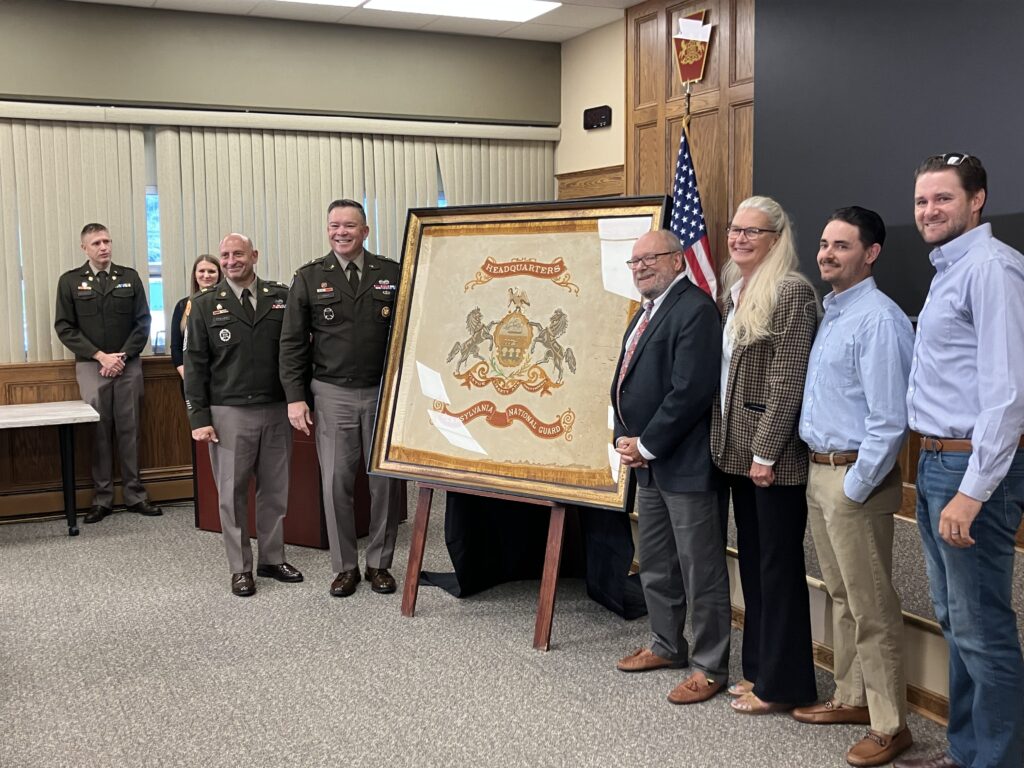
The flag was found by Pittsburgh area and lifelong Pennsylvania resident Joseph Restelli who purchased it from a Dillsburg area military flag dealer. It was Restelli’s desire to donate it to the Guard, according to Stephanie Olsen, historic preservation specialist with the Pennsylvania National Guard Museum, which is located on the Gap’s base.
Read More: History of ‘civilians in peace, soldiers in war’ preserved at FTIG military museum
“Luckily, Mr. Restelli, recognizing the importance of this flag to the commonwealth, purchased it, intending to restore it to its rightful place at the headquarters of the Pennsylvania National Guard,” Olsen said. “Mr. Restelli, with the help of the Governor’s Office, recognized the Pennsylvania National Guard Military Museum as the ideal means to ensure the preservation and to exhibit this significant artifact for future generations. This historic flag will take a place of honor among the Pennsylvania National Guard Militaries collection.”
Olsen said the museum became aware of its existence in 2023 but “at that time lacked the ability to pursue it.”
“While we do not have exact records of what happened to this flag after it was retired, we do know the recent history of the flag thanks to Jeff Bridgman, an expert in the field of flag conservation, who recognized its significance,” Olsen said. “The museum would like to take this opportunity to express our appreciation to Mr. Restelli and his family for their generosity.”
Restelli offered a few comments and before mentioning his role, thanked the military personnel in attendance for their service to the nation. He said they “do a wonderful thing” that is “far greater than “all of what I could possibly do for you.”
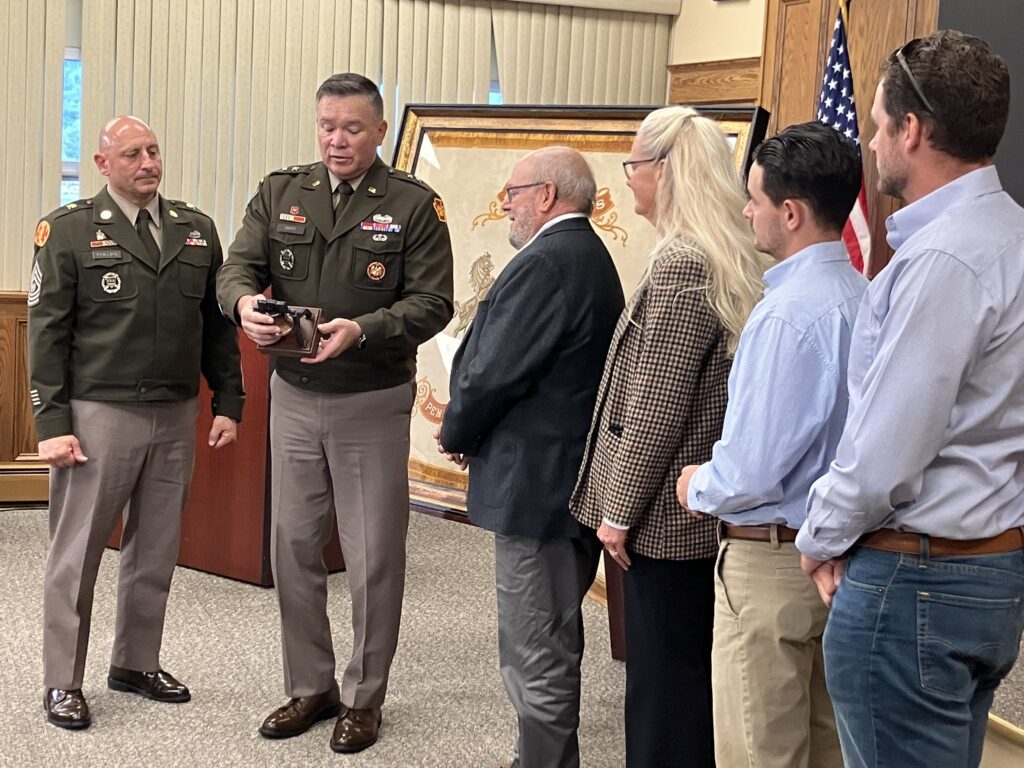
He explained the process of bringing the 45”-by-50” flag home to the Gap.
“This has been a few months in the preparation of all of this. This is something that I’m very honored to be able to do and I think today is the day that finally brought it to fruition,” said Restelli. “So on behalf of my family, and my wife, Andrea, we’re proud to submit this to the National Guard.”
Restelli noted that Bridgman, who has been an antique flag dealer for over 25 years, had the flag listed on his website.
Bridgman said he had purchased the flag from a military dealer years ago and had it framed years before Restelli inquired about it, adding it is a high quality product.
“It is an extraordinary flag in terms of quality. In the 19th century, the best flags were made by Tiffany & Co. in New York, probably under contract with a British firm, actually,” Bridgman said. “I long thought they made them in the city, probably, but there’s a really top-notch British maker that was founded in the same year as Tiffany, (in) 1837, and still makes flags for the company today that probably made these in this sort of quality.”
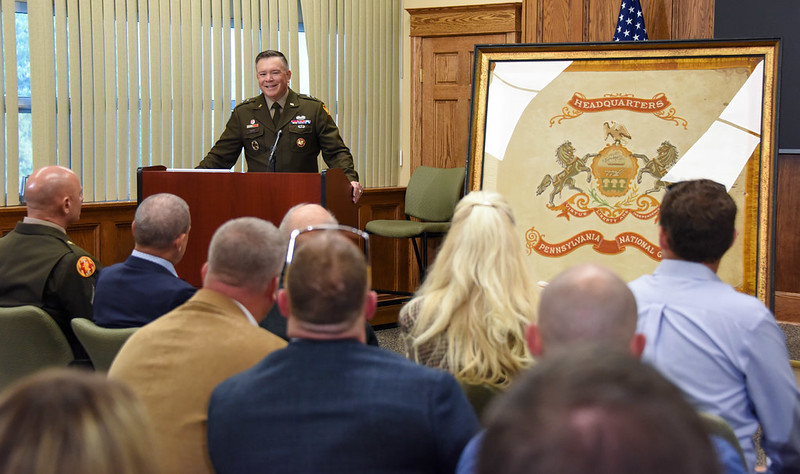
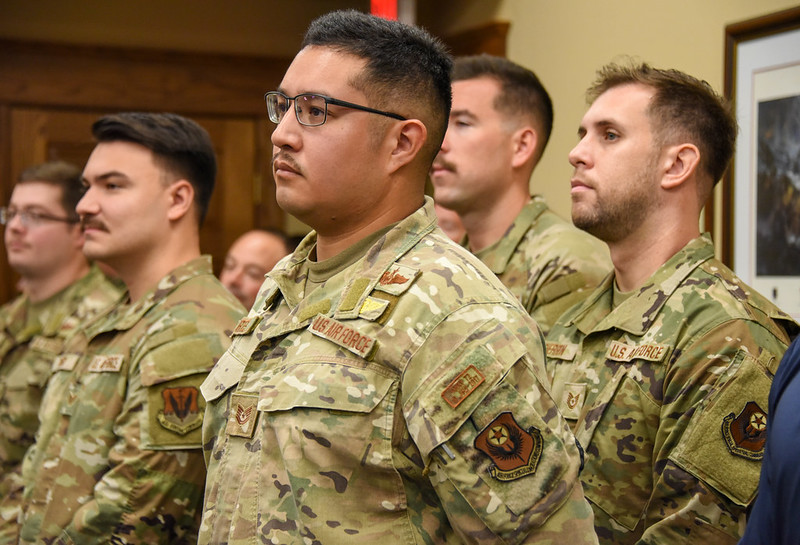
Major Gen. John Pippy, adjutant general of Pennsylvania and head of the state Department of Military Affairs, expresses his gratitude for the antique Pennsylvania National Guard flag, circa 1920s, that was donated and accepted at a dedication ceremony Monday at the state headquarters at Fort Indiantown Gap. (Department of Military and Veterans Affairs photos by Tom Cherry/Released)
Bridgman said it’s quite possible the flag was crafted in Pennsylvania.
“Now being in Pennsylvania there were other competing firms and this was more likely made here. The quality is what you saw coming out of Tiffany & Co.,” Bridgman said. “During the Civil War, battle flags were supposed to all be embroidered like this, which made great sense when everybody was sitting at the table discussing how these ought to be made.”
Its high quality is why Bridgman believes it was made in the 19th century.
“They discovered, well, not many people could embroider. This was before a sewing machine. So most flags were actually painted on silk. But some were purchased that were of this quality. When I got it, I thought it was probably the 19th century because as time went on the quality went down in flags,” he said. “This (one) is exquisite. It’s what you would expect of a 19th century Tiffany & Co. flag. Or someone like Evans & Haskell, in Philly, who was a competitor, which could be the maker of this.”
Olsen explained to LebTown after the dedication ceremony when it’s believed that the flag was created.
“Based on the style and the quality, we have narrowed it down to between 1921 and 1928 that it was made. And at that time, the Pennsylvania National Guard headquarters was in Philadelphia,” Olsen said. “So this flag would have flown at the headquarters in Philadelphia, and then I believe it was 1933 that the headquarters moved from Philadelphia to Harrisburg. So it would have moved with them to Harrisburg, and then we sort of lose track of it.”
LebTown asked Olsen about whether it may have been in Mount Gretna prior to the Guard’s final move to northern Lebanon County. Mount Gretna’s Soldiers Field was used for training grounds before it was relocated due to growing pains.
“During the time that this would have been in use, the headquarters was in Philadelphia, but training was at Mount Gretna. So this flag would have been flown in different things in Mount Gretna – different training and things,” Olsen added.
Another indication that it was used heavily is the wear and tear it endured. The right side of the flag interior is frayed from the days it was used by military personnel.
Michael Sprowles, federal museum curator for the Pennsylvania National Guard, noted the flag contains Pennsylvania Coat of Arms and the words “virtue, liberty, and independence” along with plenty of gold coloring.
“It is part of the Pennsylvania Coat of Arms, so it would have been used by the headquarters. Gold was sort of a symbol of regality and royalty,” Sprowles said.
Bridgman concurred with Sprowles, who created an educational plaque that notes that it is an “elaborately embroidered silk banner with a white background that signifies that it was a headquarters flag, which would have also served as the flag for the commandant.” It is also silk embroidery on a silk ground that contains silk fringe, a common military construction for the time period.
“When it comes to actually producing these things, they aren’t designed like they would be today, where everything would be specified very distinctly – especially if you go before this period, late 19th century into the 20th century,” Bridgman said. “State seals were done, but it was the artist’s liberty almost, how they were constructed in terms of the embroidery and the colors. The gold, you’re absolutely right. Headquarters unit being in charge at the state level, it does represent it as a hierarchy.”
Following the ceremony, Pippy and others gathered in the lobby of the DMVA headquarters where he said the flag will be prominently displayed, adding it will serve another purpose as well.
“This wall is where we take pictures with guests and dignitaries, so it (the flag) will have a prominent place where it will be displayed,” added Pippy.
Questions about this story? Suggestions for a future LebTown article? Reach our newsroom using this contact form and we’ll do our best to get back to you.
Support Lebanon County journalism.
Cancel anytime.
Monthly Subscription
🌟 Annual Subscription
- Still no paywall!
- Fewer ads
- Exclusive events and emails
- All monthly benefits
- Most popular option
- Make a bigger impact
Already a member? Log in here to hide these messages
Local news is disappearing across America, but not in Lebanon County. Help keep it that way by supporting LebTown’s independent reporting. Your monthly or annual membership directly funds the coverage you value, or make a one-time contribution to power our newsroom. Cancel anytime.