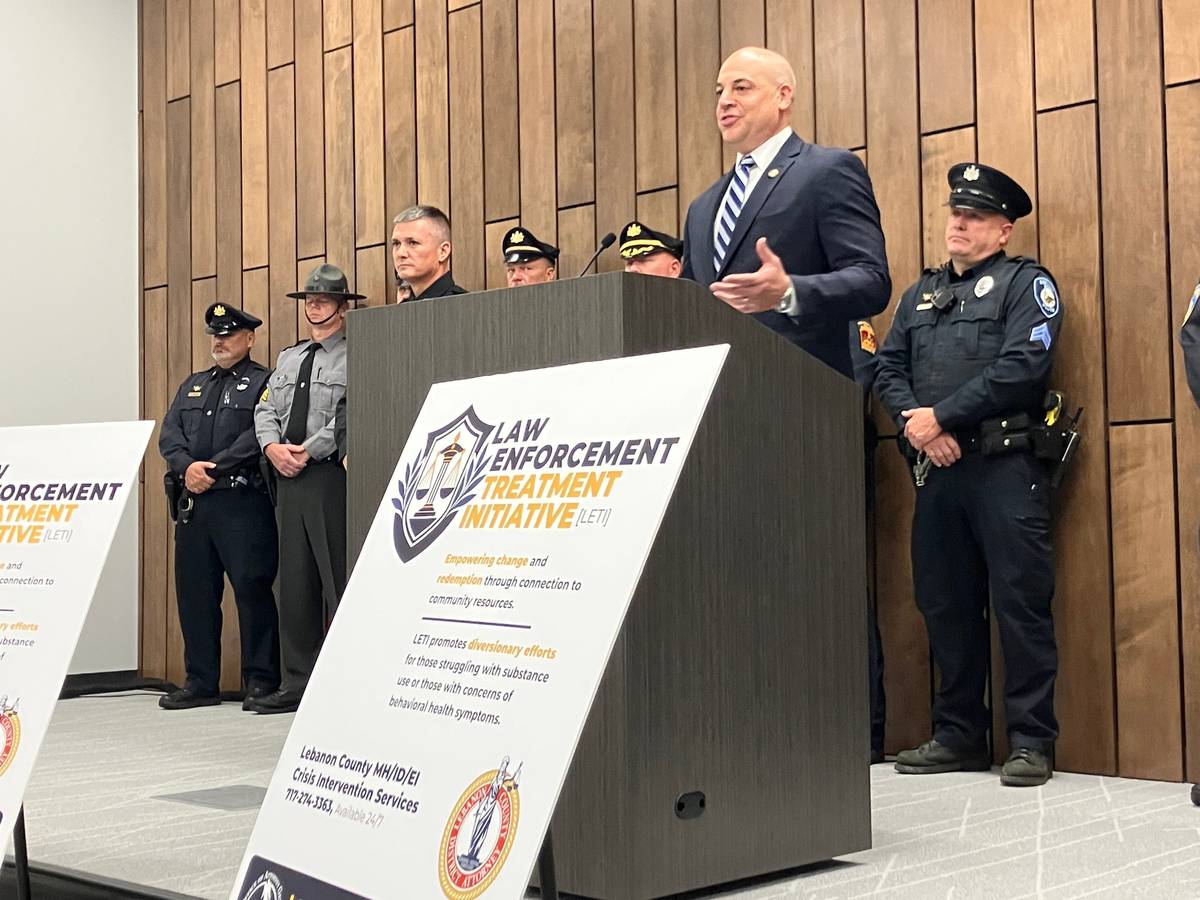

Commonwealth and Lebanon County officials announced Wednesday, Oct. 15, an initiative to provide assistance to county residents with mental health and/or substance abuse problems.
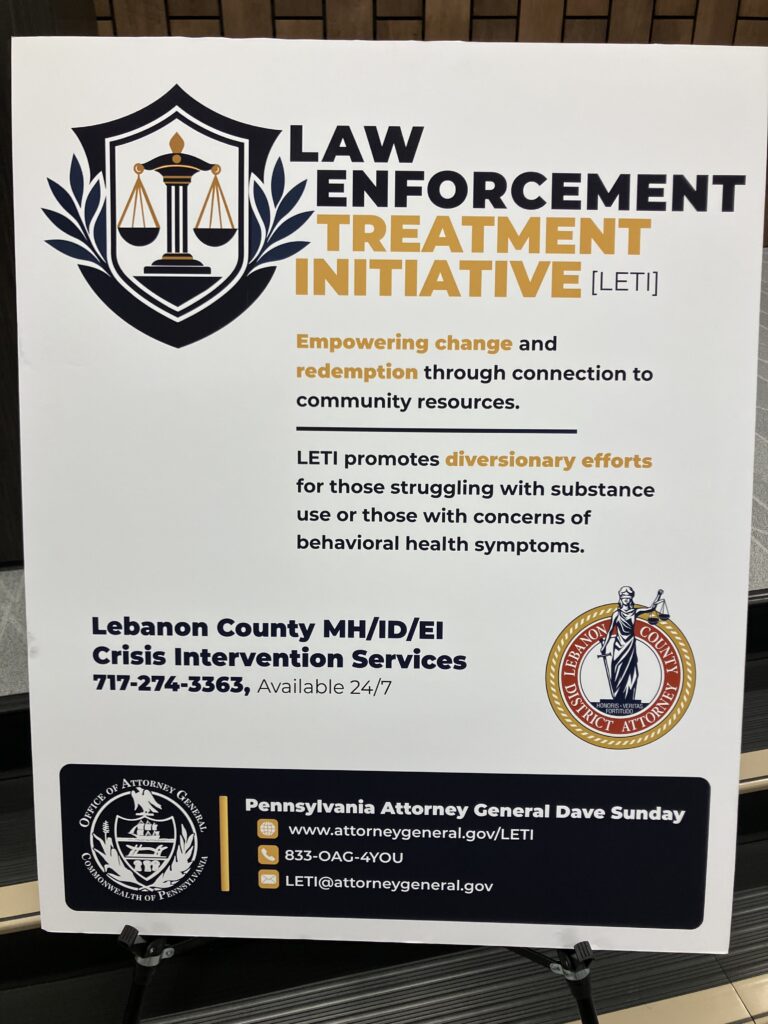
Lebanon County is the 34th county in Pennsylvania to adopt the Law Enforcement Treatment Initiative (LETI) to provide residents assistance for one or both of those symptoms.
The program is a partnership of the county’s district attorney’s office, Lebanon County Drug & Alcohol, Lebanon County Mental Health/Intellectual Disabilities/Early Intervention, local law enforcement agencies, and the state attorney general’s office.
“LETI serves as one more tool for use by law enforcement to combat mental health and/or substance abuse within Lebanon County,” Pier Hess Graf, district attorney, said at a press conference, which allowed no questions from the media. Graf informed the media prior to the conference that any questions should be sent to her after the event.
Dave Sunday, Pennsylvania’s Attorney General, spoke to the press afterwards to answer questions about the three-tiered program.
“The whole goal here is to help these individuals before it gets to a place where they might be doing, you know, violent crimes,” Sunday said.
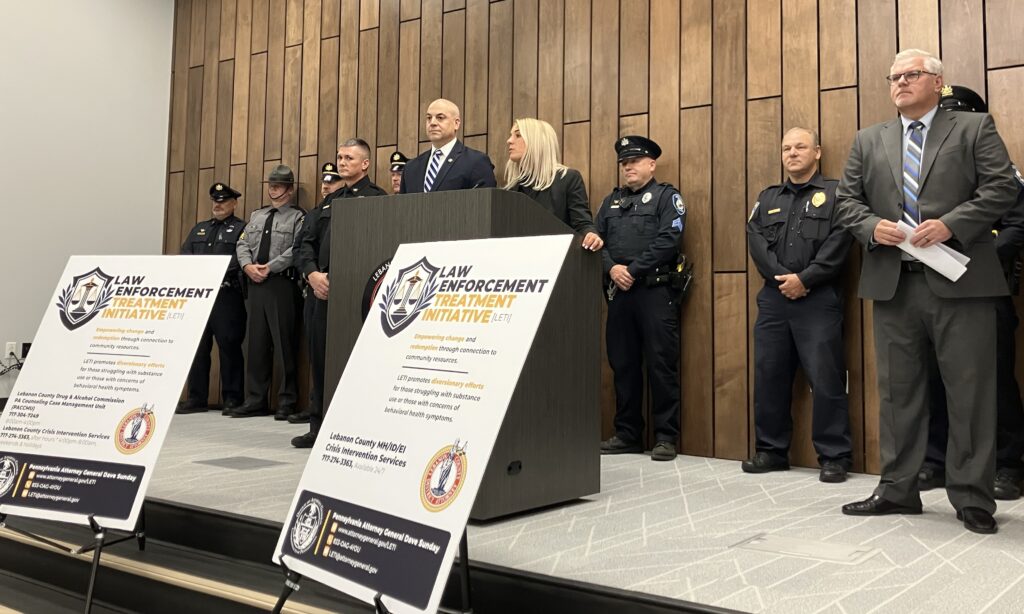
The program has three different tracks, according to Graf. Those tracks range from voluntary requests for assistance to law enforcement intervention or placement into LETI during court proceedings.
Graf said Track One is “a purely voluntary request and provision of mental health and/or substance abuse services. Any individual within Lebanon County may request help and a list of applicable services for himself or herself.”
Track Two is initiated by law enforcement as a result of a police encounter. If an officer is called to a scene or encounters an individual and believes mental health and/or substance abuse to be the root case, the officer can initiate LETI via approval from the district attorney’s office.
The release explained that the arresting officer places a call to local treatment providers, and the individual is directly connected for diagnosis.
Graf noted during the press event that individuals must comply with the program terms and be a willing participant or else criminal charges will be filed against them.
“If the individual completes the necessary steps for treatment, the officer does not file criminal charges. If the individual fails to complete treatment or meaningfully participate, the officer initiates the criminal process via the filing of criminal charges. Track Two gives an avenue of treatment in lieu of incarceration, if the individual truly wants help,” she said.
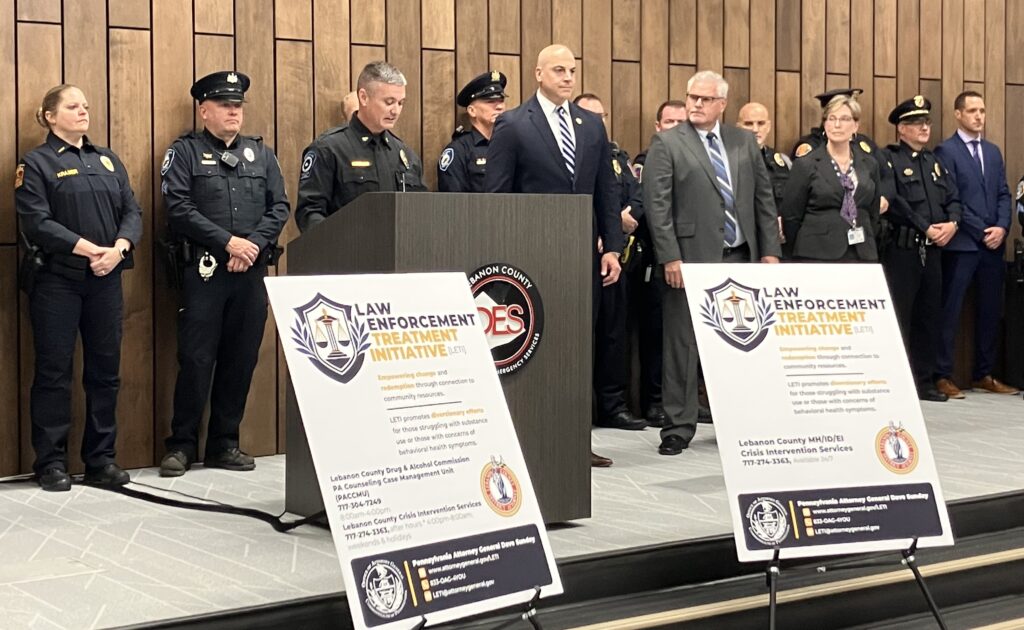
She also noted that Track Two exists for individuals with addiction or untreated mental health but who have a minimal criminal record and commit a low-level, non-violent misdemeanor. She emphasized that violent criminals, persons with a lengthy history of drug dealing but not of drug abuse, and other criminals who have committed serious violations are ineligible for the program.
The final opportunity to participate in LETI happens once an individual is in the criminal justice system after committing a non-violent crime.
Track Three initiates after an individual is charged for criminal activity and appears for the preliminary hearing as the initial onset of the criminal proceedings. At any point after police file criminal charges, the DA’s office or the defendant may request a LETI referral.
Graf said during the press conference that this program is another tool in an existing arsenal to treat individuals who should have access to treatment other than incarceration. Lebanon County’s other court treatment programs include ARD, Small Amount of Marijuana Program, DUI Court, Drug Court, and Veteran’s Court.
Read More: Lebanon County’s DA’s office offers redemption over incarceration
“LETI defendants in Track Three would present with mental health and/or substance abuse issues but not rise to the level of treatment via the existing programs and courts,” Graf said. “Track Three thus allows for an additional avenue of treatment for the individual’s addictions and/or disorders to avoid the commission of future crimes.”
Holly Leahy, administrator of MH/ID/EI, said her department’s goal is to provide services that support individuals who choose to seek assistance for “their growth, wellness, and inclusion in our community.”
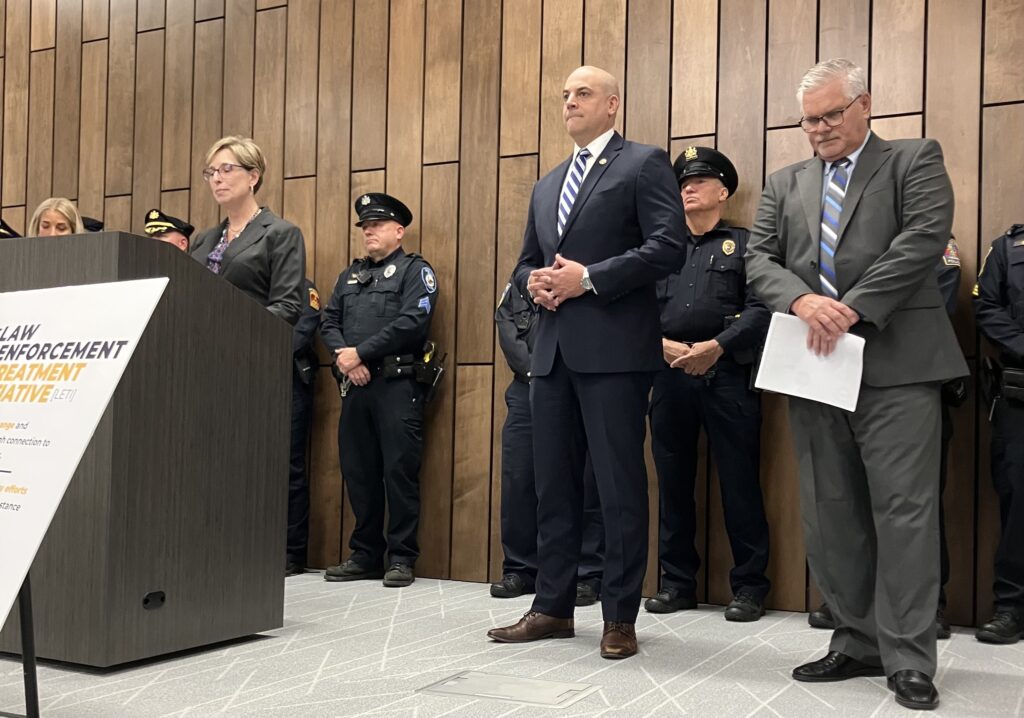
“Our agency has been diligently working with our community partners to build a system of opportunities to divert people experiencing behavioral health, intellectual disabilities, and autism-related concerns away from the criminal justice system and into supportive services and treatment,” Leahy said.
LebTown has previously reported county officials stating that 65 to 70 percent of inmates at the Lebanon County Correctional Facility are incarcerated due to a mental health, alcohol or drug abuse problem. It was noted during the press conference that 67 percent of inmates statewide have one or more of the same diagnoses.
“If we sign off on it, the officer puts that individual in direct contact with a treatment center with diagnosis, with evaluations,” Graf said.
However, there is a component to ensure accountability and program compliance.
“If it is a ruse and the person doesn’t go through the evaluation and the person does not comply with treatment and services, then the police officer files charges and we proceed with prosecution anyway,” Graf said.
The idea, however, is to give offenders a different route than a trip to the county correctional facility.
“Any avenue we can provide to give non-violent, first-time offenders a chance at treatment is worth pursuing. If a defendant betters himself or herself, and never commits another crime, our community wins. We will still diligently and dutifully prosecute criminals and incarcerate them any time appropriate,” Graf added.
Western Lebanon County Police Department Chief Andy Winters, speaking on behalf of Lebanon County law enforcement, said the goal is to give resources to local officers.
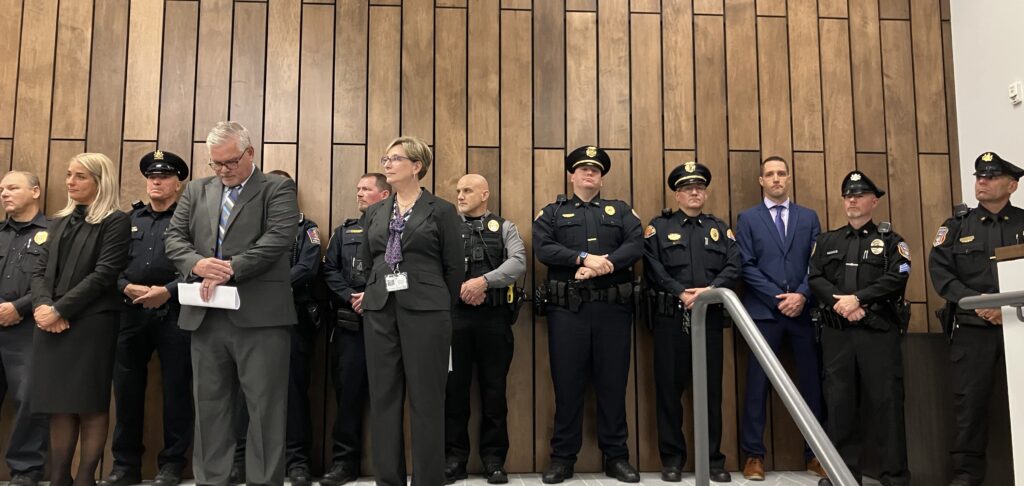
The press conference followed a meeting of the Lebanon County police chiefs, both of which were held at the Lebanon County Department of Emergency Services building in North Cornwall Township. Over 20 officers from across Lebanon County lined the stage or sat in the audience.
“It’s adding a tool in our toolbox and it is giving options to our police departments – because not everybody we deal with has to go to jail,” Winters said. “Sometimes, people make mistakes, and a second chance is needed to get them back on track. Our goal for this program is to make people productive members of Lebanon County again.”
James Donmoyer Sr., executive director of the Lebanon County Commission on Drug and Alcohol Abuse, said his agency looks forward to working with law enforcement on LETI.
“We receive drug and alcohol referrals all the time, and this is just another way to get more people to us to treat and support,” Donmoyer said.
Donmoyer said people may undergo substance abuse assessments, referred for outpatient or extensive outpatient counseling, Medical Assisted Treatment, and referred for detox and rehab centers.
“We have all kinds of programs at our fingertips that we can refer people to for treatment,” he added. “This is a collective effort, and I plan to do my small part to help make this a success.”
Questions about this story? Suggestions for a future LebTown article? Reach our newsroom using this contact form and we’ll do our best to get back to you.

Keep local news strong.
Cancel anytime.
Monthly Subscription
🌟 Annual Subscription
- Still no paywall!
- Fewer ads
- Exclusive events and emails
- All monthly benefits
- Most popular option
- Make a bigger impact
Already a member? Log in here to hide these messages
You know us because we live here too. LebTown’s credibility comes from showing up, listening, and reporting on Lebanon County with care and accuracy. Support your neighbors in the newsroom with a monthly or annual membership, or make a one-time contribution. Cancel anytime.
Questions about this story? Suggestions for a future LebTown article? Reach our newsroom using this contact form and we’ll do our best to get back to you.
Keep local news strong.
Cancel anytime.
Monthly Subscription
🌟 Annual Subscription
- Still no paywall!
- Fewer ads
- Exclusive events and emails
- All monthly benefits
- Most popular option
- Make a bigger impact
Already a member? Log in here to hide these messages
You know us because we live here too. LebTown’s credibility comes from showing up, listening, and reporting on Lebanon County with care and accuracy. Support your neighbors in the newsroom with a monthly or annual membership, or make a one-time contribution. Cancel anytime.