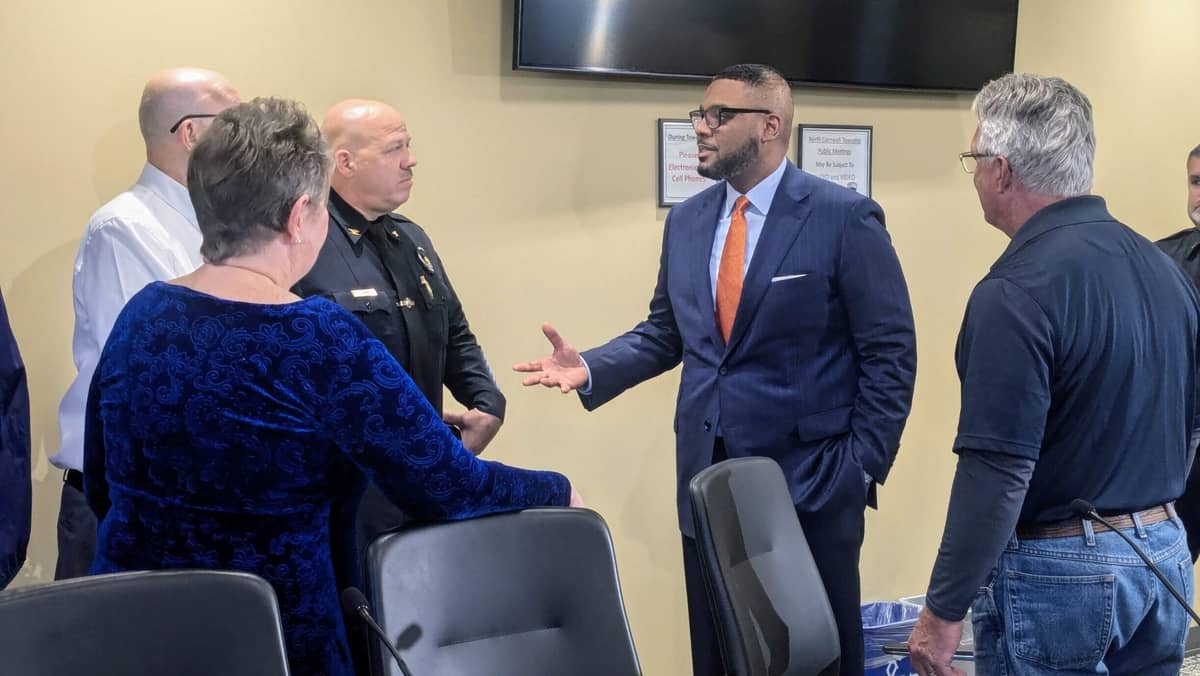

Pennsylvania Lt. Gov. Austin Davis met with local lawmakers and law enforcement officials Tuesday morning to discuss recent police regionalization, which combined the police departments for North Cornwall and North Lebanon townships into the Lebanon County Regional Police Department.
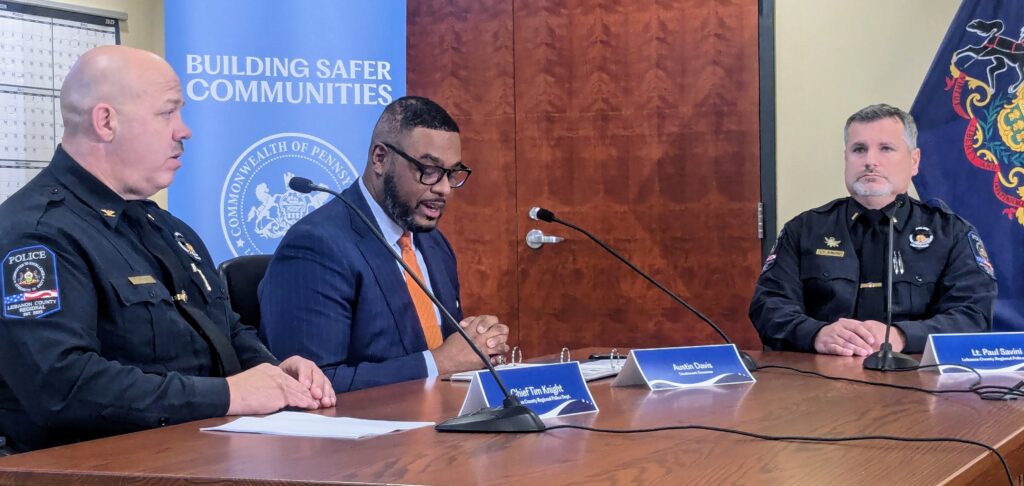
Davis sat down with Ardy Snook and Mike Wahmann of the department’s governing commission, representing North Lebanon and North Cornwall townships respectively, as well as police Chief Tim Knight and Lt. Paul Savini, at the North Cornwall Township building.
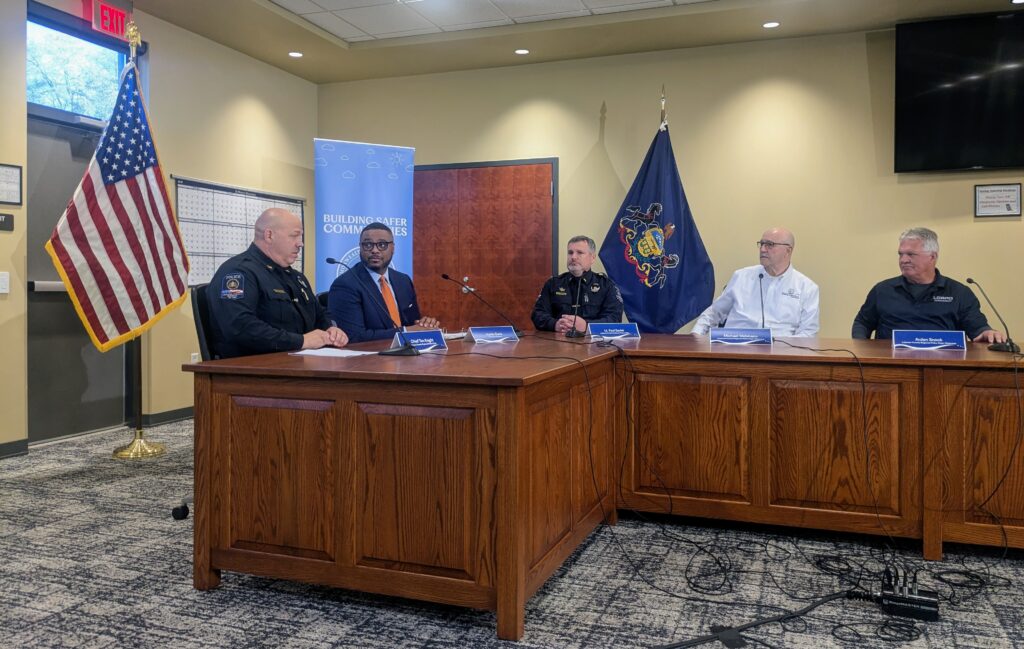
Davis asked others at the roundtable how the state could encourage regionalization, voicing his belief that regional departments are becoming more necessary as operation costs increase.
“We’ve been encouraging consolidation; it’s something I’ve been doing throughout my career as an elected official,” said Davis. “I proposed a bill as a state representative to encourage municipal police consolidation, and now as chairman of the Pennsylvania Commission on Crime and Delinquency (PCCD), we’re driving out dollars and providing support to encourage more departments to take the step that you all have taken here.”
Late last year, the department received a $150,000 grant from the PCCD to go toward items including body cameras, car cameras, and part of the chief’s salary, Knight said at the time. One-time regionalization costs also include the updating of uniforms and vehicles, administrative costs, and more.
When regionalization was first being considered in 2023, the study analyzing the viability of a merger was paid for by the state Department of Community and Economic Development. The study found the townships to be compatible, with similar growth and needs.
“We looked into it, we did a lot of research to figure out what would work best for our two communities,” said Knight, noting that as regionalization was explored, he looked to ensure no officers lost their positions, pay, or benefits.
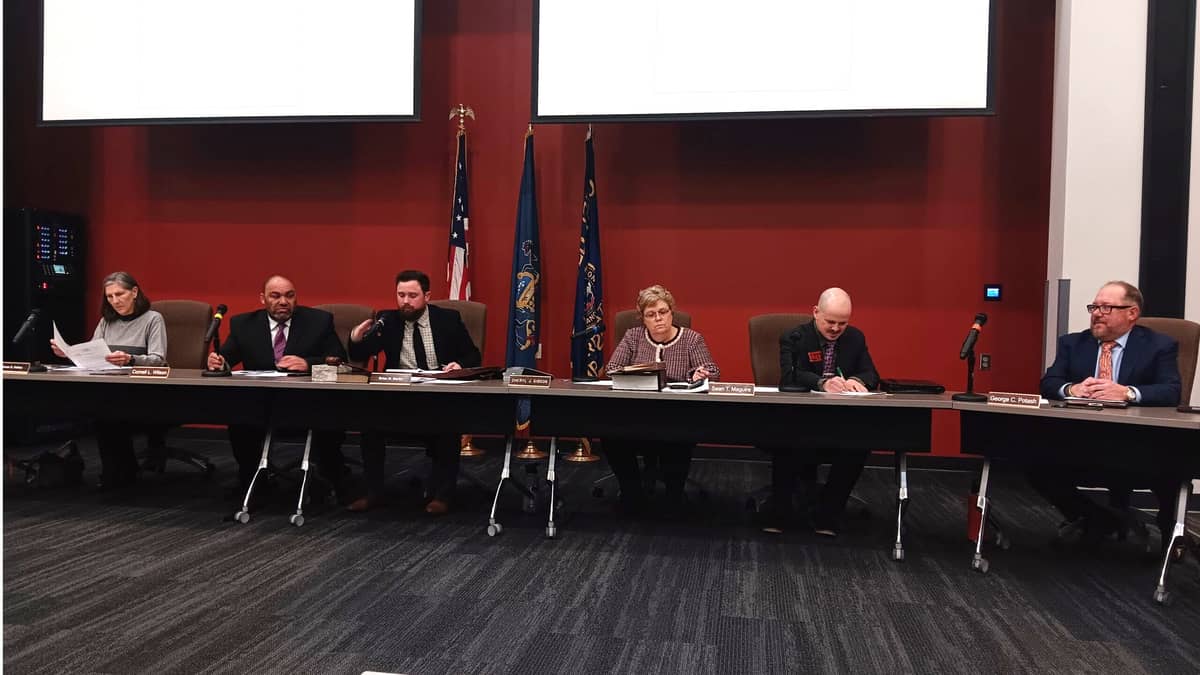
Then, township supervisors spoke with representatives of regionalized departments throughout the state and held public hearings on the topic. Eventually, the townships agreed to begin work on a charter governing a merged department, which was adopted.
The newly merged department became active at the start of 2025. Wahmann described the department’s very first call close to midnight on New Year’s, a domestic violence incident.
“Five officers responded to that call, because domestic violence calls can be the most dangerous,” said Wahmann. “When they all returned from the call, they were all saying, ‘Wow, that was really nice to be able to go to that call and know that there was backup; that there was somebody else there to help me and I didn’t have to wait 10 minutes for another unit to come back me up.’ That was the first call, and I think that set the tone for the officers, that this is what they could anticipate by being a member of this regional police department.”
Before merging, it wasn’t uncommon for officers of both departments to work without backup. Response time sometimes was as high as 18 minutes, Snook said, which has improved this year. Snook described an incident where an officer arrived on the scene of a medical emergency in three minutes and was able to administer life-saving aid.
“We’ve had a recent example where an officer saved a guy’s life because he got there in three minutes,” said Snook. “He got there ahead of the ambulance, and basically kept the guy going by doing CPR until they got there. That just happened last month.”
Snook said he feels some governments may oppose regionalization because they want to maintain control over the police department. “They look at this and they tend to become territorial and sometimes selfish when it comes to control. I think they have to put that aside; it’s more about what you’re doing for the people you represent and the people that work for you.”
Wahmann, a former police chief, echoed this sentiment, saying, “We don’t really control the police department if we’re doing it properly. The police department is operating under the guise of the police chief, and the township supervisors or borough officials shouldn’t be putting their fingers in the police department.”
So far, the department has found costs manageable, with North Lebanon reducing police budget from 50 percent to 39 percent of its budget, and North Cornwall costs remaining stable despite new officers. The townships split costs 50/50 despite North Cornwall’s smaller population, in part due to more commercial developments in North Cornwall.
Going forward, Savini said, the department will likely need to renovate the station to be able to better accommodate officers, something with which he said they would appreciate state assistance. Regionalization, he said, comes with many one-time costs, but saves money in routine costs.
As of the end of September, the department has had less than 400 hours of overtime, while the pre-merged departments had over 600 hours combined by that point in the year. The merged department was similarly able to save around $200,000 in healthcare costs, said Wahmann.
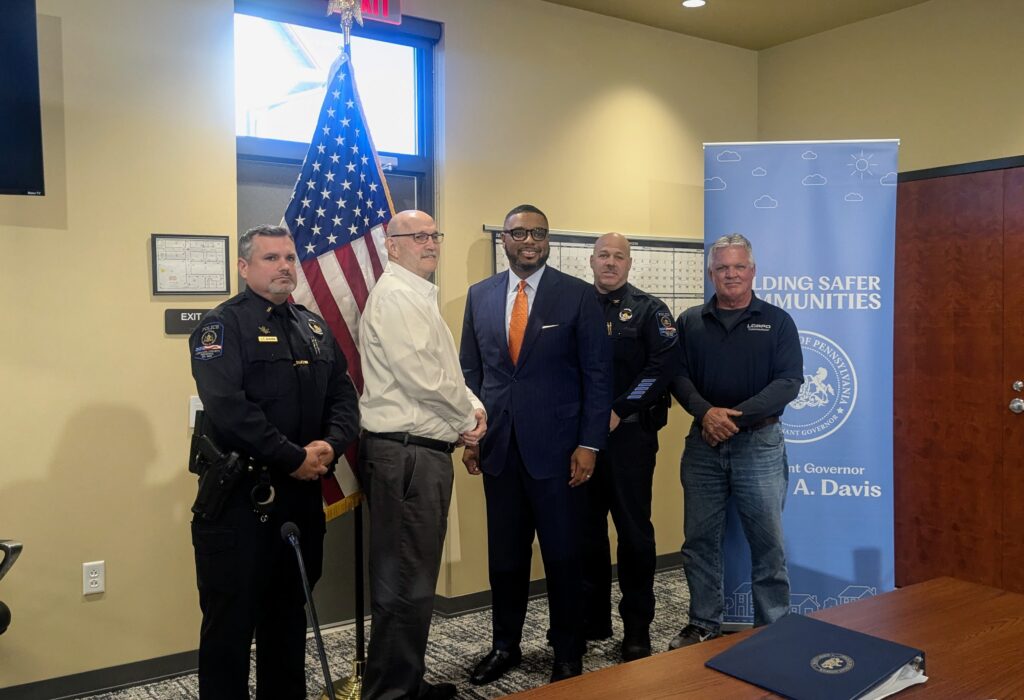
“I want to congratulate you for all the great work you’ve done here,” said Davis at the end of the roundtable. “I think, really, this is a model that other communities across the state can look to around increasing public safey, making sure that we’re serving our communities in the most efficient and professional manner, saving taxpayer dollars by creating scales of economies that you talked about, and building a model that’s gonna be sustainable for the next 30, 40 years.”
In an interview after the roundtable, the lieutenant governor listed driving factors for regionalization as including the large amount of municipalities in Pennsylvania, difficulties recruiting and retaining police officers (a sentiment echoed by Knight), and desire to provide good benefits for police.
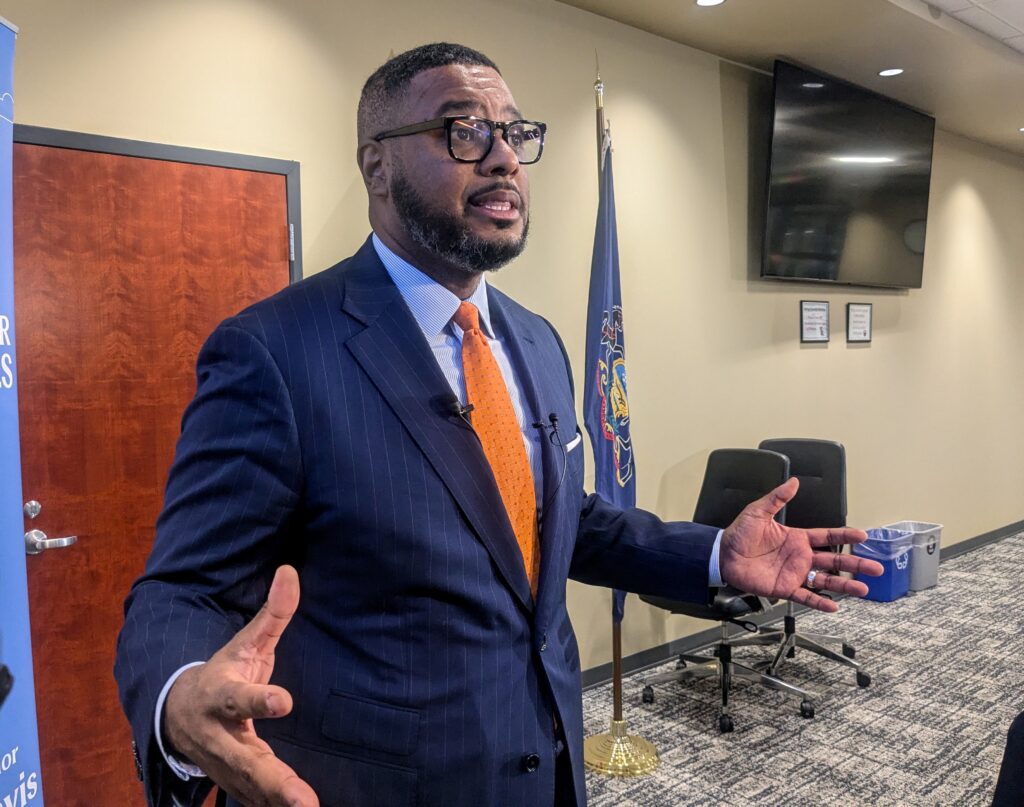
“I think we saw a perfect example of the benefits that regionalization can give to a community; from saving taxpayer dollars both for commmunities on public safety services but also in healthcare costs, increasing services to communities, allowing communities to think about public safety in a strategic way,” said Davis. “I think all of those things are on display and came out of the conversation that we had this morning.”
Davis said the state intends to continue funding feasibility studies for departments looking to regionalize and provide funding where possible to newly regionalized departments.
“Obviously budgets are tight everywhere, but one of the things the state could look at is figuring out how we are a little bit sustainable for regionalization funding,” he said. “We’re probably not going to be able to fund it for years on end, but what I heard directly from the officers here is that a year after mergin, two years after merging, gives them a cushion to help figure out how they’re best able to situate themselves going forward.”
He urged municipalities to be willing to consider regionalizing, and to include the state in conversations about it when possible.
“Local elected officials should keep an open mind, and they should do their research,” said Davis. “They should do the cost-benefit analysis of what it would save taxpayer dollars, what level of public safety support would look like in their communities. I think it’s hard to write off something unless you’re fully informed about what it would do for your community.”
Questions about this story? Suggestions for a future LebTown article? Reach our newsroom using this contact form and we’ll do our best to get back to you.
Keep local news strong.
Cancel anytime.
Monthly Subscription
🌟 Annual Subscription
- Still no paywall!
- Fewer ads
- Exclusive events and emails
- All monthly benefits
- Most popular option
- Make a bigger impact
Already a member? Log in here to hide these messages
Trustworthy local news is built on facts. As Lebanon County’s independent news source, LebTown is committed to providing timely, accurate, fact-based coverage that matters to you. Support our mission with a monthly or annual membership, or make a one-time contribution. Cancel anytime.