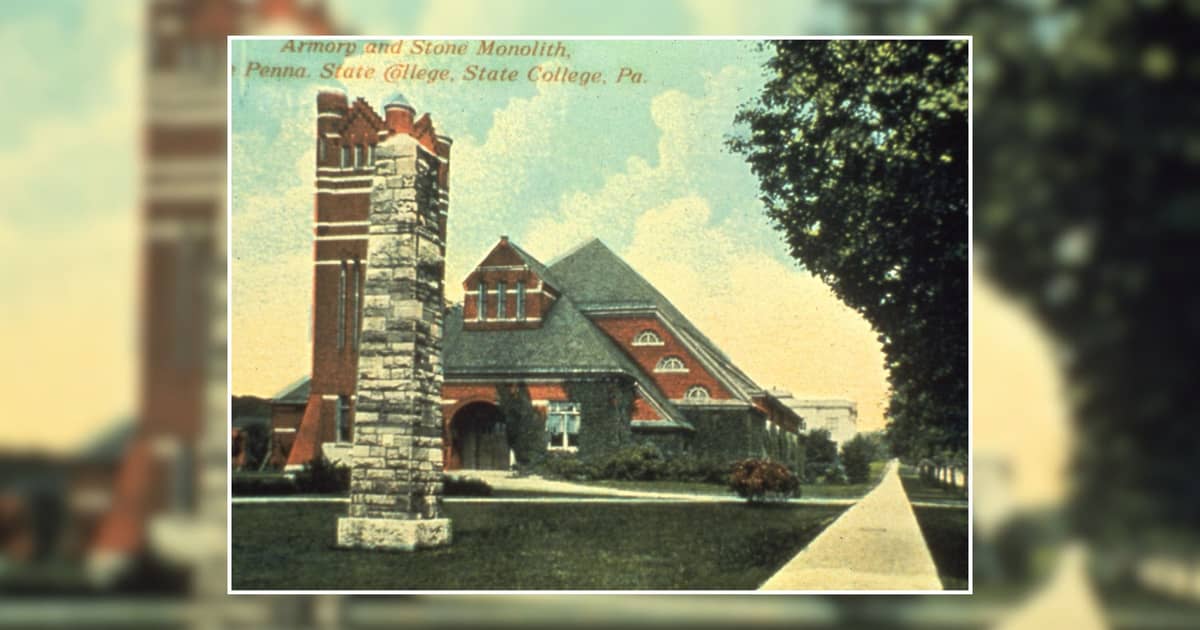

Penn Staters might remember walking around campus and coming across a large obelisk made of multiple stones. Also called the polylith, this Penn State landmark was constructed in 1896 and has a Mount Gretna stone sitting right up at the top.
The Obelisk stands 32.7 feet high and weighs 53.4 tons, according to the Penn State Library. It was created in the same year that the College of Earth and Mineral Sciences — formerly the School of Mines — was created.
State College stonemason Michael Womer built it with 281 blocks of building stone from 139 different local places, with the oldest rocks at the bottom and the youngest at the top.
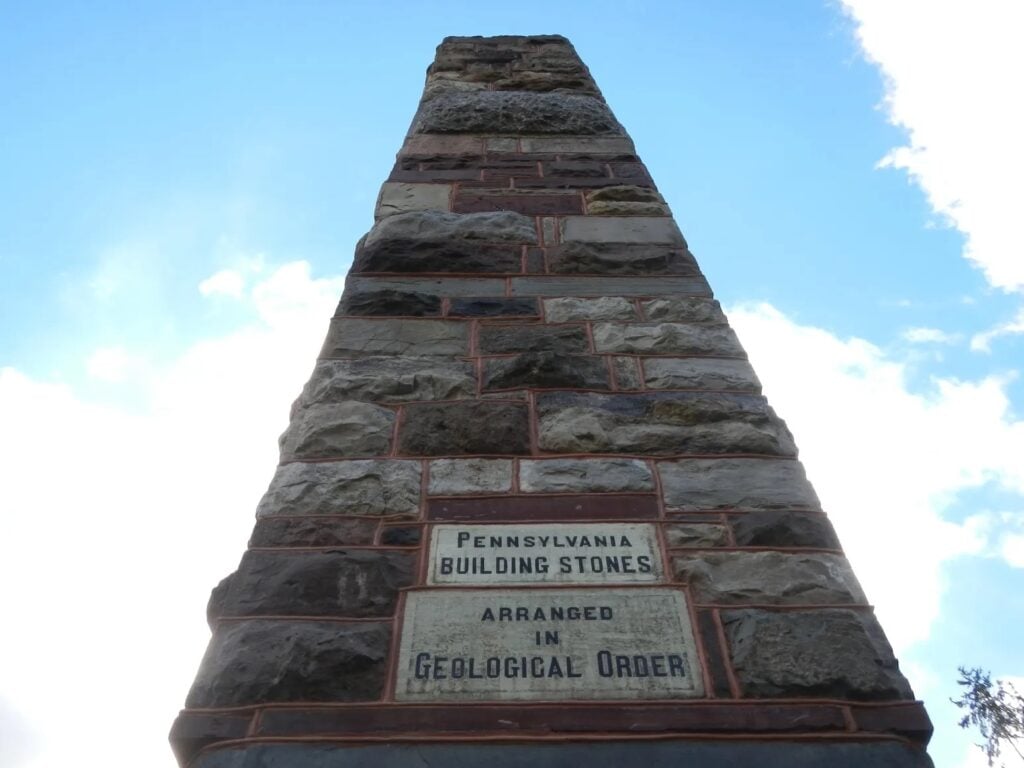
The Obelisk, Penn State’s oldest monument, contains 281 stones from 139 localities arranged in geological order and was created as a hands-on learning tool for the School of Mines, though its true purpose was long obscured by student folklore. (Greg Scholsser/Onward State)
Mount Gretna’s stone, therefore, is one of the youngest. The red sandstone is from the Triassic Period, said Patti Wood Finkle, a curator for the Earth and Mineral Sciences Museum & Art Gallery.
Going through Penn State’s collection, she found the stone was bought from an A.G. DeHuff. This would have been Abraham Gilbert DeHuff of Lebanon, who advertised the land in which the Mount Gretna red sandstone was located in 1892. (In another LebTown connection, the DeHuff house would later become Lebanon Rescue Mission’s Agape House.)
Read More: Who Knew? The spirit of kindness, Pt. 1
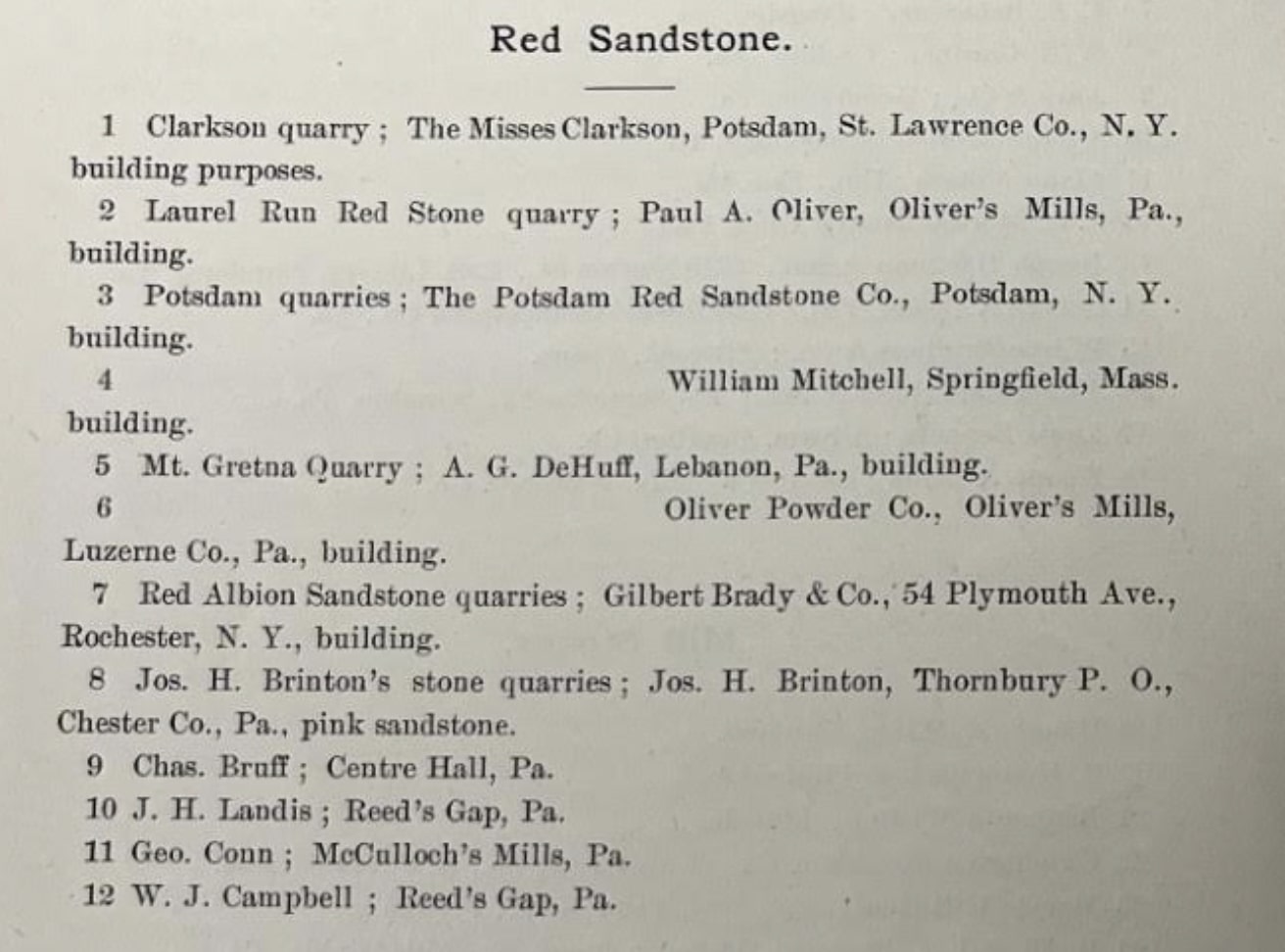
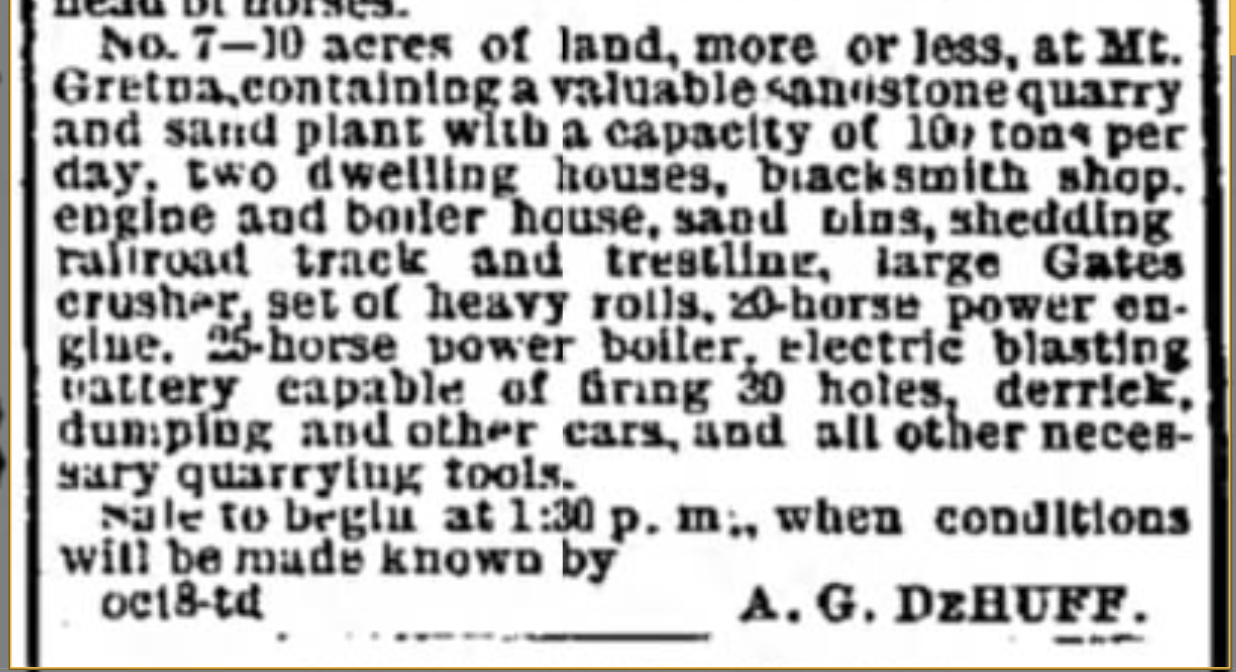
The advertisement states the following:
“No. 7-10 acres of land, more or less, at Mt. Gretna, containing a valuable sandstone quarry and sand plant with a capacity of 10 ton per day….”
Finkle said Womer created the obelisk as an ongoing science experiment and as a way to show off regional building stones.
“He wanted to feature the geological building stones of Pennsylvania and the region. Not all of the stones are from Pennsylvania — there are a couple from New York and Massachusetts and the surrounding area, but they are definitely all from this region,” she said. “I also think, and this is just my opinion, it’s a way to feature Pennsylvania minerals on campus in a startling, eye-catching way.”
Finkle said all of the stones have experienced the same environmental factors since they’ve been stacked on top of each other, and it has allowed experts to see how the different types of building stone stand up to the elements over time. Since it was made, some stones have cracked and chipped.
To her, the special thing about the Obelisk — and the Mount Gretna stone sitting on top — is all of the Penn State history it has seen. It has witnessed Penn State go from a college to a major university and has watched the expansion of the campus and downtown State College.
“The Obelisk is one of the most interesting objects on campus because it was conceived and created prior to what we consider the modern world,” Finkle said. “1896, so many changes were going to come in the next 100 years, and the Obelisk has been there to see them all.”
Questions about this story? Suggestions for a future LebTown article? Reach our newsroom using this contact form and we’ll do our best to get back to you.
Support Lebanon County journalism.
Cancel anytime.
Monthly Subscription
🌟 Annual Subscription
- Still no paywall!
- Fewer ads
- Exclusive events and emails
- All monthly benefits
- Most popular option
- Make a bigger impact
Already a member? Log in here to hide these messages
Trustworthy local news is built on facts. As Lebanon County’s independent news source, LebTown is committed to providing timely, accurate, fact-based coverage that matters to you. Support our mission with a monthly or annual membership, or make a one-time contribution. Cancel anytime.