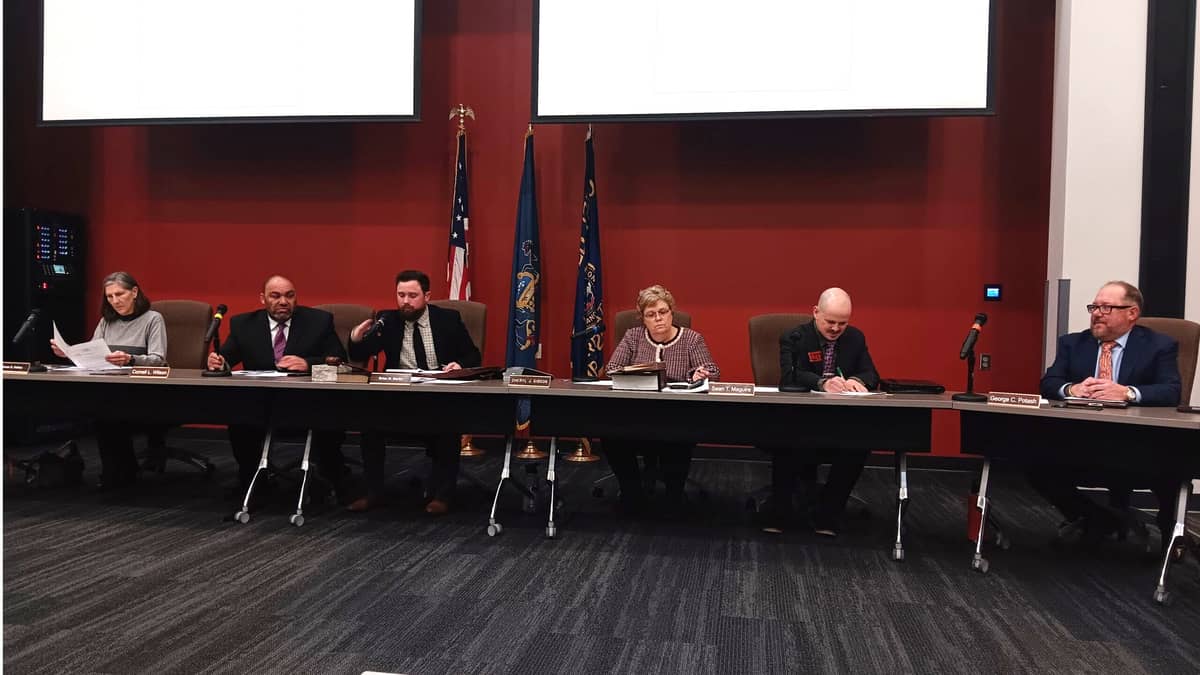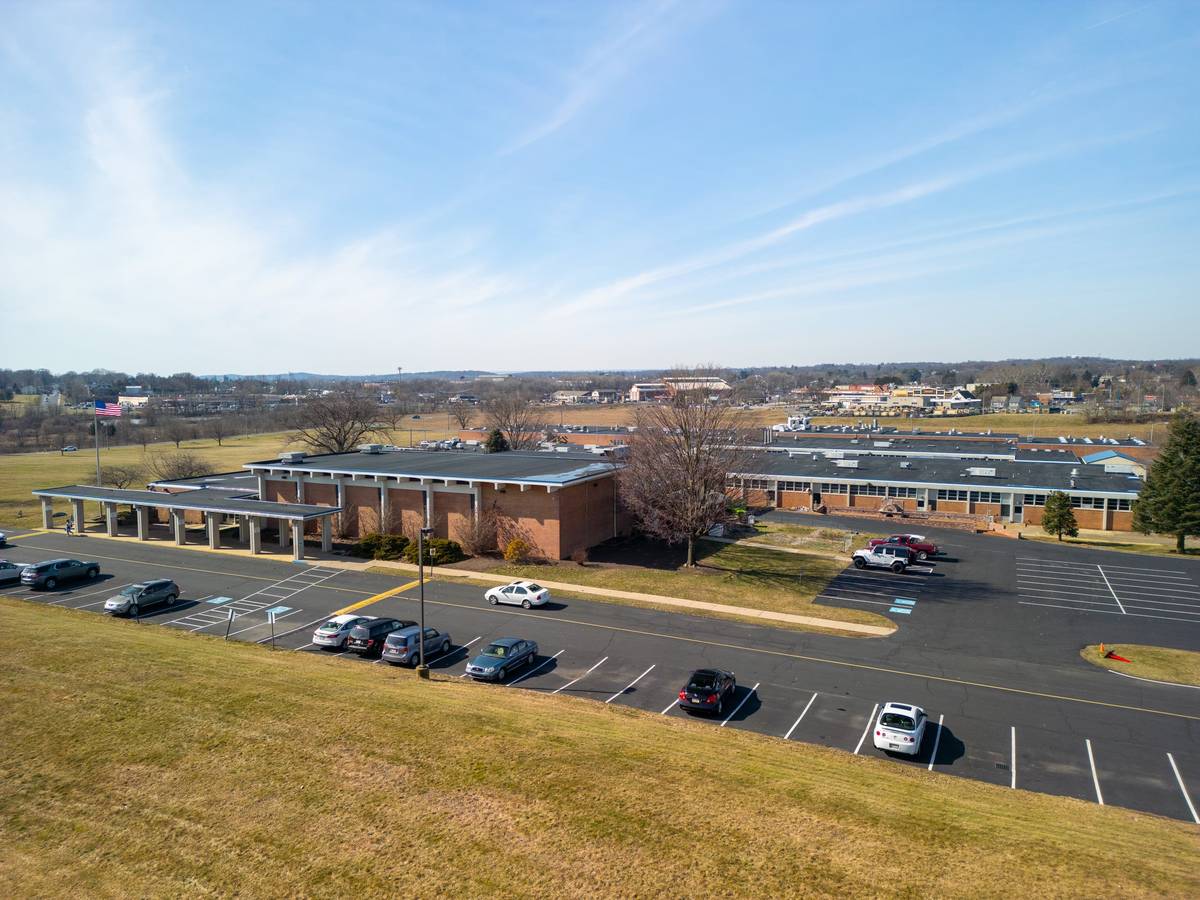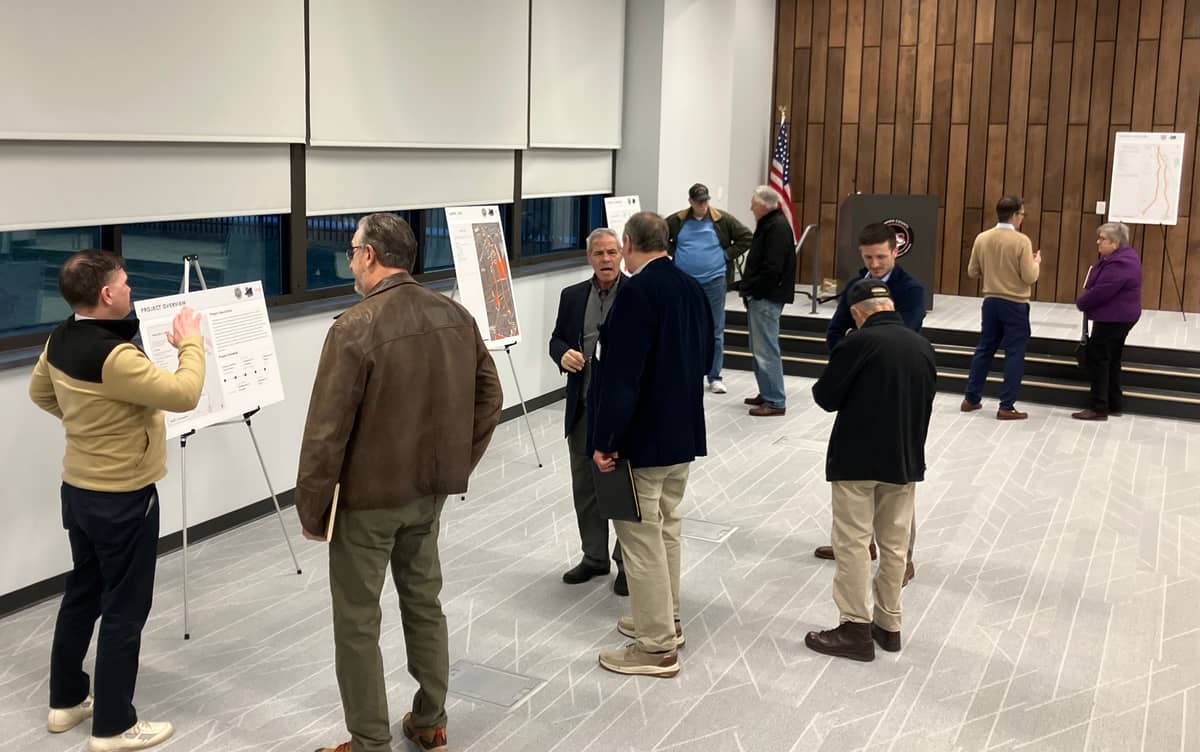

At least 60 county residents shared their views on the Route 72 and Cornwall Road corridors during a public meeting held Wednesday, Jan. 14, at the Lebanon County Department of Emergency Services in North Cornwall Township.
The meeting was held by the Lebanon County Planning Department’s Metropolitan Planning Organization (MPO) to provide residents an opportunity to meet with officials to discuss the transportation study, according to Jon Fitzkee, senior transportation planner with the Lebanon County Planning Department.
“We’re just trying to assess first, given that this is a growing part of the county, there’s a lot of activities that are occurring. And really the intent of this is just to begin trying to identify using information that our consultants have collected,” Fitzkee said. “A host of traffic, operations, safety, land development, all the factors that are playing into this corridor.”
A transportation plan will be formed from the data that’s collected, he added, for the two roadways that run north/south parallel to each other.
“We will look at developing an overall strategy of what are some projects that we could carve out of this effort and try to advance forward as part of our MPO transportation improvement program,” he said.
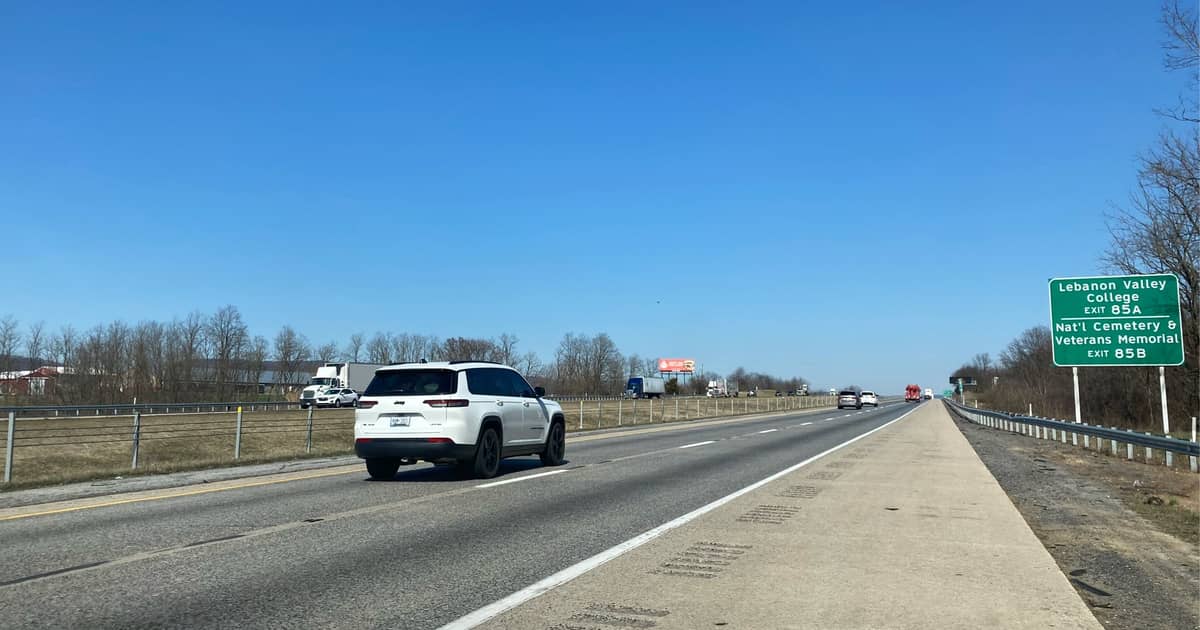
The transportation study is occurring along the corridors of State Route 72 and Cornwall Road between Oak Street in Lebanon and Route 419 in Cornwall and West Cornwall townships.
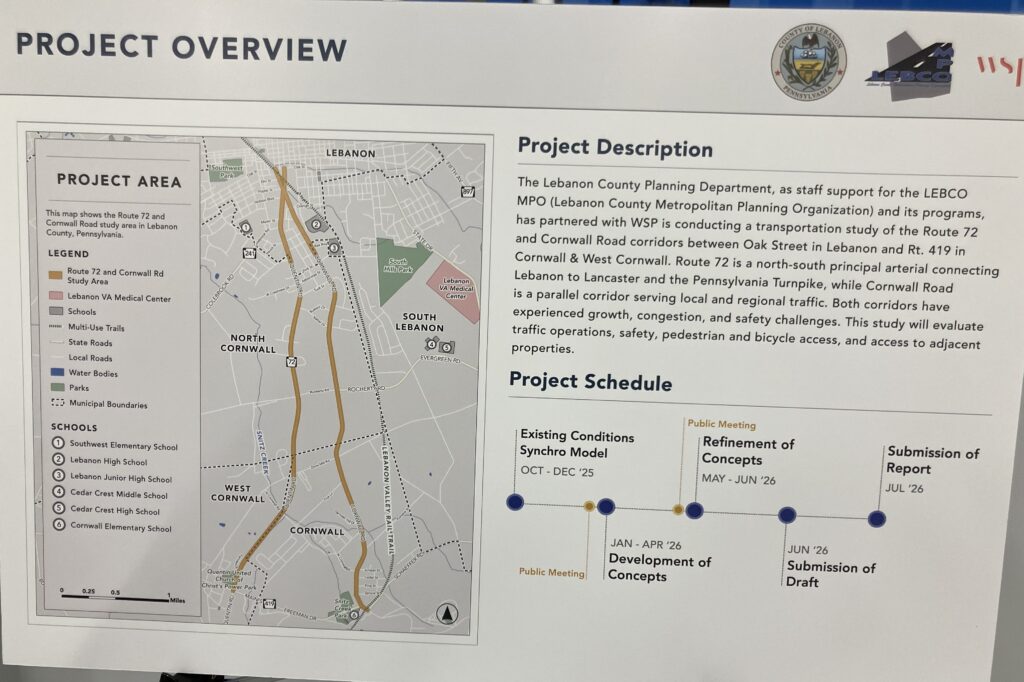
“I think we largely determined this as an area that both quarters or (areas) sort of operate as a pairing system,” noted Fitzkee.
Nine posters were placed in the main conference room at the county’s DES building for residents to read. One provided a project description, stating that both corridors have “experienced growth, congestion, and safety challenges. This study will evaluate traffic operations, safety, pedestrian and bicycle access, and access to adjacent properties.”
The same poster explained a timeline, noting that January through April is the “development of concepts” phase. May through June will entail refinement of those concepts, with June including the submission of a draft document. July will bring submission of the report.
“A lot of these boards are to say to people, does this data sort of hit the mark on what you’ve observed? I know about a lot of crashes that have happened in that intersection,” Fitzkee said. “Also telling them about other options like transit that could come in the future, and how we better prepare for some of those things.”
The data will help traffic planners determine what projects should be addressed and when.
“The one important part about it is, depending upon the specific issue, a longer corridor at a specific intersection may actually dictate what type of money we would use. So if there is a major safety issue for, say, traffic crashes, this may be eligible for what we call HSEP (Hazardous Materials Emergency Preparedness) funding,” Fitzkee said. “So we could work with the department to say, ‘Hey, we’ve had 16 crashes or 12 crashes at this intersection. What can we do to prioritize?’”
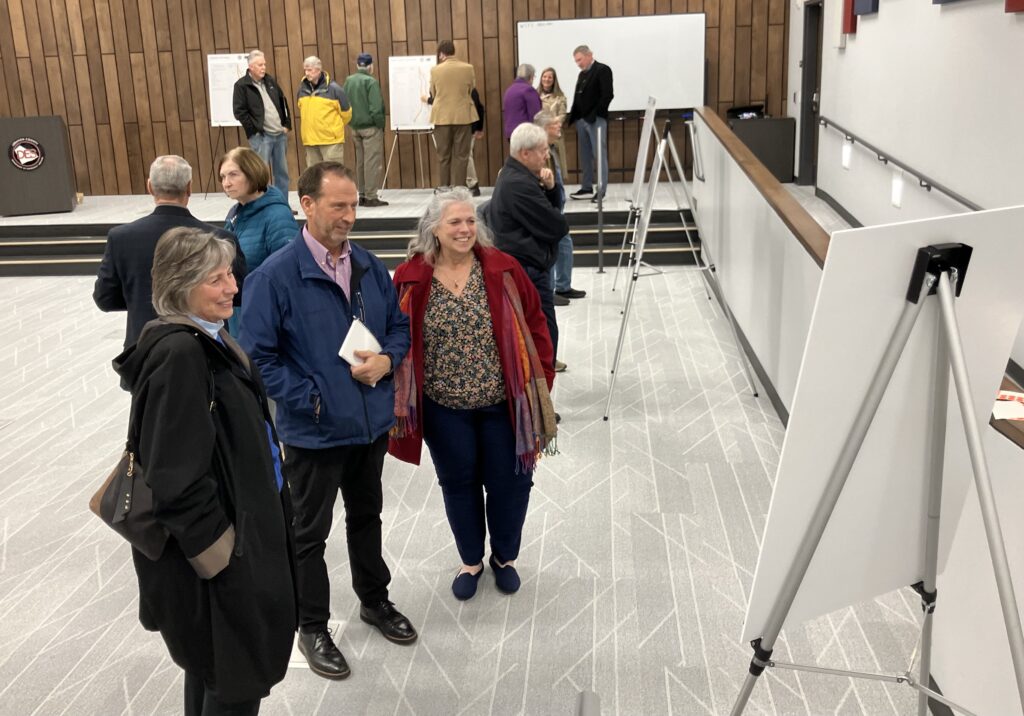
Another panel asked guests to place an orange sticker in one of five categories to rate each issue from 1 to 5, with 1 being a top concern to 5 being a lesser concern.
As might be expected, the traffic safety and traffic congestion categories both scored a high number of “1” designations within their respective categories, with pedestrian and bicycle safety also highly marked as a top concern.
“I think a lot of the things that fall into the crashes, improving safety and congestion, in some ways, are areas that don’t surprise me as being hot button issues because I think in some ways, they kind of feed into each other,” Fitzkee said. “The congestion sort of attributes to some of the issues that you see with crashes and people trying to pull out at places where they don’t have good visibility or they get impatient and try to make a decision when it’s their last chance to be able to pull out.”
Fitzkee noted it was good to see the pedestrian and bicycle safety categories receive top concerns in the eyes of local residents.
“That means there may be other modes that people are using to get around, which certainly from a traffic plan or perspective is if there’s other modes that you can use, that’s less vehicles that are out on the road that we have to add additional capacity,” he said.
The final panel asked residents to mark with stickers the locations within the two corridors they believe to have issues such as congestion and crashes.
State Rep. John Schlegel (R-101) said these public information-gathering sessions are important components to formulating a traffic plan for what is one of the fastest growing areas in Lebanon County.
“I think it’s a great first step to reach out to the community and give everyone an opportunity over multiple occasions in order to be able to get information but also to provide their thoughts and input,” Schlegel said. “We have these meetings, I think this is the second, I don’t know how many more we’re going to have, but we do have that survey that I think over a thousand people have already responded to to give their ideas and thoughts on a myriad of ideas about this.”
It’s a plan that needs to have long-term viability as well, he added.
“As we move forward and we want to look to the future, I think that’s one of the things that has been suggested already that we really need to think very long term. Not just the next 10 years but well beyond that,” Schlegel said.
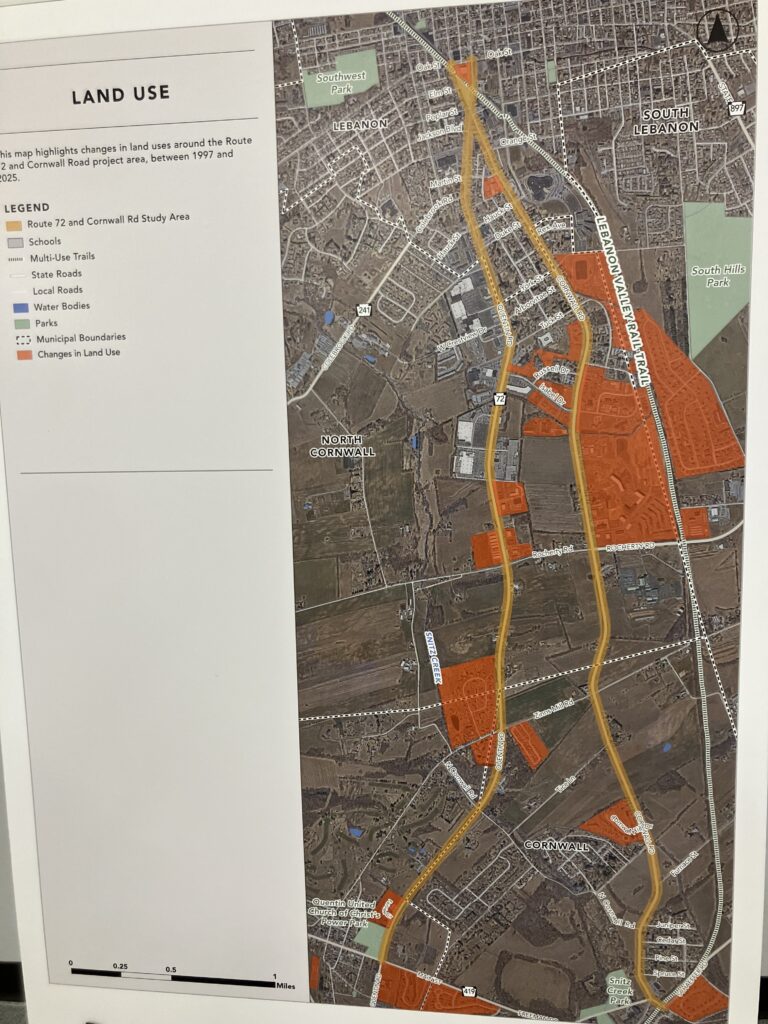
Karen Groh, president/CEO of the Lebanon Valley Chamber of Commerce, said the south side of Route 72 below the city is growing “exponentially” quicker than its counterpart on the north side of the city along the same roadway.
“If you look at the increase in traffic in the northern end, it is mostly employees going to larger distribution centers or manufacturing companies,” Groh said. “In this area, there’s a lot more retail services and food (business) that have grown in the area. So people are in and out (going) back and forth.”
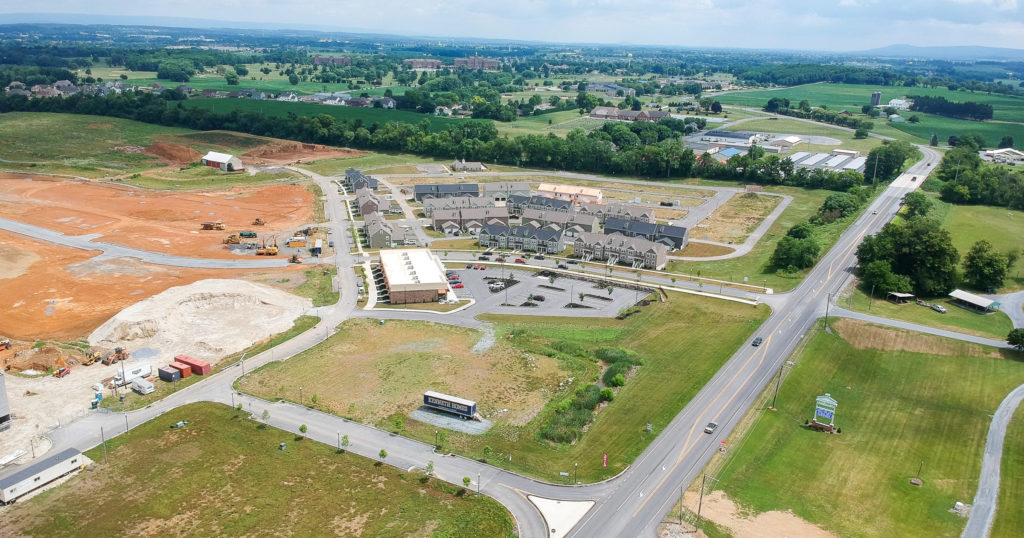
Groh noted there’s a balance between preserving green spaces and meeting the needs of a growing community. The determining factor is based on existing law, she noted.
“Ultimately, zoning dictates what can go in places and if zoning is agricultural, then it will hopefully stay that way. But private landowners have a right to do with their property what they need to, and if agriculture is not providing the income or is there a next generation who wants to take over an ag business, then the best thing they can do is sell it to somebody else for given uses that are already acceptable on that property,” Groh said.
“And therefore, you can’t stop it if it’s within zoning. So there’s that limitation, right? But if you’re looking for responsible growth, then you don’t make accommodations to allow for things that don’t belong in certain areas. So municipalities who make a zoning accommodation or a text amendment to zoning to allow for a larger industrial project or something else, they should think really carefully about making those (decisions), making sure that it’s in the best interest of that community.”
Cornwall Mayor Howard “Mac” MacFadden said he appreciated the idea of public-input sessions for the two-corridor study.
“That’s a good idea that they’re inviting public input. And I was kind of expecting there to be a row of seats and speaker and microphone for people to offer comments. But I like this format, which is very casual,” said MacFadden, who noted he’d like to see the shoulders widened along roads throughout the two corridors. “I know I heard a lot of other people as I did, filled out the online survey, which was pretty easy, and got right to the point of what concerns you about these two roads.”
Asked if he was surprised by any of the responses, Fitzkee said wider shoulders was not something he expected to hear from residents.
Residents who would like to provide their comments can do so via the survey at the Lebanon County Planning Department website.
Questions about this story? Suggestions for a future LebTown article? Reach our newsroom using this contact form and we’ll do our best to get back to you.
Support Lebanon County journalism.
Cancel anytime.
Monthly Subscription
🌟 Annual Subscription
- Still no paywall!
- Fewer ads
- Exclusive events and emails
- All monthly benefits
- Most popular option
- Make a bigger impact
Already a member? Log in here to hide these messages
Trustworthy local news is built on facts. As Lebanon County’s independent news source, LebTown is committed to providing timely, accurate, fact-based coverage that matters to you. Support our mission with a monthly or annual membership, or make a one-time contribution. Cancel anytime.