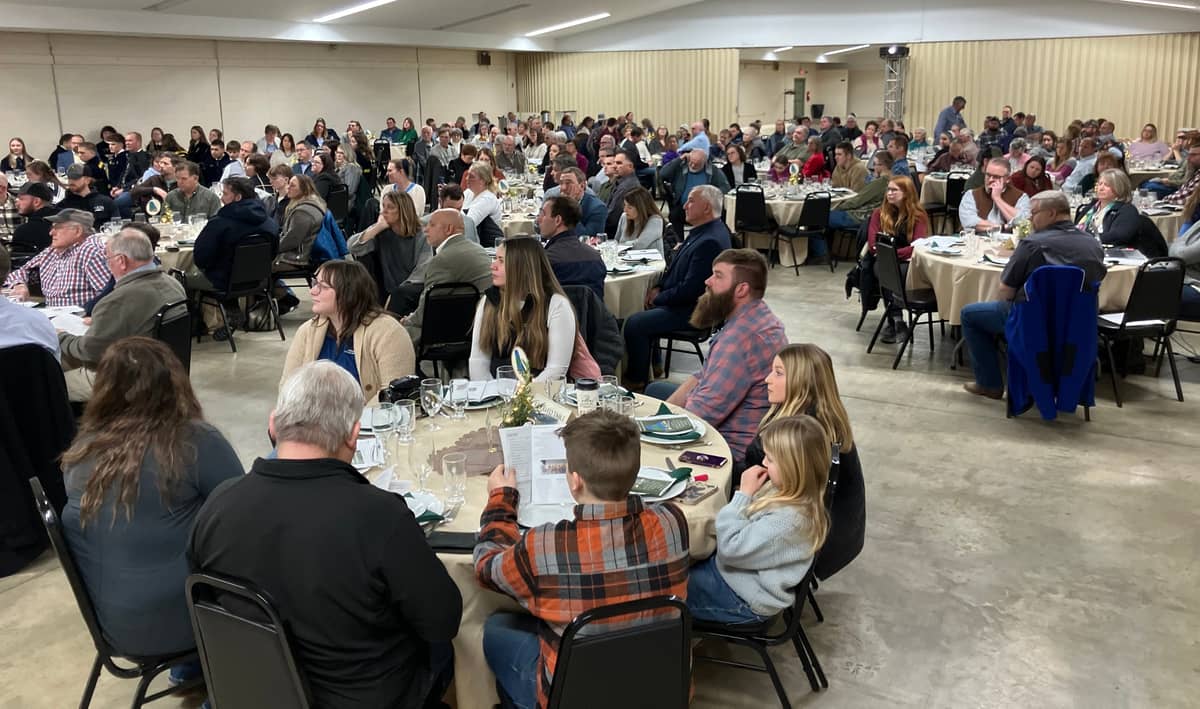

Lebanon County’s conservation and farmland preservation programs were celebrated with an inaugural banquet Tuesday, Feb. 10, honoring achievements in those fields.
The banquet featured four awards and several speakers who spoke about Pennsylvania being a national leader in preserving its farmland in perpetuity and implementing conservation measures to protect natural assets.
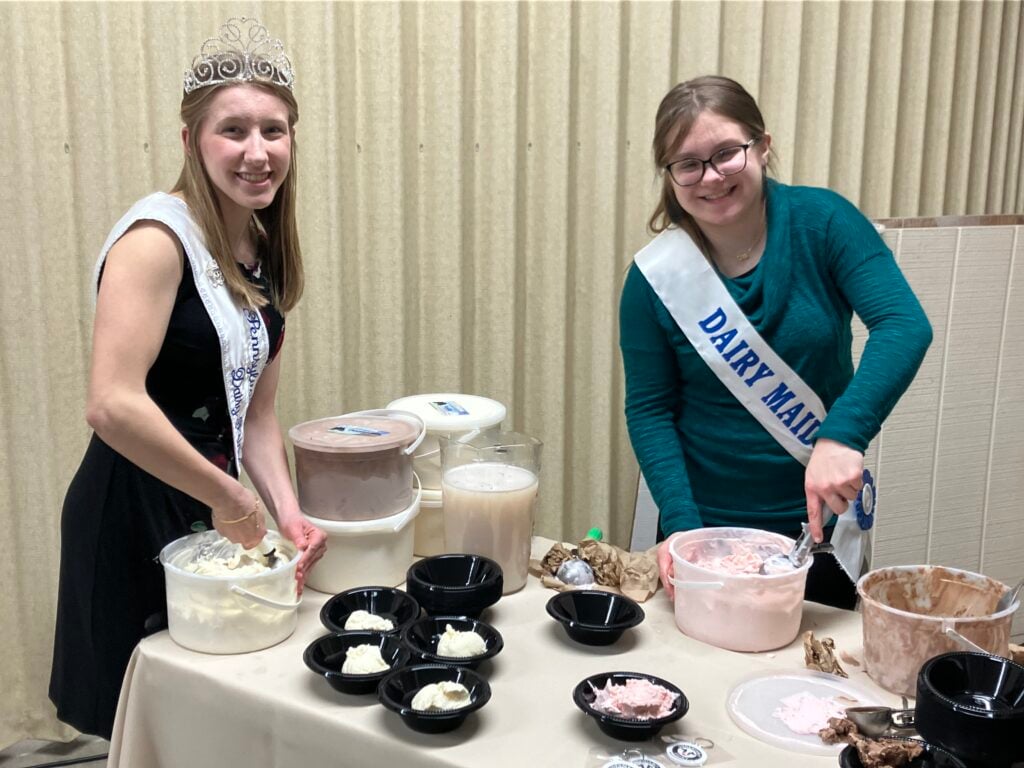
Sponsored by the Lebanon County Conservation District, “Rooted in Conservation, Growing in Preservation” was held at the Lebanon Valley Exposition Center & Fairgrounds and exclusively covered by LebTown.
There were two different speakers during a 2.5-hour program that also featured a comic and the distribution of awards in conservation, farmland preservation, and conservation stewardship practices.
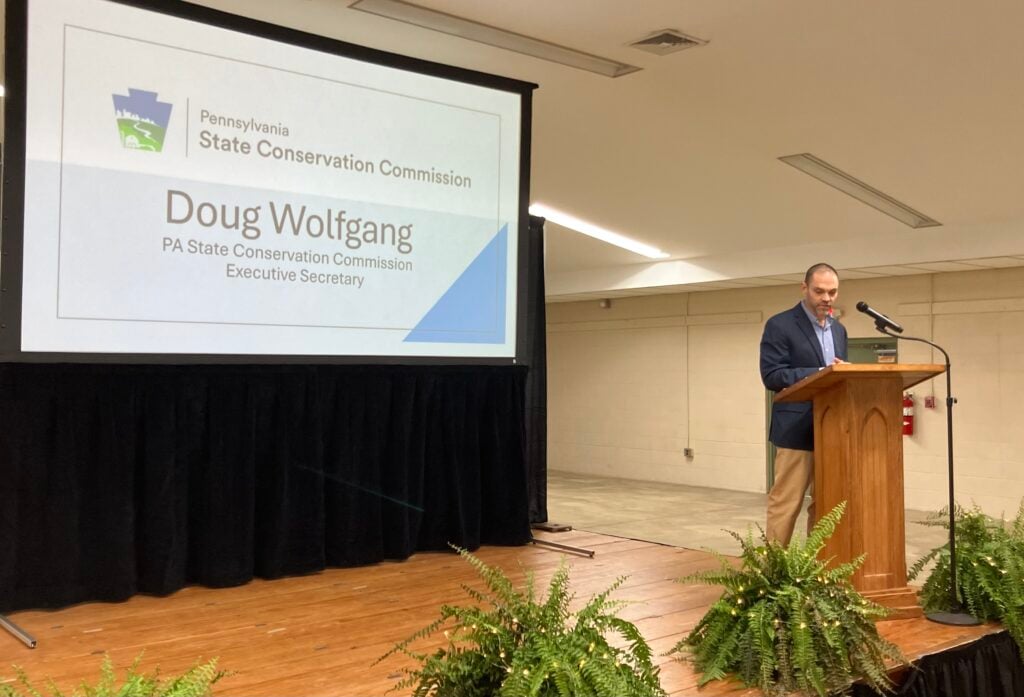
Doug Wolfgang, executive director of the PA State Conservation Commission, reviewed the creation of the farmland preservation program in 1988 and its history. He highlighted the first farmers who were pioneers in an initiative that charted new territory.
“It would have been (tough) for farmers to preserve their farms with so much uncertainty, not knowing what the future holds or the, you know, agreeing to essentially devalue their property,” Wolfgang said. “But that changed over time and confidence grew because of the vision of a few farmers like the Aarons in Lancaster County and like the Hoovers in Lebanon County. And over time, these single farms turned into large, continuous plots of preserved farms as more agricultural security areas were formed and the program matured.”
He said their efforts – and everyone who has joined over the past nearly 40 years – matter.
“We all know why it’s important to preserve farmland, it’s an economic powerhouse. First and foremost, is the economic value in this region of the country,” Wolfgang said. “$137.5 billion total economic impact, 20% of our state’s gross domestic product, top 10 in many commodities, poultry, eggs, and milk, specialty crops.”
That economic impact extends beyond farmer fields.
“We’re second in the nation in direct marketing, we’re first or second in organic (products). Our strength is in our diversity here, from hemp to hop, from traditional to basic syrup. All sorts of commodities in between. It is a driving force of our economy,” Wolfgang said. “Food security is second. A day’s drive up to a large percentage of our nation’s population from where we’re standing right here at the expo center.”
And keeping that food production close to population centers is critical when you consider the Lebanon Valley’s rich agricultural assets.
“Some of the most fertile, non-irrigated soils found anywhere in the nation or the world,” Wolfgand said. “These Hagerstown and Duffield soils that are through this valley here. It’s incredible. And third, of course, environmental and ecosystem services. Preserved farms are required to have a conservation plan that addresses all soil, water, and nutrient concerns of the farm. And farms with clean conservation, including the natural environment, the groundwater we recharge habitat.”
Wolfgang noted the many partnerships and programs that benefit farmers, including the Ag Conservation Assistance Program (ACAP).
“It’s historic funding under the Clean Streams Fund with conservation practices on farms that improve water quality and soil health and make farms more viable and productive. We’re pretty new to this program, only three years, but now we have nearly 1,700 signed contracts with farmers across the state wanting to install good conservation on their farms,” Wolfgang said. “Here in Lebanon County, 64 signed contracts with farmers, and many of those are bundled with EQIP (Environmental Quality Incentive Program), which is a federal program.”
These efforts work to improve water quality here and downstream, he added.
“All driven largely by efforts to clean up the Chesapeake Bay watershed, a long history of clean-up efforts that go way back with agriculture being in the crosshairs. But we’ve made notable progress,” Wolfgang said. “And Pennsylvania farmers are doing their part to clean up the Chesapeake Bay.”
Wolfgang noted conservation efforts are especially important on preserved farms.
“We’re trying to intentionally focus these practices on preserved farms as much as we can through our programming. Understanding now what better farm to be investing in than one that’s protected with an easement,” Wolfgang said. “And we know it’s always going to be a farm. Not investing in farms that could be warehouses years from now. So that’s been very important to me personally since being in the commission. So together, these preservation and conservation investments are more important than ever before.”
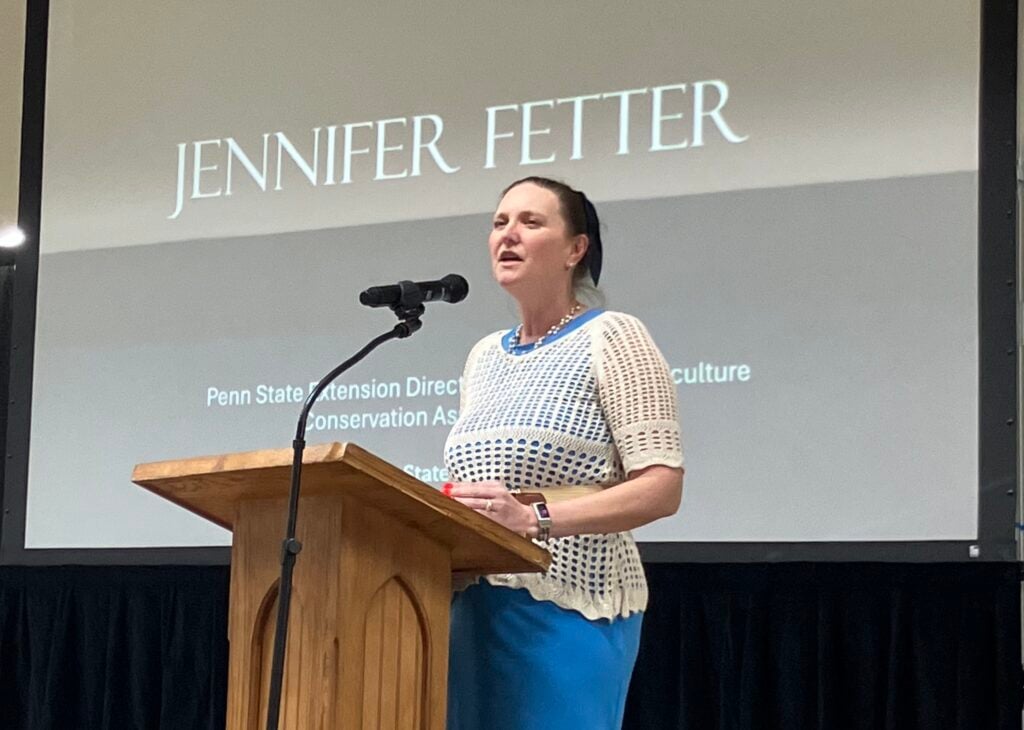
Jennifer Fetter, director of the Center for Agriculture Conservation Assistance Training and Penn State Extension’s Water Resources Program team lead, said she was asked to speak about agricultural conservation. That messaging, however, was like “speaking to the choir” during her remarks to the nearly 250 event attendees.
“Farmers are the original conservationists. They are the people who truly understood the value of soil and water and working lands long before environmentalists came along and tried to tell everybody what the value was of soil and water and working lands,” Fetter said. “So you really all have been doing the work that the conservation district is here to help steward. You understand that value. You understand what’s going on out in the farming landscape and what we need to do.”
She instead highlighted efforts to perpetuate conservation at the county level so that officials can continue to help farmers keep their soils healthy and waters clean – especially when costs are rising, weather has become unpredictable, and other factors farmers can’t control cut into their profits.
“Doug talked about earlier tonight, a handful of those conservation programs that come to you. There’s an abundance now. The state listened to a lot of the concerns, the constraints, the frustrations with needing to put these conservation practices in place on the farm, but being burdened by the cost of doing that,” Fetter said. “Because what you do on your farm, it’s not just for your farm. Those benefits extend way past the farm field.”
Many others benefit from conservation practices.
“They’re benefiting your neighbors, down to your communities, people that don’t even live in Pennsylvania, right? Way down in the Chesapeake Bay, those individuals are gaining so much from what we’re doing on our landscape here,” Fetter said. “It’s only fair that all of those people help to support what’s going on on your farm. And that’s where these ag conservation programs come into play.”
Any farmer interested in learning more about conservation practices via various LCCD programs that they can implement to benefit water and soil quality, is encouraged to contact the Lebanon County Conservation District at 717-277-5275.
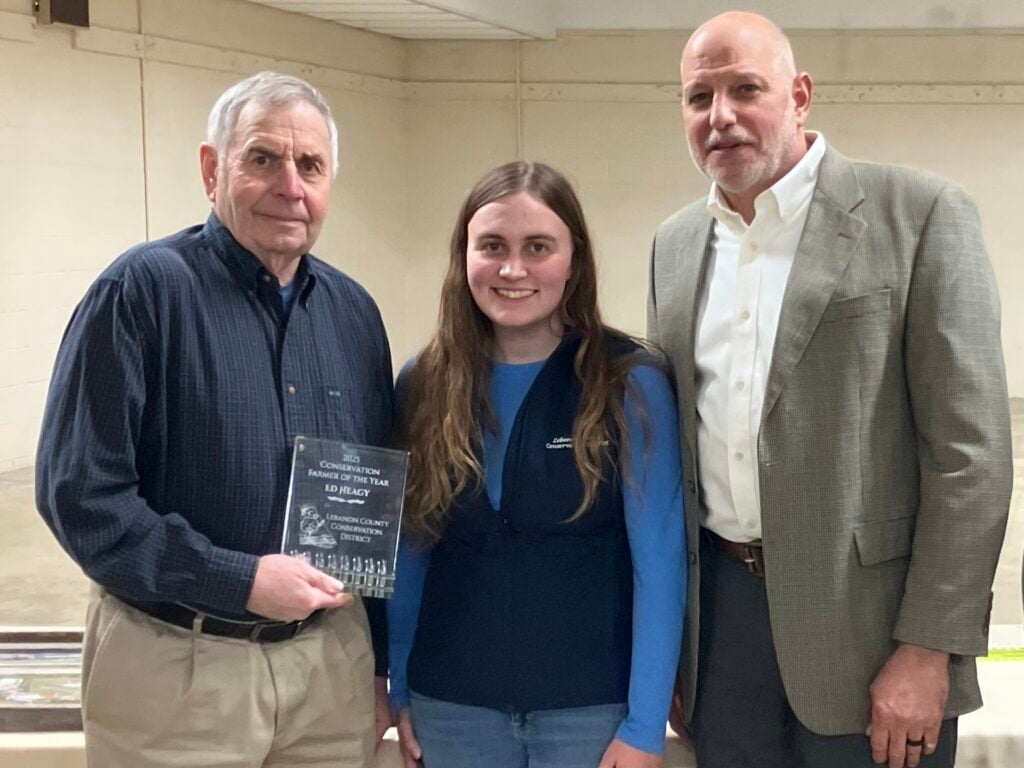
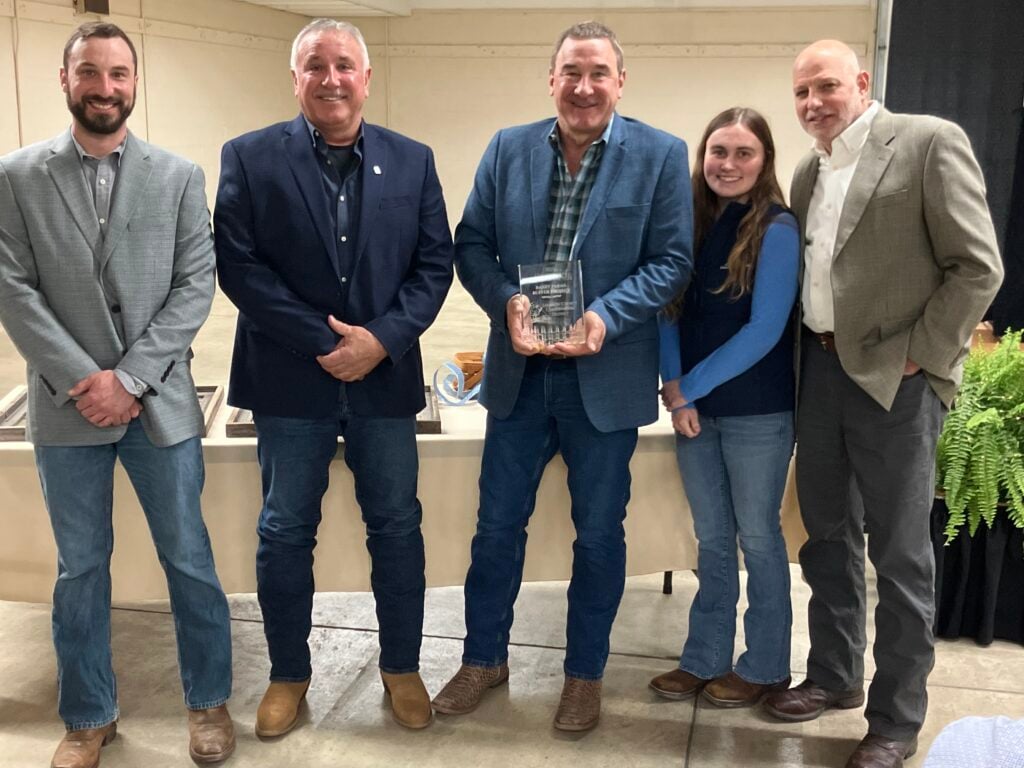
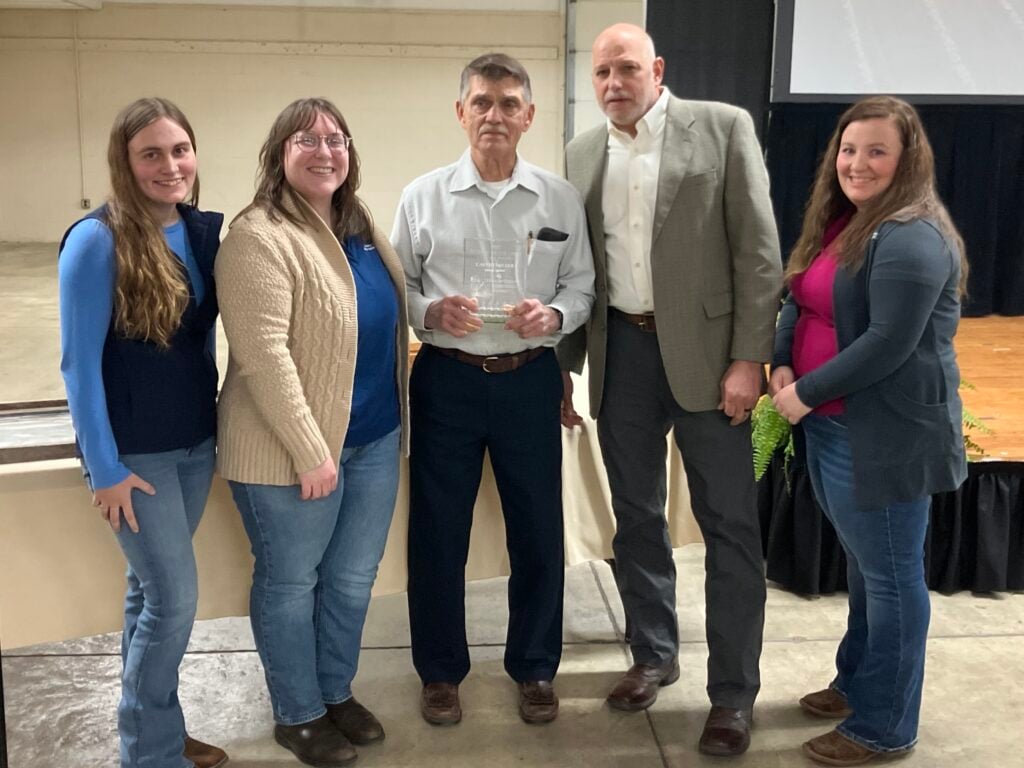
Following Fetter’s remarks, four awards were distributed for Conservation Farmer of the Year, Conservation Project of the Year, Farmland Preservation Excellence Award, and Steward of the Land Lifetime Award.
The award recipients are:
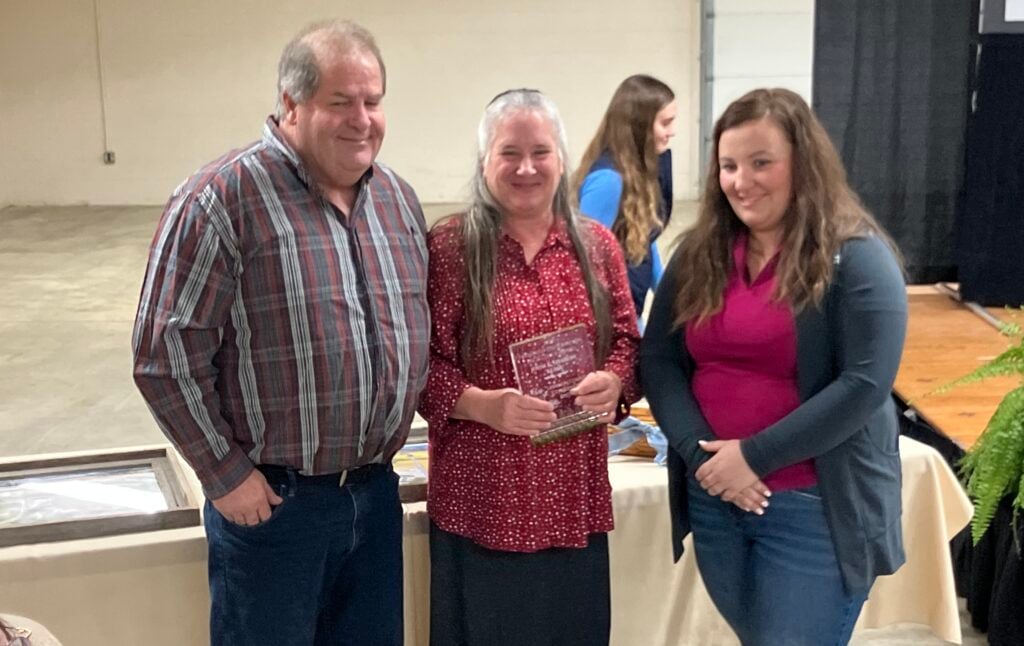
- Conservation Farmer of the Year: Ed Heagley, East Hanover Township
- Conservation Project of the Year: Barry Farms, Schaefferstown
- Farmland Preservation Excellence Award: John and Sharon Kline, Myerstown
- Steward of the Land Lifetime Award – Calvin Miller, Fredericksburg
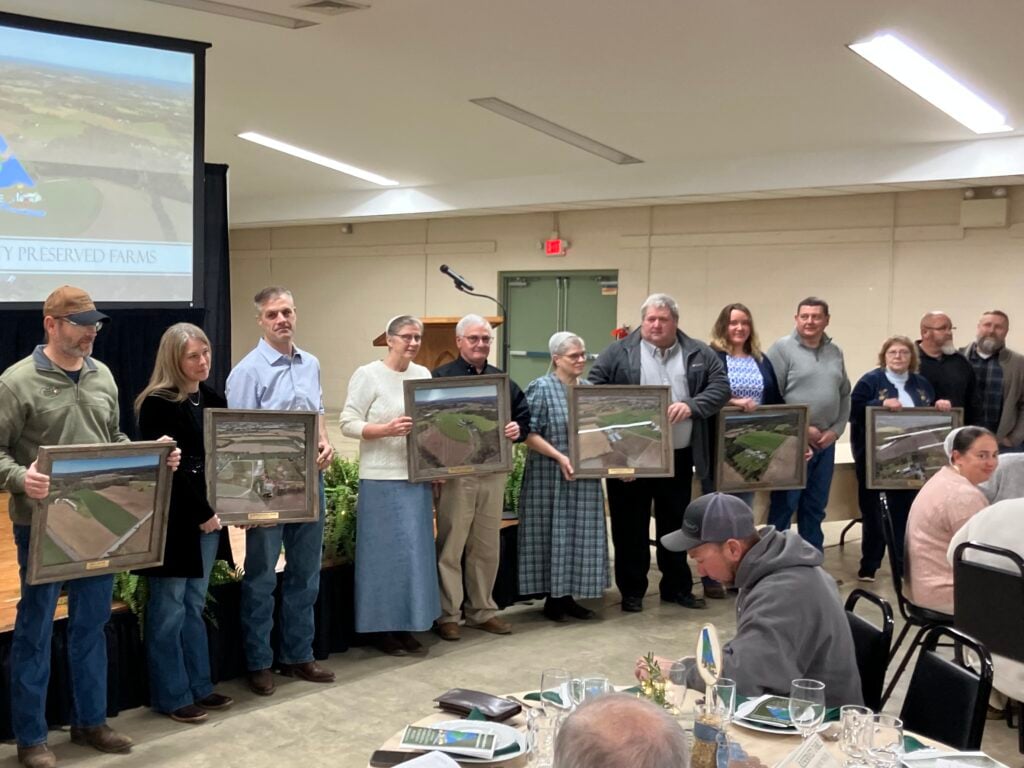
The latest entrants into the farmland preservation program were recognized prior to dinner being served and were presented with a large framed aerial photograph of their respective farms.
All farms below were preserved except for the Pedersen property, which entered at the start of the new year. The most recent preserved farms are in alphabetical order by property owner last name and include their location and total land preserved:
- Clovis & Joanna Crane, Lebanon – 64.17 acres
- Nancy Lane, Lebanon – 52.89 acres
- Paul Meyer, Palmyra – 73.69 acres
- Elvin & Nancy Nolt, Richland – 46.85 acres
- Klaus & Amanda Pedersen, Fredericksburg – 37.11 acres
- Kevin & Lauren Snader, Fredericksburg – 152.73 acres
- Jay & Miriam Weaver, Myerstown – 166.26 acres
A display at the registration table noted that 191 farms totaling 21,234 acres have been preserved in the Lebanon Valley over the past 33 years.
Questions about this story? Suggestions for a future LebTown article? Reach our newsroom using this contact form and we’ll do our best to get back to you.
Support Lebanon County journalism.
Cancel anytime.
Monthly Subscription
🌟 Annual Subscription
- Still no paywall!
- Fewer ads
- Exclusive events and emails
- All monthly benefits
- Most popular option
- Make a bigger impact
Already a member? Log in here to hide these messages
Strong communities need someone keeping an eye on local institutions. LebTown holds leaders accountable, reports on decisions affecting your taxes and schools, and ensures transparency at every level. Support this work with a monthly or annual membership, or make a one-time contribution. Cancel anytime.