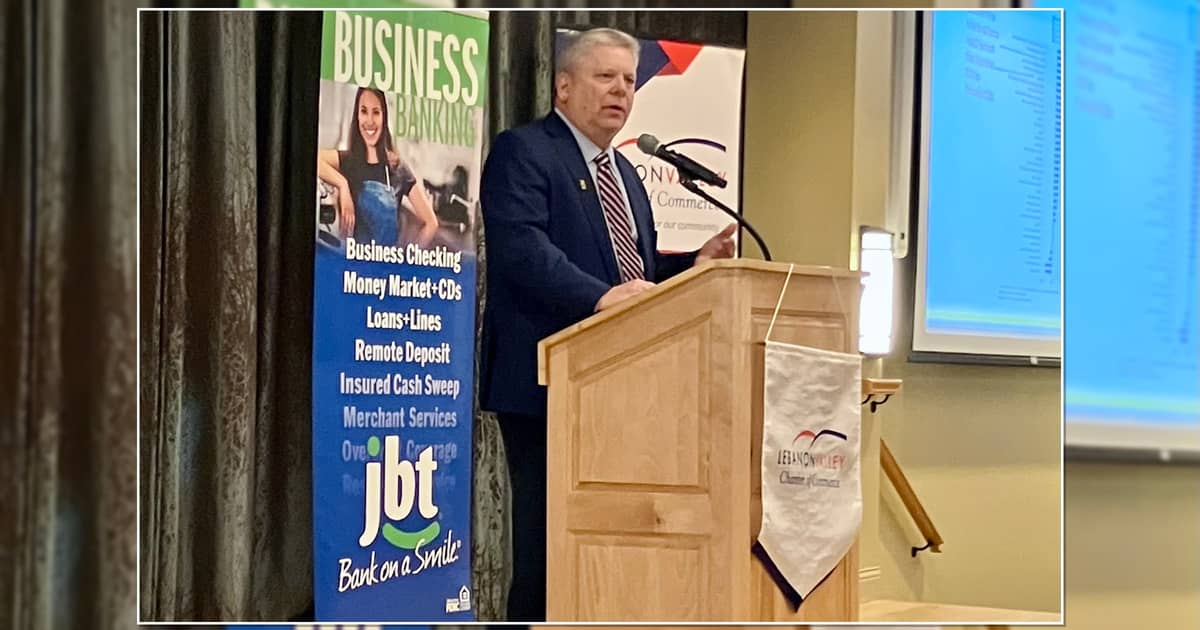

Two speakers addressing federal and local economic conditions on Thursday highlighted the impact the housing shortage, among other factors, is having on consumer confidence and spending.
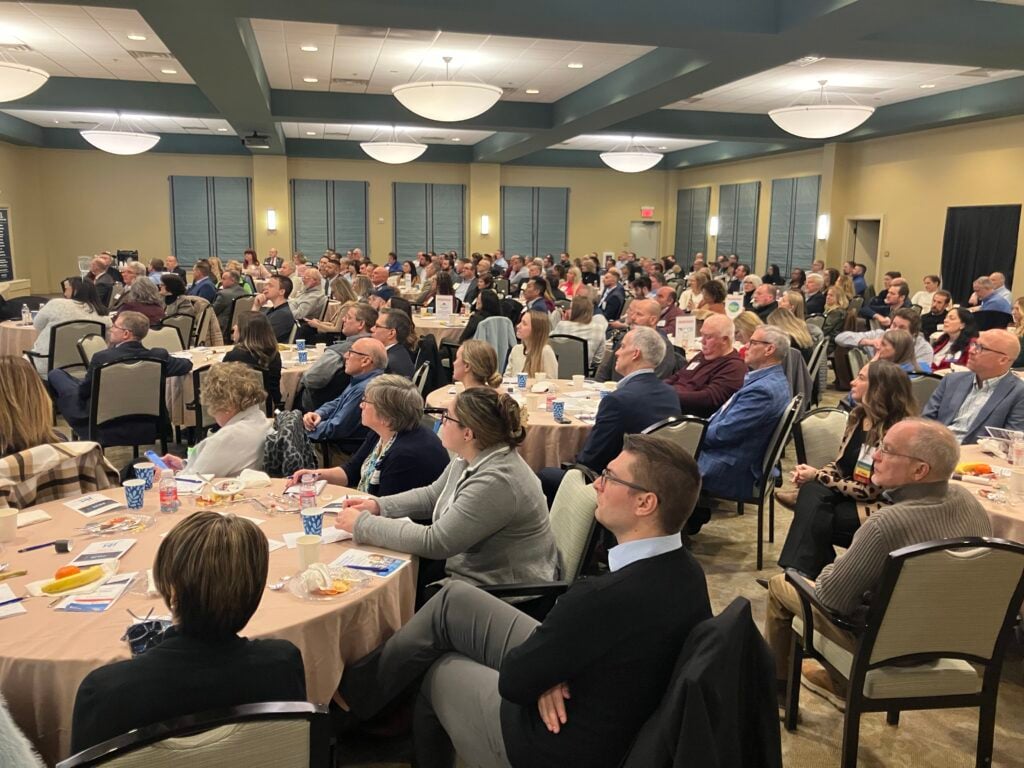
Their perspectives were part of a 2026 federal and local economic forecast during a Lebanon Valley Chamber of Commerce event at StoneRidge Poplar Run, Myerstown. What was called the largest crowd ever for the organization’s annual economic forecast breakfast had approximately 220 guests, according to chamber officials.
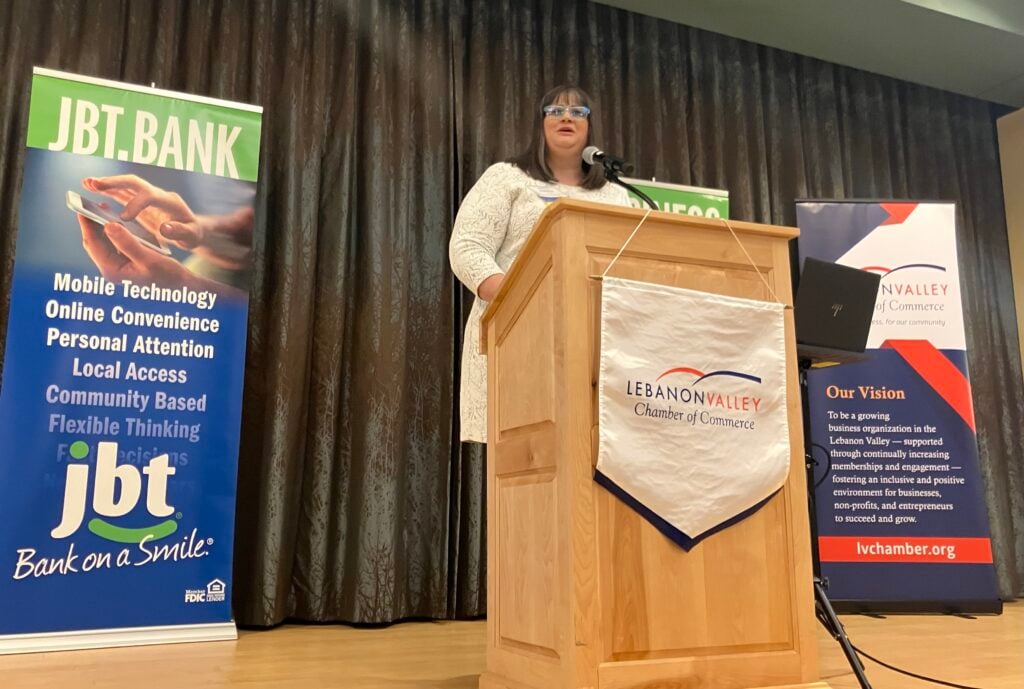
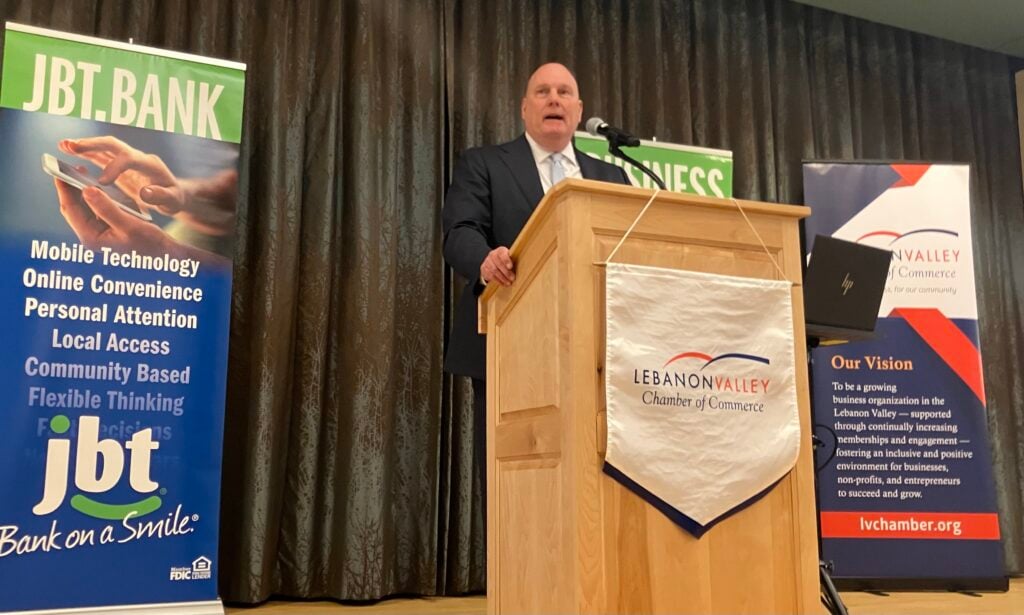
Both Ryo Tashiro, outreach economist and adviser for the Federal Reserve Bank, Philadelphia, and Bruce Darkes, chief financial officer of Byler Holdings, prefaced their respective remarks by noting that their comments were their own and not necessarily of their employers.
Tashiro said the housing shortage has driven prices skyward and is contributing to the ongoing battle with inflation.
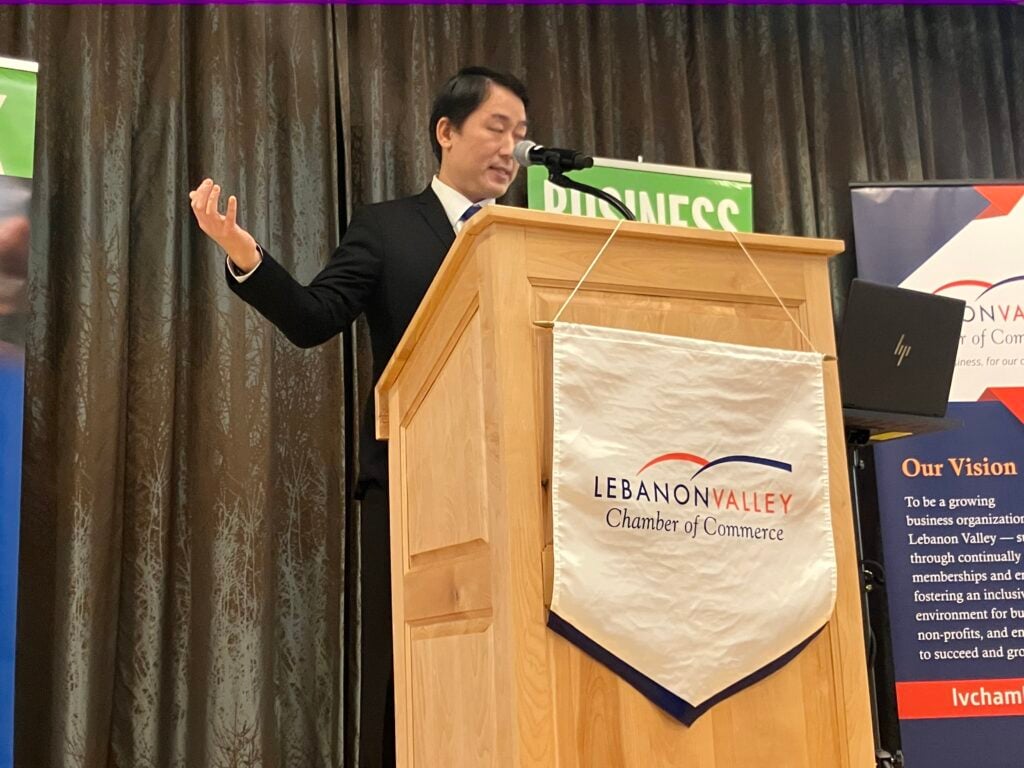
“I think in terms of what’s going to drive inflation, housing is obviously still going to be more important but in terms of the core goods inflation categories, I think that’s going to be a fairly important question for 2026 and beyond,” Tashiro told the packed audience.
He said while home prices have been calming down quite a bit, particularly in the western and the southern parts of the United States, due to rising inventory, that’s not the case in Pennsylvania, including Lebanon County.
“For example, if you look at the data for Pennsylvania you can really see that over the past, you know, 12 months, 24 months, or even since COVID, that number of housing inventory or housing supply has really not recovered in a fairly meaningful way,” Tashiro said. “I mean, that before COVID, you know, the typical inventory for housing in the state was something like 30,000. Today, that number is still well below that.”
Darkes said he believes the housing shortage began in 2008, which while not stated was the beginning of the Great Recession across the nation.
”I don’t think we could go and talk about affordable housing in the area without talking about 2008. I still think I contend that we’re still dealing with a housing shortage because of 2008,” Darkes said. “Think of what happened after that. Again, prior to 2008, everybody was getting a house.”
Darkes referenced a housing study commissioned by Lebanon County Commissioners a few years ago, which revealed some interesting facts.
“What they found in the study is that housing in Lebanon County is really short. We have about 40,000 people coming into the county to work,” he said. “I’ll give you an example of Byler Holdings. In our finance department, we have 10 people. Over half of them come from out of the county to work in Byler Holdings. The other half are Lebanon County residents.”
That’s not unique to his company.
“I imagine in all of your businesses you see something similar where you have a lot of people coming from outside the county coming to work,” he added. “I think everybody thought prior to this study by the commissioners that people from Lebanon County were leaving the county going to work in Berks, Lancaster or Dauphin. Again, here are the actual numbers they came up with on the shortages, which give you some cost of housing in Pennsylvania.”
Tashiro said housing inventory dropped greatly in the past few years, which impacts affordability. Locally, that number sits at about 6,000 units.
“It’s just that after COVID, when we started to see this housing inventory drop very drastically, you can really see that affordability has also dropped down and has not been coming back up in a meaningful way,” Tashiro said. “And that’s not unique to this area, right? You can see that the same thing can be said of a lot of the communities in Central PA and also across the United States. But relative to what it was before, certainly counties like Lebanon, PA, seems like we have seen this sudden and pretty significant drop when it comes to affordability.”
Darkes said his company works to address the local housing shortage. Byler Holdings is heavily involved in developing and constructing residential housing, particularly through mixed-use projects in Pennsylvania, including as developer of North Cornwall Commons in North Cornwall Township.
“The real need in the county was the need for housing in a community sense. So you’ve got everything here,” Darkes said about North Cornwall Commons. “You’ve got retail, you’ve got restaurants, hotels, and you have again the housing that we talked about.”
Current housing and other economic conditions will likely contribute to a “holding back” of cutting interest rates further, according to Tashiro.
“What we should be doing in terms of rates – and there’s a debate about should we hold rates or should we cut rates – one of the sort of difficulties with this debate is probably this picture where not only we’re still seeing this elevated current inflation, but also we continue to see this elevated inflation in terms of expectation,” Tashiro said. “As a result, if that continues, it’s going to be very challenging for the policy makers to convince themselves that perhaps the rate cut is a good way to go. So the market certainly is seeing that message as well.”
Although March and April monetary meetings will be highly dependent on incoming data, it appears that a high share of the market is convinced that the Fed will move “a little bit more slowly when it comes to additional rate cuts in 2026,” Tashiro said.
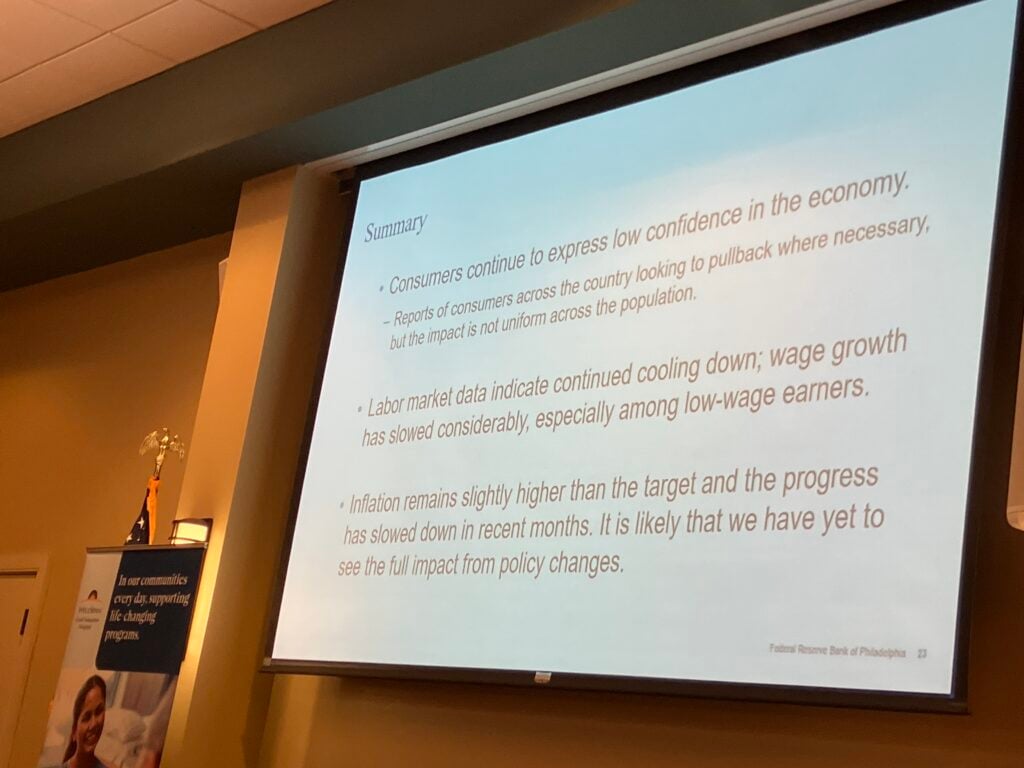
Tashiro stated three takeaways from his presentation.
“I think the most important thing that I talked about today is that in terms of consumer behavior, I think we are starting to see this initial evidence of people pulling back their spending, and that has really resulted in companies reporting that their sales are down, et cetera,” he said. “So that’s something that’s been consistent since the end of 2025. And then with that labor market conditions have continued to cool off, where if the companies are not seeing strong numbers when it comes to sales, then, of course, that could lead to their decisions to not hire and that’s probably what’s happening.”
The last point is not good news for those concerned about the ongoing fight against inflation.
“And then last but not least, inflation remains fairly elevated relative to where we’d like to be, about 2%,” Tashiro said. “And I think the more interesting and important story here is that people’s expectations about inflation for the next 12 months are still high.”
Questions about this story? Suggestions for a future LebTown article? Reach our newsroom using this contact form and we’ll do our best to get back to you.
Become a LebTown member.
Cancel anytime.
Monthly Subscription
🌟 Annual Subscription
- Still no paywall!
- Fewer ads
- Exclusive events and emails
- All monthly benefits
- Most popular option
- Make a bigger impact
Already a member? Log in here to hide these messages
An informed community is a stronger community. LebTown covers the local government meetings, breaking news, and community stories that shape Lebanon County’s future. Help us expand our coverage by becoming a monthly or annual member, or support our work with a one-time contribution. Cancel anytime.