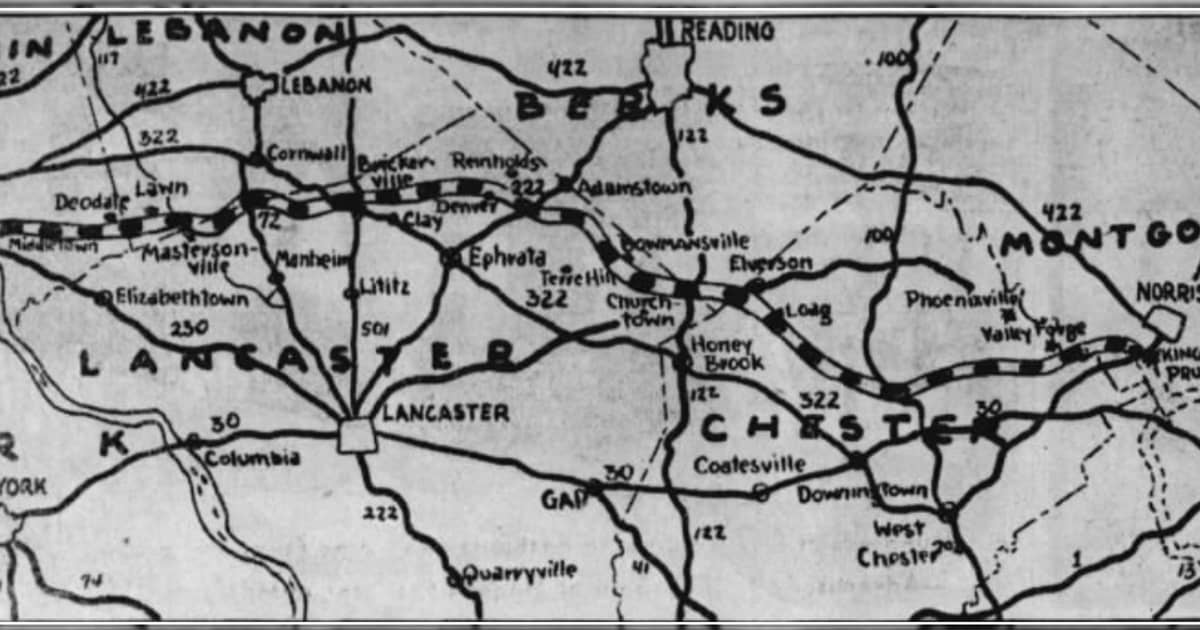

The Pennsylvania Turnpike opened on Oct. 1, 1940, stretching from Carlisle in Cumberland County to Irwin in Westmoreland County and covering 160 miles.
Lebanon and Lancaster’s exit is located along state Route 72 and opened on Nov. 20, 1950, as part of the highway’s Eastern Expansion, also called the Philadelphia Expansion. Construction took about two years and stopped about 15 miles short of downtown Philadelphia, according to information provided by the PA Turnpike Commission.
A May 5, 1948, edition of the Intelligencer Journal in Lancaster covered the route set by former Gov. James H. Duff, who served in the role from 1947 to 1951.
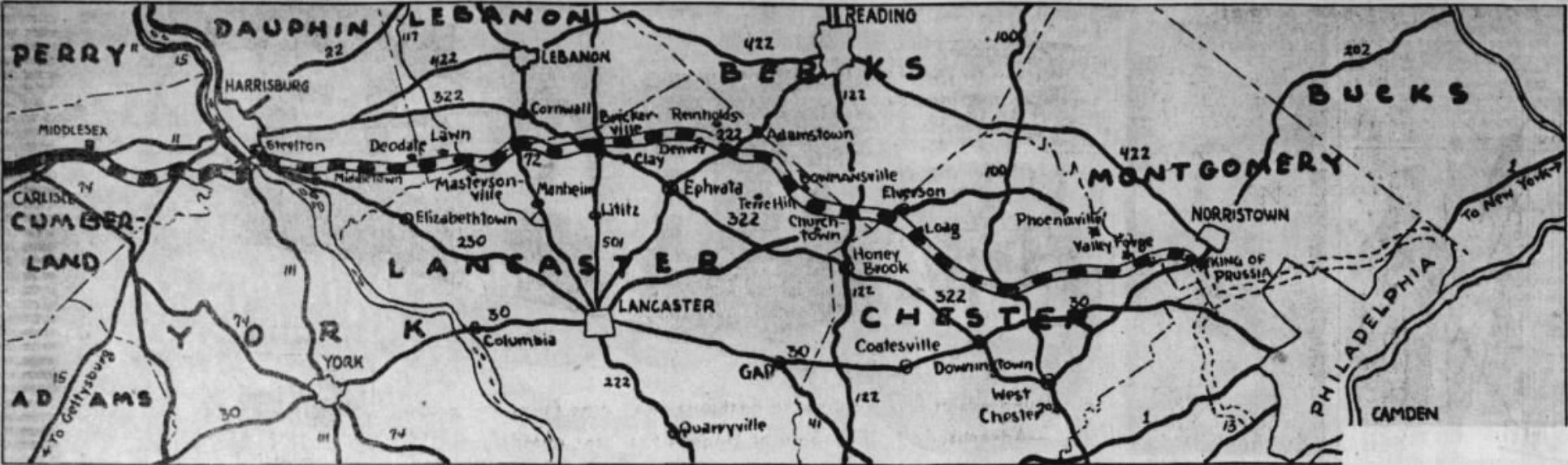
“The route also will cross the Lebanon-Lancaster road (Route 72) just South of the Lancaster-Lebanon County line and the Ephrata-Reading road Southeast of Denver,” the article states.
The proposed route was chosen to limit the impact on usable farmland in the region. A Lancaster New Era article published on April 15, 1948, quoted Duff, saying, “This new highspeed highway was selected for the most part in the wooded and hilly areas between Carlisle and Philadelphia. … Except in a very minor way it does not traverse or damage the valuable and productive farmlands on the areas adjacent to it.”
The governor correctly estimated in April that crews would break ground before the end of the year.
A Patriot-News article, also published in April 1948, said the route somewhat follows the old Union and Schuylkill Canal lines, “taking the same curve to the Philadelphia area used by pioneers more than a century ago,” though the turnpike will be farther south than the lines that ran through areas that had since become more densely populated.
“The Lancaster/Lebanon interchange provided a critical link between one of the Commonwealth’s key agricultural and industrial hubs and the eastern seaboard, accelerating commerce and mobility across southeastern Pennsylvania,” the commission’s document stated.
An October 1950 Harrisburg Patriot-News article stated that motorists could save two hours between Pittsburgh and Philadelphia by taking the turnpike. Businesses near exits also saw boosted sales with people stopping for food, lodging, attractions, and gas.
By 1954, the Lancaster New Era reported there were nine new businesses within a mile of the roadway, with a tenth citing major growth due to the new turnpike access. The article stated that during the summer months, 1,000 vehicles leave the Pennsylvania Turnpike at the Lebanon-Lancaster interchange each day, on average.
Today that number is closer to 4,000, according to traffic count reports (PDF) published by the turnpike commission.
Questions about this story? Suggestions for a future LebTown article? Reach our newsroom using this contact form and we’ll do our best to get back to you.
Join our community of local news champions.
Cancel anytime.
Monthly Subscription
🌟 Annual Subscription
- Still no paywall!
- Fewer ads
- Exclusive events and emails
- All monthly benefits
- Most popular option
- Make a bigger impact
Already a member? Log in here to hide these messages
Trustworthy local news is built on facts. As Lebanon County’s independent news source, LebTown is committed to providing timely, accurate, fact-based coverage that matters to you. Support our mission with a monthly or annual membership, or make a one-time contribution. Cancel anytime.



![[Column] No thanks, we don’t need a Pace-O-Matic Senator](https://images.lebtown.com/cdn-cgi/image/width=1200,slow-connection-quality=50,quality=70,format=auto/uploads/2026/03/IMG_0818.jpg)