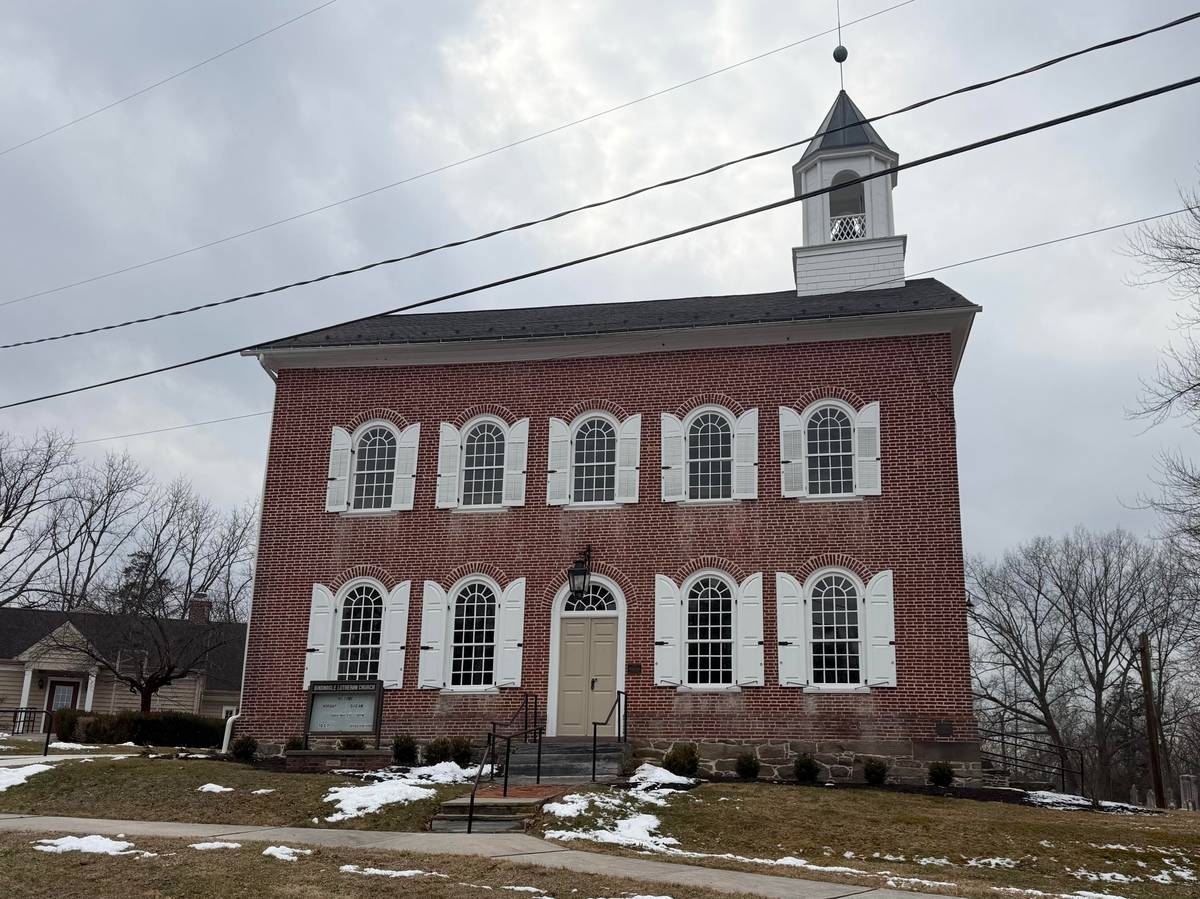

North of Palmyra, seated along Gravel Hill Road in North Londonderry Township, sits Bindnagle Evangelical Lutheran Church — a building constructed in 1803 to replace an earlier log structure.
The congregation is one of the oldest in the region and was founded when German immigrants moved to the wild frontier.
One of the people who received land was Hans Bindnagle, whose property extended from the small creek that runs to Swatara Creek, to Bindnagle Road, and to the stream up Eisenhower Road. He deeded part of the land to the congregation in 1754 so they could build a permanent church structure, rather than the traditional way of worship of going from home to home, according to Heidi Neiswender, who gives tours of the building.
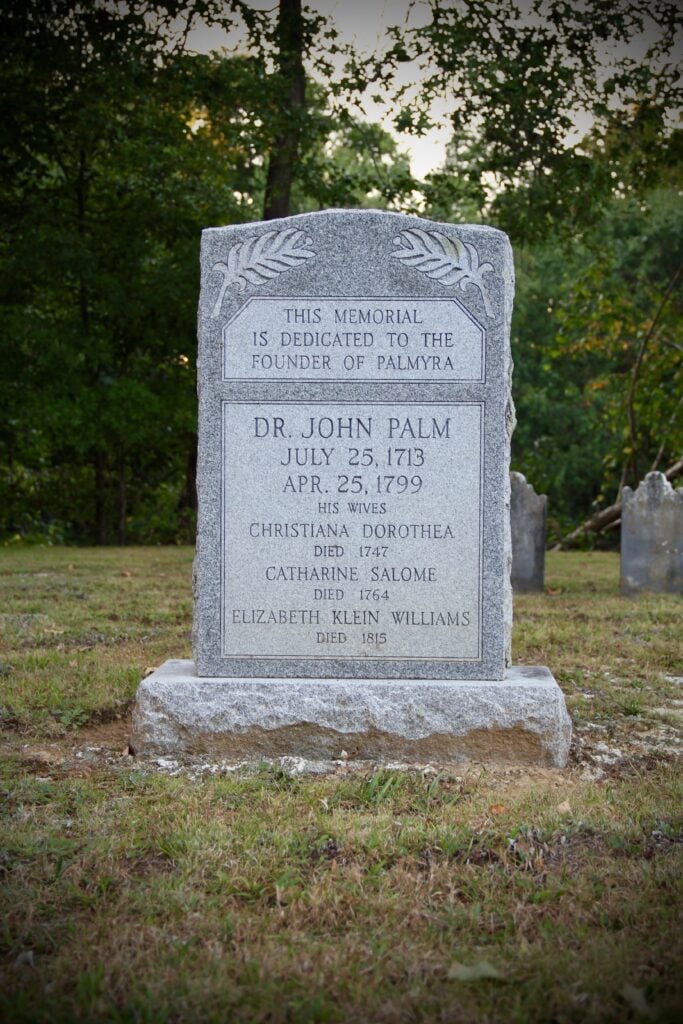
She said history doesn’t know exactly what happened to Hans Bindnagle or his family, and the name died out. However, John Palm, founder of Palmyra, was a member of the congregation, and family history indicates a Bindnagle child married a Palm child. John Palm is now buried in the cemetery behind the church.
Neiswender said said the original log structure was standing in 1754 because travelers mentioned it. She said they aren’t entirely sure where it was located, though they assume it was between the original building and the Swatara Creek, because it was said they built the new church in front of the old church.
“By 1800, this was a growing area. People were settling,” Neiswender said. “There was an oil mill in what we call Syner and a dam, the Colemans had an iron furnace. A lot of stuff was going on in the area, and the congregation felt they needed a more substantial building, and that’s when they got together and decided to build this building.”
She said the bricks were brought in from the Valley Glen area, and the sand for the mortar was from the Swatara Creek. Builders scored between each brick and painted lines. A lot of the glass in the church is original, as seen in the imperfect waves and bubbles.
The current building, erected in 1803, has two levels and is built in the form of a cross, with an altar in the center for communion and a wine-glass pulpit at the head of the church.
“There aren’t many of them left,” Neiswender said of the pulpit. “This congregation was one that preserved themselves. They did not say, ‘Oh, that’s old-fashioned, we’re going to rip this out.’”
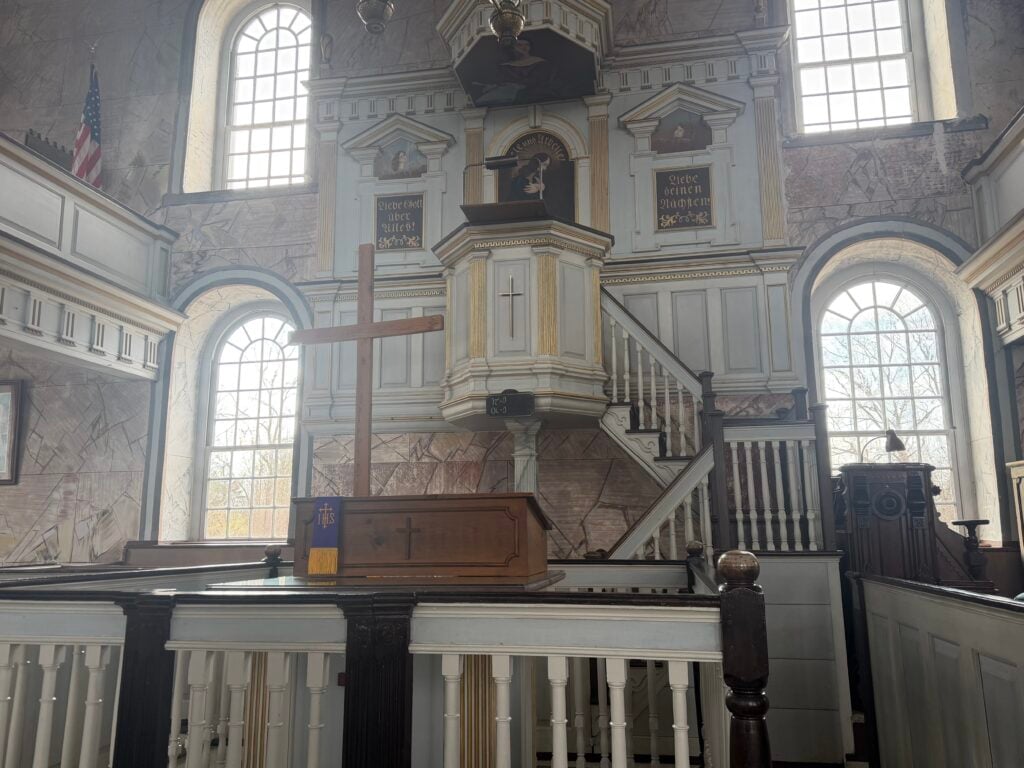
The painted wooden board over the pulpit served as an early sound system that projected the speaker’s voice throughout the church.
With the speaker raised in the wine-glass pulpit during a sermon, they could see churchgoers on both levels. Neiswender said this prevented children from fooling around during the all-day services. Church lasted so long because the journeys congregation members made from towns like Campbelltown or Jonestown took a large time commitment in an age before cars.
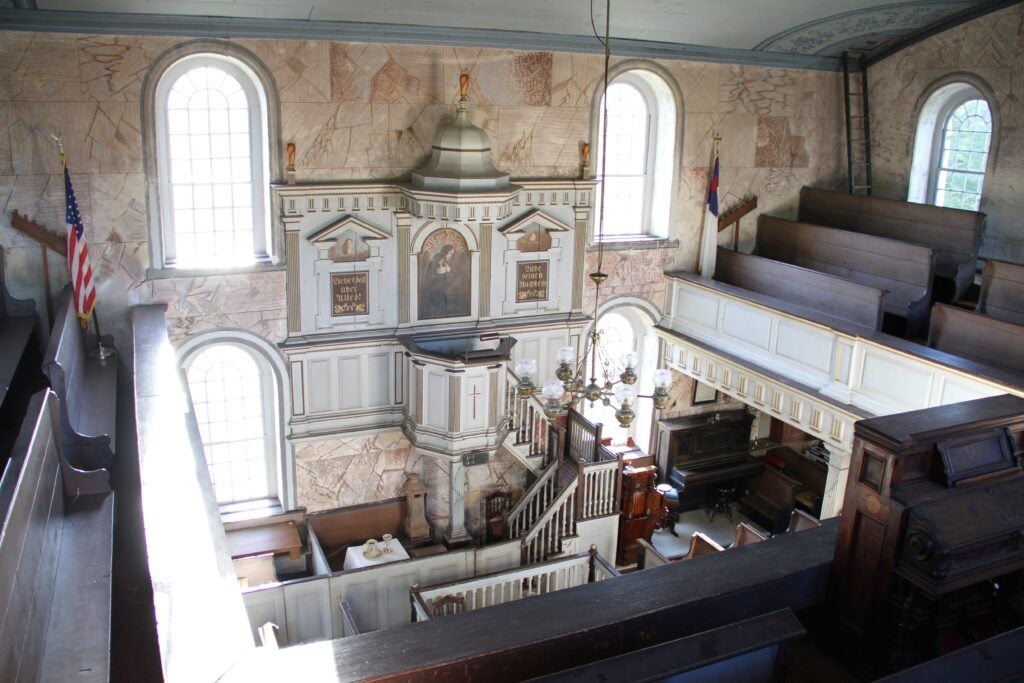
Originally, the walls were plastered white on the inside, but in the 1880s, they were painted to look like marble. A Swedish artist created the various paintings inside the church with German phrases that say, “Love God overall,” “Pray and work,” and “Love your neighbors.”
Neiswender said the congregation was full of working people — especially farmers — so these messages were deemed to be the most important for their way of life.
There wasn’t an organ or music originally, though the congregation purchased an organ in 1883, and it’s still sitting in the front corner of the church. It has stands for candles or kerosene lights. The piano also dates from the 1880s, and was given to the congregation by a member.
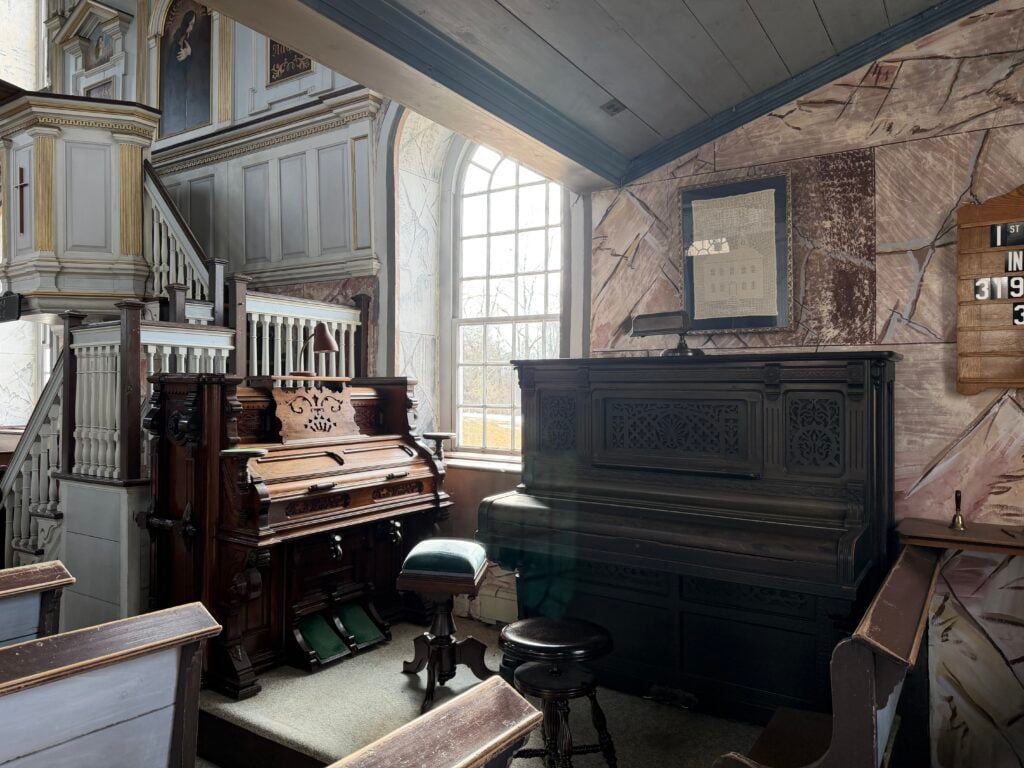
Lynne Shuey, who takes care of the church with her husband, said the congregation embraces the building’s history rather than trying to modernize.
“We’re very protective of it,” she said. “Once you’re a part of it, you know the history. We just want to protect it and preserve it.”
She said about 20 people regularly attend services, and they join the church’s long history. Even today, visitors can see names and dates from churchgoers signed beside a second-floor window.
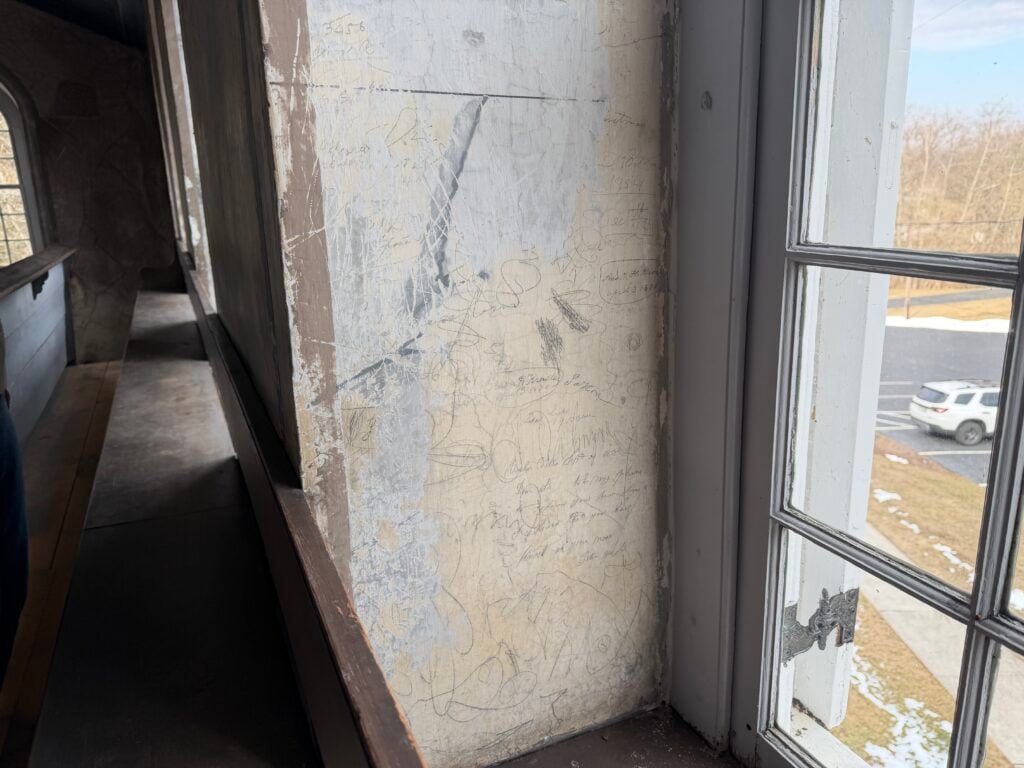
In the archives
The earliest-dated mention of Bindnagle found on Newspapers.com was published on Jan. 30, 1852, in the Lebanon Courier and Semi-Weekly Report, which referred to repairs for Bindnagle’s bridge.
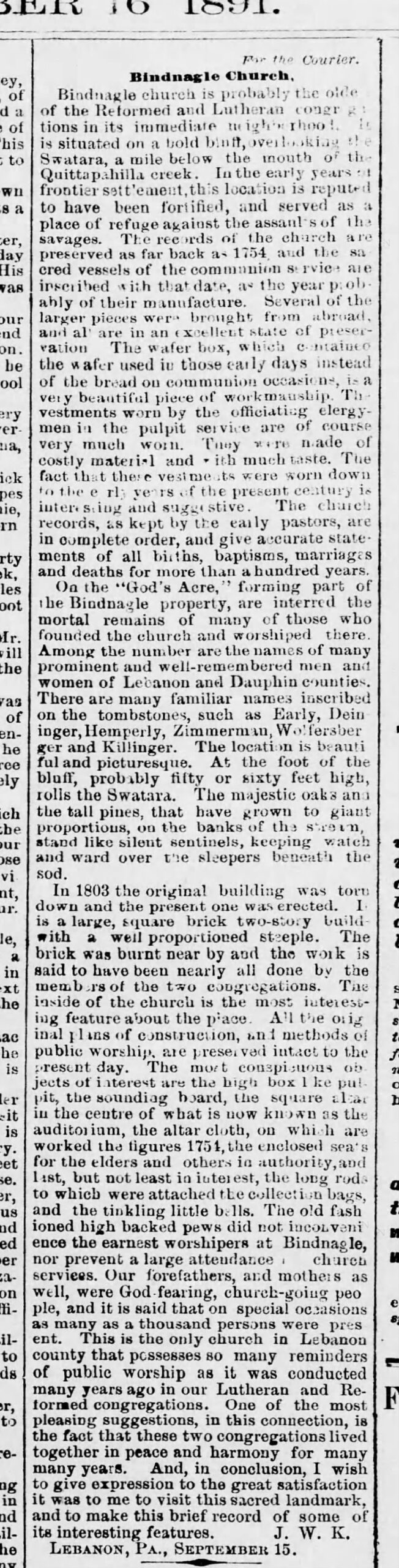
Throughout the years were other mentions of payments, events, and deaths, but a substantial Courier article from Sept. 16, 1891, speaks of the church’s history and design.
“Bindnagle church is probably the oldest of the Reformed and Lutheran congregations in its immediate neighborhood,” the article states. “In the early years of frontier settlement, this location is reputed to have been fortified, and served as a place of refuge against the assaults of the savages.”
The writer continues to describe the church’s interior — the wine-glass pulpit, the sounding board, and the high-backed pews.
“This is the only church in Lebanon county that possesses so many reminders of public worship as it was conducted many years ago in our Lutheran and Reformed congregations,” it states. “One of the most pleasing suggestions, in this connection, is the fact that these two congregations lived together in peace and harmony for many many years. And, in conclusion, I wish to give expression to the great satisfaction it was to me to visit this sacred landmark and to make this brief record of some of its interesting features.”
Questions about this story? Suggestions for a future LebTown article? Reach our newsroom using this contact form and we’ll do our best to get back to you.
Become a LebTown member.
Cancel anytime.
Monthly Subscription
🌟 Annual Subscription
- Still no paywall!
- Fewer ads
- Exclusive events and emails
- All monthly benefits
- Most popular option
- Make a bigger impact
Already a member? Log in here to hide these messages
Our community deserves strong local news. LebTown delivers in-depth coverage that helps you navigate daily life—from school board decisions to public safety to local business openings. Join our supporters with a monthly or annual membership, or make a one-time contribution. Cancel anytime.