
Drug overdose deaths and suicides in Lebanon County fell sharply in 2025, a trend officials attribute to expanded crisis services, street outreach programs, and increased public awareness campaigns.
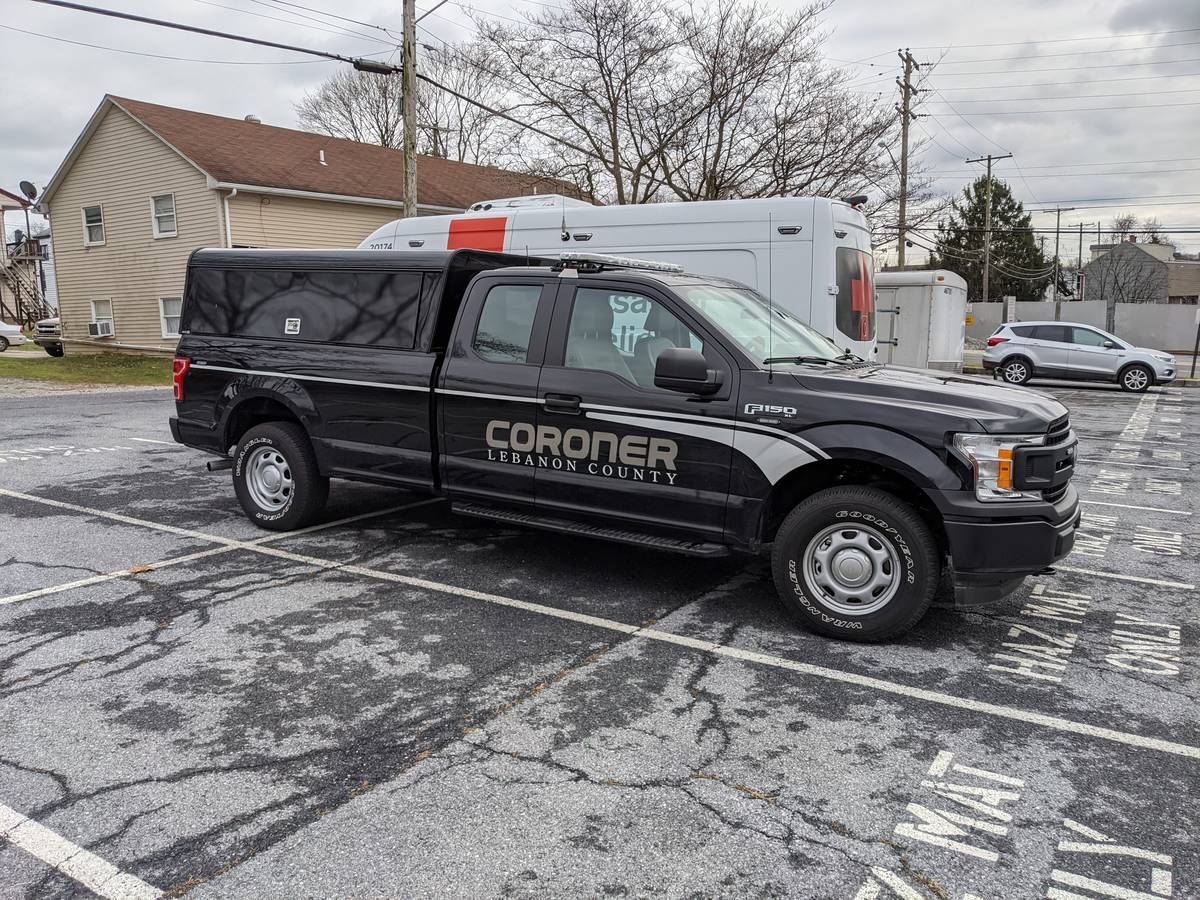
Total numbers were down in both categories in 2025, according to Lebanon County officials and the annual autopsy report from the local coroner’s office. One death on the report was ruled a homicide, which was the same number as 2024.
While the overall number of autopsies requested by the coroner’s office increased by nine over the previous year (345 to 354), the total number of cases ruled as suicide or drug overdose dropped by 40% and 47.6%, respectively. (It should be noted that these numbers may change slightly since four autopsy results are still pending as of publication.)
Holly Leahy, administrator of Lebanon County Mental Health/Intellectual Disabilities/Early Intervention (MH/ID/EI), spoke of the communal need to support each other in the fight against suicide.
“I always see it as a blessing when our numbers are down from the previous year that, you know, we really look at each and every individual who completes suicide is a tremendous loss to our community and even one person completing suicide is too many,” Leahy said. “So our goal is – we know that it will never be zero but – we are going to continue to take every effort and do everything we can possibly do to ensure that individuals know that there is hope (of) healing. That they can continue on in our community, and we need to support one another in that.”
There is help, there is hope, and there are solutions.
If you or someone you know is in immediate danger of harming themselves, please call Lebanon County Crisis Intervention at (717) 274-3363 or the National Suicide Prevention Lifeline at 1-800-273-8255 or by calling 988. Find more help in Lebanon County here.
Jim Donmoyer, executive director of the Lebanon County Commission on Drug and Alcohol Abuse, echoed similar sentiments about the realistic nature of drug deaths.
“I always say when I’m at the commissioners or I’m talking to other people about this, we’re not happy with one, one’s too many, but we’re realistic and we know that some people are gonna overdose and die from drug use,” Donmoyer said. “(But) we are very proud of the fact that we can go from 21 (deaths) to 11, very proud of the fact. I mean, that’s less than one a month.”
Public awareness & outreach
Within both offices, efforts by their respective task forces to increase ongoing public outreach are among the reasons the numbers are down.
Kasey Felty, director of mental health for Lebanon County MH/ID/EI, spoke about that agency’s PR endeavors.
“From a suicide prevention task force point of view, I guess my feelings are that it’s helpful that the efforts that we really have increased this past year have been working. We have been increasing our media presence and doing media campaigns throughout the year,” Felty said.

Their PR efforts have extended beyond media campaigns.
“We’re really making our presence known in the community by offering the Mental Health Awareness Festival and our suicide prevention month events. And I think another thing to add is that our local Lebanon County Crisis Intervention services have really increased their community presence,” added Felty. “And I believe that that increased community presence has really been beneficial to our community and our individuals that they’re serving are receiving a better response within that setting than what may have been there previously.”
Since the creation of a task force within Donmoyer’s office, the number of drug overdose deaths began to come down.
“I think our highest year was 31. If you go back a few years, probably five years, six years, it was 31. That’s when we established the task force,” Donmoyer said. “And then it slowly started to come down. It was in the 20s. Last year was the lowest (21) compared to the years before that. And now this year from 21 in 2024 to 11, and we’re not seeing as many as we did with fentanyl-involved deaths.”
There’s been a causal effect in the public outreach of both agencies that’s contributing to more awareness and people getting the help they need. In the case of substance abuse, the Medically Assisted Treatment program is getting people assistance.
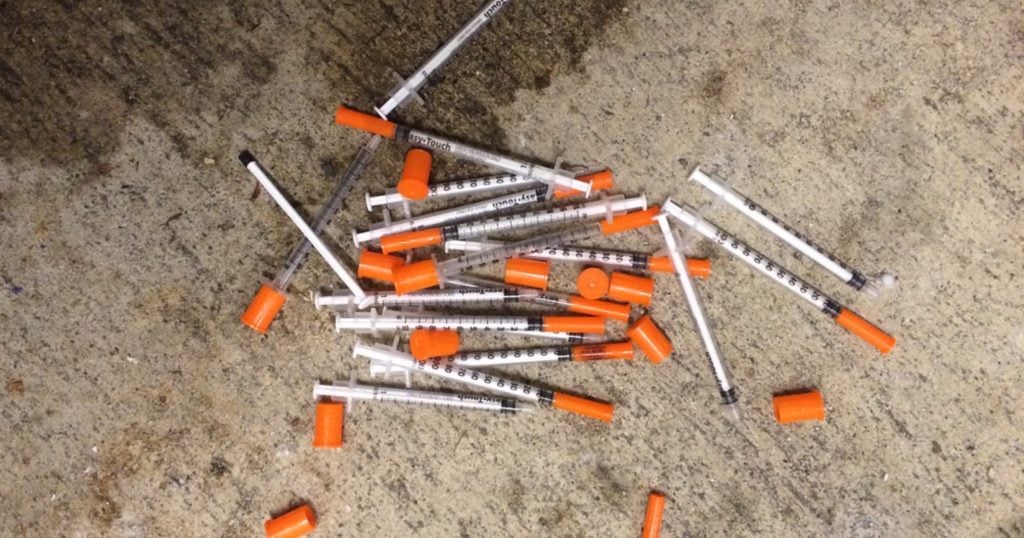
MAT programs combine FDA-approved medications (like buprenorphine, methadone, naltrexone) with counseling and behavioral therapies to treat substance use disorders, primarily opioid addiction. These evidence-based programs reduce cravings, withdrawal symptoms, and relapse risk, supporting long-term recovery in both outpatient and residential settings.
“One major thing would be there’s more availability of MAT services in our county. … We have more people and we have more resources seeking out and getting on medically assistant treatment,” Donmoyer said. “That’s, I think, a big factor because if someone’s on MAT, they’re not using opiates and fentanyl and on heroin, so MAT is a blocker.”
In the area of mental health and substance abuse, the crisis hotlines have been a lifeline for users.
“I think there is a big push for 988, which many people have heard about. Now, once again, obviously 988 is open to everyone. We do promote our local crisis (line) and the 988 system just because our local crisis is here within our community. But there is a huge push, like you said, to make sure that mental health is not taboo anymore,” Felty said.
These phone lines are a lifeline for individuals.
“That we are talking about our feelings, that we’re talking about what is going on in our world. There’s a lot of things happening right now, a lot of uneasiness, a lot of pressure to be angry. So we’re really trying to ensure that people are talking and being open and working through those feelings. Which is also why we are doing so many community events,” added Felty.
The drug and alcohol commission is also taking its message to the streets.
“The other factor is we have a street outreach person that actually works in the streets and tries to make connections with these folks and set them up with services,” Donmoyer said. “So not only are we sitting in our office waiting for them to call us, we’re out there trying to meet them where they’re at, because a lot of times where they’re at, they’re not calling us.”
This outreach is a critical component of the work that the office performs on behalf of the community.
“So we have people working in our community, they’re outreach workers, who actually go out and try, you know, and they know the area and where they can find this population. So that’s another thing that we’ve done among a lot of proactive things,” added Donmoyer.

There will be an increase in the public outreach of the mental health department throughout 2026, according to Felty.
“So for this upcoming year, the task force is once again increasing our digital campaign. We’re actually going to be working with a web design and digital marketing agency to help us develop ads to go over the internet. And then the second half of the year, really focusing on social media,” Felty said. “As I mentioned, we have the mental health awareness fair that is on May 9th and that’s a way for our community to connect with local health and wellness agencies and providers throughout Lebanon County.”
Other awareness events include a suicide prevention walk in September during prevention month, and this year marks the 10th anniversary of the dedication of the county’s remembrance garden. The garden was created for a place for individuals who have lost loved ones to suicide to have those individuals’ names remembered.
Donmoyer said Narcan distribution is also having a positive impact on lower OD deaths.
Narcan is a safe, easy-to-use, over-the-counter nasal spray that reverses opioid overdoses (heroin, fentanyl, pain pills) in minutes by blocking receptors in the brain. It is non-addictive, works instantly to restore breathing, and is essential for anyone at risk or around those who use opioids.
While 1,800 Narcan kits were distributed in 2024, 2,000 were provided by his agency in 2025.
“Narcan distribution is one thing. Access to MAT services in our county is another. We have an active heroin task force in Lebanon County that does events, where they actually hand out Narcan as well, but they do events, recovery events in our community,” Donmoyer said.
He credited their outreach as making a difference.
“They’re the ones that do the recovery day, the big event, the one day recovery day event. They also are the ones that do the overdose awareness visual outside the county courthouse steps. They do that every year in August. They do the recovery day in September. So they’re always out doing something,” Donmoyer said. “And we’re pushing Narcan as much as we can. We’re in the community promoting education, awareness, and all that stuff in the community through the task force.”
Suicide by the numbers
There are certain statistics concerning suicide that have remained consistent over the years, according to Leahy.
Firearms and hanging are still the predominant method for those who complete suicide, with 10 by weapon and four by hanging. Three others were by intentional overdoses and one by carbon monoxide poisoning.
The demographics of those who complete has also remained the same as in past years.
She said there were 16 males and two females who died by suicide in 2025, with the average age being 57. Seventeen were Caucasians.
“As we delve a little deeper, we do believe that culture plays a lot into whether someone complete suicide or not,” Leahy said. “As we’ve heard, the Latino population does not see suicide as an option. They very much want to take care of one another and they do not believe that suicide is an option. … Statistically speaking, it has always been here in Lebanon County, that it’s Caucasians who appear to see suicide as an option.”
Leahy and Felty agreed there’s no consistent pattern here or nationally to indicate that one time of year is more prevalent than the other for suicide attempts.
“We keep that data and we look at it but we’ve never really seen consistency throughout the years, that a certain period of time during the year has a more concentrated number,” Felty said. “We’ve talked about it actually extensively during our suicide prevention task force meetings just when we’re looking and planning activities throughout the year, but we really have not been able to find any correlation to those numbers.”
Drug overdoses by the numbers
Middle-aged white males are also more likely to die of a drug overdose in Lebanon County.
“Nine of those folks were Lebanon County residents, had a home address in Lebanon County, and two were from out of county. One had an Ephrata address and one was from a Philadelphia address,” Donmoyer said. “Out of those 11, the average age was 53 years old. The youngest was 34, the oldest was 76. The breakdown was eight males, three females.”
Drugs of choice involved in the 11 deaths were three each for fentanyl, methamphetamine and a mixture of more than one substance, and one each for cocaine and morphine, he said.
“This year we’re seeing less fentanyl involved than we did in previous years. We’re actually seeing fentanyl and opiates, in general, not being the primary reason for overdoses. I’m seeing it not being the primary substance being used in Lebanon County,” Donmoyer said. “It’s more methamphetamines and alcohol, at least in 2025.”
Lebanon County’s lone homicide in 2025
Katelynn Kearney, 32, was charged Thursday, Oct. 9, with the only homicide last year. She is accused of fatally stabbing Dontay Maurice Hunter during an argument at his apartment at 833 Chestnut St. on the night of Oct. 4. His death was caused by a stabbing to the chest, according to the coroner’s office.
Questions about this story? Suggestions for a future LebTown article? Reach our newsroom using this contact form and we’ll do our best to get back to you.
Become a LebTown member.
Cancel anytime.
Monthly Subscription
🌟 Annual Subscription
- Still no paywall!
- Fewer ads
- Exclusive events and emails
- All monthly benefits
- Most popular option
- Make a bigger impact
Already a member? Log in here to hide these messages
Local news is disappearing across America, but not in Lebanon County. Help keep it that way by supporting LebTown’s independent reporting. Your monthly or annual membership directly funds the coverage you value, or make a one-time contribution to power our newsroom. Cancel anytime.