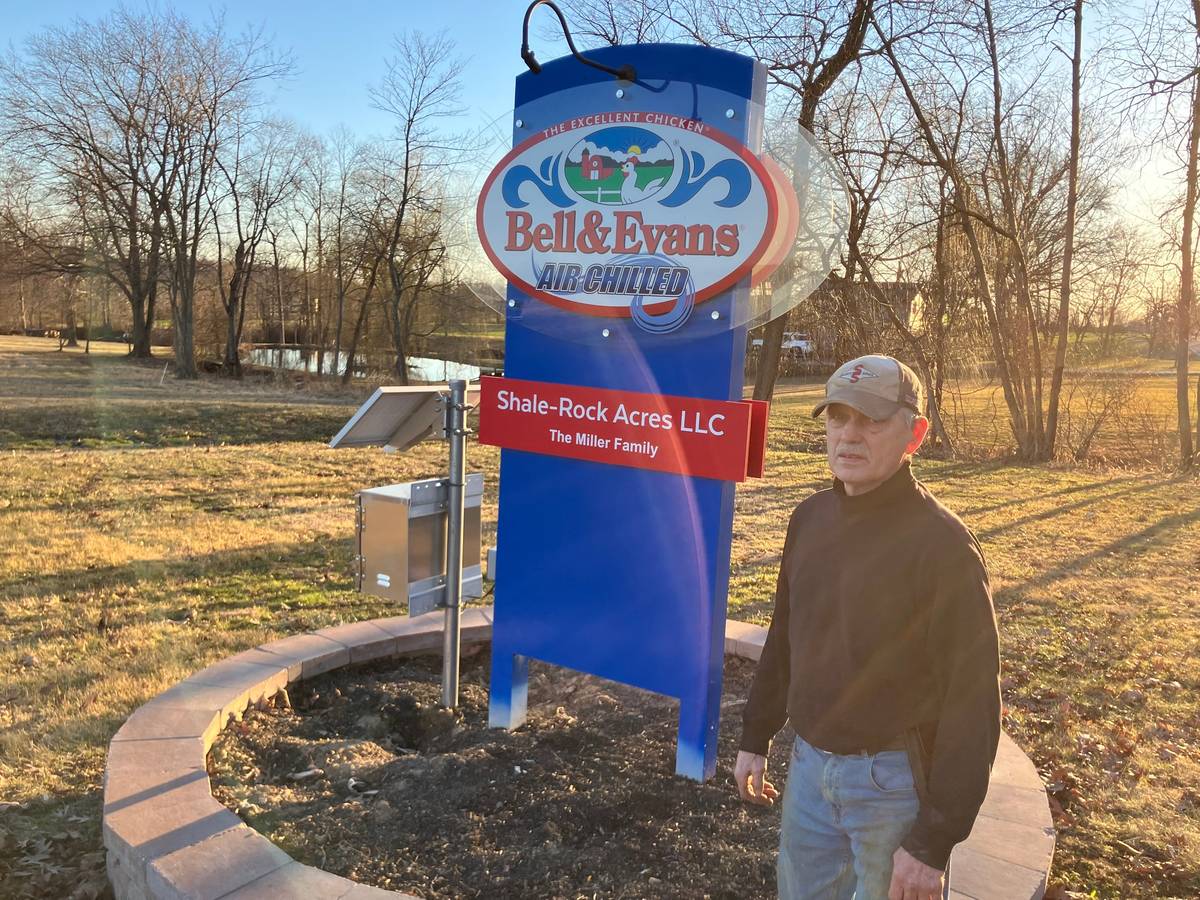

As a life-long farmer, Calvin Miller knows there’s a delicate balance between conserving the land and making his soil as productive as possible.
That’s why he cherishes the opportunity to serve on the Lebanon County Conservation District’s board of directors. He knows decisions made now help preserve the land needed to grow food by future generations of local farmers.
“That’s why I like to sit on the conservation board. You get to say here’s the way farming should be, and have a say of where it’s going,” he said.
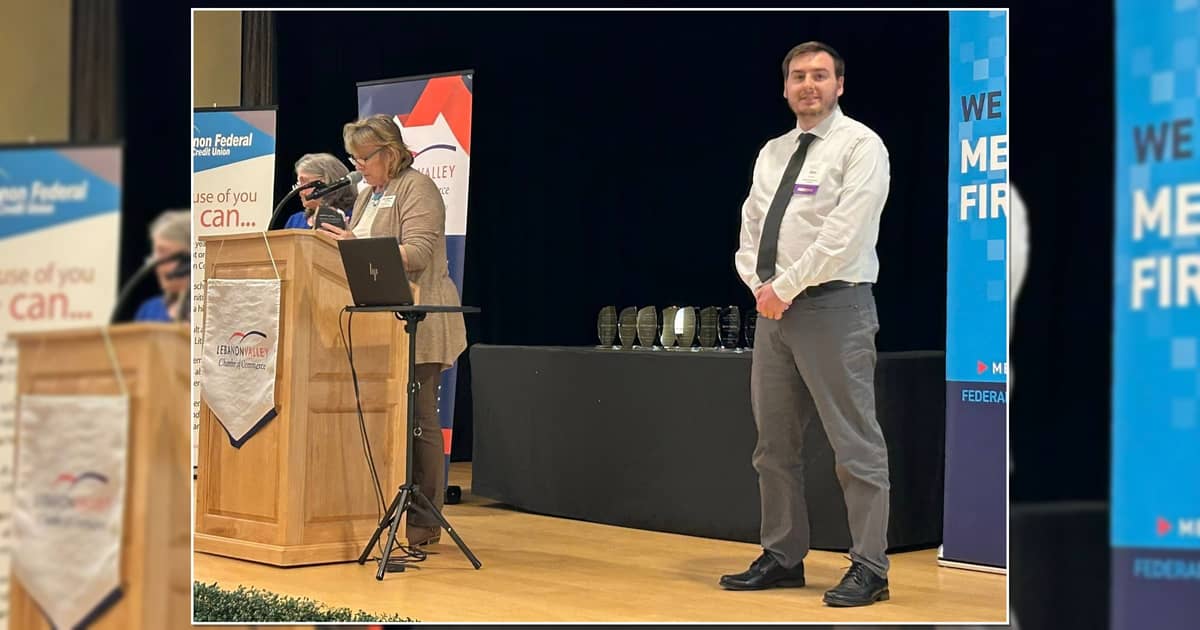
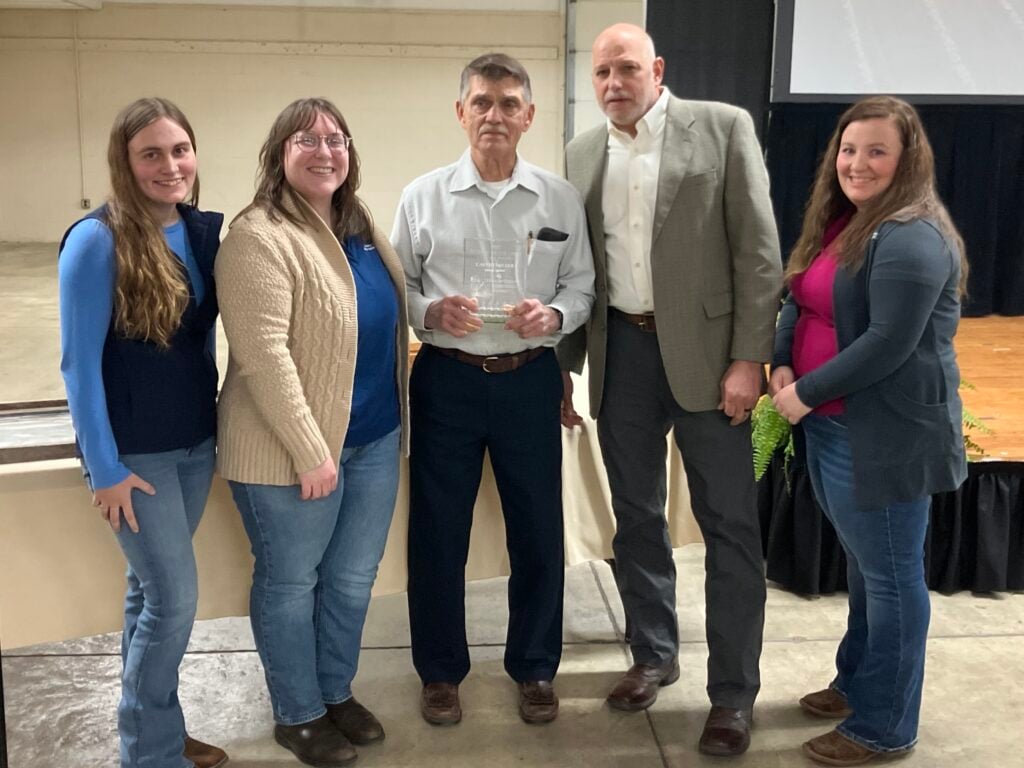
Miller’s mentality towards conservation, along with 40-plus years of service on the LCCD board, was recently recognized when he received the organization’s inaugural Steward of the Land Lifetime Award.
Hannah Hartman, district manager of the LCCD, said the Steward of the Land Lifetime Award honors an individual or family whose lifelong commitment to agriculture and conservation has left a lasting impact on the land and community.
“Their dedication reflects the belief that caring for the land today ensures its productivity and vitality for tomorrow,” she said.
Miller simply smiled when asked for his reaction when he learned he had won the award, which was announced a few weeks ago at a banquet held at the Lebanon Valley Exposition & Fairgrounds before a capacity crowd.
“I’m happy. I’m proud. I’ve been there a long time,” Miller said. “I knew that we had a list of eight or so names (of finalists) and mine was one of them.”
Hartman also highlighted Miller’s many years of service to the LCCD’s board.
“Calvin Miller has been a dedicated supporter of the Lebanon County Conservation District since the early 1980s and has served on the district board for over 40 years. Throughout that time, he has been an active board member and provided leadership to the conservation district, including serving in officer roles,” Hartman said. “Over the years, Calvin has worked with the conservation district and NRCS (Natural Resource Conservation Service) on projects on his farm and hosted NRCS Bootcamps, which provide on-farm conservation training.”
One aspect Miller likes about serving on the board is receiving information about new agricultural practices, which suits him well since he’s a forward-thinking farmer.
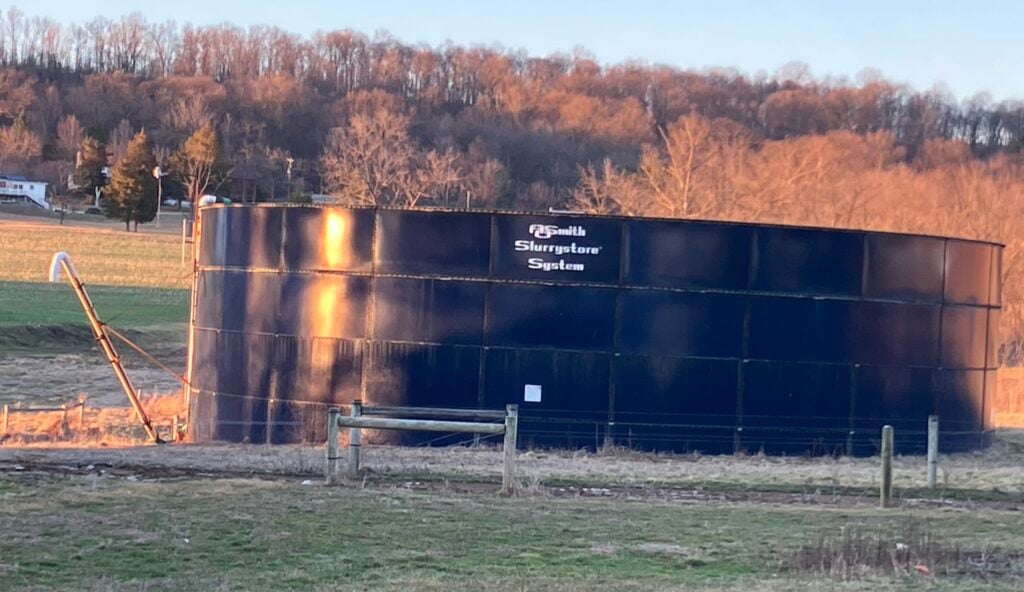
Miller said he was one of the first to construct a manure storage unit when efforts to protect the Chesapeake Bay watershed launched in the 1980s, and he’s among the first Lebanon County farmers to embrace strip-till farming that he uses when planting corn on the 300 acres he owns in Swatara and Bethel townships.
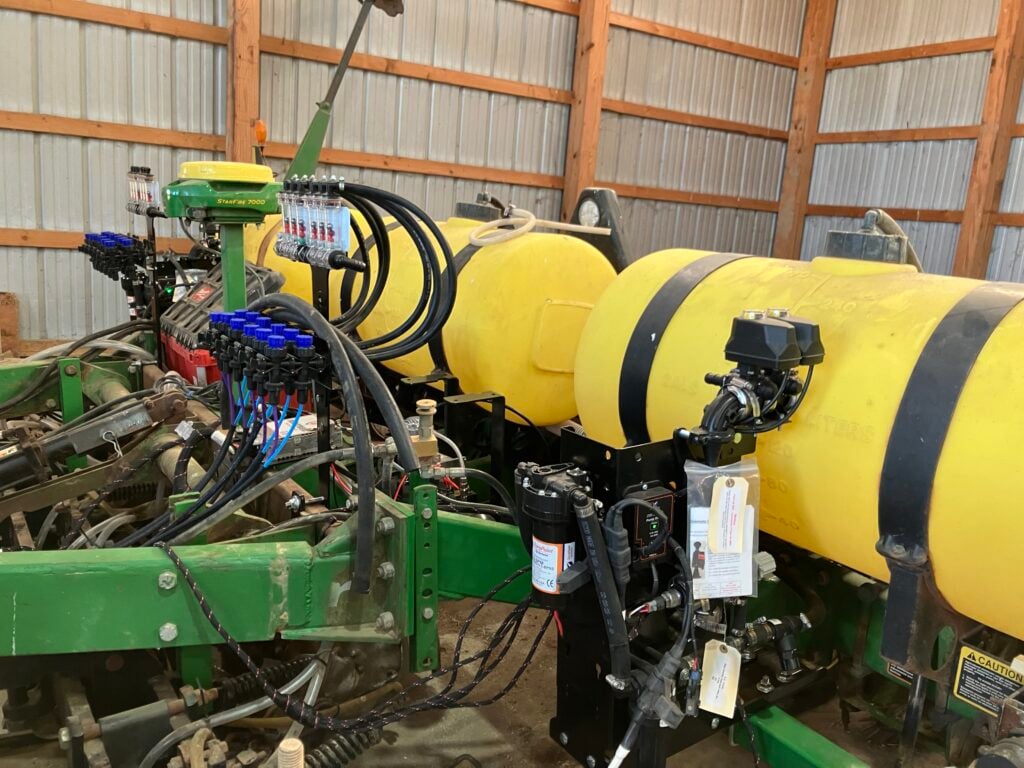
“When we built a lot of manure storage, it was on a cost-share basis. The sad part is, we had a slurry store we used for the dairy. We didn’t get a cent because we were ahead of the times,” Miller said. “Just like that corn planter, five years from now, we’ll probably be getting cost-share money to farmers to put that on their planters, but I already have it. I’m ahead of the times.”
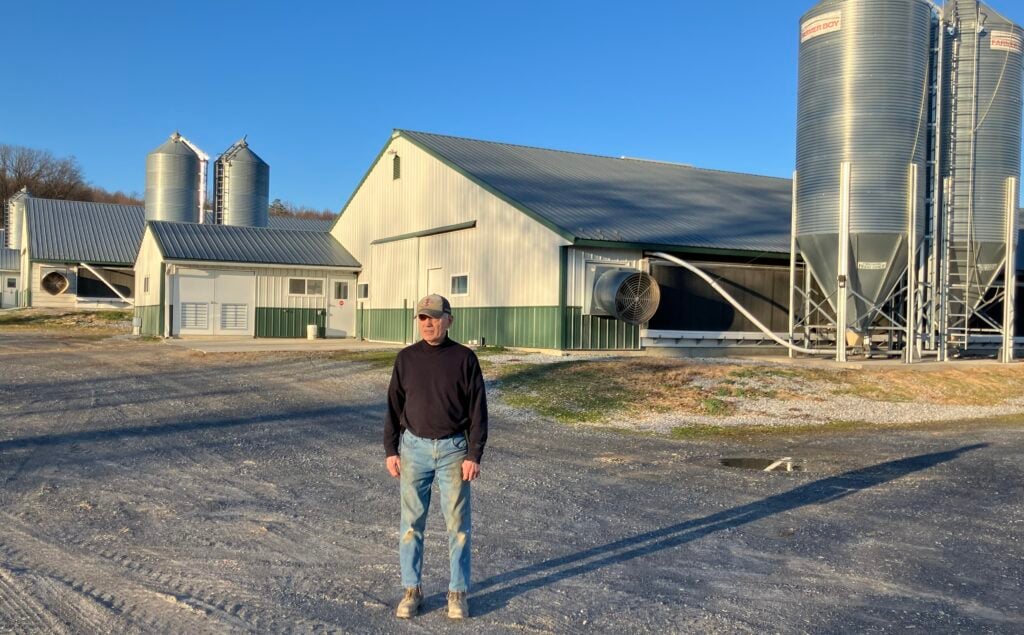
Having shifted from dairy to raising broiler chickens for Bell & Evans a few years ago, Miller said the recent addition of a fourth chicken house turned his operation into a Concentrated Animal Feeding Operation, or CAFO. Each broiler house contains 34,000 chicks that are raised for about six weeks before they go to a processing plant in nearby Fredericksburg.
“We can’t stack manure outside for that. So through conservation, the second (manure storage) building here was erected,” Miller said. “If you have three (chicken) houses, you’re not. You build the fourth house, you’re a CAFO. If we had known it when we started, maybe we would have stopped at three.”
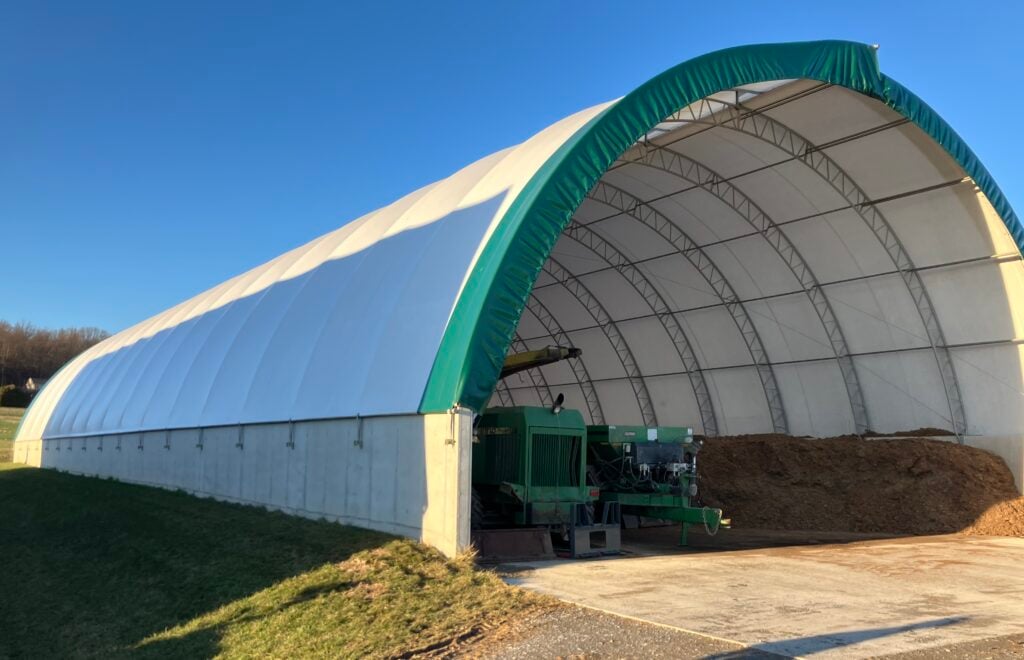
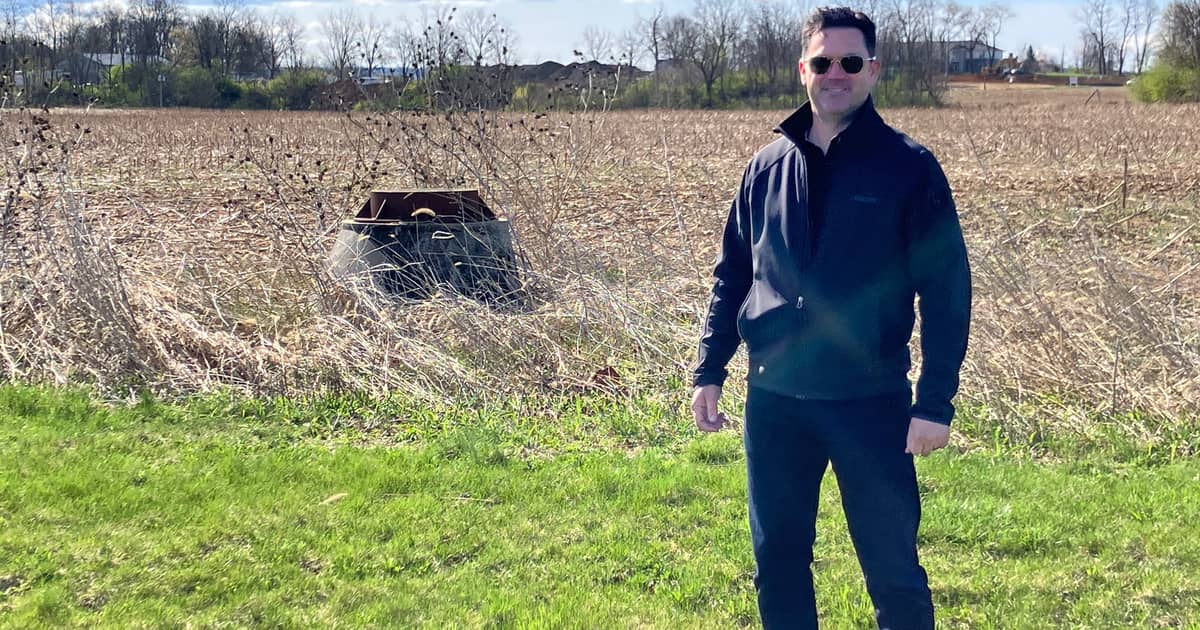
The fairly new 62’-160’ covered building for the dry manure allows the byproduct to be stored until it can be spread on fields as fertilizer.
“So we have no manure outside, exposed to the elements. We have six weeks, roughly, to raise and then we have two weeks down time. So we’re guaranteed six flocks a year,” Miller said. “And you’ve got to clean out the house. Right here’s three cleanouts worth of manure.”
Miller said a skid loader moves the manure into the storage unit. The cleaning process and placement of dry materials helps ensure the manure stays dry, he added.
“Well, with Bell & Evans, we clean out after every cycle. So there’s always new litter, wood shaving is going back in for bedding. And being that we clean it out every time is why it stays on the dry side,” Miller said.
Miller said another manure storage unit that measures 20’-by-32’ for the 40 beef cattle he and his sons raise on an adjacent farm is being expanded by 40 feet with the assistance of the local conservation district.
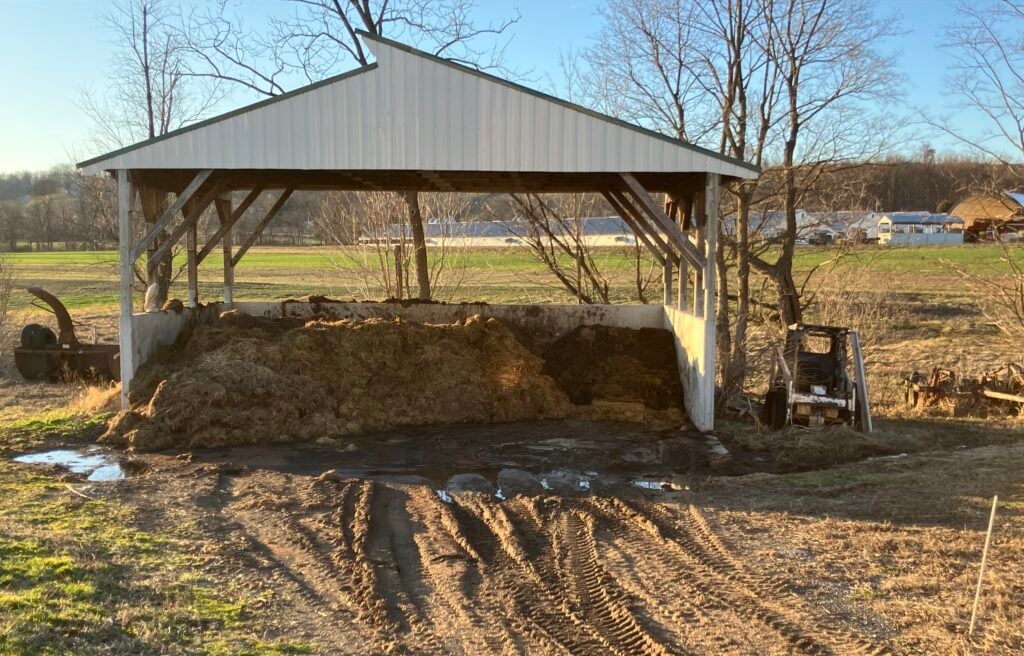
“It is architecturally designed by an engineer for the purposes of conservation to ensure that we’re not getting run off or whatever else,” Miller said. “And also that in two years, it doesn’t blow away or fall down because it was built (wrong). It’s going to last, it’s gonna last forever.”
Miller provided a sense of the precision that goes into these modern-day structures that look simplistic to the novice eye. These structures help ensure nutrients are maximized while helping to protect the environment.
“They actually came out and counted to make sure, and it (the design) will tell you how many nails you need at every joint. And then someone came – actually came out – and counted that we had so many nails set at every joint to make sure the roof stays there forever,” Miller said. “If you cut a corner here, cut a corner there, after a while, something happens, and you’re going to say, ‘Why? And whoa.’”
Having shuttered the dairy in favor of launching a broiler operation, the Millers now grow corn, alfalfa, soybeans, wheat, barley, grass for hay, and some rye to sell as a cash crop since the chicken feed is provided by the company.
The Millers recently adopted a different kind of corn planting that involves strip-tilling.
Strip-tilling is a conservation tillage system that typically combines no-till benefits with conventional tillage, where only 6- to 8-inch-wide strips (about one-third of the row area) are tilled and fertilized, leaving the rest of the field undisturbed. It warms and dries soil for faster planting while preserving soil structure and reducing erosion.
Calvin’s son Troy said the family pivoted to this method after corn yields had maxed out. Having high yields is already difficult in Lebanon County’s northern tier where the ground is typed as Berks soil. The land north of U.S. Route 422 tends to contain more shale and hold less moisture than its counterparts on the south side of that highway.
“It just seemed that I could never get yields to go up no matter what I did. You get that hard (soil) pack and it just stays there. You have to bust it up just a little bit to get the roots to go down through,” Troy said.
“With that 8- to 10-inch slot (in the soil), when that corn root plant starts to grow, it now has 8, 10 inches down to the moisture, nutrients, whatever,” added Calvin. “It doesn’t have to say, ‘Hey, I gotta get down there.’ They’re down there already.”
Year one of using this tilling system brought a drought, so those yield numbers were not reliable. Last year, however, was a different story, according to Troy, adding that he was “impressed with those yield totals.
“Being you’re not doing nothing to the soil with no-till, the amount of compaction a drop of rain has on the scoring of the soil is unbelievable. It’s impacting it, compacting it,” said Calvin. “If you’re not doing some kind of disturbance, you have all this hard ground sitting there that the plant has to fight against. Where with us and strip-till, now we gave it (the seed) an escape way for the plant to start to grow.”
Embracing new technologies that improve yields while protecting the environment contributed to Calvin being given this first-ever honor by the LCCD. Being honored was important, seeing how he missed attending his granddaughter’s playoff basketball game to go to the awards ceremony and banquet.
”This is my life. Like I say, I spent three years in the military and I couldn’t wait to get back home,” said Miller, who was born on a Myerstown-area farm and who has been a farmer for 70 of his 75 years with no plans to ever retire. “They’ll find me somewhere in the field one day. If I didn’t get up in the morning and have something to do, I would literally go nuts. That’s just the way my mind is. I gotta be on the go.”
Questions about this story? Suggestions for a future LebTown article? Reach our newsroom using this contact form and we’ll do our best to get back to you.

Support Lebanon County journalism.
Cancel anytime.
Monthly Subscription
🌟 Annual Subscription
- Still no paywall!
- Fewer ads
- Exclusive events and emails
- All monthly benefits
- Most popular option
- Make a bigger impact
Already a member? Log in here to hide these messages
Free local news isn’t cheap. If you value the coverage LebTown provides, help us make it sustainable. You can unlock more reporting for the community by joining as a monthly or annual member, or supporting our work with a one-time contribution. Cancel anytime.