
48 months.
That’s how long animal health officials have been battling the latest outbreak of HPAI, commonly known as the avian flu.
Avian flu is a highly contagious viral infection caused by Type-A influenza viruses that primarily circulate among wild aquatic birds and domestic poultry. While rarely infecting humans, certain strains like H5N1 can cause severe respiratory illness, pink eye, or death in people with close contact to infected birds, dairy cows, or contaminated environments.
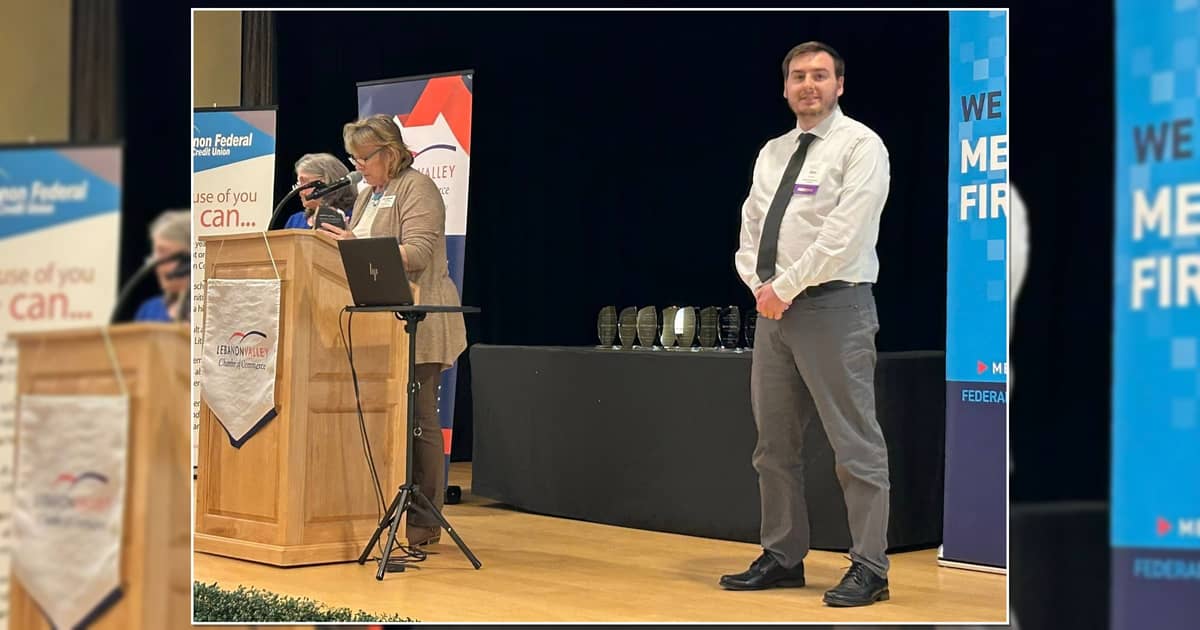
Unlike past outbreaks where the virus wanes, this one has been and still is a concern for officials and producers and was a focal point at PennAg Industries’ two-day Expo held at the Lebanon Valley Exposition Center & Fairgrounds last week.
Educational seminars included an update on the virus in Pennsylvania and a session focused on biosecurity, a best practice to help prevent the virus from spreading to a producer’s operation.
Avian flu numbers
A state official said, and the U.S. Department of Agriculture’s website confirms, that 26 poultry sites in Pennsylvania were identified with the virus since Jan. 20, and 17 were still active as of March 30. Most of the affected farms are in Lancaster County.
Five control areas were active and 290 sites remained under surveillance as of March 30, according to state veterinarian Dr. Alex Hamberg, who spoke at a seminar.
He said a control zone was set March 27 around an infected 660-bird flock in Bucks County. Other outbreaks this month were found on premises with 870,000 laying hens, 35,000 broilers, and 18,000 ducks, all in Lancaster County.
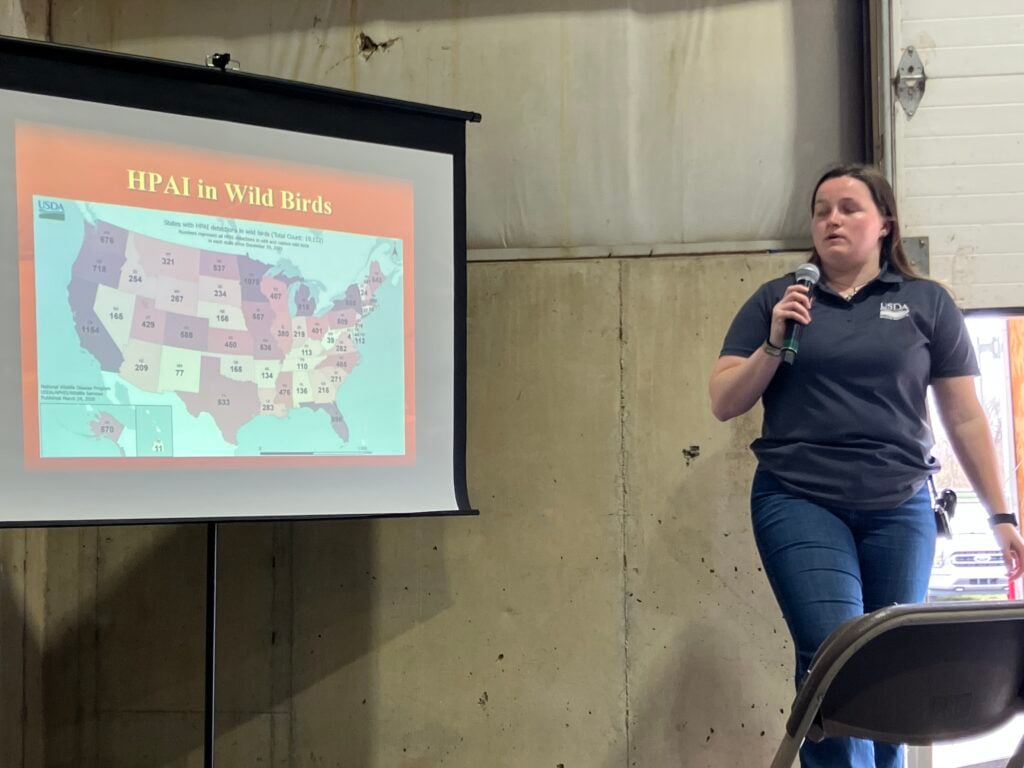
The USDA website says Pennsylvania producers have lost just under 16 million birds to the virus since the outbreak began in 2022 – with about half occurring in 2026. Some 31 million birds have been infected nationwide since 2022, according to the USDA.
Ellie Gerhardt, wildlife biologist with USDA Wildlife Services, provided more national statistics at a separate session at the expo.
“Since 2022, there have been over 200 million birds that have been affected by HPAI. That is about 2,100 flocks, almost a thousand of which being commercial flocks, and about 1,100 being backyard flocks,” she said. “I believe I found that the CDC have recorded maybe 70 cases of HPAI in humans over the past couple of years. And so obviously we want to prevent the disease from continuing to spread to birds and keep it from spreading to humans.”
No avian flu cases have been reported recently in Lebanon County, but two since 2022 led to 138,300 animals being euthanized, according to USDA records.
Biosecurity
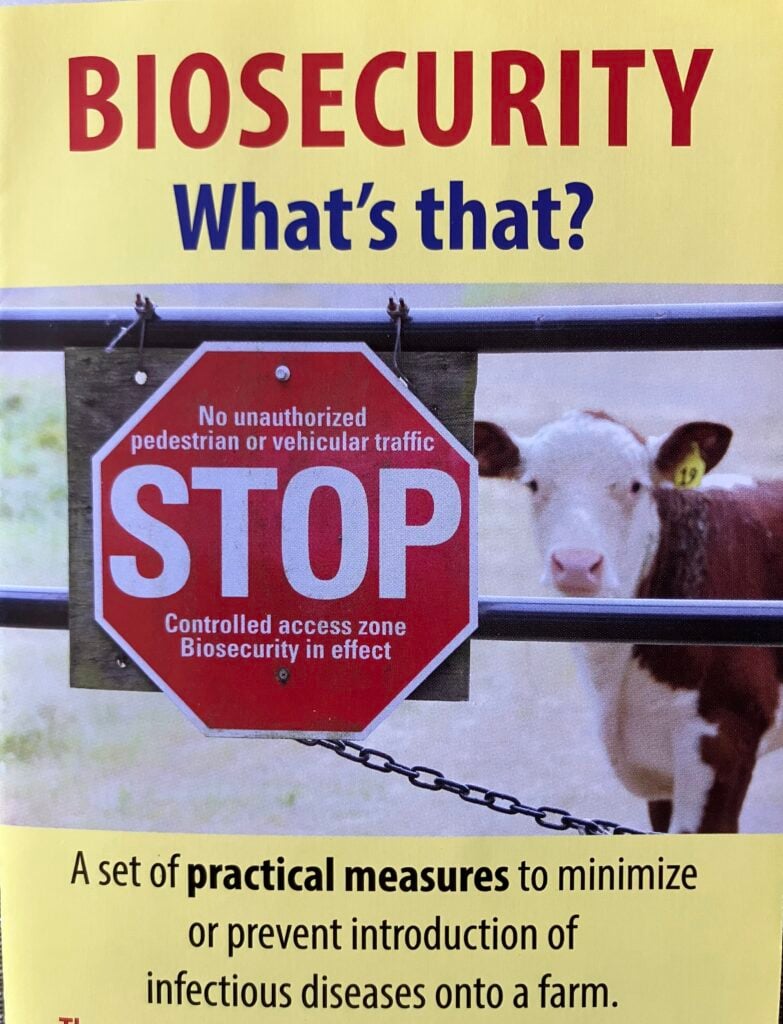
Biosecurity is not just some modern agricultural fad; it is a way of life for poultry producers across Pennsylvania who want to protect their valuable investments from being wiped out.
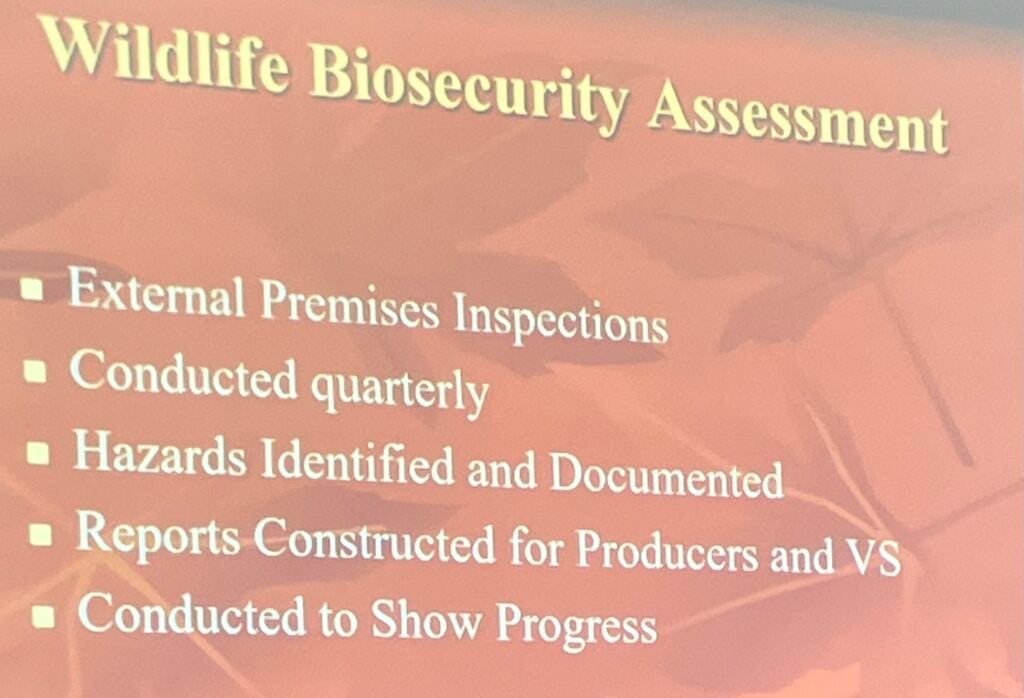
One educational seminar highlighted how producers can protect their flocks by implementing practical wildlife biosecurity support.
Zach Bair, district supervisor for USDA Wildlife Services, and Gerhardt highlighted measures farmers can use to protect their flocks from infected species, especially wild bird populations that may co-mingle with their animals.
Gerhardt said the agency offers several voluntary programs.
“Veterinary Services, one of our sister agencies, has two different kinds of programs that they offer to producers that are meant to help increase biosecurity. One of which is the BCAP, or Biosecurity Compliance Autoprogram. This is a required program for any farms that have been hot or are hot. And it’s required if they want indemnity, which is replacing the birds that are lost when they do go hot,” she said.
Wildlife Biosecurity Assessments and Biosecurity Incentive-Focused Assessments (BIFA) are two programs administered by USDA.
BIFA “is a voluntary assessment,” Gerhardt said. “Producers are not required to participate in this assessment. They evaluate the structure and operational biosecurities of poultry sites. And allow producers to better understand what are some security risks.”
Wildlife Services focuses on finding ways that wildlife can transmit HPAI to flocks.
“So anything that we find when we are completing these assessments has no backlash, no requirements that need to be followed, nothing that the producers have to do when they get this assessment,” she added. “But we do complete it so that they’re aware, ‘Hey, these are things that can pose a risk.’ If you go positive with(it), this might have been a reason and potentially be a threat in the future. We, unlike vet services, have a continual kind of assessing process that we do. We keep going out and doing assessments, and there is more to this program than just the assessments.”
More information about support services are available by contacting the USDA.
Lingering impacts
State Agriculture Secretary Russell Redding told LebTown the next day that the strain has mutated. He also shared other thoughts about the long shelf life of this virus strain.
“If you talk to the veterinarian community, they thought this strain would burn out two years ago, ’22 to ’24. You have another strain potentially. And what this one’s done is actually strengthen,” Redding said. “And they think it’s because of the co-mingling of the birds as they migrate.”
LebTown noted that birds have always co-mingled and wondered why this particular outbreak is so virulent.
“I think once this virus is in, it just keeps circulating. And then it’s circulating to get stronger. So I think it’s partly climate issues. I think it’s the intersection of wildlife and domestic poultry, and I think it’s the number of countries and states that just keep growing, right? So it’s not a great answer. I think it (the virus) just keeps getting stronger,” Redding said.
He also provided insight into the psychological toll on farmers when they learn that their flock must be destroyed due to the virus having penetrated it.
“It is devastating. And it’s a range of emotions. Most of the farmers, if they have a choice, will not want to be present when those birds go down,” Redding said. “Because they care for them, that’s their job. And all of a sudden you’ve got to terminate that. So it is emotionally devastating. It’s a reason we’ve started to talk about the mental health aspects as we did at the round table with the governor last month because it’s really an important issue to talk about.”
The effects from a flock being destroyed to control spread of the disease has long-term effects, he added.
“It also reveals the human side of the loss, right? So it is devastating and like every mental shock has long-term implications. It has changed your perspective about your birds, your responsibility and the what ifs when it happens,” Redding said. “How do you prepare yourself when you really can’t because it’s a disaster.”
Vaccine pilot program
Redding, like PennAg Industries, wants Pennsylvania to be a leader in trial testing of avian flu vaccines.
“We have been leading in every federal conversation about vaccines. So we talked about it before the federal administration changed, and (U.S. Ag Secretary Brooke Rollins) has a five-point plan that includes a vaccine pilot. We have been right up front most recently talking to Secretary Rollins about what we want to make sure that Pennsylvania is a pilot state for vaccines.”

The first step, however, is gauging interest in vaccine development. (Some nations have refused to import any products containing avian flu vaccine.)
“There’s two pieces to this, and one is the actual vaccine challenge that the USDA put forward to make sure that we’ve got companies that are interested in doing the vaccine development. That’s part one,” Redding said. “So you think about the commercial sector that’s here, the pharmaceutical sector, so that’s one piece. And then two is where do you deploy it and how do you deploy it? That’s the pilot piece.”
Redding said Pennsylvania is the perfect state to run a pilot program.
“What we’ve said is we’ve got the perfect representation of the animal industry. We’ve got long-term breeders, we’ve got every species, We’ve got every size here. And we think that this would be a really good test. Relative action, but also piloted here,” he said.
When that might happen is currently unknown.
“I don’t know the exact timing on it, only because the USDA has been a little, I’d say delayed … because I think they were overwhelmed with potential vaccine development proposals,” Redding said. “So they have to evaluate those, the efficacy of those, and then look at where do you want to do it. So I would guess within the year, we’ll have direction on both on the vaccine and where (it’s) going to be piloted. That’s our hope.”
Redding has little patience for those who say let the virus run its course.
“We’re gonna give you a call to help come pick up the birds. The issue is it’s terminal. It’s a virus, a deadly virus,” Redding said. “A reason we’ve gotta terminate because as long as the birds are living, once they test positive, they continue to shed. So we’ve had this direct experience. It’s in one barn, all of a sudden it’s in eight barns.”
While termination is a choice no one wants to make, he said it’s the right decision.
“The decision to do it, that’s our dilemma. I mean, no one wants to put these birds down. I’m thinking this virus is just gonna burn itself out. It’s gonna burn everybody out, right? It won’t just be the poultry industry. So, yeah, that’s not gonna work,” Redding added.
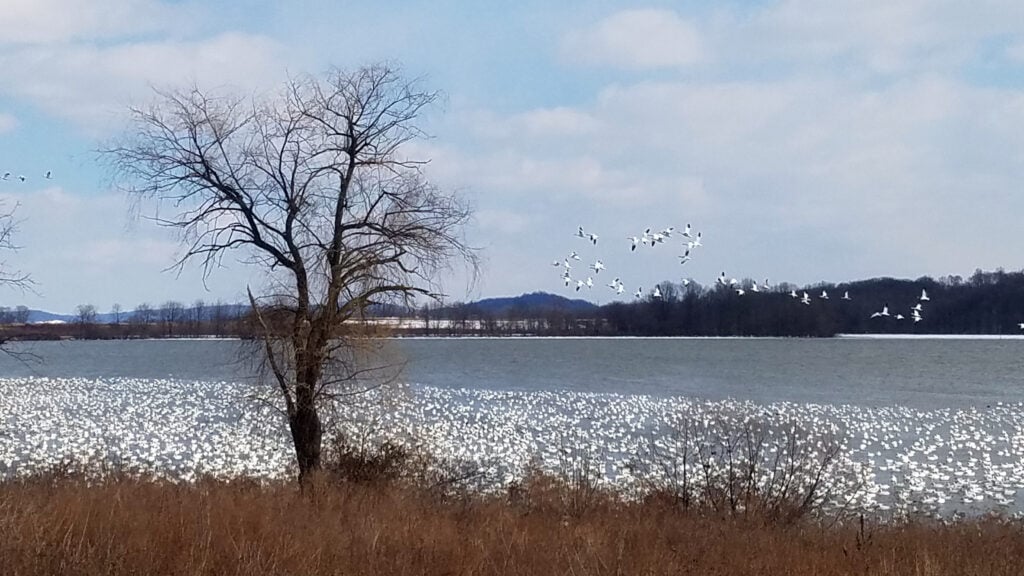
Middle Creek Wildlife Management Area
The state game commission has taken steps, Redding said, to address the disease potentially being in migratory birds that stop at Middle Creek Wildlife Management Area, which is in southeastern Lebanon County. Millions of migratory birds stop there annually in the spring and fall.
“They’re testing all the time. Those tests are coming from the migratory population. And if there’s any dead stock, they’re testing. They’re collective testing. And then with the work of the game commission, particularly this year, we had them put in the tire wash stations, and bio security stations at Middle Creek,” Redding said. “They’re on it and they’re aware, highly aware, of the need to control it.”
Questions about this story? Suggestions for a future LebTown article? Reach our newsroom using this contact form and we’ll do our best to get back to you.

Support Lebanon County journalism.
Cancel anytime.
Monthly Subscription
🌟 Annual Subscription
- Still no paywall!
- Fewer ads
- Exclusive events and emails
- All monthly benefits
- Most popular option
- Make a bigger impact
Already a member? Log in here to hide these messages
Trustworthy local news is built on facts. As Lebanon County’s independent news source, LebTown is committed to providing timely, accurate, fact-based coverage that matters to you. Support our mission with a monthly or annual membership, or make a one-time contribution. Cancel anytime.