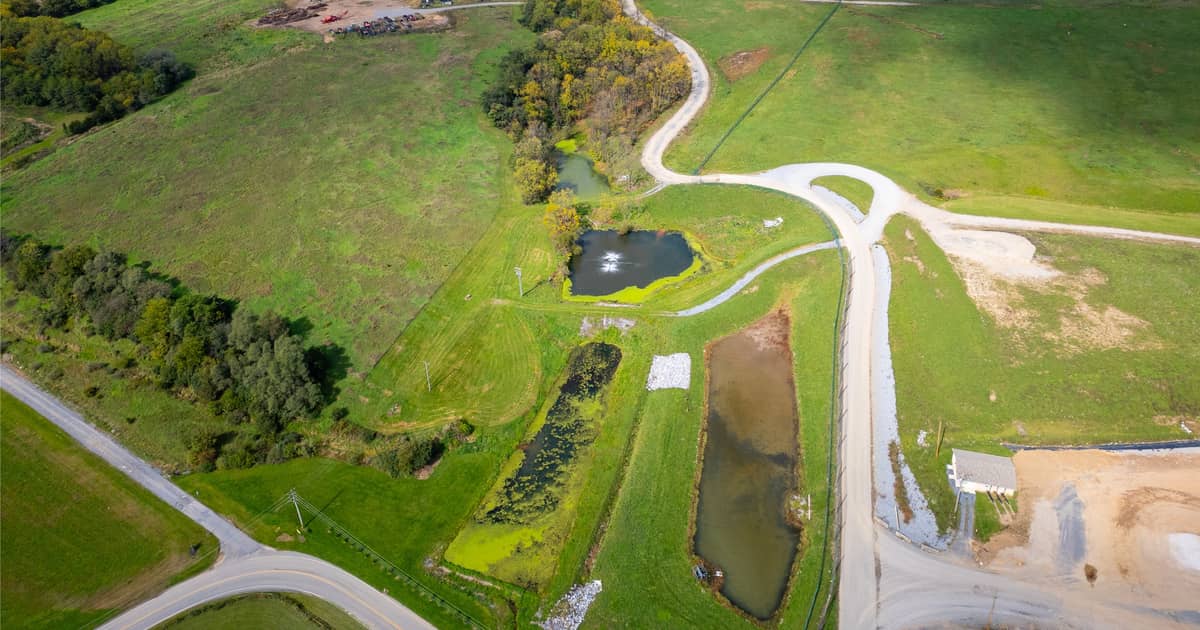

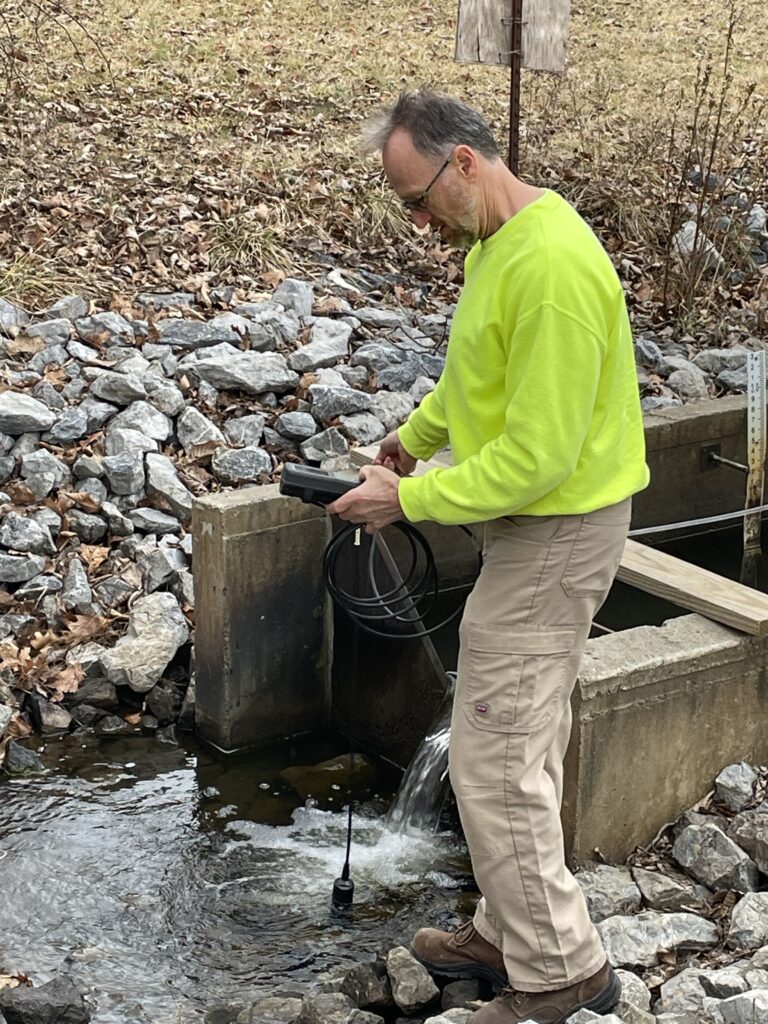
Every Wednesday morning, Dean Zechman sets up a small pump to collect stream water as it flows out of the last of the Greater Lebanon Refuse Authority’s (GLRA) treatment ponds and into an unnamed tributary of the Swatara Creek.
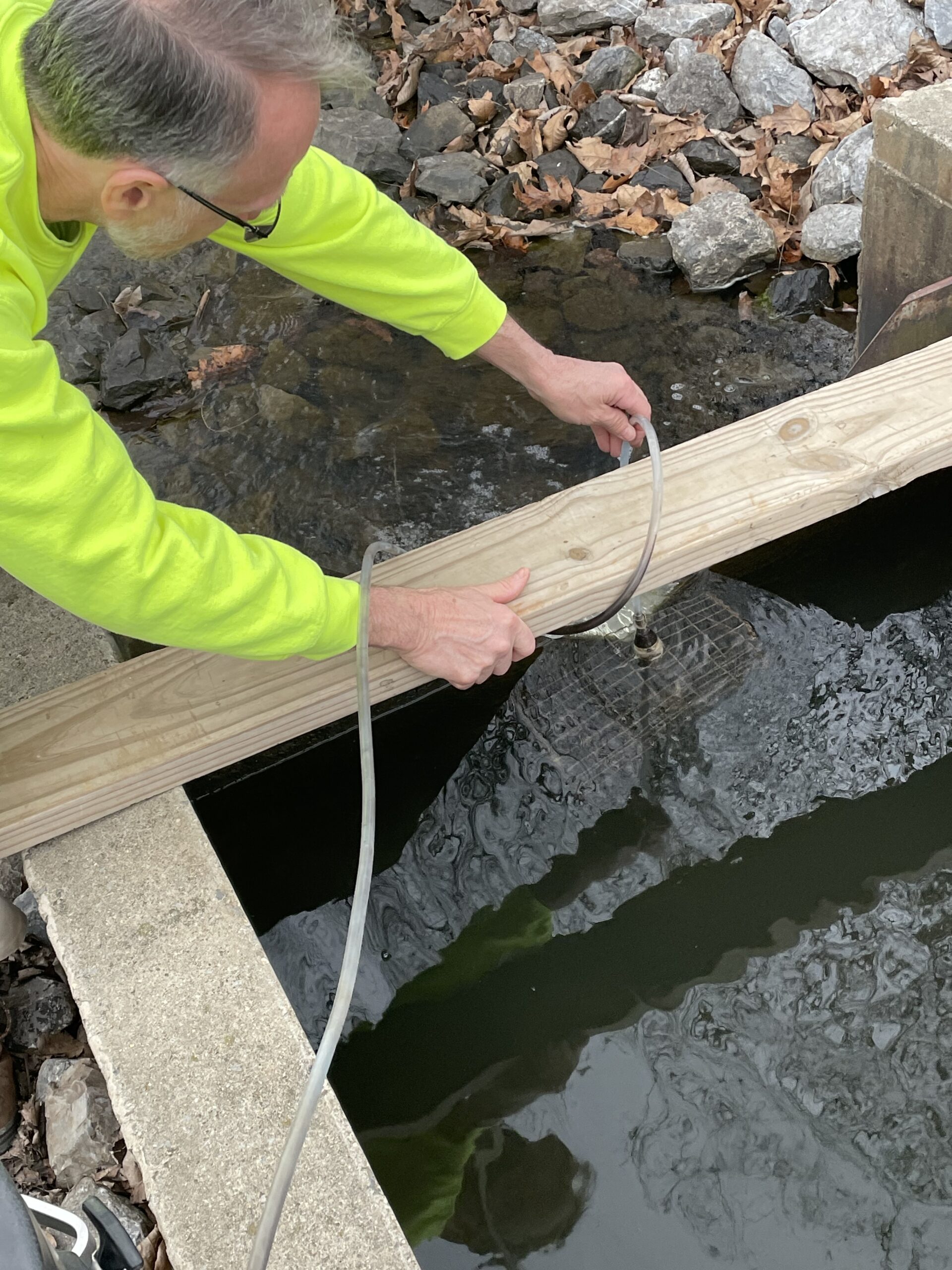
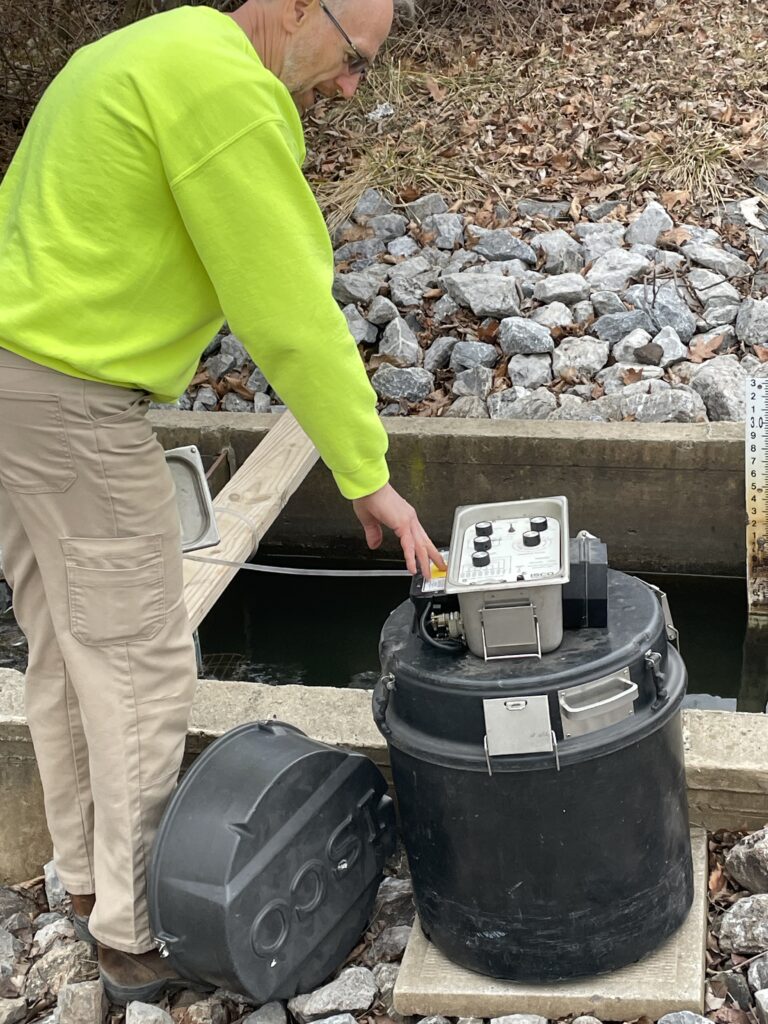
For 24 hours, the pump pulls in 500 milliliters of stream water every 20 minutes. Altogether, two gallons are collected for chemical analysis by a laboratory contracted by GLRA.
Zechman’s weekly water testing routine is required as part of GLRA’s DEP permit to operate a landfill and to discharge water into the stream. In the 1970s, that stream which had run through the site became part of the authority’s Natural Aquatic Life Treatment System (NALTS).
Read More: Natural solution to Lebanon’s 1970s waste crisis became a success story
While the pump is working, Zechman measures the pond water’s pH, temperature, dissolved oxygen and total dissolved solids — all indicators of water quality.
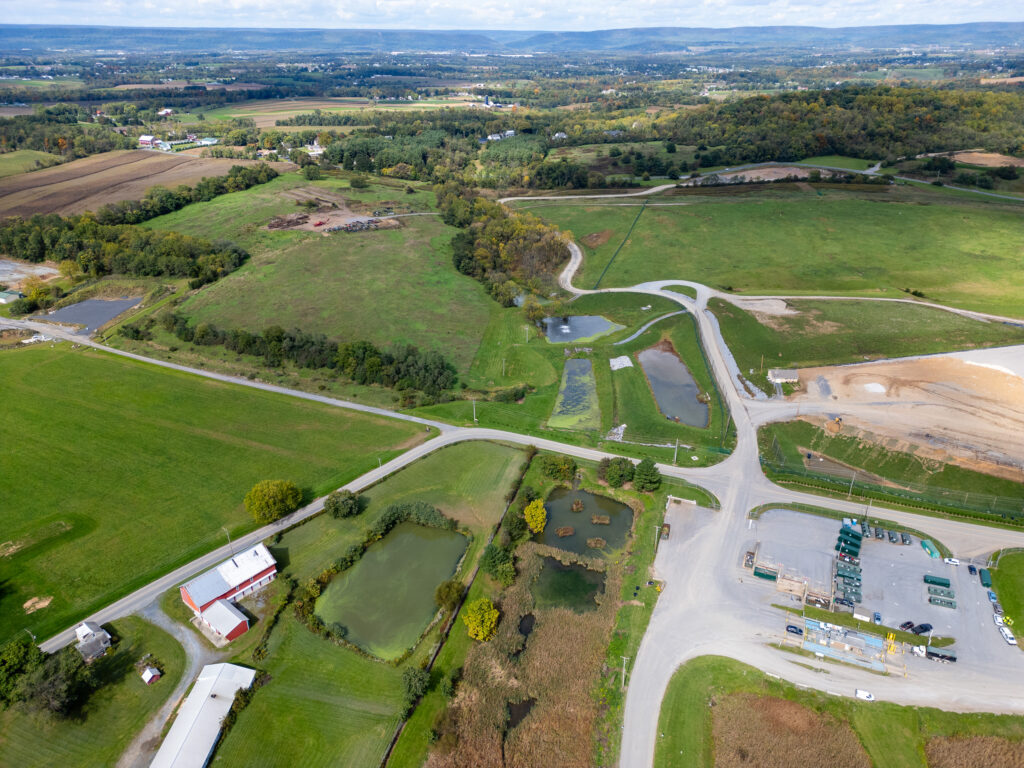
NALTS is a series of 12 ponds that rely on natural and biological processes to remove the organic and inorganic materials produced by the decomposition of waste occurring in GLRA’s early landfills. While closed up in the early 1970s, those landfills continue to produce liquids that pose a potential threat to groundwater.
The pond system treats those liquids, so they meet standards set by the Clean Streams Law.
“The quality of the water at the end of the NALTS shows marked improvement from when it enters the system,” said Jim Zendek, GLRA engineering manager. “We have not had any violations of our permit requirements.”
Mapping the NALTS
GLRA’s pond system predates the state requirement that landfills have liners to protect groundwater from potential contamination by leachate or the liquids that is produced as waste decomposes and that can contain potential pollutants.
Both of GLRA’s active landfills have geocomposite and high-density polyethylene liners as well as protective stone between each of their cells where waste is deposited. The liners effectively contain the leachate, which is piped out of the cells and pumped to the City of Lebanon Authority’s wastewater plant for treatment.
The leachate from GLRA’s older landfills, in contrast, is treated on site with the NALTS.
“You’d never be able to build this kind of system today,” Zendek said. “When this went in, we basically took a stream and segmented it into ponds. That would no longer be approved today.”
Like a natural wetland, the NALTS’ ponds trap loose soil particles or sediment, which by volume is the No. 1 contaminator of surface waters. The NALTS’ plant communities take up nutrients such as nitrogen and phosphorous, both of which impair water quality. And the pond system reduces toxic substances that enter the water.
As such, GLRA’s pond system provides a natural solution to the human-made problem of waste and leachate.
The NALTS stretches over one-quarter mile. While it includes 12 ponds today, initially there were 14 ponds. Ponds 1 and 2 were filled and buried under the Heilmandale landfill that opened in August 2023 and is piggybacked on one of GLRA’s older landfills, Zendek said.
The first three, or ponds 3, 4, 5, are settling ponds where pollutants such as metals and sediment settle to the bottom. These are more elongated than other ponds and more closely resemble a natural wetland as they are saturated, marshy and swampy.
What doesn’t settle out flows into pond 6, where aerators run almost 24/7 adding oxygen to the water. The extra oxygen benefits the pond microbes essential for breaking down organic materials. Then to pond 7 and into pond 8 and so on through pond 13. Each of these has water-loving plants — cattails, lily pads, bulrushes — that break down excess nutrients or absorb them in their roots. These plants also create habitats for fish, birds and muskrats.
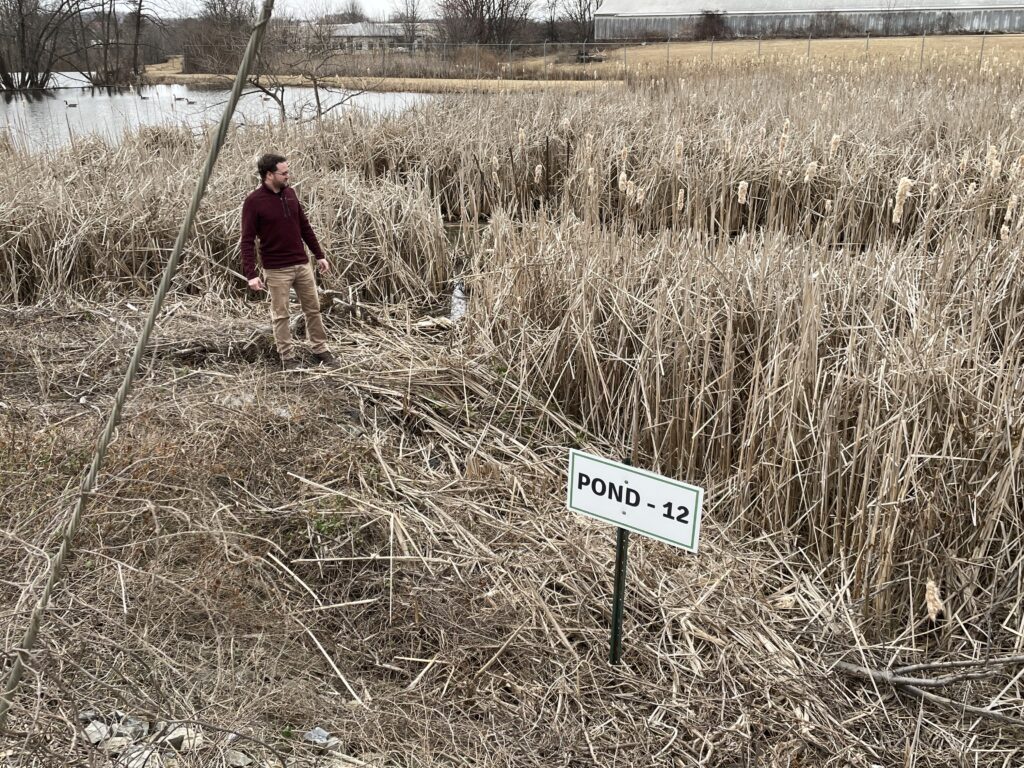
Pond 14 is the last before the water flows over a concrete dam and into the unnamed tributary to the Swatara. Movement from the first to last pond takes about a month, according to a 1990 GLRA newsletter.
Only one of its kind
While other industries have constructed wetlands to filter and clean contaminated water, GLRA is the only refuse authority in Pennsylvania with such a system, according to DEP.
Initially, interest was high in the NALTS from professionals outside of GLRA. In June 1982, a group from Penn State came to Lebanon to learn about the NALTS’ leachate purification process, the Lebanon Daily News reported.
Later that year, the NALTS was featured in a story in Solid Waste, a national waste management magazine.
But interest in replicating the system has waned over the years. Streams are highly protected now, and changing a stream’s flow would not be permitted.
“It is a unique feature of our site,” Zendek said, “that draws the interest of environmentally minded employees, interns and researchers.”
Interestingly, a 1995 article in MSW Management, the Journal for Municipal Solid Waste Professionals, extolled constructed wetlands as “a very promising leachate technology.” Wetlands, the authors wrote, “offer environmentally responsible, effective leachate treatment … and may emerge as a vital technology in the future of leachate treatment.”
Questions about this story? Suggestions for a future LebTown article? Reach our newsroom using this contact form and we’ll do our best to get back to you.
Support Lebanon County journalism.
Cancel anytime.
Monthly Subscription
🌟 Annual Subscription
- Still no paywall!
- Fewer ads
- Exclusive events and emails
- All monthly benefits
- Most popular option
- Make a bigger impact
Already a member? Log in here to hide these messages
Strong communities need someone keeping an eye on local institutions. LebTown holds leaders accountable, reports on decisions affecting your taxes and schools, and ensures transparency at every level. Support this work with a monthly or annual membership, or make a one-time contribution. Cancel anytime.