
It’s light and airy unless used as an acronym, and then FOG is heavy, dense, and a maintenance problem for municipal wastewater treatment plants.
If rinsed down a kitchen sink, fats, oils, and grease — aka FOG — can clog sewer pipes and slow drainage. If the blockage is severe, wastewater can back up and flow into your home.
Flushing FOG-blocked pipes with pressurized water is one option for opening them up. An Ephrata-based company, Quorym, has another — adding live bacteria that use the fats, oils, and grease in wastewater pipes for cellular respiration.
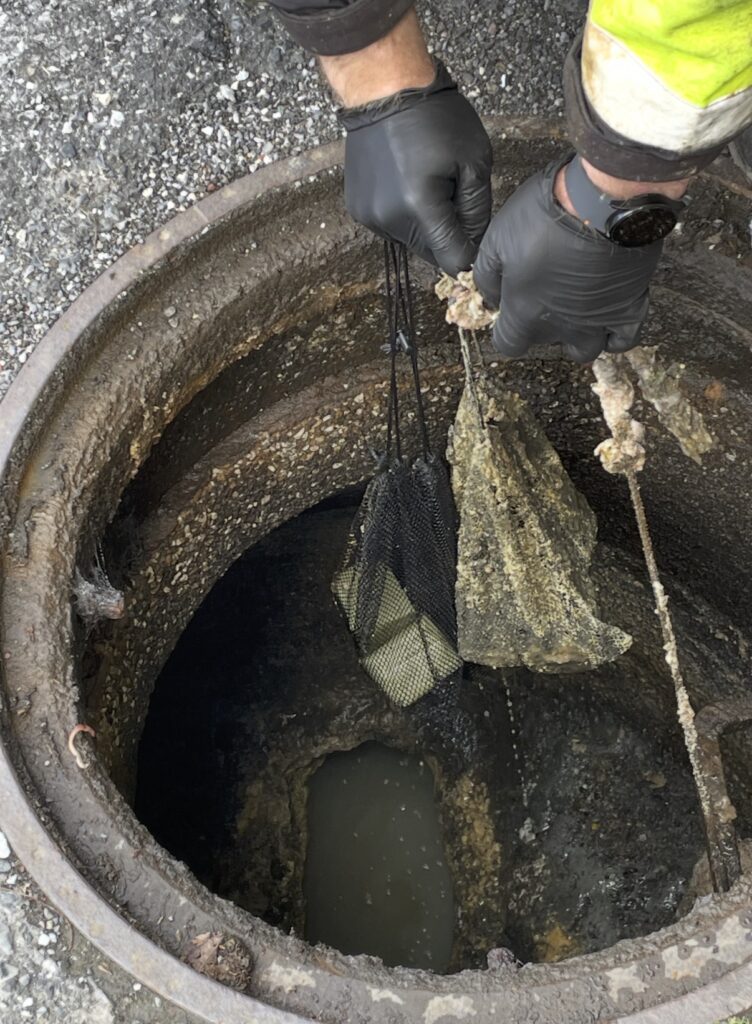
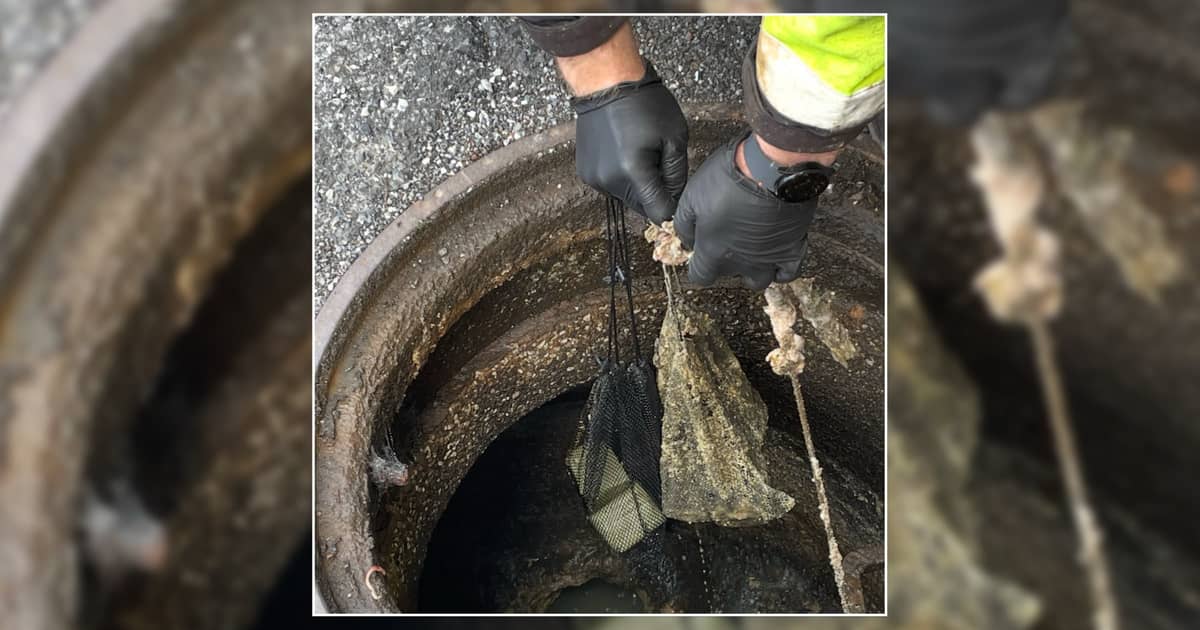
For the past five years, Quorym technicians have spent several days each month dropping mesh bags with the FOG-metabolizing bacteria into manholes around Lebanon city and county. As wastewater runs over the bags, the bacteria are released and begin digesting the grease and fats lining the sewer pipes.
The colonizing bacteria not only solve the problem of FOG but also save money for municipal authorities.
“We grow live bacteria that consume the complex carbohydrates in grease in the wastewater collection system,” said George Pearson, Quorym CEO. “What we’re doing is accelerating the natural microbial processes to match what accumulates in wastewater.”
In the sewer system
If you cook, you create FOG.
Typical sources include butter, salad dressing, cooking oils, meat fats, and dairy products. If washed down the sink, these can form “hotspots,” places where FOG has collected, and sewer blockages have occurred.
When that happens, sewers can back up in basements or overflow onto streets, creating environmental and health hazards.
Clearing those out often involves “jet blasting” the pipes with pressurized water to break up the hardened fats and grease. But that’s no guarantee they won’t re-form and have to be treated again.
Jet blasting a sewer line is labor and equipment intensive and can cost up to several thousand dollars depending upon the blockage, said Frank DiScuillo, wastewater systems director for the City of Lebanon Authority (CoLA), in an email.
Regular inoculation with Quorym bacteria has not only removed the need for monthly jetting but allowed CoLA to remove some locations from the jet list altogether, DiScuillo said. Currently, Quorym inoculates 134 of CoLA’s manholes as well as two pump stations in Lebanon city, he added.
South Lebanon Township also has notched cost savings by using Quorym bacteria.
“Quorym has greatly reduced our very expensive maintenance costs while reducing the FOG that travels downstream to the treatment plant,” said Ron Johnson, public works director, in an email.
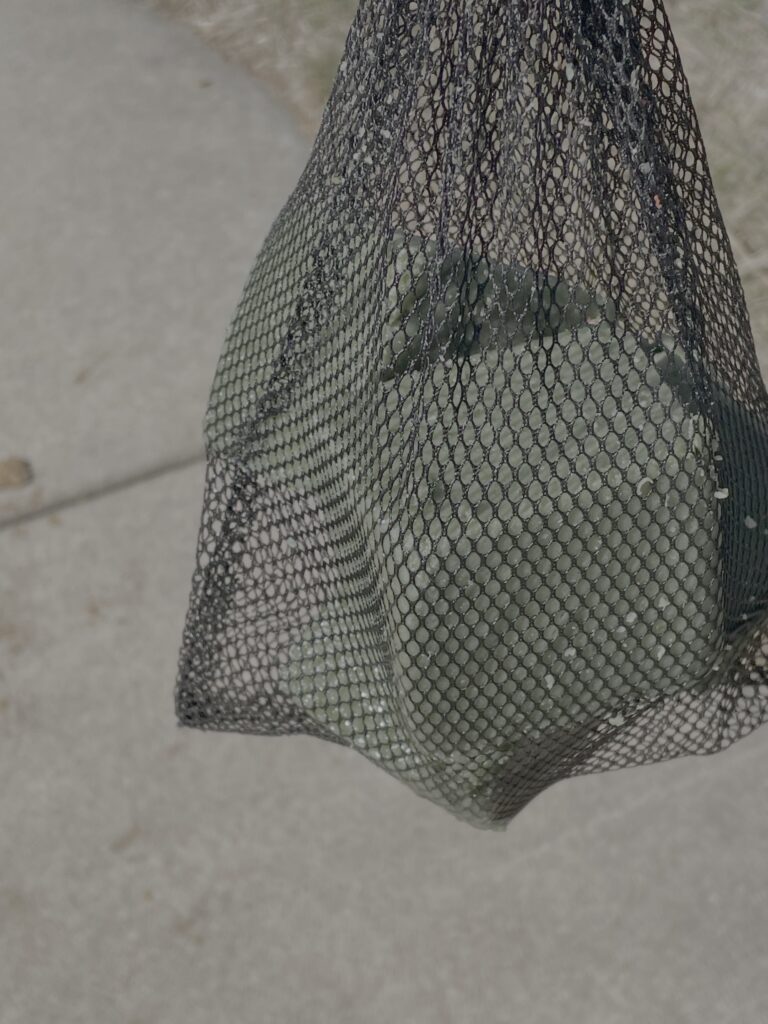
Inoculating a manhole takes Quorym technicians about a minute. The manhole cover is popped off, the old mesh bag pulled up, a new one is dropped in, a photo is snapped, the manhole cover replaced — and it’s off to the next one.
Mesh bags typically contain four of what Quorym calls “tablets” — each of which is just slightly smaller than a 3-inch cube and weighs about 8 ounces. The tablets are infused with trillions of live bacteria, said Howie Pearson, Quorym chief technology officer and George’s son.
These beneficial bacteria start immediately to decompose FOG and are effective in the hotspots and for a distance of about 600 feet.
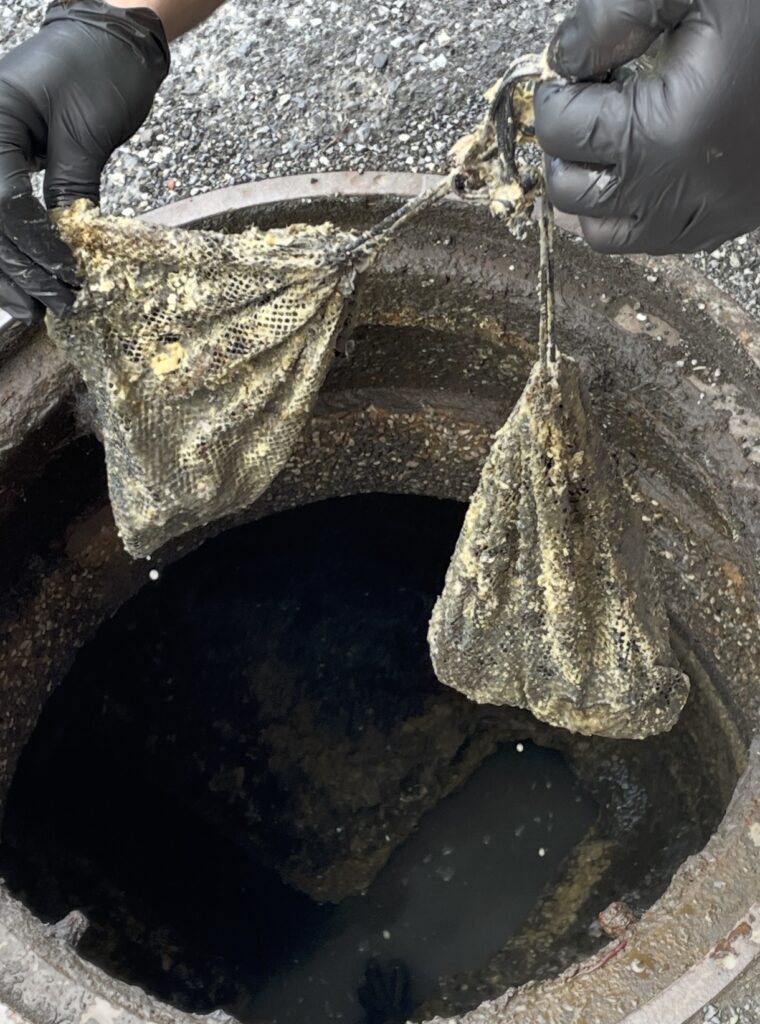
“The effects of what we do is also measured in the treatment plant as well,” George Pearson said. “Getting rid of the grease in the sewer line helps improve the biology of the treatment plant.”
How many tablets are dropped into each manhole depends upon the level of problem. Typically, technicians start with four tablets. But if photos show accumulations of FOG on pipes, then more tablets are added.
“There’s some fluctuation in the rate of accumulation of grease from month to month, particularly around holidays, but for the most part, it’s pretty consistent,” George Pearson said.
In the lab
Quorym achieves high concentrations of bacteria through a multi-step process that takes about three days for each batch. When mature, the bacteria are added to the tablet which at that point is liquid. The bacteria stay alive as the tablet cools and hardens, said George Pearson of the composition and application of the tablet which Quorym has patented.
When hardened, the tablet media is cut into blocks. These are then put into the mesh bags and then coolers for distribution in designated manholes.
What goes into the sewers are first-generation bacteria that double every 10 to 15 minutes, Howie Pearson said. Within a week, the bacteria likely grow through thousands of generations, he added.
Regular re-treatment is needed because over multiple generations, the bacteria become less efficient at reducing the fat molecules.
Currently, Quorym works with about 50 municipal authorities in a 3-hour radius of Ephrata, including South Lebanon and North Cornwall townships and CoLA. While FOG is currently about 70 to 75 percent of Quorym’s business, treating hydrogen sulfide — a toxic gas that occurs in septic parts of the collection system — is growing, George Pearson said.
“Hydrogen sulfide is a highly acidic gas that weakens and destroys construction materials like concrete that sewer systems are made from,” said Eric Shearer, CoLA collection system manager. “Eliminating these acidic bacteria saves money and energy at the wastewater plant.”
Besides expanding into the treatment of hydrogen sulfide, Quorym is researching development of genetic analyses of wastewater for treatment plants, Howie Pearson said.
This involves identifying species of bacteria that might be an issue — such as an imbalance in the system created by pollutants, pathogenic microbes — before they become a problem.
“We do everything from A to Z ourselves, and we are both a lab and a service company,” George Pearson said. “It’s difficult to create a new technology, but because we have control over the entire process, we can correct something if it is not working.”
Read More: Small plastic ‘honeycombs’ led to big savings for City of Lebanon Authority
Questions about this story? Suggestions for a future LebTown article? Reach our newsroom using this contact form and we’ll do our best to get back to you.
Support Lebanon County journalism.
Cancel anytime.
Monthly Subscription
🌟 Annual Subscription
- Still no paywall!
- Fewer ads
- Exclusive events and emails
- All monthly benefits
- Most popular option
- Make a bigger impact
Already a member? Log in here to hide these messages
While other local news outlets are shrinking, LebTown is growing. Help us continue expanding our coverage of Lebanon County with a monthly or annual membership, or support our work with a one-time contribution. Every dollar goes directly toward local reporting. Cancel anytime.