
In 2011, the City of Lebanon Authority needed to figure out how to convert the ammonia in its wastewater treatment effluent to meet discharge limits set by its NPDES permit.
One option was to build four additional wastewater treatment tanks which, at that time, would likely have cost more than $15 million. That option also would have necessitated purchase of additional land in order to fit four more tanks.
Another was to try a novel technology that promised to increase the concentrations of bacteria that could oxidize ammonia and convert it to NO3, or nitrate — and thereby, eliminate the need for new tanks.
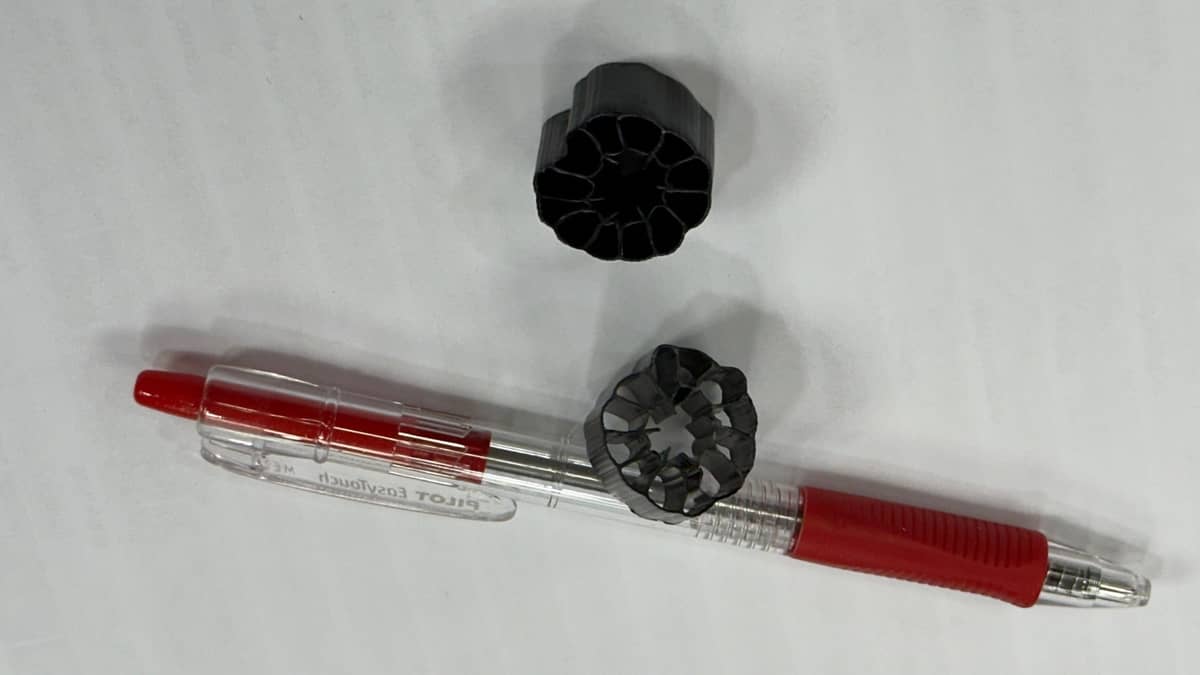
CoLA opted for what was then a new media for wastewater treatment — biofilm carriers — and purchased 1.7 million pieces of the plastic media. These went into CoLA’s existing tanks where they performed as promised, and CoLA met the limits set in its permit.
Now those plastic honeycombs are beginning to break down from their constant bouncing and jostling against the walls of the aeration tanks.
“We knew this day was coming — we are 13 years into them, and they had a life expectancy of 15 years,” Jon Beers, CoLA executive director, told the board recently. “We will do our homework this year, and cost this out for next year.”
Beers isn’t certain how much CoLA paid for the biofilm carriers in 2012 as their purchase was wrapped into a $3 million line item for an entire bioreactor system. But Bryon Killian of Entech Engineering, who attended the board meeting, said they are “relatively cheap.”
Slightly larger than a nickel, the plastic pieces add surface area for the natural bacteria in wastewater to grow and multiply. These microorganisms oxidize ammonia, or anhydrous nitrogen, found in a variety of sources including human and animal waste.
Too much nitrogen in streams and creeks can cause algal blooms and decrease levels of dissolved oxygen in the water, which can kill fish and other aquatic creatures.
NPDES permits target reducing nitrogen pollution in waterways, especially the Chesapeake Bay.
CoLA anticipates taking tanks out of service one at a time in order to remove the biofilm carriers — and then add new ones back in.
“We want to replace the bacteria slowly, so they keep growing,” Beers said.
Read More: Bugs battle grease: Live bacteria take the FOG out of pipes
Questions about this story? Suggestions for a future LebTown article? Reach our newsroom using this contact form and we’ll do our best to get back to you.
Build the future of local news.
Cancel anytime.
Monthly Subscription
🌟 Annual Subscription
- Still no paywall!
- Fewer ads
- Exclusive events and emails
- All monthly benefits
- Most popular option
- Make a bigger impact
Already a member? Log in here to hide these messages
An informed community is a stronger community. LebTown covers the local government meetings, breaking news, and community stories that shape Lebanon County’s future. Help us expand our coverage by becoming a monthly or annual member, or support our work with a one-time contribution. Cancel anytime.