
The City of Lebanon Authority is attempting to confirm the pipe material carrying water from the curb stops at the street into every city property — whether it’s a single-family home, multi-family dwelling, or commercial building.
The choices are lead, copper, galvanized metal, or plastic — but which one? A quick check by CoLA water maintenance employees of the pipe in each basement, crawl space, or other location is all that’s needed to answer that question.
Recently, those employees inventoried homes in a South Lebanon Township development built in the 1970s, prior to records being kept. Two of those properties were confirmed to have copper pipes.
“People have been really good about this,” CoLA water distribution manager Austin Douple said of the door-knocking and drop-in visits. “We’ve already knocked on about 300 homes, and the majority were of a material not in need of replacing.”
‘Public’ and ‘private’ service lines
CoLA’s distribution system consists of water mains and service lines that come off the water mains and end inside properties.
The portion of the service line from the main to the curb stop is what CoLA calls the “public side” because the water authority is responsible for it. The “private side” or the service line from the curb stop to inside the house is owned by and the responsibility of the property owner, said Brian DiScuillo, water systems director.
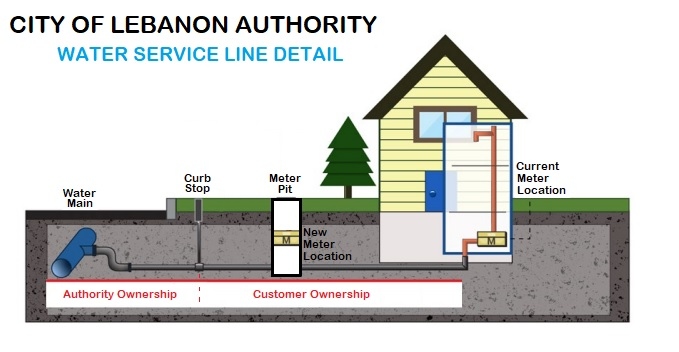
Given where its ownership ends, CoLA has few records of property owners’ pipe material. But as part of the EPA’s Lead and Copper Rule requiring replacement of lead and galvanized metal lines, CoLA is required to identify all pipe material from its mains to inside — and that puts CoLA water maintenance employees knocking on doors.
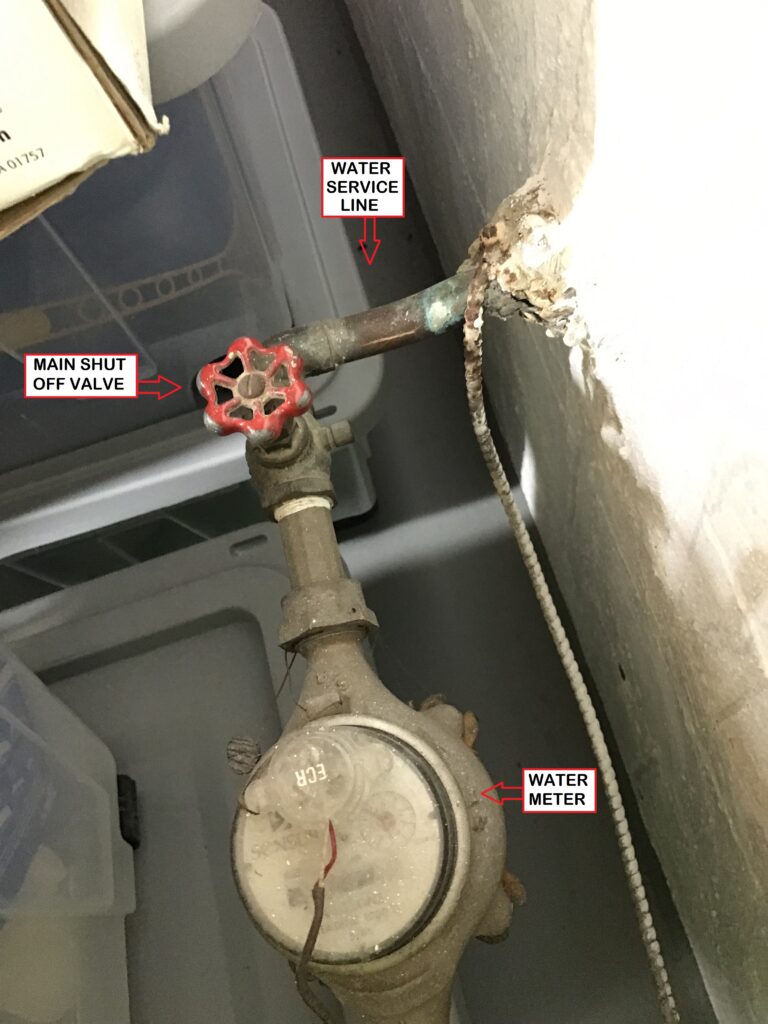
Identifying the pipe material takes only a few minutes. If a pipe is copper-colored with green spots, it likely is copper, which a quick scratch on the pipe will confirm, according to a CoLA notice. If the pipe is a black, gray, and hard metal, it is likely iron, while a gray, shiny, silver soft metal is likely lead.
Once water employees determine the material, they snap a photo of the pipe, enter the data, and move onto the next property.
Plumbing with copper, lead
Buildings constructed in the 1970s or after likely have copper pipes from the curb stop into the dwelling (copper is still used today along with polyethylene plastic).
In properties built prior to the 1970s, lead was the material of choice for water systems and plumbing as it was flexible and not prone to cracking. But lead pipes can leach lead particles into drinking water.
Lead-contaminated water can be harmful to children, pregnant women and adults with compromised immune systems — and the effects of lead poisoning are not reversible.
Lead in drinking water has long been a public health concern but came to the forefront with the Flint, Michigan, water crisis when lead concentration skyrocketed due to high corrosion in the water system’s lead pipes.
CoLA has routinely tested for lead without finding contamination even in those dwellings with lead service lines. Nonetheless, CoLA is very aggressive in replacing lead service lines when they are discovered due to leaks or other excavation, DiScuillo said.
“How we treat our water reduces the possibility of corrosion,” he said. “Our water’s chemistry also provides barriers or protections from any materials leaching into the water.”
Property owners can help
CoLA water maintenance employees have been knocking on doors for about a month, sometimes gaining entrance to confirm pipe material but more often leaving door hangers that explain the reason for the visit and ask property owners to call CoLA and schedule an appointment.
Currently targeted are those areas where CoLA has records of lead service lines or areas for which CoLA has no information about the lines, DiScuillo said. About 12 percent, or about 1,800, of CoLA’s service lines are of unknown material and are being investigated, he added.
CoLA is particularly interested in identifying lead service lines so as to test those properties’ water.
“We need to verify that our corrosion control is working, and the water is lead-free,” DiScullio said.
Given the need to confirm pipe material and the difficulty of reaching property owners during the day, CoLA may change how it collects this information. Under consideration is calling people to let them know when water maintenance employees will be in their area.
CoLA also plans to put links of videos on its website to show property owners how to identify service line pipe material themselves. Then they can photograph their pipes and send the information to CoLA.
Another option is for folks to contact CoLA to verify the pipe material.
“We’ll take the time to come out, look at your property and let you know what you have,” DiScullio said. “People should definitely call if they have questions or concerns.”
Questions about this story? Suggestions for a future LebTown article? Reach our newsroom using this contact form and we’ll do our best to get back to you.
Support Lebanon County journalism.
Cancel anytime.
Monthly Subscription
🌟 Annual Subscription
- Still no paywall!
- Fewer ads
- Exclusive events and emails
- All monthly benefits
- Most popular option
- Make a bigger impact
Already a member? Log in here to hide these messages
Our community deserves strong local news. LebTown delivers in-depth coverage that helps you navigate daily life—from school board decisions to public safety to local business openings. Join our supporters with a monthly or annual membership, or make a one-time contribution. Cancel anytime.