The state of the dairy industry in Lebanon County is as healthy as a glass of calcium-rich whole milk, according to several producers at the Lebanon Area Fair.
In other words, milk does a body – and currently the wallets of producers – good.
Dairy farming is a work-intensive industry whose prices that are paid to producers are set by the Pennsylvania Milk Marketing Board (PMMB). Producers and ag-based organizations may petition the PMMB to adjust prices, but farmers ultimately are paid the price set by the board.
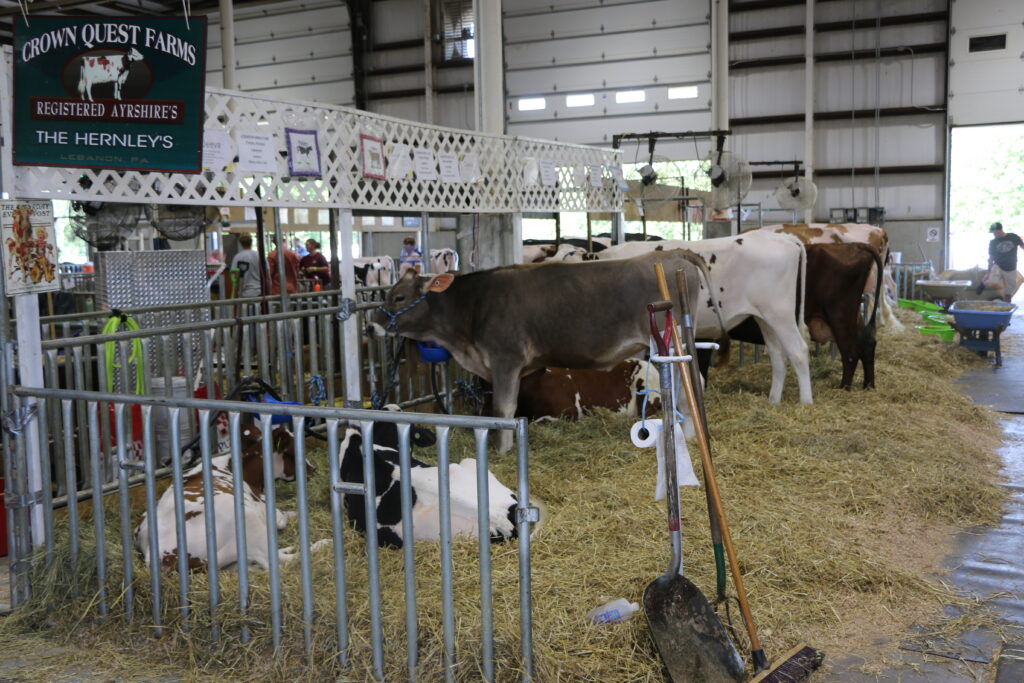
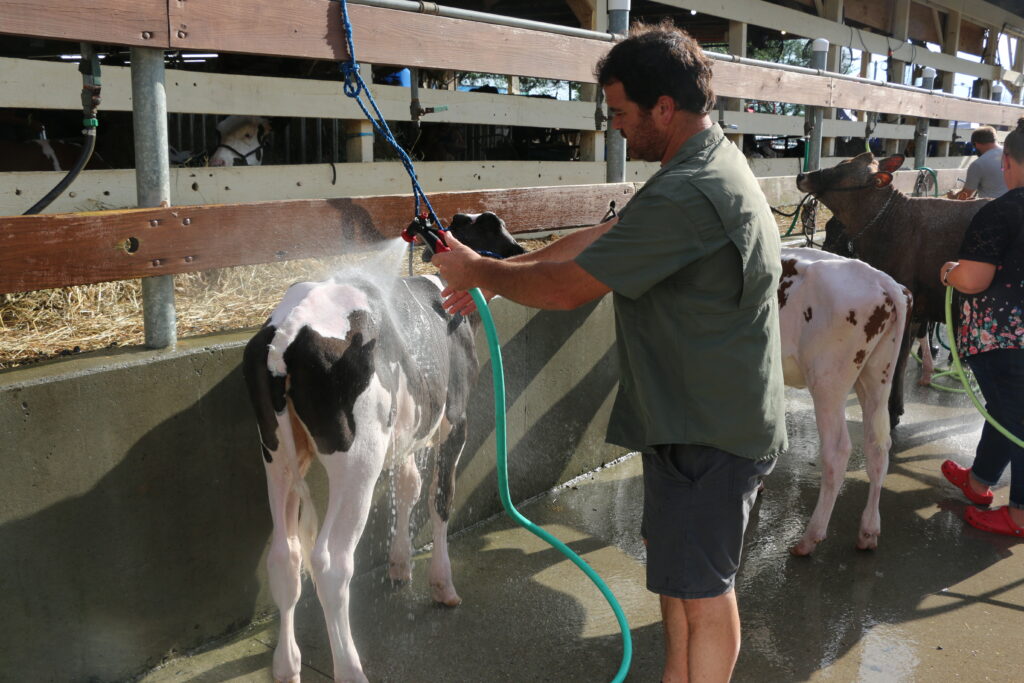
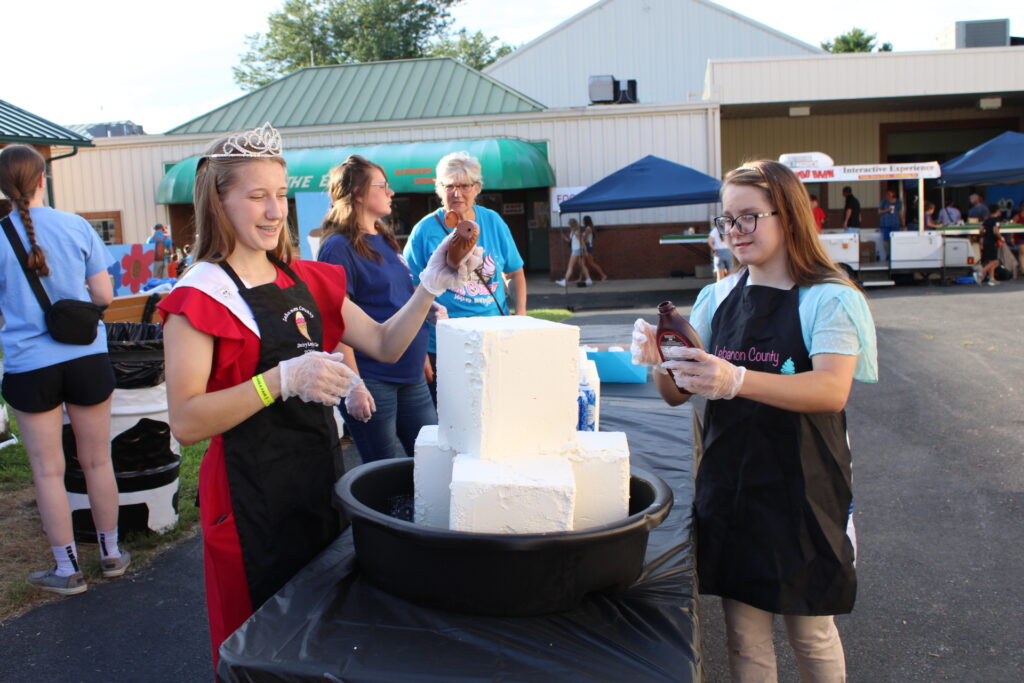
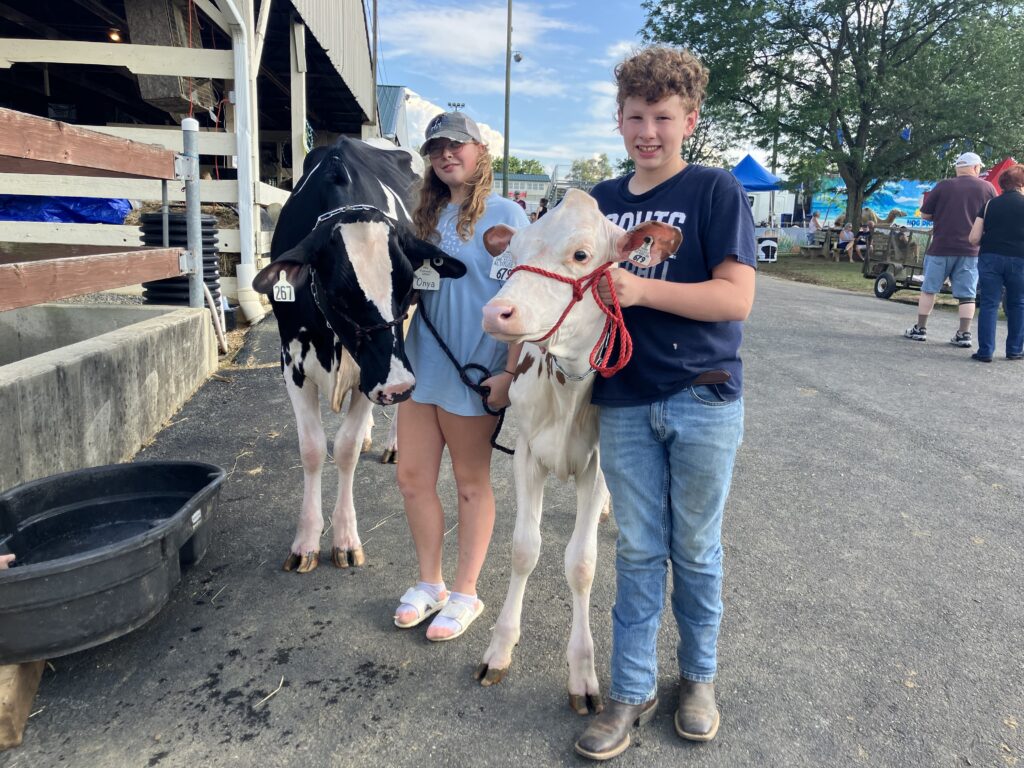
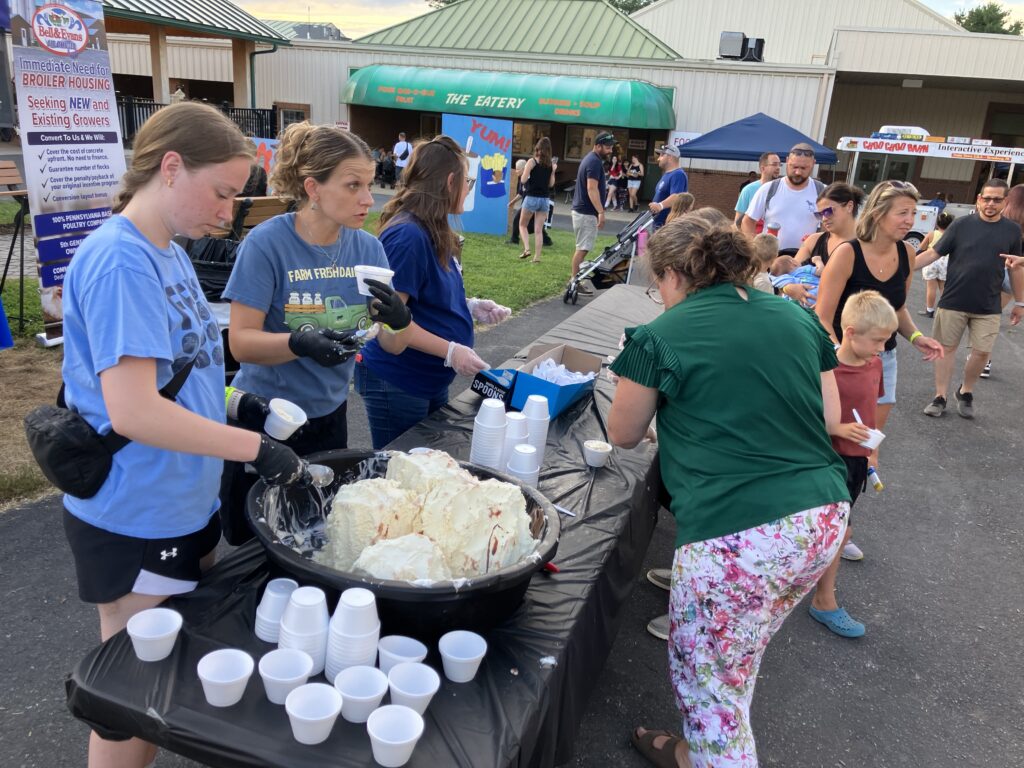
LebTown spoke to several producers prior to a dairy show at the 69th edition of the Lebanon Area Fair, which runs through Saturday. Just prior to the show, fairgoers consumed 12 gallons of ice cream donated by Patches Creamery to the giant sundae made and distributed by the Lebanon County Milk Promotion Program.
Dan Eberly is a first-generation dairy farmer who owns a 100-acre operation in South Lebanon Township. He said he has about 150 head of Holstein cattle, of which 70 are milking. They grow rye, corn, soybeans, and triticale to feed their animals.
“I started working for a neighbor feeding calves when I was probably about 10. When I was 14, I went to work for another dairy farm. Milked his third milking all the way through high school for four years,” said Eberly. “And then after that, I went, after I graduated in December, the following year I rented a dairy barn.”
Many consumers don’t realize that farmers don’t set the price for the milk they get paid for in Pennsylvania. The Milk Marketing Board sets prices for milk, butter, cheese and other dairy commodities.
Eberly said the current price is around $18.82 per hundredweight, meaning a farmer receives $18.82 per every 100 pounds of milk sold to market. Many cows average about 85 pounds of milk per milking and most Lebanon County farmers milk their animals two times per day.
“It is a fair price,” Eberly said. “You’d always hope for a little bit more, but you gotta control what you can control. Your inputs, your expenses, and manage those closely, have a budget, have a cash flow, and worry about what you can do to control your feed inputs.”
The base Class I price of $18.82 per hundredweight is an increase of $1.56 from June. Farmers mentioned how the pricing structure is a complex maze to navigate when determining the final price that’s paid to producers.
The Federal Milk Marketing Orders establish minimum prices for milk based on its use (e.g., fluid milk, cheese, butter) and components (e.g., butterfat, protein).
Then there is a Producer Price Differential, an additional payment on top of the base price that reflects the value of milk components and the overall pool of milk in the region.
The marketing board also sets an Over-Order Premium Class I milk (fluid milk) sold within Pennsylvania. This premium is paid on top of the federal price and is intended to support local dairy farmers and maintain a stable milk supply. The current OOP is $1 per hundredweight plus a fuel adjustment, according to the commonwealth.
And, the marketing board regulates minimum producer, wholesale, and retail prices for milk to ensure farmers receive a fair percentage of the retail price.
While some farmers may work two jobs to make ends meet, Eberly said his family isn’t in that situation. He has five children and hopes that one day they’ll want to take over his operation. For now, he supplements his income by selling excess inventory and crossbred beef cattle.
“We do 95% dairy. Our sub income is from selling off extra dairy replacements, whether they’re calves, show calves, yearling heifers or fresh cows, bred heifers, just extra dairy animals,” he said.
Eberly said he believes the dairy industry in Lebanon County is doing well. In 2022, there were 170 dairy farms in Lebanon County, which ranked as the fifth-highest producing county in Pennsylvania, according to the National Agricultural Statistics Service.
“I’d say the dairy industry in Lebanon County right now is pretty good. I mean, there’s always the trend of getting large or losing some farms, but the farms that are in Lebanon County are very prosperous. And the industry itself right now seems to be going pretty good,” Eberly said.
Joel Krall, whose farm is near Cornwall in South Lebanon Township, said he farms about 100 acres, rents a satellite farm with additional acreage near Elizabethtown, and has a total of 450 cows, of which 250 are milked daily.
Krall said the price of butter has helped boost profits for dairy farmers in recent years.
“So last fall butter was really strong but it’s been coming down since there’s some cheese facilities that are getting in like other places in the United States and that are coming into production, and there’s some fear out there that it is gonna create a lot of cheese production,” Krall said. “So milk prices are really complicated, but you have the milk … you have Class 3, which is cheese, Class 4, which is butter – and butter’s actually been really strong over the last four years. And that’s actually really helped dairy farmers a lot, the butter price.”
Krall also knows that inputs are one aspect a farmer can use to control costs in an attempt to be more profitable.
“We double crop rye in the spring and then corn for corn silage (to harvest) in the fall. So we try to make as many tons of forage as we can because it’s not a lot of acres and a lot of animals we have,” Krall said. “So we plant rye in the fall, and then it’s kind of dormant through the winter, and then starts growing in March and you take it off in April. And then that allows you to get corn out for corn silage, essentially get two crops off of an acre.”
Krall added that each farmer has to decide whether double cropping is right for his operation based on the number of mouths he has to feed versus the amount of land he owns or rents.
“It depends on the farm and how many times you need to crop the acres you have. So if you have a lot more acres than you need, you may not but most guys that have dairy cows do double crop because they need as much forage as they can get,” he added.
Luke Troutman is a Womelsdorf-area, third-generation dairy farmer who is currently renting his herd to another farmer.
The itch to get back into the dairy business, however, is strong, especially now that his five children are showing interest in keeping the family tradition going. He owns 95 head and has about 95 acres that’s farmed, and his offspring are members of the Lebanon County 4-H dairy club.
Troutman said it makes him feel great that his children want to keep the farm intact, noting the farm first purchased by the family in 1969 is also preserved.
“They don’t want the money for (selling) the farm, they want the farm,” Troutman said.
Questions about this story? Suggestions for a future LebTown article? Reach our newsroom using this contact form and we’ll do our best to get back to you.
Support Lebanon County journalism.
Cancel anytime.
Monthly Subscription
🌟 Annual Subscription
- Still no paywall!
- Fewer ads
- Exclusive events and emails
- All monthly benefits
- Most popular option
- Make a bigger impact
Already a member? Log in here to hide these messages
Quality local news takes time and resources. While LebTown is free to read, we rely on reader support to sustain our in-depth coverage of Lebanon County. Become a monthly or annual member to help us expand our reporting, or support our work with a one-time contribution. Cancel anytime.
Questions about this story? Suggestions for a future LebTown article? Reach our newsroom using this contact form and we’ll do our best to get back to you.
Support Lebanon County journalism.
Cancel anytime.
Monthly Subscription
🌟 Annual Subscription
- Still no paywall!
- Fewer ads
- Exclusive events and emails
- All monthly benefits
- Most popular option
- Make a bigger impact
Already a member? Log in here to hide these messages
Quality local news takes time and resources. While LebTown is free to read, we rely on reader support to sustain our in-depth coverage of Lebanon County. Become a monthly or annual member to help us expand our reporting, or support our work with a one-time contribution. Cancel anytime.