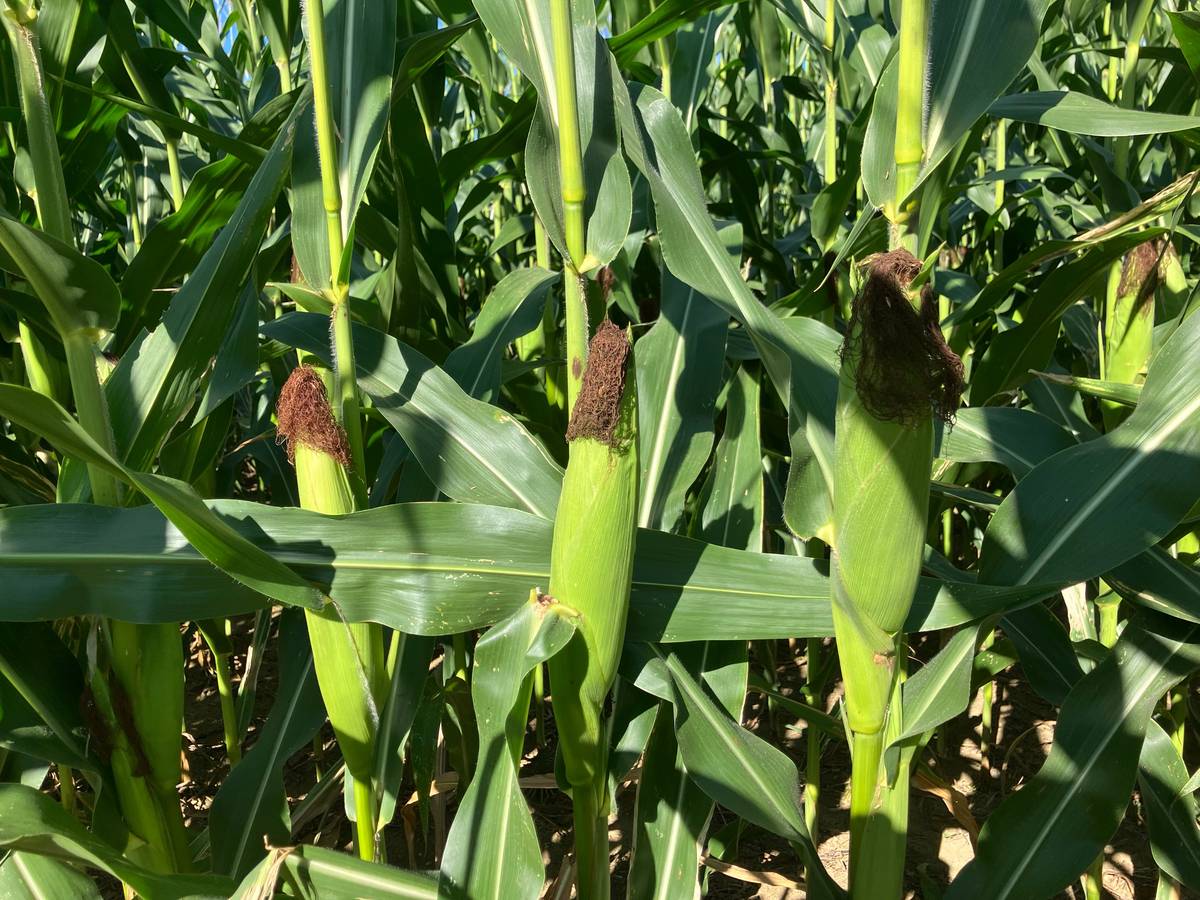

Despite weeks of rain earlier this year, the 2025 growing season is predicted to be about average overall with highly variable yield rates for Lebanon County farmers.
That’s the prediction of Penn State Cooperative Extension agents following the annual Crop Tour of numerous farmer’s fields across the Lebanon Valley last week.
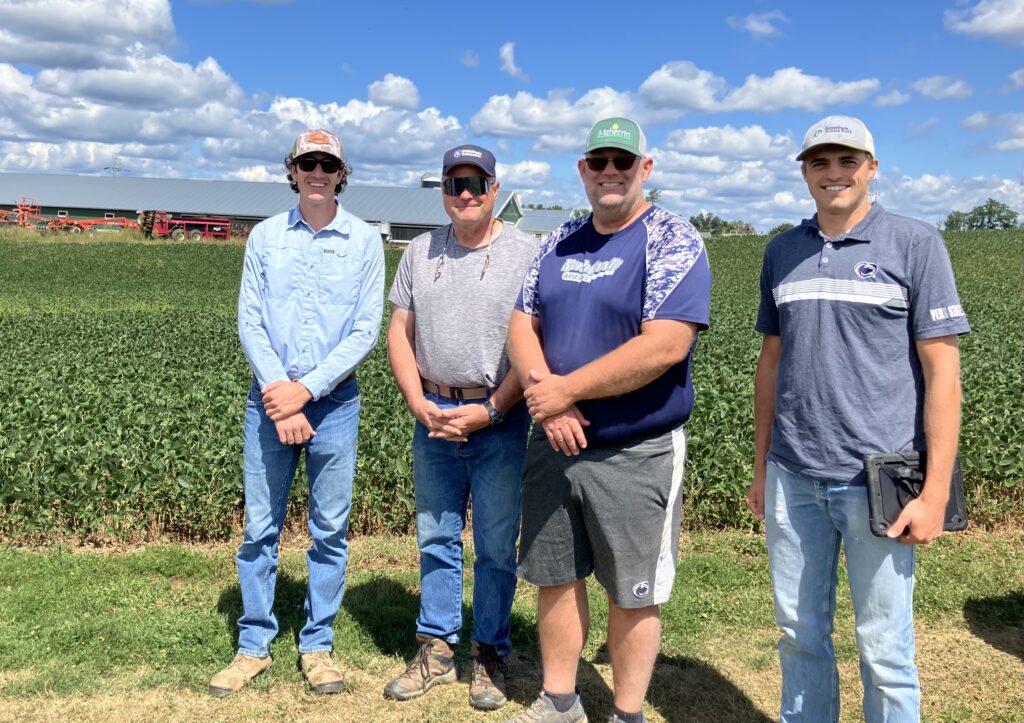
The assessment of 2025 yields is based on taking corn and soybean samples at seven area farms throughout Lebanon County, according to Delbert Voight Jr., senior agronomy extension educator.
“I would say it’s going to be highly variable based on where the rainfall pattern was after the drought. What we saw yesterday at a crop tour was that we had fields that were obviously in pretty decent shape, but if you looked across the field, wherever the rock knobs were, they were dried off and (in) drought,” Voight said.
Voight gave an example of Darren Grumbine’s farm in South Annville Township, where the corn showed lesser yields in some areas while more in other spots despite being in the same general area.
“We took our assessments right at a knob and I’m sure down in his bottom (area) he’s gonna get more yield than that, so it’s gonna be variable,” Voight said. “Just driving from farm to farm, you can see certain fields are fired up. So I kind of think we’re gonna have mostly an average year for most farms. It’s not gonna be a bumper crop.”
Voight pointed to the spotty rains that fell about two weeks ago as playing, as might be expected, a role in the prediction of variable yields for this growing season.
“I think on the south side on some of the heavier soils that got the rains, those rains we just had a couple weeks ago – two or three inches – that you can see as soon as you drive into those areas,” he said. “The corn and the soybeans are much more uniform in those fields, so I think that the name of the game here is that it’ll be variable yields. I think of it as an average to normal crop harvest.”
Voight said some areas of the county still may have what he called a bumper crop.
He noted that areas that had decent rain, including the Schaefferstown area, will see higher yields this year. However, the potential for a bumper crop is still unknown since now is a crucial time for additional rainfall as crops near the end of the growing season.
“There’s a lot of potential but we still need a little bit of rain. I mean, the crop’s not completely made, we could use it but it looks like in the forecast that we’re not gonna get appreciable rain for another week here,” Voight said. “So, that’s gonna shave off some (yield totals). Our estimates go by what’s hanging there right now.”
Voight said now is a crucial time for soybeans whose pods are still filling out in late August and into September.
“Soybeans are a little bit more sensitive right now. So we have the number of beans there, but soybeans are really sensitive to getting rain during pod fill, which we’re in right now. So a lot of these fields will not achieve those yields that we calculated if we don’t get rain, and the beans might be lower than what we expected. But the corn, in general, was at a stage where it’s pretty well almost done. If we get rain it would help a little bit, but not nearly as much as if we got rain on the soybeans,” he said.
The tour – which began in the northern part of the county in Bethel Township on a mostly sunny but coolish and windy morning – snaked its way southward then across the lower portion of the county throughout the day.
It is intended to provide a snapshot of potential harvest figures while also serving as an opportunity to check for disease and insect damage on those participating farms.
It started at Randy Ziegler’s farm near Fredericksburg. Ziegler, standing on a farm lane near rows of corn, said he appreciates being part of the tour. Ziegler said there’s about 220 acres total with about 180 acres comprising the land mass on which the tour took place. He had grown rye on about 80 acres earlier in the year on his farm located on Wildflower Lane.
“It’s something I think that we’re learning some tips through, and I think they’re also learning as we go with different (agricultural) practices,” he said. “I’ve been no-till (farming) here for about 20 years now. This is all we do since we stopped with dairy, having dairy cows here, which is going on for about seven years. I try to do extensive cover cropping to leave as much green in as I can.”
Ziegler said there’s only one true arbiter to gauge harvest totals.
“The first thing I’ll always say is, until the combine gets in, I don’t know about yields even with this checking,” Ziegler said. “So the combine doesn’t lie. We could have some severe weather now until harvest.”
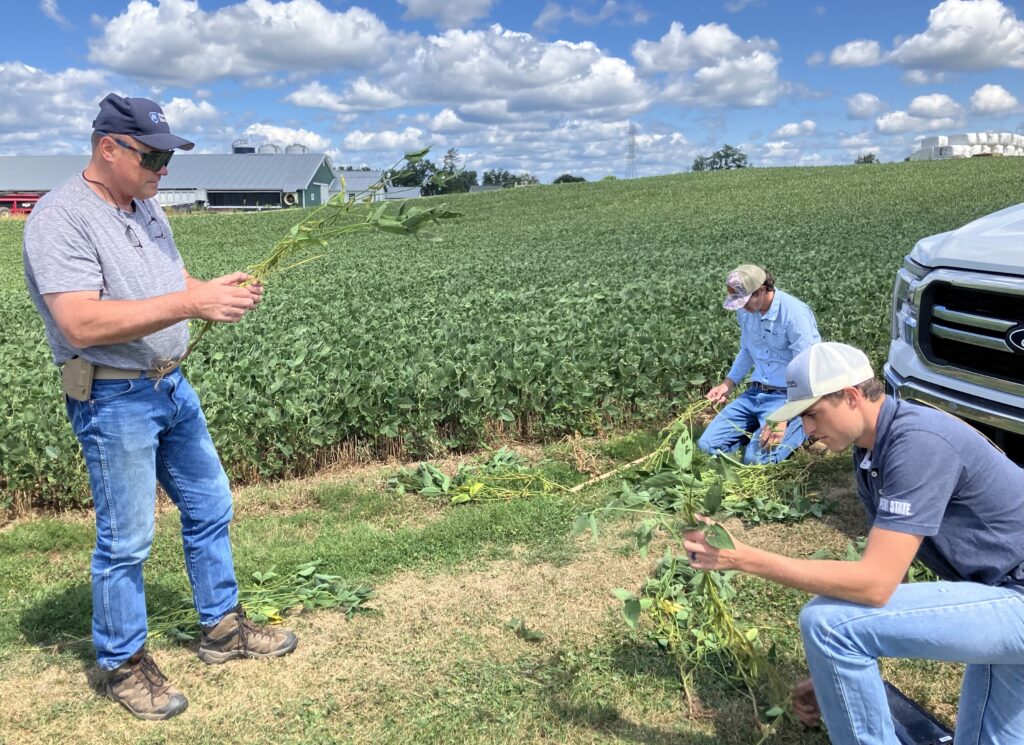
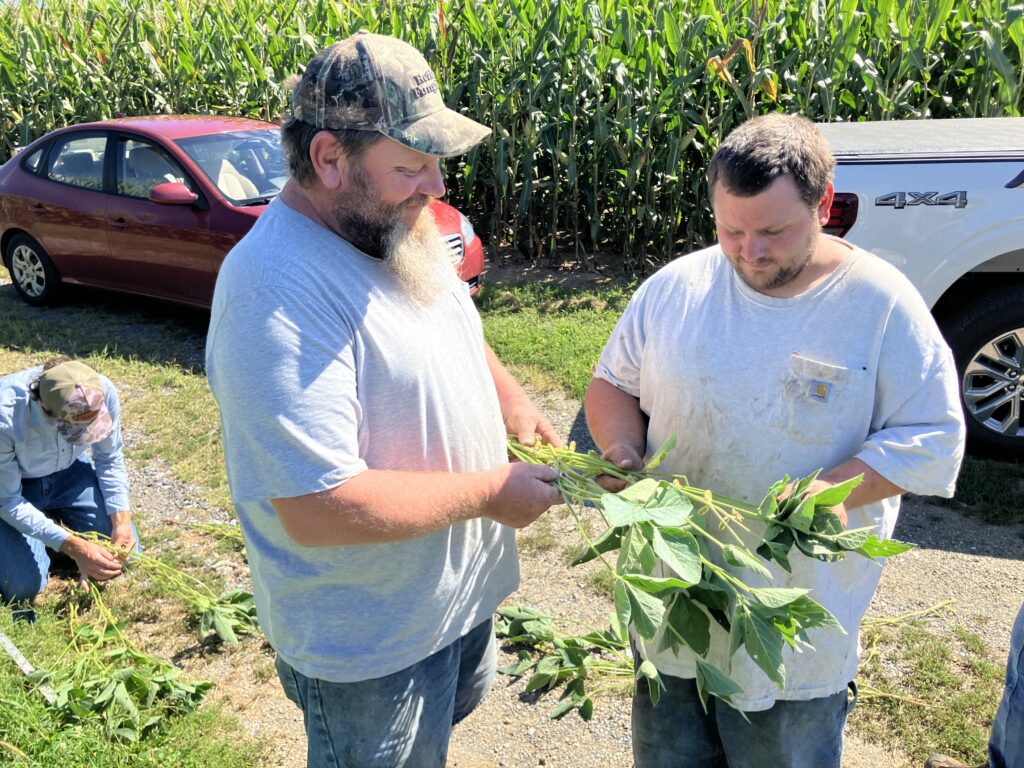
Despite his hesitation, he offered an assessment of his potential yields while the extension agents were counting the number of kernels in an ear of corn and the number of soybean pods on a number of plants that had been pulled from a swath of land.
“I’m going to say this is right now looking like an average to a little above average yield,” Ziegler said. “We were hit with that long drought right around pollination and stuff, which hurt a little bit. And our crops got in a little later this year for what we usually do too.”
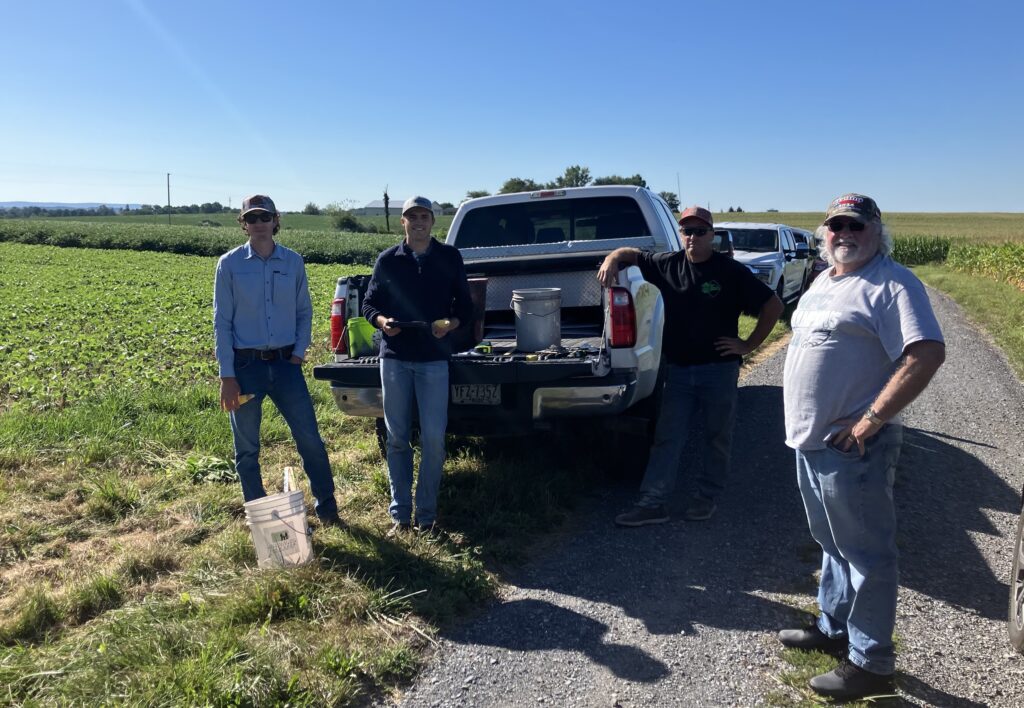
Extension agent Tyler McFeaters asked a number of questions to share with Penn State Extension since the Crop Tour occurs throughout Pennsylvania counties.
He asked when crops were planted, expected maturity date and other questions about inputs at all crop site stops to get a better understanding of this growing season. The data was entered into a portable laptop he carried with him. Before entering the data, the agents grabbed samples from three different areas of a field and then assigned the average as the expected yield amounts.
Mike Long Sr. of the 2100 block of Yordys Bridge Road, Annville, said he’s also grateful that Penn State Cooperative Extension conducts the count. He likes that the tour has incorporated farmland located north of U.S. Route 422, which is less productive because it contains more shale than land south of that dividing line.
“I like that they do come out because years and years ago they used to just hit the better ground, what I call the better ground in Lebanon County, which is south of (Route) 422,” Long said. “I think it gives everybody a good reality. You know, there is a lot of farmland up in this area. It’s not bumper crop (land) like down that way. But, I mean, it shows that we’re doing our best.”
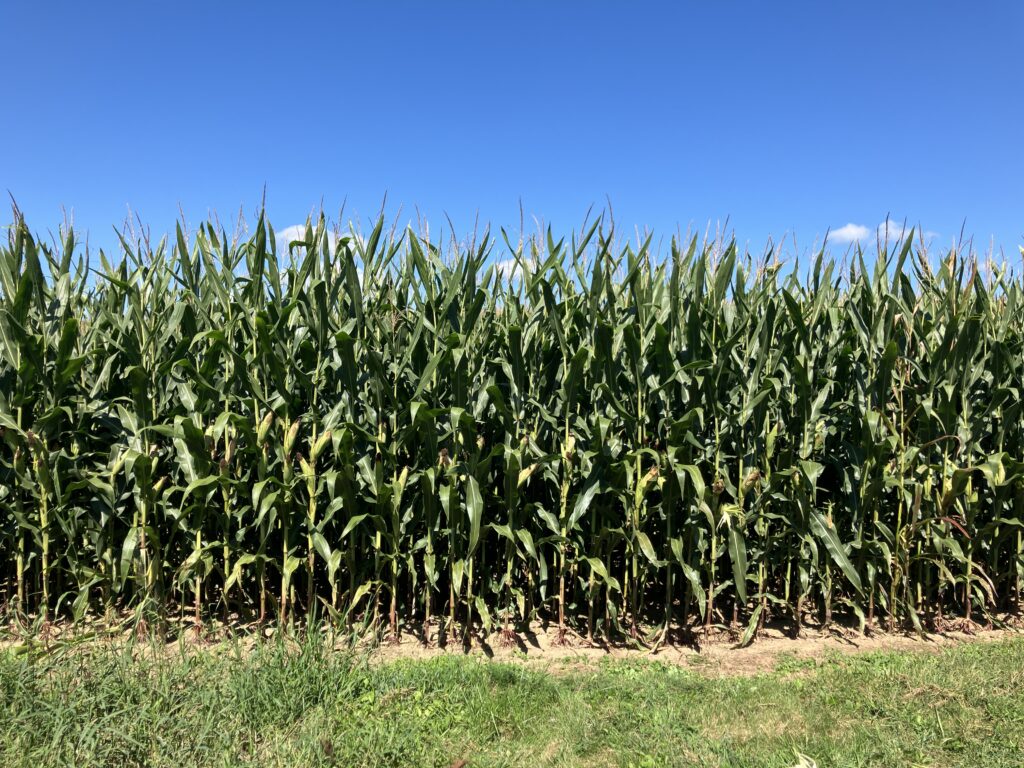
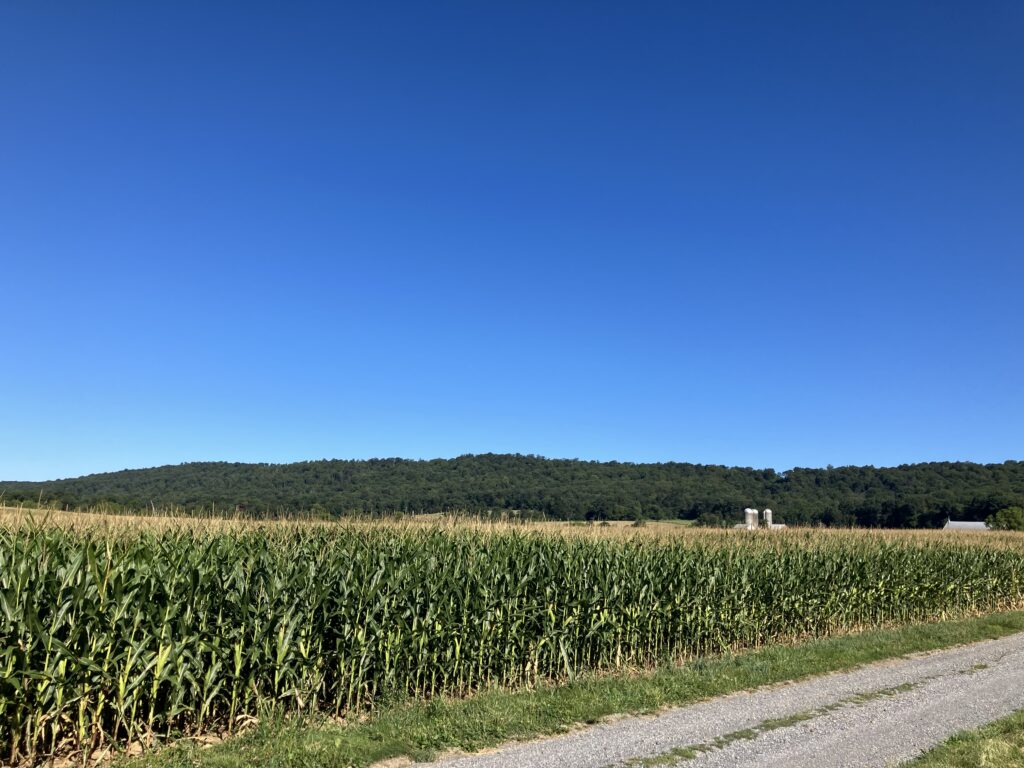
Best might be somewhat of an understatement for Long’s farm, which includes several hundred acres of corn, soybeans and some wheat. Corn stalks on his land towered high into the air, looking to be around 12 feet and higher, deep green leaves and containing large ears of corn.
“I think these ears here, I mean, they are just massive,” added Long.
No matter how well a farmer’s crop does in any given year, they are still beholden to what prices the market is willing to pay. That means they must be shrewd when it comes to production practices and look to limit costs whenever possible, according to Voigt.
“Prices have remained flat while inputs have gone up,” he said, noting that inputs have risen in price by anywhere from 15 to 40 percent, the latter cited as the increase for the cost of diesel fuel. Meanwhile, prices paid for their product have remained relatively flat.
“Machinery up 35 percent, fertilizer, 20 percent, 10 percent for chemicals, diesel fuel, 40 percent, seeds are up by as much as 35 percent,” Voigt said. “Wheat, 15 percent, corn 20 percent, soybeans, 35 percent. Farmers are feeling it. Vet fees are up, the ingredients that go into their feed have gone up. Futures for corn and beans are all pretty much at the same levels that we’ve seen from a few years ago. They haven’t moved.”
Voigt said while inputs are around $5 per bushel of corn, payments are in the $3.80 to $4.50 range, meaning farmers are losing money with the crops they grow.
“The rains in the Midwest have really dropped the prices. We’re seeing some of those corn prices down in the Midwest to the $3.80 range, and then you add the basis on for here so we’re probably in the mid-fours in this area for corn. And in a lot of cases because of the input costs going up, it’s costing a farmer $5.25 per bushel to raise it but they’re selling it for $4.10 or $4.20.”
The tight margins farmers face in the marketplace is a reason why Charlie Bomgardner participates in the tour at his North Annville Township farm, near the intersection of Clear Spring Road and State Route 934.
“The margins are so little that if you’re not up to speed on things, you’re going to get left behind. So you’ve got to be willing to try new things on a certain amount of acres and figure out for yourself what works, what doesn’t work,” Bomgardner said. “That’s why we always put test plots out, so we know which varieties to use next year.”
Bomgardner mentioned two strategies he uses on his land to hopefully help get better yields.
“So we usually plant varieties that are a little bit drought tolerant. In this area, we don’t have the top soil that the areas south of Annville do,” he said. “So we’re 100% no-till, too. That’s to help conserve moisture in the soil.”
Questions about this story? Suggestions for a future LebTown article? Reach our newsroom using this contact form and we’ll do our best to get back to you.
Support Lebanon County journalism.
Cancel anytime.
Monthly Subscription
🌟 Annual Subscription
- Still no paywall!
- Fewer ads
- Exclusive events and emails
- All monthly benefits
- Most popular option
- Make a bigger impact
Already a member? Log in here to hide these messages
Quality local news takes time and resources. While LebTown is free to read, we rely on reader support to sustain our in-depth coverage of Lebanon County. Become a monthly or annual member to help us expand our reporting, or support our work with a one-time contribution. Cancel anytime.