
Prosecutors began the first day of testimony in Kabary Salem’s murder trial by calling witnesses to describe the finding of Salem’s daughter’s body in a Staten Island park and the injuries found in an autopsy a day later.
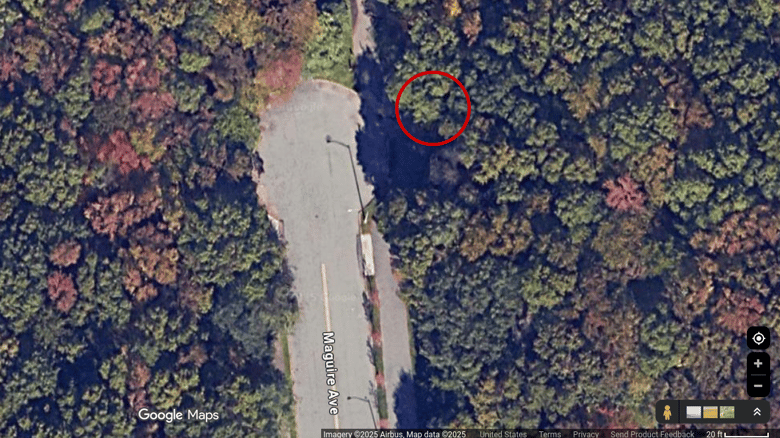
Salem is charged with killing his 25-year-old daughter, Ola Salem, in Palmyra in October 2019, driving her body to Staten Island, then dumping it in a wooded area off a park road cul-de-sac. Prosecutors allege father and daughter had argued violently the day before her body was found.
The charges were originally brought in New York, but transferred to Pennsylvania when medical examiners concluded that Ola Salem was killed in Lebanon County.
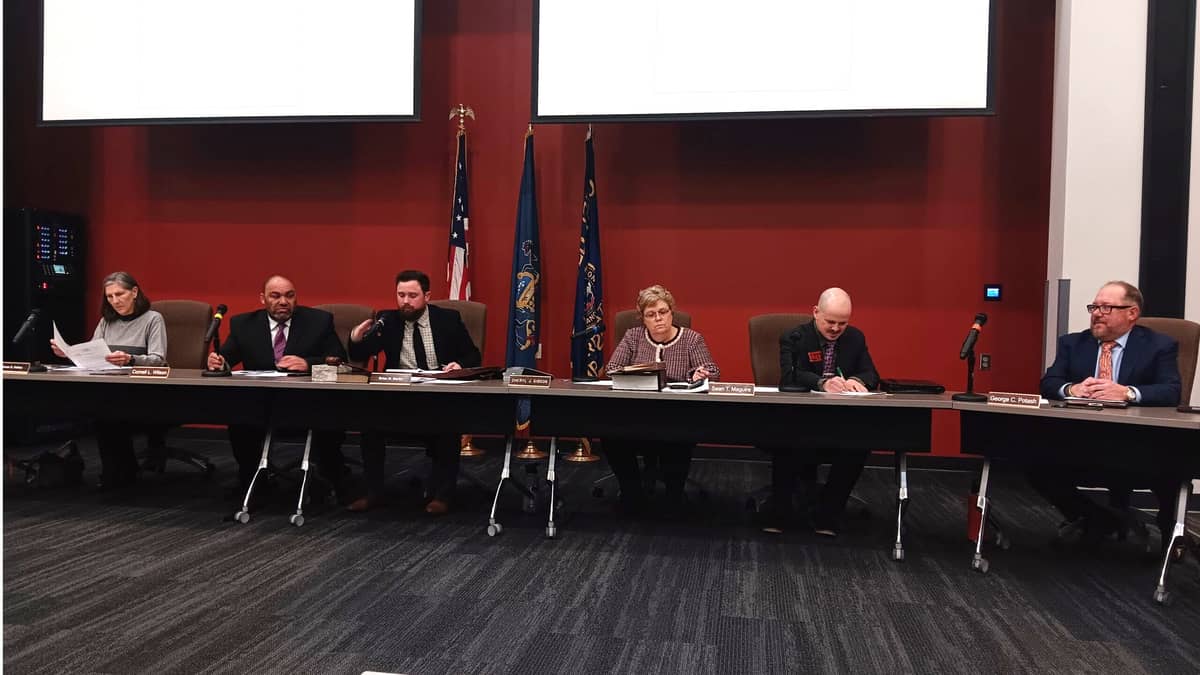
The case is being heard before a jury of seven women and five men in the courtroom of Lebanon County Judge Bradford Charles.
Read More: Trial of former Olympic boxer accused of killing daughter underway in Lebanon
The morning began with the testimony of retired New York City firefighter Steven Vicino. He described hearing a woman scream “something’s over there” as he was walking on a dead-end road in Staten Island’s Bloomingdale Park on the morning of Oct. 24, 2019. Vicino found a body on the ground, covered with sticks, in a wooded area just off a pedestrian walking path and called 911. Prosecutors played the 911 call in which Vicino described the exact location to operators.
Detective Errol Bhagan of the NYPD’s crime scene unit described arriving at 10:20 a.m. and finding officers and a medical examiner already present. Bhagan documented the scene by sketching it and photographing the body and its surroundings. Personal items recovered from the body, including a driver’s license, identified her as Ola Salem.
Bhagan said the soil leading to and around the body was “disturbed.” Nearby, he found a cigarette butt, a piece of clear plastic, the cut end of an extension cord, and shoe prints that he took casts of.
Bhagan also described a photo of personal items found on the body, which he testified included a cigarette pack, coins and currency, marijuana residue, wrapping papers, and the driver’s license.
The last morning prosecution witness was Dr. Anne Hoffa, a forensic pathologist who performed an autopsy on Ola Salem a day after her body was found.
Hoffa, with the aid of autopsy photographs, told the jury that the cause of Ola Salem’s death was “asphyxia, including neck compression,” which stopped blood flow to the brain, and that the manner of death was homicide. She described bruises, scrapes, hemorrhages, and lacerations to her neck, neck muscles, eyes, face, mouth, and legs, all of which she concluded occurred before death and were “acute,” meaning recent.
Hoffa discussed a “linear orange-red scrape on the left side of the neck.” She thought that it may be evidence of ligature, but couldn’t say for sure because strangulations with cords or ropes usually leave marks around the entire circumference of the neck. Hoffa said the linear wound could also be consistent with an object striking the neck.
The pathologist emphasized the presence of “petechiae” around Ola’s right eyelid. Petechiae “are often associated with pressure on blood vessels” she said. She also described scrapes and abrasions inside and outside the mouth, accompanied by a torn frenulum, the small fold of tissue that connects the upper lip to the jaw.
Hoffa concluded that the presence of petechiae and an injured frenulum were “signs of a struggle associated with neck compression.”
Toxicology reports reviewed by Hoffa showed the presence of a “low level” of alcohol, inactive marijuana byproducts, and amphetamines. The pathologist explained that Ola Salem had a prescription for Adderall, which is an amphetamine.
Finally, Hoffa discussed livor mortis found on Ola Salem’s body, which is skin discoloration caused by the pooling of blood at low points inside a dead body due to gravity. Livor mortis can be an indication of the positions a body may have been in after death, and of how long someone has been dead.
Police had earlier testified that the body was found face down in the park, but livor mortis was also found on the decedent’s back, suggesting that it might have been in a different position between the time of death and discovery. Hoffa concluded that the location and advanced state of livor mortis that she found showed that the body was on its back longer than on its stomach after death.
On cross examination, defense attorney Jay Nigrini, referring to a piece of electrical cord found near the body, got Hoffa to concede that the linear wound on the left side of the neck could be evidence of ligature strangulation, and that the wound probably occurred “before or around the time of death.” Nigrini had suggested in his opening statement that Ola may have been killed in New York by someone other than the defendant.
Hoffa also said that, from the wounds and injuries she found, she couldn’t say whether the attacker came at her from the front or back, or if hands were used to choke her.
Tuesday afternoon’s session began with the testimony of commonwealth witness Darryl Valinchus, whose company Telefore Inc. analyzes communication data, such as GPS records, and converts them into “geo-spatial visualizations” – in other words, creating maps of an object’s location and movement over time.
Valinchus used GPS data obtained from a rented Toyota Camry that Kabary Salem used in and around Palmyra to map the defendant’s driving between Oct. 22 and 25, 2019.
On Oct. 24, between 2:15 and 4:48 a.m., Valinchus said his maps showed that the Camry drove from the Knights Inn in Palmyra, where Kabary and Ola Salem were living, to the cul-de-sac in Bloomingdale Park, Staten Island, feet from where Ola’s body was found. Its ignition was turned off at 4:48 a.m., then turned back on at 4:59 a.m. at the same location.
From there, Valinchus testified that his GPS mapping shows the Camry drove away and, except for a 10-minute stop at a New Jersey Wawa store, drove straight back to the Palmyra Knights Inn, arriving at 7:37 a.m., and then on to the restaurant at 615 E. Main St. that Kabary and Ola were preparing to reopen.
Earlier testimony suggested that Ola Salem’s body was found in the park between between 9 and 10 a.m. on the morning of Oct. 24, 2019.
Tuesday’s last witness was Tuch Smith, who became acquainted with Kabary Salem, whom she knew as “Barry,” when they worked together at a restaurant in Waynesboro years earlier. In October 2019, she was helping Kabary and Ola Salem reopen the restaurant at 615 E. Main St., Palmyra.
Smith testified that she was in the Palmyra restaurant’s restroom around lunchtime on Oct. 23 when she heard Kabary and Ola arguing loudly in Arabic. At one point, a chair was thrown against the restroom door so violently that it knocked a hole in it.
Smith told the jury that she and Ola drove away in her car to let father and daughter separate and cool down. They drove aimlessly for about two hours, getting lost in the process. Along the way, Ola drank a beer she had in her purse and offered Smith one, which she refused.
They returned to the restaurant after getting a worried call and directions from “the guys at the restaurant.” When they got back, Smith testified that Kabary and some other men were still there.
Smith testified that she stuck around the restaurant until about 7 p.m. on Oct. 23, and that Kabary, Ola, and some other men were there when she left.
That was the last time she ever saw Ola, Smith told the jury.
The next morning, Oct. 24, Smith said she saw Kabary and other workers at the Palmyra restaurant, but not Ola.
On the witness stand, Smith told the jury that “I asked Barry where is Ola,” and he replied, “She’s still sleeping” at the Knights Inn. However, on cross-examination by Nigrini, Smith admitted that she told New York investigators on Oct. 25 that “I’m not positive Barry told me Ola was sleeping,” and “I assume Ola was sleeping.”
Nigrini also confronted Smith with her earlier testimony before a New York grand jury investigating Ola’s killing where she testified, “I believe Barry told me that Ola was sleeping.”
Trial was scheduled to re-convene on Wednesday morning with more prosecution witnesses.
Questions about this story? Suggestions for a future LebTown article? Reach our newsroom using this contact form and we’ll do our best to get back to you.
Support Lebanon County journalism.
Cancel anytime.
Monthly Subscription
🌟 Annual Subscription
- Still no paywall!
- Fewer ads
- Exclusive events and emails
- All monthly benefits
- Most popular option
- Make a bigger impact
Already a member? Log in here to hide these messages
Trustworthy local news is built on facts. As Lebanon County’s independent news source, LebTown is committed to providing timely, accurate, fact-based coverage that matters to you. Support our mission with a monthly or annual membership, or make a one-time contribution. Cancel anytime.