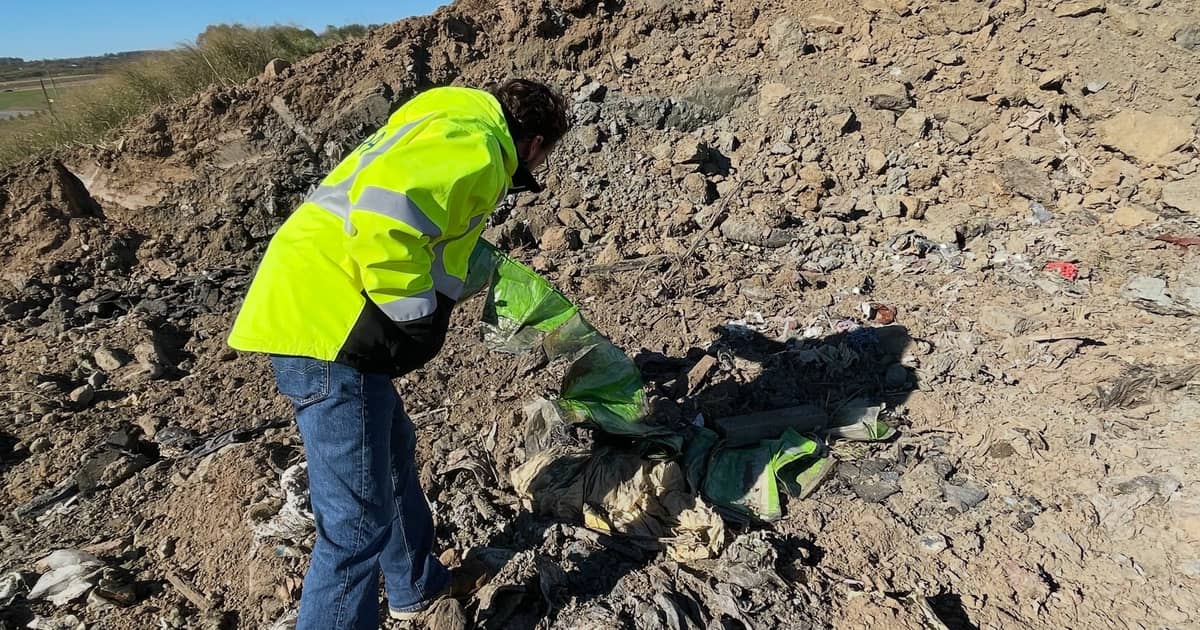

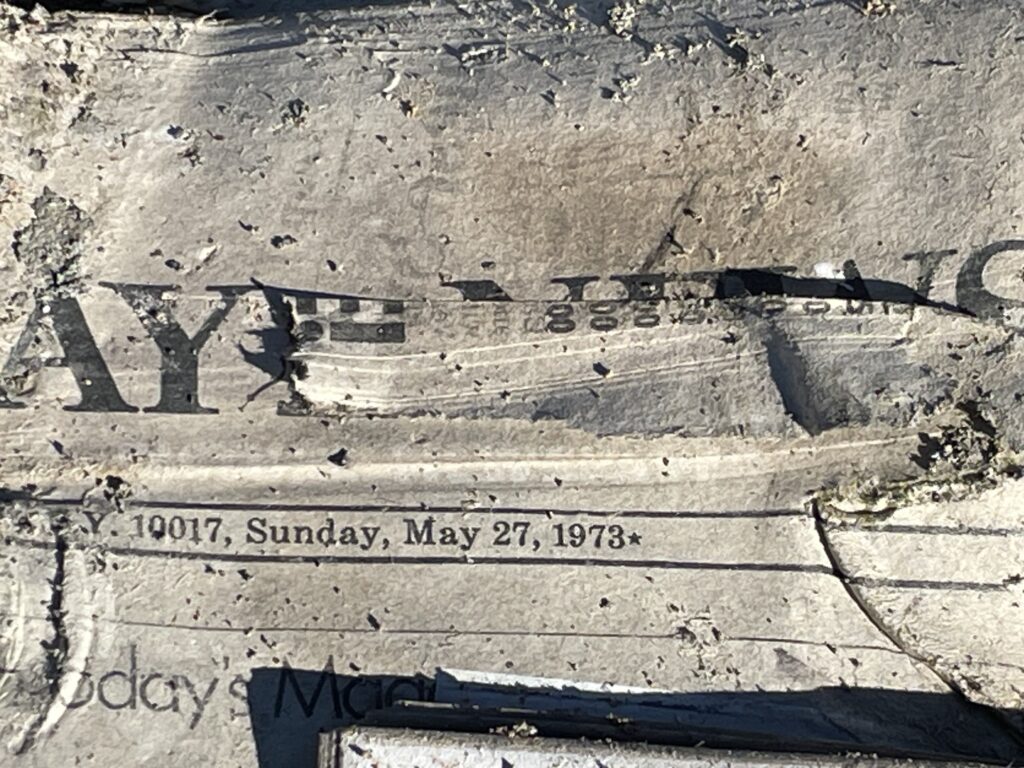
It’s an archaeologist’s goldmine: Decades-old glass bottles alongside a still-readable issue of the May 27, 1973, Lebanon Daily News.
Items like those are being unearthed daily by the Greater Lebanon Refuse Authority at the site of a landfill that operated from the 1970s to the 1990s. While some of its trash has deteriorated, much has not.
“A landfill is long-term, safe storage of waste, so it is not polluting the environment,” said GLRA staff engineer Jim Zendek. “While some decomposition occurs, it’s a lot less than you might think.”
Left outside and unprotected from weather, waste will decompose. But landfills are closed environments, and waste is locked in. Additionally, landfills are anaerobic, or oxygen-free, further hampering decomposition.
“The vast majority of the deposited waste does not go anywhere,” Zendek said.
A look at what GLRA employees have dug up confirms that: tires, ribbons of clothing, cans, newspapers — all discarded and somewhat preserved.
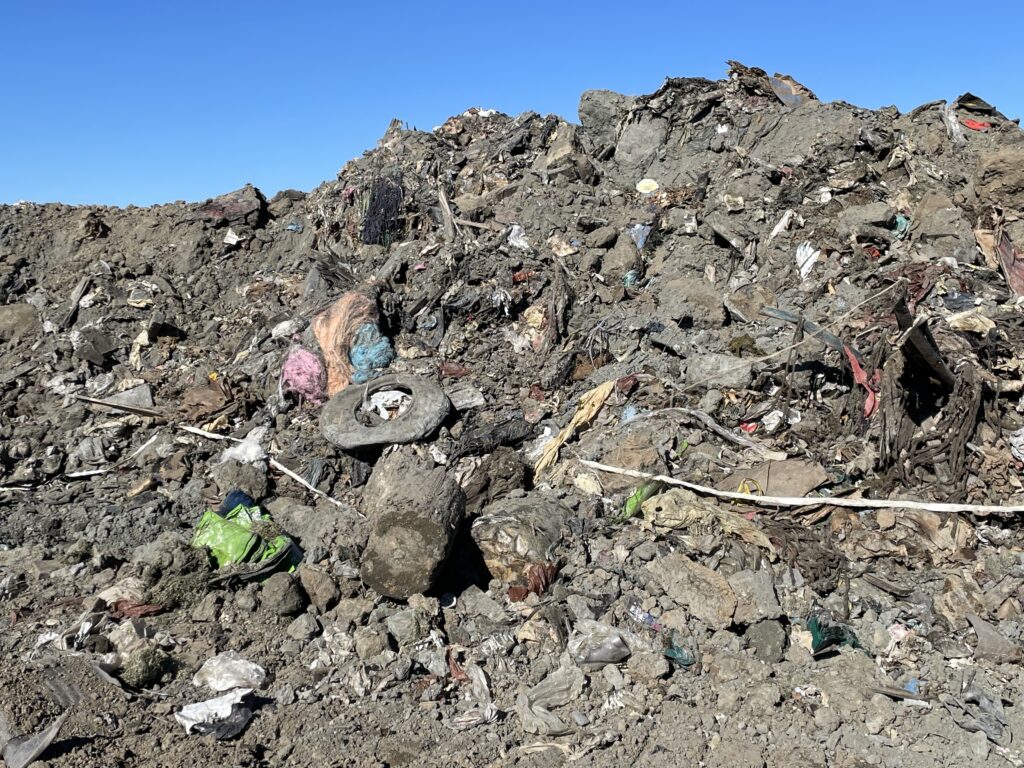
Missing are some items commonly found in trash today: plastic water bottles, plastic wrapping from purchased goods, disposable diapers.
Since the excavation started about a month ago, GLRA employees have removed several 10-foot-deep wedges of the decades-old waste, trucking it to the Schilling landfill on the south side of Russell Road.
The waste removal is part of prepping cell 9 at GLRA’s new 48-acre Heilmandale landfill north of Russell Road. “New” is a slight misnomer as Heilmandale is being constructed or piggy-backed on the unlined landfill currently being exhumed.
Back in the 1970s, refuse authorities essentially dug holes into which truckloads of trash were dumped. At day’s end, the waste would be covered with several inches of soil to keep the refuse in place.
Starting in the 1990s, landfill construction changed as the waste industry realized it could and needed to do better, Zendek said.
“Landfills are broken into segments or cells, so they can have liners and sump pumps,” said Zendek of the industry-wide change.
The Heilmandale landfill will eventually have six cells, only one of which at a time is a repository for trash. About 8 to 9 acres in size, each cell can accept garbage for four to five years.
Cell 8, also located on the Heilmandale landfill, started with a similar excavation of the older landfill, a project that cost GLRA about $1.4 million, Zendek said.
This time, rather than contracting for that work, GLRA opted to do it in-house.
“We are digging it ourselves and doing it earlier because our removing the waste in the old landfill can significantly reduce the cost,” said Zendek, who estimated about 800 cubic yards of waste are being removed each day.
Right now, the waste from the original landfill is being trucked across the street to the Schilling landfill, GLRA’s first lined landfill that opened in 1991 and was supposed to reach capacity in 2018.
But daily loads of trash compress that which is below, and Schilling has not yet reached its permitted elevation. When that occurs, the excavated waste from cell 9 will go into the adjacent cell 8, Zendek said.
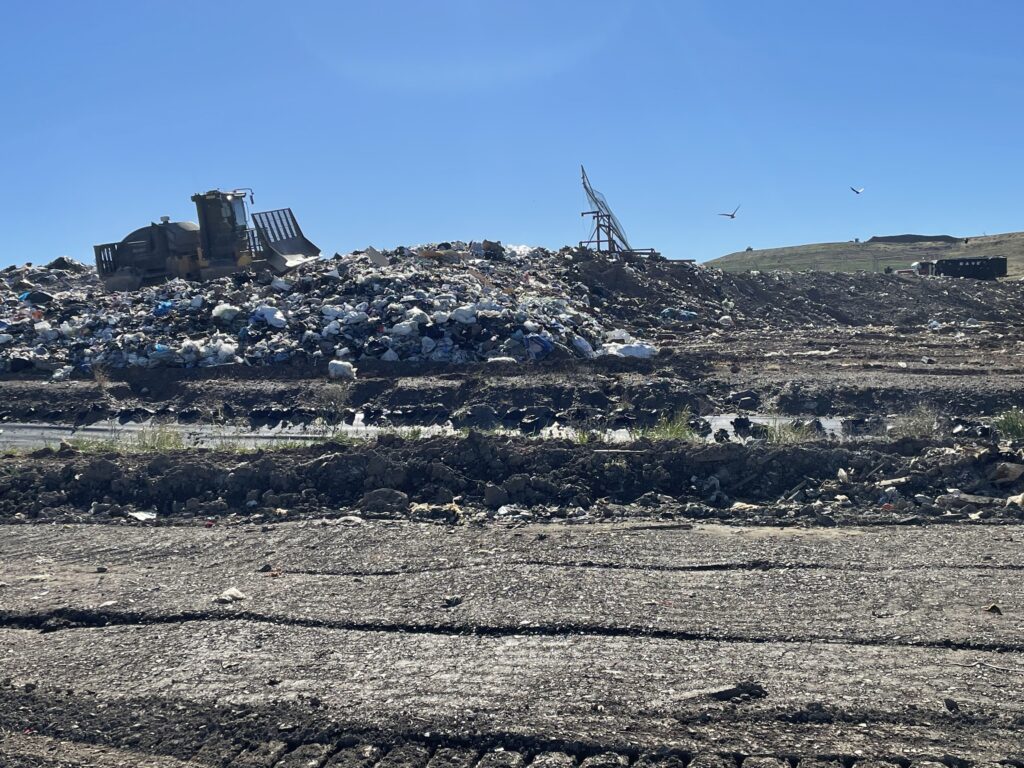
GLRA estimates it handles about 500 tons a day collected only from Lebanon County residents, commercial businesses and industries.
“A landfill is not a magic cure to make waste disappear,” Zendek said. “But it is the best option Lebanon County for safely handling and storing waste.”
Questions about this story? Suggestions for a future LebTown article? Reach our newsroom using this contact form and we’ll do our best to get back to you.
Support Lebanon County journalism.
Cancel anytime.
Monthly Subscription
🌟 Annual Subscription
- Still no paywall!
- Fewer ads
- Exclusive events and emails
- All monthly benefits
- Most popular option
- Make a bigger impact
Already a member? Log in here to hide these messages
Strong communities need someone keeping an eye on local institutions. LebTown holds leaders accountable, reports on decisions affecting your taxes and schools, and ensures transparency at every level. Support this work with a monthly or annual membership, or make a one-time contribution. Cancel anytime.