
Lebanon County officials began Wednesday to collect public input to craft its new comprehensive plan that is designed to help guide development in the Lebanon Valley for the next 10 to 15 years.
A comprehensive plan is a long-range policy document that sets a vision for the future, outlining strategies for growth and development across various sectors, including land use, housing, transportation, infrastructure, economic development, and environmental protection.
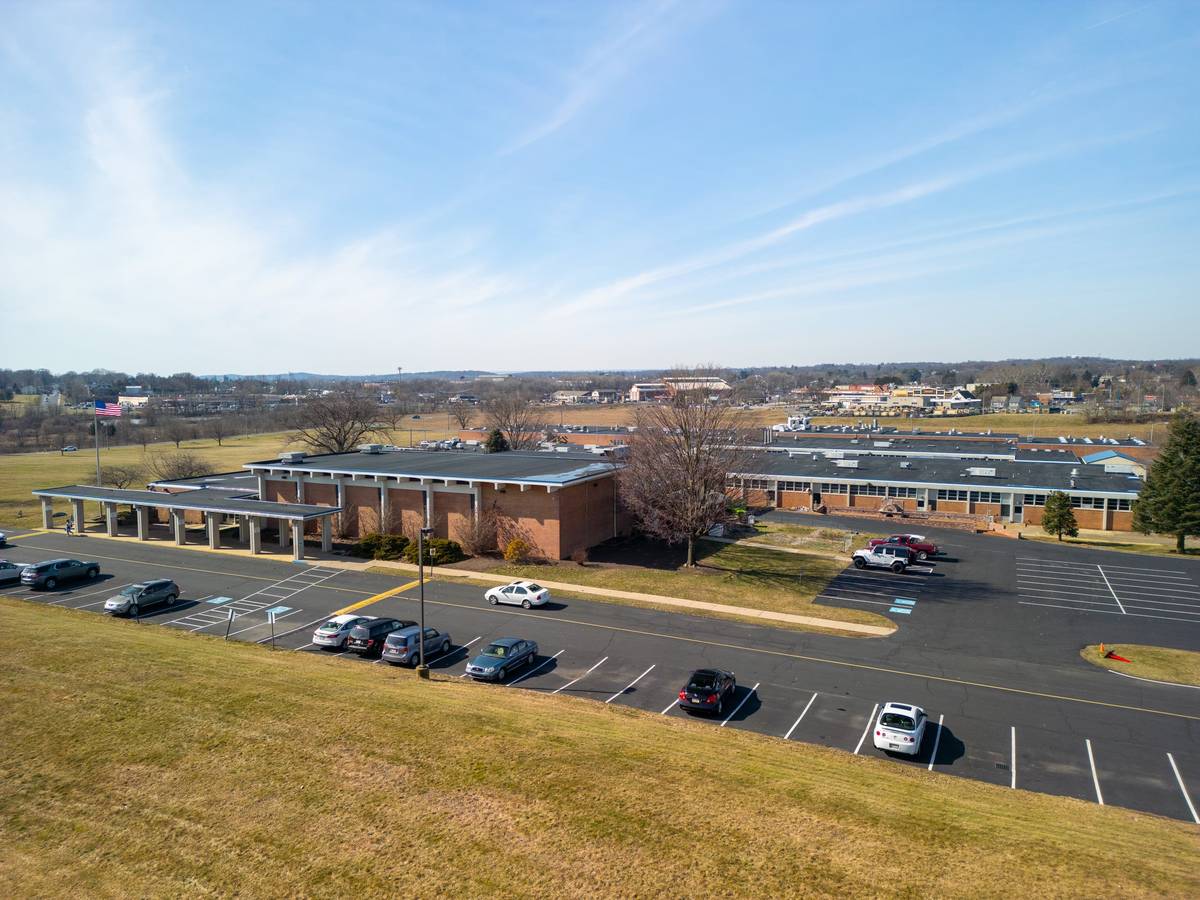
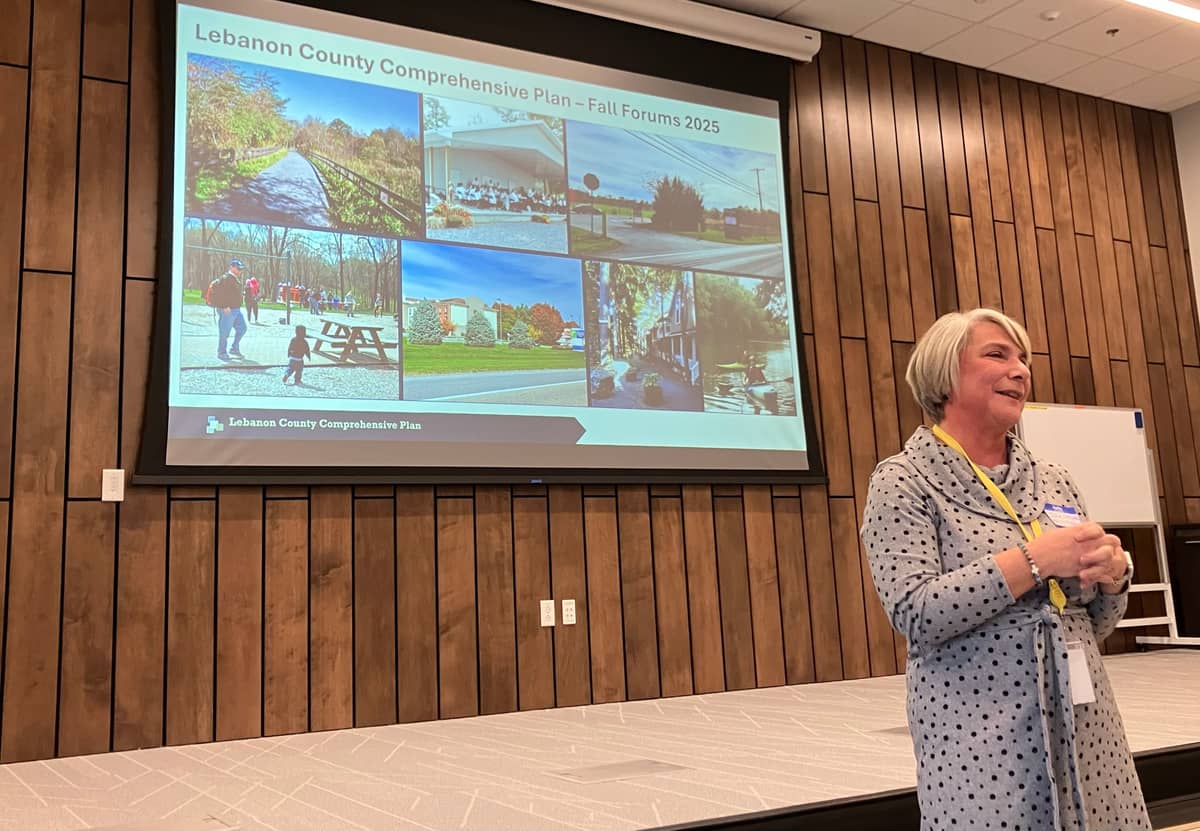
About 40 people attended an informal discussion and information-gathering session at the Lebanon County Department of Emergency Services building during a meeting sponsored by the Lebanon County Planning Department.
Julie Cheyney, director of Lebanon County Planning, noted at the beginning of the session that Lebanon County is one of the fastest growing areas in Pennsylvania.
“We are not a stagnant county, and with that growth comes change – and that is one of the things we want to discuss with you tonight,” Cheyney said.
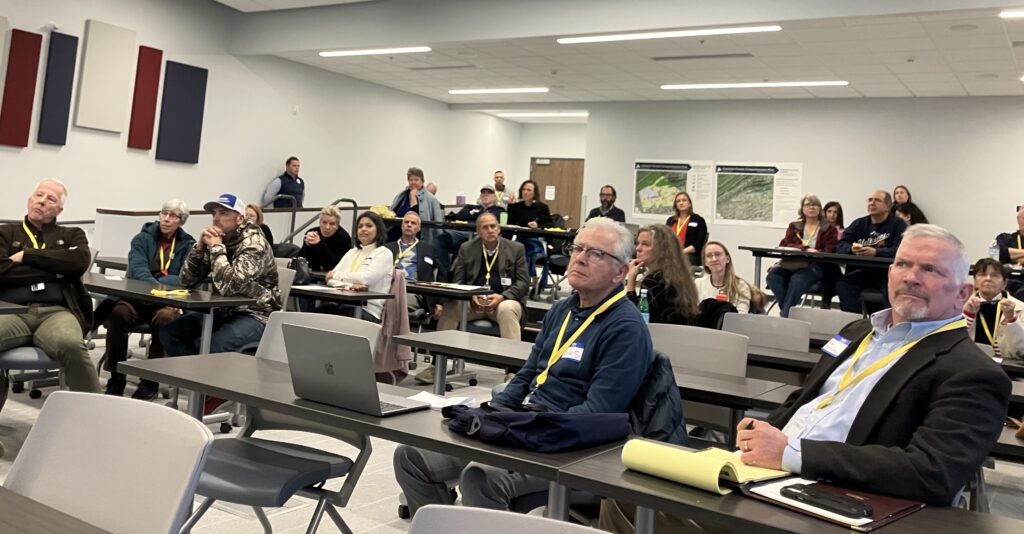
Cheyney noted during her remarks that ran about 8 minutes that growing pains causes pain for some municipalities.
“Demand for more services, various needs for development and infrastructure, and that’s really, really the point and why we’ve opened this up at this part of the process,” Cheyney said. “We really want to know what you think about where you live. What you like about living here. What things are concerning. Things that you would like to provide feedback to us about those concerns.”
Cheyney highlighted some recent developments over the past 10 years, including North Cornwall Commons near the DES building in North Cornwall Township and ongoing efforts to finish the Lebanon Valley Rail Trail, which will run from Swatara State Park in the north to the Lancaster County line near Colebrook when completed in the next few years.
Concerning recent growth, Cheyney said Palmyra and Annville school districts are growing due to residential development within their borders, including in North Londonderry and South Annville townships.
“We have many new housing developments that are happening right now, and that’s kind of the hot spot as far as housing developments are concerned in Lebanon County,” Cheyney said, adding that the commercial area known as North Cornwall Commons includes a number of mixed uses.
Despite the development, she stated that Lebanon County has remained in touch with its agricultural roots.
“Lebanon County is very much aware of its agricultural roots, and there’s been lots of preservation of agricultural lands over the past 30 years,” Cheyney said. “We have done about 188 farms and over 21,000 acres of farmland preservation. So we’re obviously very proud of that heritage and we want to continue to look at preservation there.”
Read More: Pa. & Lebanon Co. officials celebrate being top farmland preservation state
Cheyney then shifted gears from highlighting what’s occurred the past decade towards a focus on the county’s future.
“The comprehensive plan will cover the next 10 years and what will that look like. How will we choose to develop over the next 10 years?” she asked. “I think that although we’re seeing a lot of development in the county, you have to remember that this is development that’s been planned for. You see farmland and you feel that it should remain farmland, not realizing that the underlying zone for those areas is meant (already zoned) for development.”
While those zones are what Cheyney said were already in the mix, the purpose of these information-gathering sessions – including a virtual session on Thursday – is to decide what kind of future local residents want for Lebanon County.
She noted that in addition to these meetings, county officials will meet with municipal leaders to craft a plan that will serve as a roadmap for the future.
“What is our county going to look like in the next 10 to 15 years? Again, that’s a very, very vital part of why we invited you here today,” said Cheyney, who then added there will be additional future public forums along with meetings with municipal government officials over the next six months. “Right now we’re looking at the present and in the future with more forums, probably next summer. We’re going to look at where we are right now and later in ’26 we’ll get more information on that front of where we’re going.”
Michelle Brummer, senior planner with GFT (formerly Gannett Fleming), the company hired to facilitate discussion, said remaining growth-neutral isn’t feasible.
“What we want to do is plan and manage for future development. We can’t stop it. You can’t stop development. We can’t say, ‘Stop it.’ Our population grows, our land area does not,” Brummer said. “We need to address how to plan to manage more, and more varied conditions, whether that be in our population, our economy, our service demands, etc.”
Brummer presented a plethora of statistical data about Lebanon County to help participants form questions about the area’s future.
She said the county’s population went from 120,327 residents in 2000 to 143,592 as of the last census, adding that about 30% of the population rents their residence while the other 70% are homeowners.
Between 8 and 32% of the county’s population falls into a classification known as ALICE, or those who are asset-limited, income-constrained, and employed.
“These are people who are better off than poverty (about 8%) but find it difficult to make ends meet,” Brummer said. “ALICE is not limited to a certain age group, household structure, and is not bound by racial constraints.”
Poverty is below 10%, Brummer said, noting that ALICE is not limited to age or household structure and not bound by racial constraints.
Just over 67,000 of the county’s resident workers in 2022 is up from 62,467, a statistic that Brummer said officials are still drilling down to understand the data. About 25,626 live and work in the county, 41,381 residents live here and work elsewhere, and 25,408 commute into the county but live outside of it.
Brummer noted that while unemployment fluctuates due to a variety of factors, it was at 3.2% in 2000 and was at 2.9% in 2024. The top five county employers listed in her presentation were the federal government, Farmer’s Pride, Walmart, Good Samaritan Hospital, and Cornwall-Lebanon School District.
Agricultural and forest products, she said, have been “a real economic engine for a very long time, asking what will it look like in the future, and what kinds of trends will come to the forefront. She mentioned greenhouse production of products as a possible trend, adding the goal of these meetings is to “try and understand where that industry is headed in terms of development patterns.”
Brummer noted infrastructure, housing, recreational needs, and transportation are some of the focal points of the comprehensive plan.
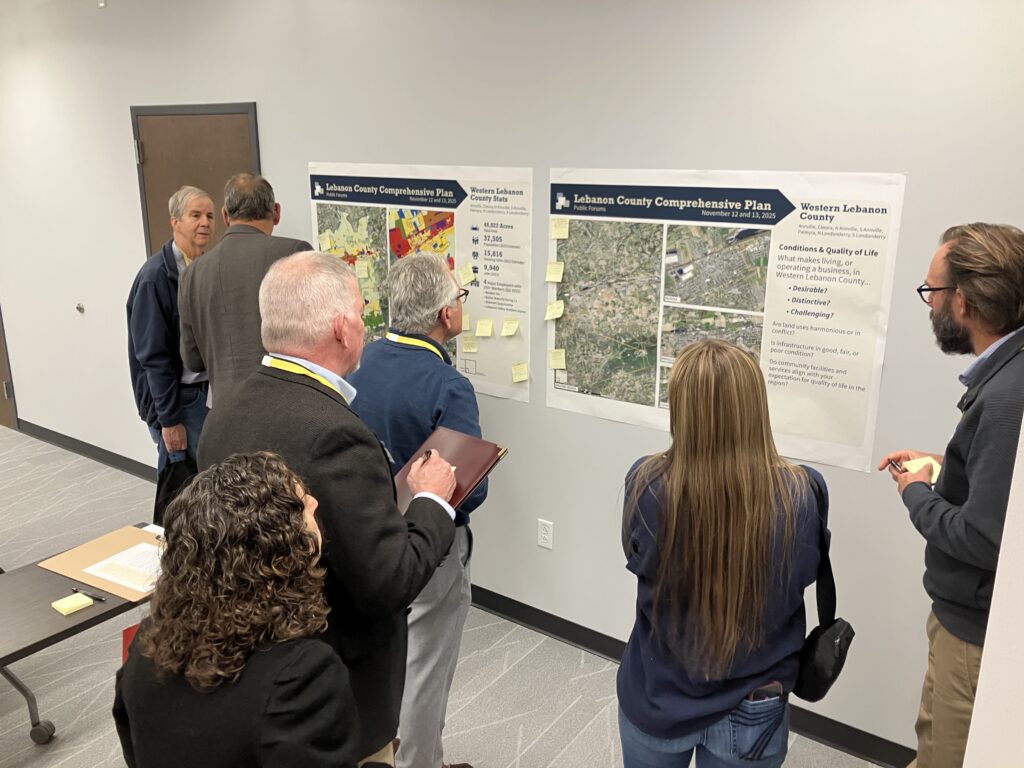
Following her 25-minute presentation, attendees were asked to break into four groups, divided by region into central, western, eastern, and northern parts of the county, so residents could share their likes and dislikes with county officials. GFT employees served as facilitators.
It was noted that some people attended as representatives of their respective community organizations.
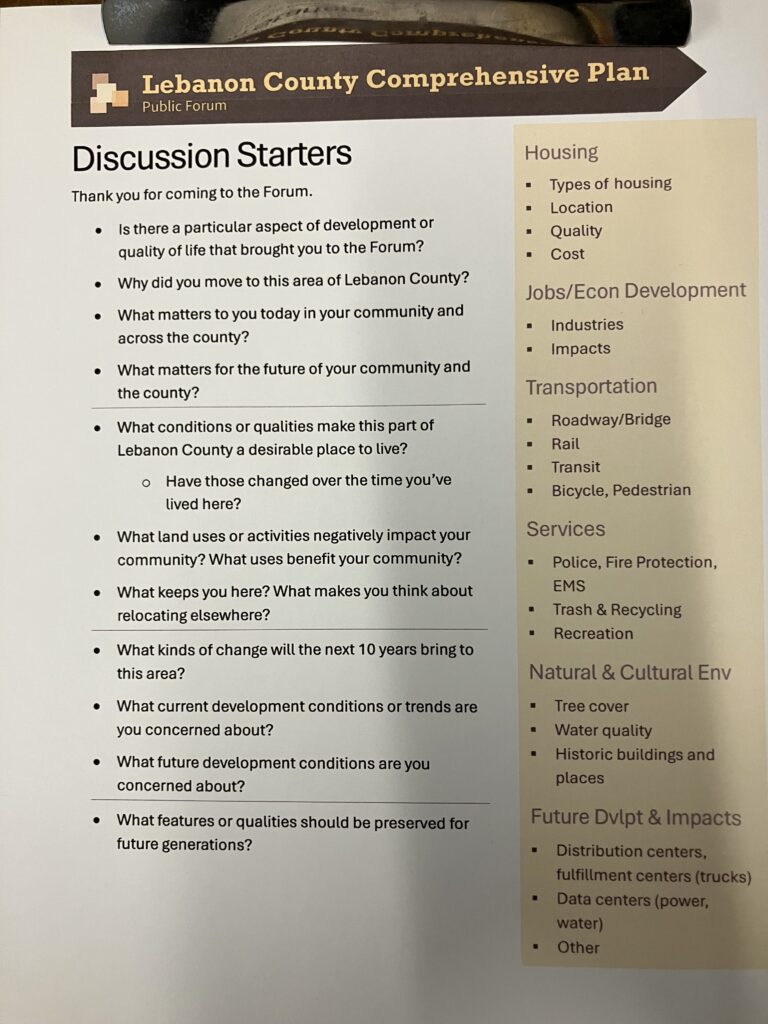
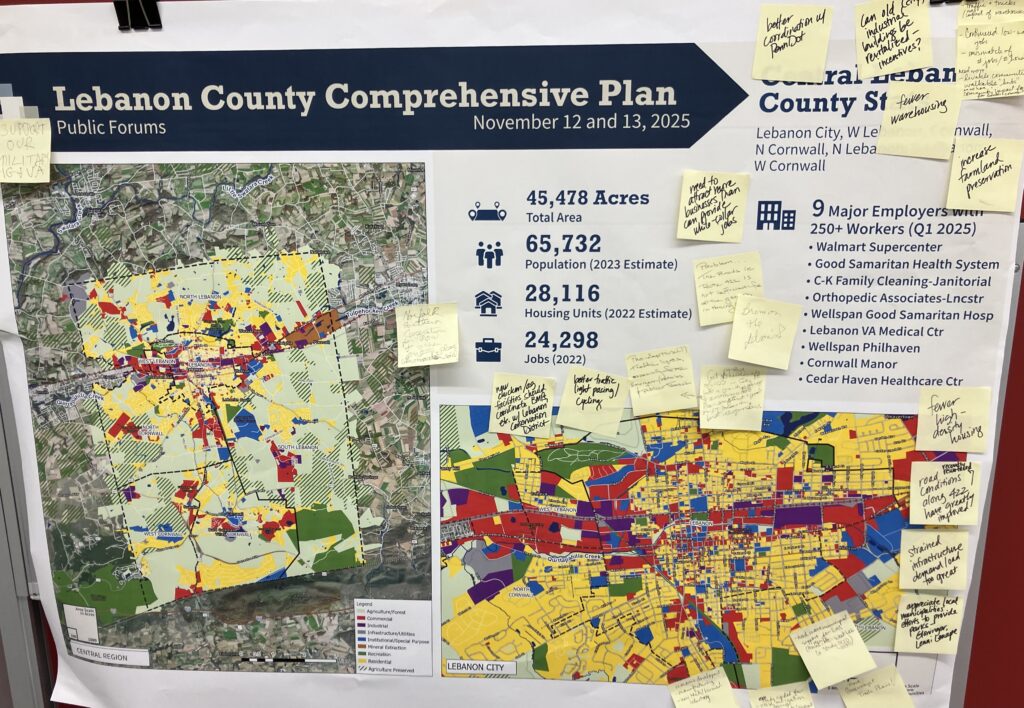
As information was shared, notes were written onto yellow sticky notes and placed on a map for those areas. Notes ranged from concerns about agricultural needs to transportation issues and other concerns like too many warehouses within the county. Numerous notes highlighted what participants like about their communities or Lebanon County, too, which was a part of the exercise as well.
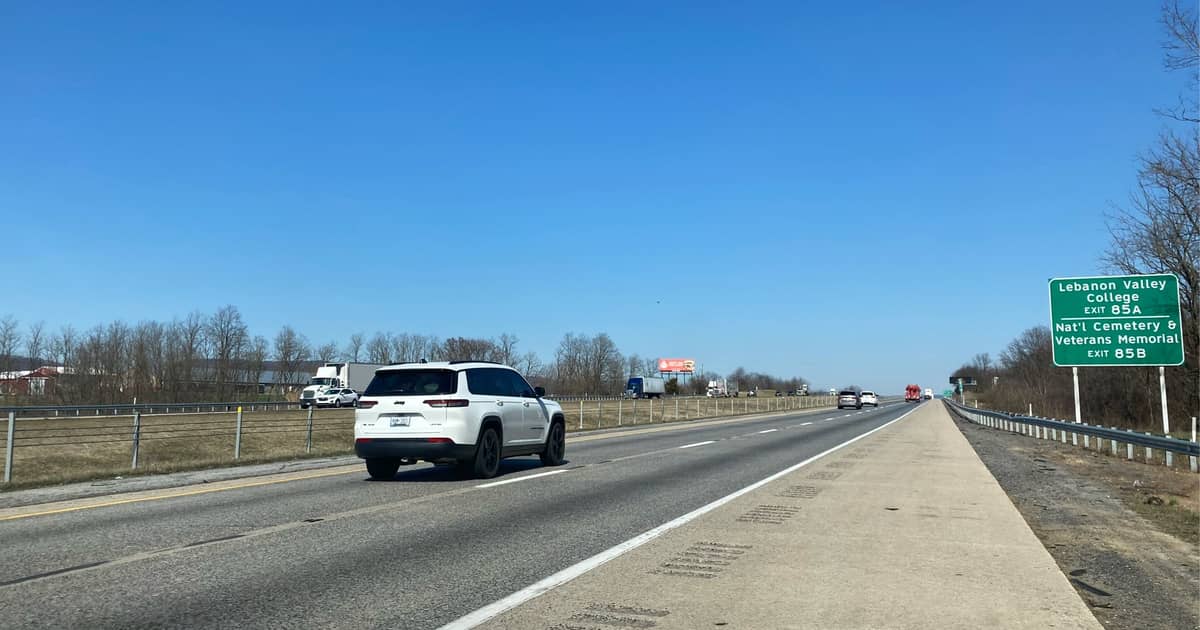
Dean Wolfe of Annville said he’s lived there his whole life, adding he, like many, have concerns about traffic congestion on U.S. Route 422.
“It used to be a lot better years ago but now there’s always traffic congestion, especially during certain hours of the day,” Wolfe said. “It is a small town, and I think a lot of the older and younger people know each other.”
Following the session, which ran past the allotted two-hour window due to ongoing discussion, Cheyney told LebTown she was ecstatic with the initial input from participants.
“Fantastic, I was very, very pleased,” Cheyney said. “I was happy with the diversity of people who were representing all aspects of Lebanon County. They were very engaged, their comments were well thought out, so I was thrilled.”
Next steps
Information from the public and virtual sessions will be posted on the county’s comprehensive plan website near the end of the month, and the site will continue to be a repository for county residents to follow developments and keep current with content as the process moves forward over the coming months.
Soon, a form will be placed on the county’s website for individuals who are unable to attend a public session to include their comments for county planners.
Questions about this story? Suggestions for a future LebTown article? Reach our newsroom using this contact form and we’ll do our best to get back to you.
Support Lebanon County journalism.
Cancel anytime.
Monthly Subscription
🌟 Annual Subscription
- Still no paywall!
- Fewer ads
- Exclusive events and emails
- All monthly benefits
- Most popular option
- Make a bigger impact
Already a member? Log in here to hide these messages
Our community deserves strong local news. LebTown delivers in-depth coverage that helps you navigate daily life—from school board decisions to public safety to local business openings. Join our supporters with a monthly or annual membership, or make a one-time contribution. Cancel anytime.