
This article was funded by LebTown donors as part of our Civic Impact Reporting Project.
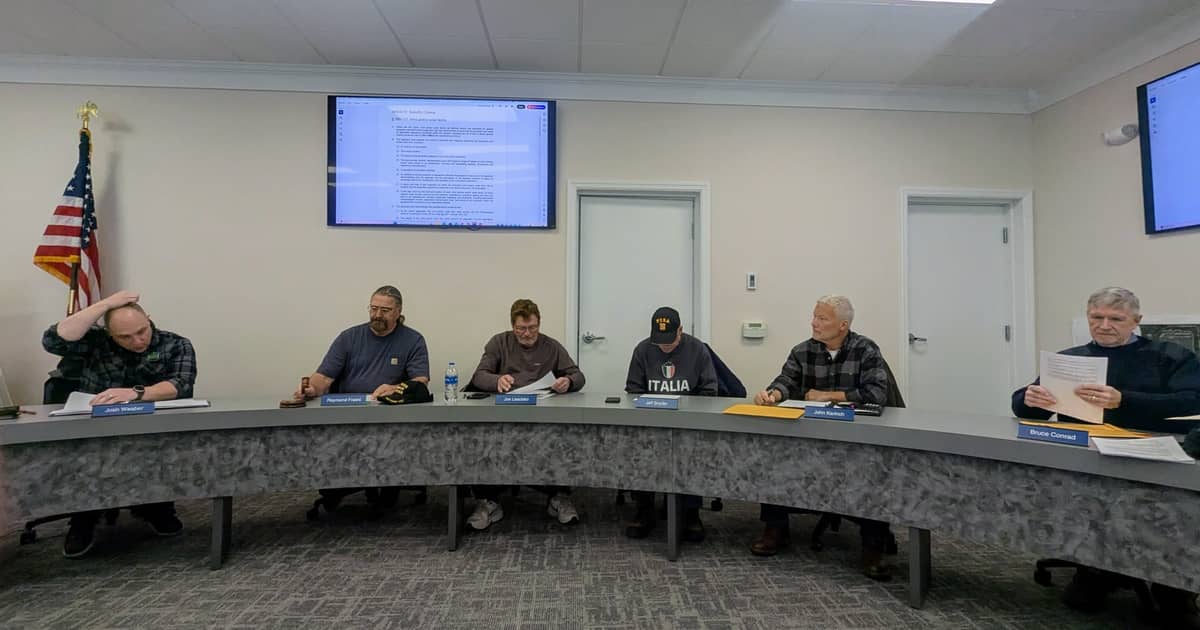
During a special meeting Monday morning, the Cornwall Borough Planning and Zoning Commission heard from Jon Neithercoat of Maine Drilling & Blasting regarding Department of Environmental Protection regulations on blasting and an in-progress blasting ordinance.
Neithercoat came at the request of Cornwall Properties, with representative Mike Swank and owner John Byler also present. Cornwall Properties’ blasting operation at the Cliffs, 200 Rexmont Road – which Swank said is paused for now, with more blasting planned for Phase 2 – precipitated complaints from residents and a push for regulation from Cornwall Borough Council.
Cornwall’s drafted ordinance, based on similar ordinances from Red Hill Borough and Upper Frederick Township, imposes the following primary conditions on blasting:
- Applicants must receive blasting permits both from the borough and DEP, including detailed plans for blasting and following all DEP regulations.
- Applicants must commission a report from a geologist to determine whether properties over 1,000 feet from the blasting location will be affected by blasting. Then, applicants must notify all property owners within 1,000 feet or a range dictated by a geologist (whichever is greater) of blasting and, at their own expense, provide inspections to all properties within this radius requested by property owners.
- The borough will, by video, inspect parts of the borough sanitary sewer system within 500 feet of blasting before blasting begins.
Draft Blasting Ordinance (subject to change)
Neithercoat reviewed state DEP regulations and processes, as well as Maine Drilling & Blasting’s policies regarding inspections and complaints.
Neithercoat said that DEP regulates blasting more closely than some states, requiring detailed plans (including maps, types of explosives to be used, and a certificate of insurance), a site inspection prior to the start of blasting, and detailed record keeping throughout blasting.
Blasters are limited to a vibration limit of 2 inches per second and a sound cap at 133 decibels. The 2 inches per second limit, Neithercoat said, is analogous to the vibration generated by a person slamming a door or stomping their foot.
Most damage to property, Neithercoat said, is generated by the displacement of material underground rather than the vibration itself — though vibration is regulated as it is what is measurable. The type of rock and sediment in the ground affects the amount of displacement, as well as the recommended technique for blasting.
Neithercoat said that other types of work have different vibration limits, noting that underground utilities work allows 4 inches per second and pipeline work allows 9 inches per second.
Though DEP does not require blasters to provide inspections to nearby property owners, Neithercoat said Maine Drilling & Blasting’s policy is to reach out to property owners within 250 feet to offer free inspections, with inspections available to further properties at the owners’ expense.
Many homeowners, Neithercoat said, do not permit photos taken inside their homes or in certain rooms, which can limit documentation.
He said that in the vast majority of cases, review of inspection photographs reveals that reported damage was already present. In cases where there is new damage, he said, it can also be attributed to changing weather or other factors.
When DEP investigates reports of property damage caused by blasting, Neithercoat said, they obtain blasting reports from the developer and check those reports against limits. If a blaster was found to be following regulations, they are not held responsible, as limits are considered to be set at a point where they will not create damage.
If this ordinance is passed, it would not create a new mechanism to investigate or enforce property damage, but would give neighbors guaranteed access to pre-blasting inspections, if requested.
When asked what he thought about the proposed 1,000-foot minimum radius for notification, Neithercoat said, “No other place ever asked us to do a thousand, it seems quite excessive.”
Borough alternate engineer Josh Weaber noted that the numbers used in the ordinance were based on those seen in some other similar ordinances, but that the board could reevaluate the distances required. The ordinance is now under review by the Water and Sewer Committee and will receive updates afterwards.
Weaber floated having notification requirements wider than inspection requirements, as well as allowing residents beyond the inspection radius to request inspections at their own cost.
“One of my big concerns is that we make this ordinance so strict it’s not really gonna be realistic or feasible for someone to blast, and you’re gonna have someone sitting on top of the hill for three months all summer long,” said Weaber.
Byler added that the requirements may be especially hard on homeowners looking to undergo small blasting projects (who would still be required to provide inspections to properties within 1,000 feet under the drafted ordinance), who he said could need to pay $25,000 or more for pre-inspections.
“When we’re doing a big development, it’s not the end of the world, but every time somebody puts a water and sewer line in front of their house and there’s 50 homes along the street, you’re gonna be requiring them to spend those dollars every time,” said Byler. “It is a huge financial burden that you’re putting on anybody who does any blasting in the borough.”
P&Z chair Ray Fratini said the ordinance is intended to protect the borough and its residents, especially with complaints from residents alleging they were not informed about blasting or that they suffered damages as a result. He said he was especially concerned about damage to utilities.
P&Z and council member Bruce Conrad said he was fine with the ordinance so far. At Monday night’s council meeting, Conrad reported that the board is considering requiring inspections within at least 300 feet.
P&Z and council member John Karinch said, following Neithercoat’s presentation, he felt some parts of the ordinance may be too strict, such as the 1,000-foot radius.
Fratini suggested the P&Z wait to hear both from the borough’s solicitor and the water and sewer committee, and make further revisions at that point.
The commission also began discussion of a possible data center ordinance. They examined a drafted ordinance from North Cornwall Township that lays out specific requirements for data center uses.
That ordinance, which is scheduled for a vote by North Cornwall’s Board of Supervisors Dec. 16, sets a minimum lot area of 70 acres and requires structures to be at least 750 feet from R-1 or R-2 zones. It also sets a 67-decibel limit Monday through Friday and lays out requirements for water and electric sources.
North Cornwall data center ordinance (draft)
Weaber explained that he plans to modify the ordinance to reflect Cornwall and the P&Z’s preferences, though noted that a 70-acre requirement may not be feasible given exclusionary zoning laws.
In Pennsylvania, zoning areas are required to have space for every type of development, meaning that governing bodies can be legally challenged for setting up use requirements that are not attainable anywhere in the zoning area. Weaber said that nowhere within Cornwall would meet a 70-acre requirement.
The commission discussed the possibility of a joint zoning map with another municipality, though Fratini said that it was unlikely to go through. He said the borough has had discussions with other municipalities regarding the possibility in the past and was not able to move forward at that time.
In other news, the commission:
- Heard that the ordinance on lawful uses otherwise not permitted has been sent to council and county planning for review.
- Unanimously agreed to place discussion of the warehousing ordinance on hold pending discussions with Cornwall Properties, which seeks to pass this ordinance alongside a mixed-use overlay by Miners Lake.
- Briefly discussed regulation for wind and solar farms, including the possibility of allowing only on rooftops.
The commission tentatively plans to hold a special meeting Jan. 12 at 10 a.m., in addition to its regular monthly meeting Jan. 5 at 6:30 p.m.
Questions about this story? Suggestions for a future LebTown article? Reach our newsroom using this contact form and we’ll do our best to get back to you.
Support Lebanon County journalism.
Cancel anytime.
Monthly Subscription
🌟 Annual Subscription
- Still no paywall!
- Fewer ads
- Exclusive events and emails
- All monthly benefits
- Most popular option
- Make a bigger impact
Already a member? Log in here to hide these messages
Strong communities need someone keeping an eye on local institutions. LebTown holds leaders accountable, reports on decisions affecting your taxes and schools, and ensures transparency at every level. Support this work with a monthly or annual membership, or make a one-time contribution. Cancel anytime.