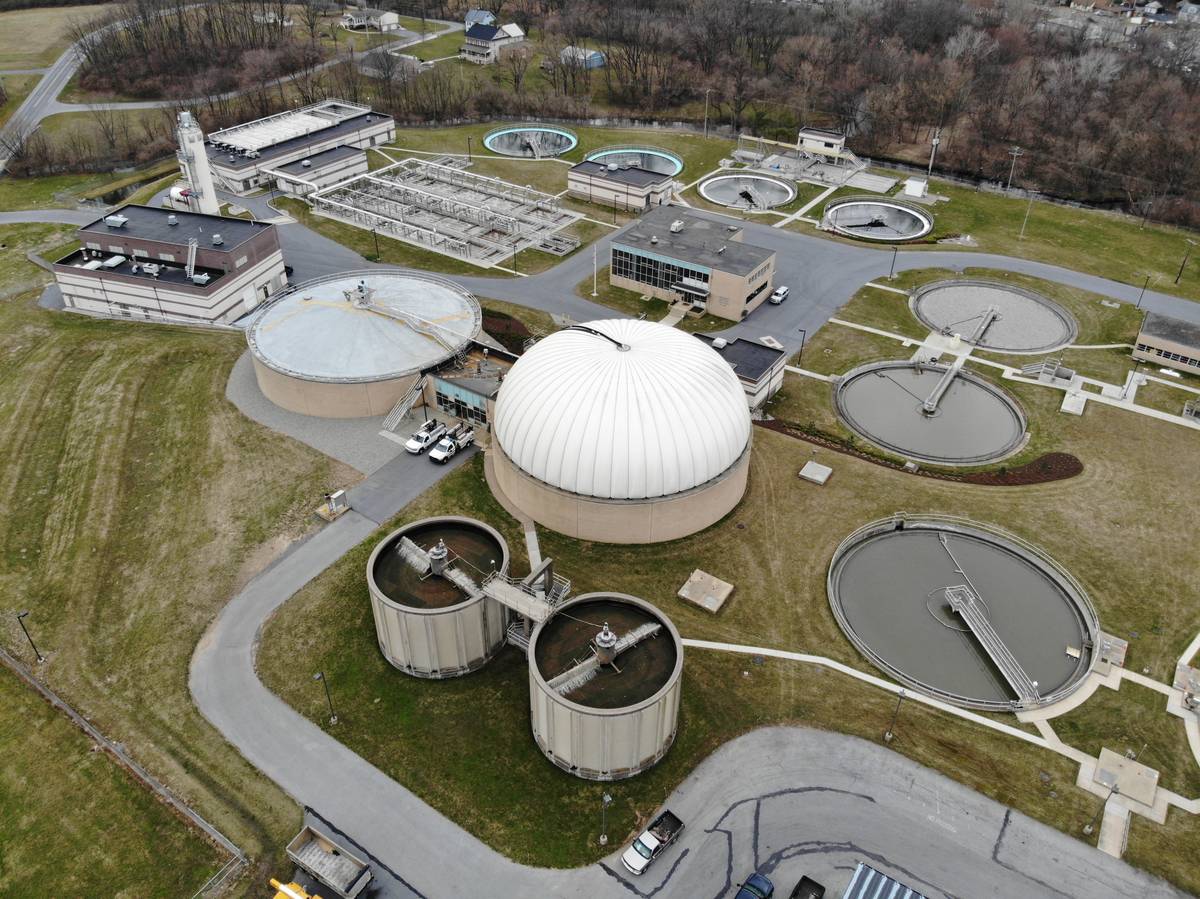

This article was funded by LebTown donors as part of our Civic Impact Reporting Project.
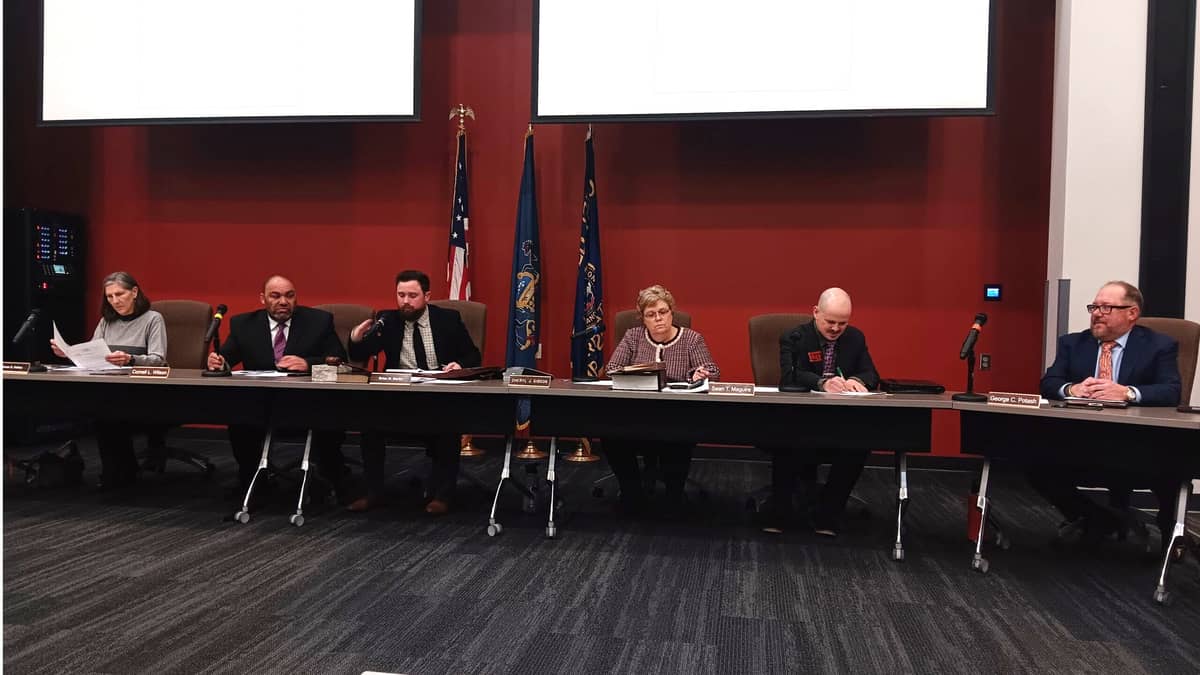
A contingent from West Cornwall Township met last week with the board of the Mount Gretna Authority to explore an idea for reducing sewer bills for Mount Gretna-area residential and business customers: Send the wastewater to the City of Lebanon Authority (CoLA) for treatment.
“We went to the Mount Gretna Authority to talk about the best long-term, most affordable alternative to handle sewage in the Mount Gretna area,” Jeff Steckbeck, a member of the contingent and West Cornwall Township Municipal Authority (WCTMA) engineer, told LebTown.
“They listened — there was no positive and no negative reaction.”
Currently, the Mount Gretna Authority (MGA) treats wastewater from Mount Gretna borough, three neighborhoods in West Cornwall Township – Stoberdale, Mount Gretna Campmeeting, and Mount Gretna Heights – and three neighborhoods in South Londonderry township – Timber Bridge, Timber Hills, and Conewago Hills.
Each municipality receives a quarterly bill from MGA based on its number of equivalent dwelling units, or EDUs. An EDU is a measure of the volume of wastewater discharged by a single-family residential property. While variation can occur among townships and authorities about its equivalence, generally an EDU is between 200 and 250 gallons per day.
CoLA, for instance, defines an EDU as 220 gallons per day, while Mount Gretna Authority uses 179 gallons.
Two consecutive years of 10% increases by the MGA prompted WCTMA to begin exploring ways to reduce costs for Stoberdale customers. WCTMA owns and maintains Stoberdale’s collection system while the Heights and Campmeeting own and maintain their systems.
One of those was to divert Stoberdale’s wastewater to the WCTMA’s pumping station on Route 117. That station collects wastewater from about 80 dwellings in and around Butler Road, Mine Road, and Route 117 and sends it to CoLA for treatment. The pump station has more than enough capacity to handle additional wastewater, Steckbeck said.
WCTMA’s discussion of possibly transferring Stoberdale’s wastewater to the pump station caught Campmeeting’s attention.
“MGA’s increases over the past few years have been more than the cost-of-living adjustment,” said Miles Bojanic, chairman of Campmeeting’s Building & Grounds Committee, at the WCTMA meeting. “A possible upgrade of MGA’s plant in the next couple of years will only add to annual cost increases.”
Whether MGA will need to upgrade its treatment plant hinges on the state Department of Environmental Protection. The authority is waiting for DEP’s review of its submission for a new permit – and until MGA receives DEP’s comments, it is unclear whether the treatment plant will need minor fixes or a major overhaul.
“We are waiting to see what our new permit requirements are,” Bill Care, public works director for Mount Gretna Borough, told LebTown. “The authority will discuss options, but we can’t make a decision until we have more information.”
Built in the early 1940s, MGA’s treatment plant is permitted to treat 200,000 gallons per day of wastewater, Care said. In November 2025, the average number of gallons treated daily was 65,000, according to the authority’s December minutes. In January, the average gallons per day dropped slightly to 60,000.
Flows to the treatment plant typically increase with rainfall, particularly if rains are heavy. In July 2025, when the plant recorded 14 inches of rain, flow jumped to an average of 141,000 gallons per day due to inflow and infiltration into the collection system.
But Mount Gretna also experiences some variation in daily flow when summer activities draw visitors to the area and owners of seasonal cottages return. In August 2025, for instance, the average jumped to 82,809 gallons per day. Rainfall that month was 1.23 inches, according to the minutes.
“We bill on what it costs to operate the plant and treat the wastewater year-round,” Care said. “The gallonage fluctuates, but our rate does not.”
MGA’s quarterly bills are based on an average per EDU rate of $193.54 with all customers paying about that rate. Stoberdale customers pay an additional $33 to cover WCTMA’s administrative, operations and maintenance and billing costs, according to figures provided by Steckbeck in an email.
Unlike MGA, CoLA calculates its rates on gallons per day used. Lebanon city residential sewer customers, for instance, will pay an average quarterly cost of $116.75 as of April 1, when new rates go into effect. The cost is based on 12,000 gallons, Tom Deitzler, CoLA executive director, said in an email.
While the expectation is that sending wastewater to CoLA for treatment would result in a less costly quarterly bill, how much less is uncertain. A formal rate study could provide that information.
“I don’t see how you can get a true apples-to-apples using different gallons/day rates,” Deitzler said after CoLA’s board meeting Monday.
At the WCTMA meeting, Steckbeck relayed preliminary support from DEP for the concept of regionalizing Mount Gretna’s wastewater treatment and sending it to CoLA for treatment.
But that support was tempered by concerns about how transferring Stoberdale, Heights, and Campmeeting wastewater to WCTMA would negatively affect MGA’s operations. DEP raised concerns about the loss to MGA of that many customers and the impact on borough rate payers, Steckbeck said.
“We want to be good neighbors,” Steckbeck said he told MGA board members. “Mount Gretna customers must be considered, and we respect that. We won’t transfer our customers if it will cause any significant detriment to you.”
Questions about this story? Suggestions for a future LebTown article? Reach our newsroom using this contact form and we’ll do our best to get back to you.
Support Lebanon County journalism.
Cancel anytime.
Monthly Subscription
🌟 Annual Subscription
- Still no paywall!
- Fewer ads
- Exclusive events and emails
- All monthly benefits
- Most popular option
- Make a bigger impact
Already a member? Log in here to hide these messages
Free local news isn’t cheap. If you value the coverage LebTown provides, help us make it sustainable. You can unlock more reporting for the community by joining as a monthly or annual member, or supporting our work with a one-time contribution. Cancel anytime.