
The storm that dumped 10-12 inches of snow on Lebanon in January accounted for most, if not all, of the county’s measurable precipitation for the month — a scant 0.72 inches.
That makes January 2026 the second driest January since 2002, the year that the City of Lebanon Authority (CoLA) began recording precipitation at the Siegrist Dam and reservoir. The county’s average January precipitation is 3.24 inches, according to the National Centers for Environmental Information.
Until Sunday’s snowfall, February precipitation measured about one inch at the dam, said Darren Luciotti, CoLA water treatment plant manager, in an email. Average February precipitation is 2.75 inches.
“The last six to eight months are below our 20-plus year average,” Luciotti said.
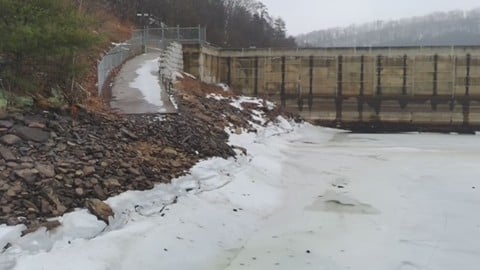
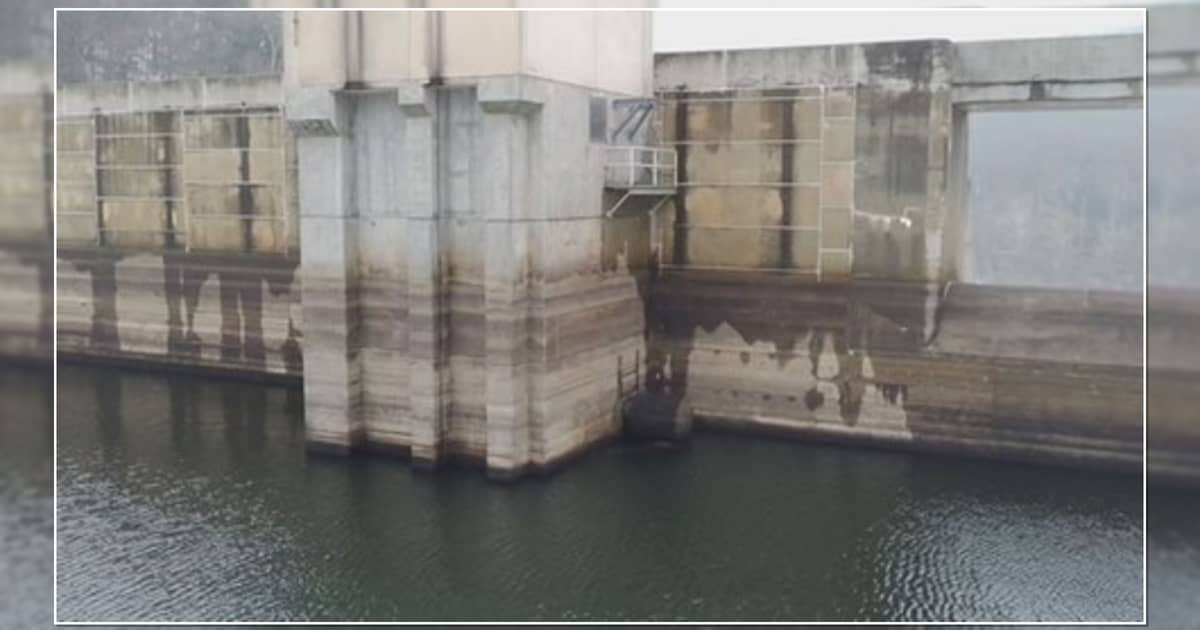
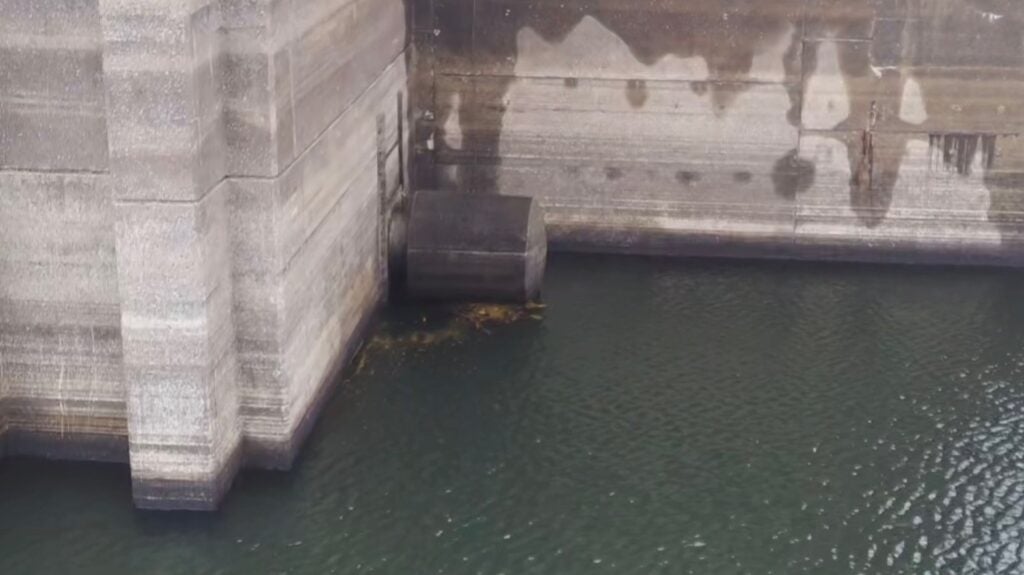
At the end of January, the water level at the Siegrist Dam was down more than 15 feet below the spillway where water overflows into Mill Creek. Recent rain combined with snow melt in combination with CoLA choking off some flow to its water treatment plant increased the water level by almost two feet, Luciotti said.
“This is the lowest water level on record at the dam for wintertime,” said CoLA consultant Jon Beers. “Typically, at this time of year, the dam has an overflow of water. Not this year.”
Beers estimated that about 8 inches of rain in addition to average monthly precipitation for the next two to three months is needed for the reservoir to reach a level where overflow occurs. Generally, it take an inch of rain to raise the reservoir’s water level a foot, said CoLA executive director Tom Deitzler in an email.
CoLA withdraws an average of about 4 million gallons a day (mgd) from the reservoir to supply water to residential, commercial and industrial customers as well as to public schools, some municipalities, and Fort Indiantown Gap.
Although the county had soaking rains last year from May through July, precipitation pretty much dried up starting in August, and the county finished the year with 41.31 inches — about 10 inches below the average yearly rainfall of 51.52 inches for the past 23 years, according to CoLA’s records.
Lebanon County isn’t alone in experiencing abnormally dry conditions. In early January, DEP added Lebanon County to its growing list of counties under a “drought watch,” a designation calling for voluntary water conservation.
Last week, DEP changed the drought status of 16 counties from “watch” to “warning.” While Lebanon County’s status remains drought watch, several surrounding counties including Lancaster and Berks are now under a drought warning status, which calls for reduction of water use by 10 to 15%.
Altogether, 34 counties are now under a drought watch and 17 counties are under a drought warning because of lack of rainfall and declining groundwater levels, according to DEP.
Other parts of the mid-Atlantic including northern New Jersey and much of Maryland and Virginia also are significantly and unusually dry, said Pennsylvania state climatologist Kyle Imhoff in a phone interview.
“When it’s really cold, it tends to be really dry,” said Imhoff, noting that it’s more common to have extended periods of dry weather during the summer compared to the winter.
The lack of precipitation also is affecting CoLA’s other water source – namely the Swatara Creek. Typically, winter streamflow is between 200 and 300 mgd, Beers said. Right now, the creek is running about one-third down.
CoLA is permitted to withdraw 8 mgd from the Siegrist reservoir and 10 mgd from the Swatara, but the combined withdrawal cannot exceed 11 mgd, Deitzler said in an email.
In 2025, withdrawals averaged 6.8 mgd, of which about 5.2 mgd was sold to customers. A combination of leaks in the distribution system, fire hydrant usage and flushing and bulk water haulers accounts for the other 1.4 mgd, he added.
This winter’s frigid temperatures caused more watermain breaks and leaks than usual. January notched nine watermain breaks, and February added four more, Dietzler told the authority board at its February meeting. All but two of the breaks were in Lebanon city, which has some of the oldest pipes in CoLA’s distribution system.
CoLA’s aggressive leak-detection program has cut water loss from leaks to one-third of what it had been. A 2025 grant from the Susquehanna River Basin Commission to purchase more leak-detection equipment promises additional reductions in water loss.
Imhoff said it is too early to tell how long the current precipitation deficit will last. Spring tends to bring more active weather through more frequent frontal passages and storms.
“We’ve been really fortunate that in the past several years, we have not seen a lot of drought,” Imhoff said. “But at this point, it’s difficult to say what it will be like in three to six months.”
Questions about this story? Suggestions for a future LebTown article? Reach our newsroom using this contact form and we’ll do our best to get back to you.
Join our community of local news champions.
Cancel anytime.
Monthly Subscription
🌟 Annual Subscription
- Still no paywall!
- Fewer ads
- Exclusive events and emails
- All monthly benefits
- Most popular option
- Make a bigger impact
Already a member? Log in here to hide these messages
While other local news outlets are shrinking, LebTown is growing. Help us continue expanding our coverage of Lebanon County with a monthly or annual membership, or support our work with a one-time contribution. Every dollar goes directly toward local reporting. Cancel anytime.