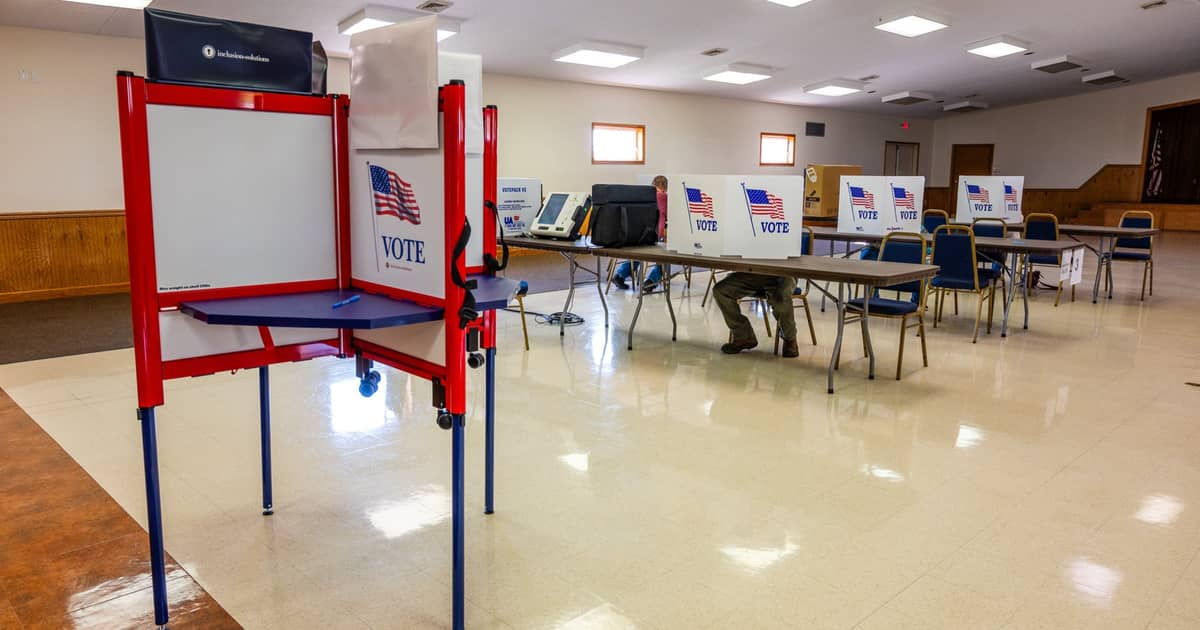

Lebanon County had over an 85% acceptance rate of provisional ballots during the last election.
Sean Drasher, department director for Lebanon County Voter Registration/Elections, said 124 of the 144 issued provisional ballots, or 86%, were accepted by election officials.
Lebanon County Commissioners serve on the county’s election board except in years when they are running for re-election. In those years, the county’s president judge appoints three members to the board, and those officials monitor the election as well as work with the election’s office to ensure provisional ballots are legitimate.
“So that’s an 86% acceptance rate. Not bad,” Drasher wrote to LebTown in an email. “When I did the math on this a couple of years ago, we were at over 90% for that other cycle. That’s pretty normal for us as it is for much of the state.”
LebTown contacted Drasher after a reader made enquiries about provisional ballots in Lebanon County.
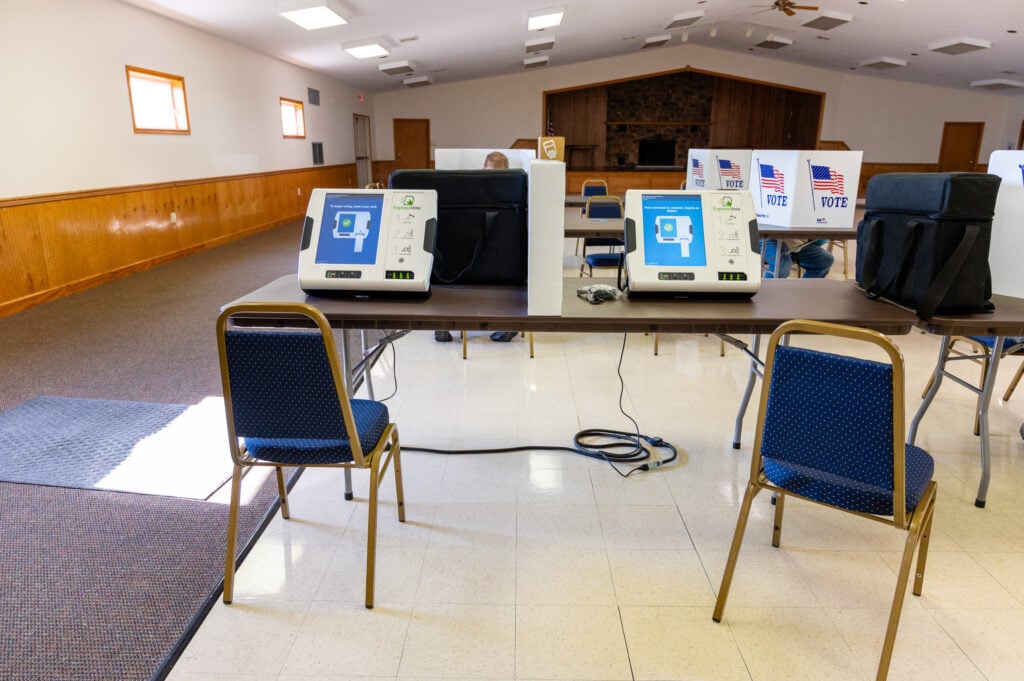
What is a provisional ballot?
A provisional ballot is a paper ballot used to protect the integrity of the election process and the rights of voters. All provisional ballots are processed to determine the eligibility of votes cast. All valid votes cast via provisional ballot are included in the certified election results and have the same impact as votes cast on voting machines.
By the numbers
Drasher provided a breakdown of the numbers for that election, telling LebTown that:
- 12 provisional ballots were rejected for having no registration record.
- Another four weren’t accepted due to a rejected registration, with Drasher noting the ballot had a false or wrong social security number (SSN).
- Two voters had canceled their voter registrations with a signed form and never reactivated theirs with Lebanon County.
- One was rejected because the voter registered after the deadline for that election cycle.
- County officials tabled one ballot for a deeper investigation. (It was ultimately rejected for a variety of reasons including that voter not being registered in Pennsylvania).
“All had been contacted repeatedly asking them to clarify their personal info and they failed to respond,” Drasher said about the four that were rejected because they contained a false or bad SSN.
Drasher gave LebTown additional context concerning the numbers.
“Prior to Act 77, provisionals were almost entirely fringe cases. Basically, the 20 or so in the above list. That means that they were correctly rejected at a much higher rate. Now that Act 77 was passed, the number of provisionals has gone way up (though still a relatively small number) but the vast majority of them are approved because they are simply mail-in voters who had some kind of reasonable issue,” Drasher wrote.
He emphasized that the sample size is so small that it’s hard to read into whether passage of Act 77 has had “any kind of meaningful impact.”
“The samples are tiny and prone to give shifting results from cycle to cycle. And further the data input using the tools in the outdated SURE system do not adequately capture what is really going on,” Drasher wrote. The ballpark estimate for provos now is around 90%. If it shifts up or down much for a cycle it’s only because the sample size is so small.”
Act 77 of 2019
Act 77 of 2019 made significant changes to Pennsylvania’s Election Code.
Gov. Tom Wolf signed Act 77 of 2019 into law on Oct. 31, 2019. The reform bill made the most major changes to Pennsylvania’s elections in more than 80 years, permitting votes by mail-in ballot and allowing more time for eligible individuals to register to vote and for voters to return their absentee or mail-in ballots.
A LebTown reader asked, “Is the creation of a voting impediment, like excessive provisional ballots, a viable means of malicious voter suppression if the impediment could be directed by hackers at a given demographic?”
“There was no particular increase in Provisional ballots at all,” Drasher wrote in his response. “The numbers are very consistent, and in Lebanon County the vast majority of all provos are accepted.”

Why provisionals?
The website for the commonwealth’s Department of State notes various reasons a voter may cast a provisional ballot in a given election cycle. They are:
- Your name was not in the poll book or supplemental poll book.
- For example, you reported to the wrong precinct; or
- You did not report a recent change in residence to the county election office.
- You are required to show ID, but cannot show ID.
- Your eligibility was challenged by an election official.
- You were issued an absentee or mail-in ballot but believe you did not successfully vote with that ballot, and you do not surrender your ballot and outer return envelope at the polling place to be spoiled.
- You returned a completed absentee or mail‐in ballot that was rejected, or you believe will be rejected, by the county board of elections and you believe you are eligible to vote.
- There is a special court order with respect to your registration status.
- There is a special court order related to extending the hours of voting.
- You believe that you are registered in a political party, but your voter record indicates otherwise (for primary elections only).
The state website answers additional questions about the provisional ballot process, such as how to cast a provisional ballot, what happens after it has been cast, and how to determine whether your ballot was counted in that election.
Important election dates
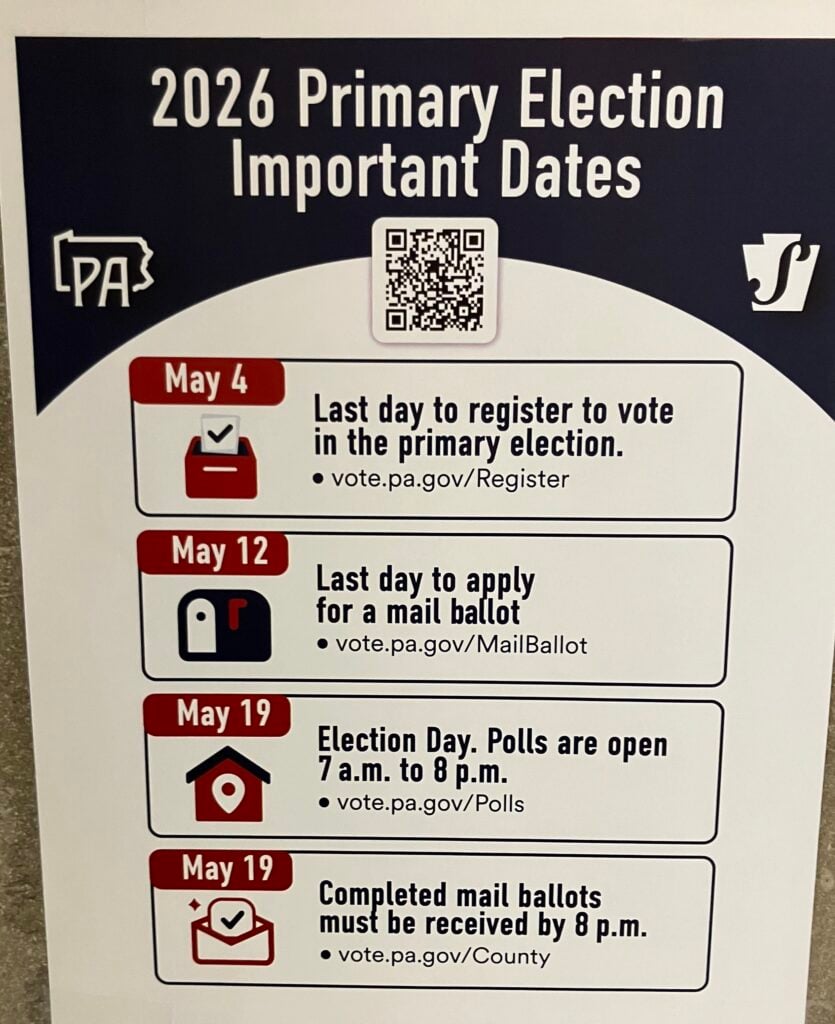
The following are important upcoming dates for the 2026 primary election on May 19:
- May 4 – Last day to register to vote in the primary elections.
- May 12 – Last day to apply for a mail-in ballot
- May 19 – Election Day. Polls are open from 7 a.m. to 8 p.m.
- May 19 – Completed mail-in ballots must be received by 8 p.m.
Questions about this story? Suggestions for a future LebTown article? Reach our newsroom using this contact form and we’ll do our best to get back to you.
Join our community of local news champions.
Cancel anytime.
Monthly Subscription
🌟 Annual Subscription
- Still no paywall!
- Fewer ads
- Exclusive events and emails
- All monthly benefits
- Most popular option
- Make a bigger impact
Already a member? Log in here to hide these messages
Our community deserves strong local news. LebTown delivers in-depth coverage that helps you navigate daily life—from school board decisions to public safety to local business openings. Join our supporters with a monthly or annual membership, or make a one-time contribution. Cancel anytime.