On June 19, 1865, Union soldiers arrived in Galveston, Texas, and announced the end of slavery, two and a half years after the Emancipation Proclamation had made it law. The distance between the declaration and the delivery, between the promise on paper and the reality on the ground, became the founding fact of Juneteenth. It is a holiday not about liberation accomplished but about liberation delayed, about the persistent gap between what a nation professes and what it practices.
William Wilbur Miller Barbour understood that gap from the inside.
He was born in Philadelphia in 1908 and raised in Virginia, arriving in Dauphin County at the age of ten as part of the Great Black Migration, the movement of more than one million African Americans out of the Jim Crow South into the cities and towns of the North and West between 1916 and 1940. Central Pennsylvania was part of that story. The Barbour family was part of that story. They settled in Middletown, a sundown town, a community where Black residents knew to be indoors after dark. He became the first African American to graduate from Middletown High School. He chose Elizabethtown College, a Historic Peace Church institution founded by the Church of the Brethren on the conviction every human being carries inherent dignity, over Lincoln University, where Langston Hughes and Thurgood Marshall were forming a different kind of tradition. He graduated in 1932 as one of the college’s first African American graduates, an English literature major and debater, shaped by a liberal arts curriculum and a tradition of radical inclusion, social justice, and peacemaking rooted in the Anabaptist theology of the Church of the Brethren.
What Barbour did next belongs to what historians now call the Long Civil Rights Movement, the sustained, largely invisible work of organizing, documenting, and building the institutional infrastructure of racial justice that ran through the 1930s and 1940s, decades before Montgomery and Birmingham and Selma gave the movement its canonical name and its television cameras.
He went to Philadelphia, then to Denver as Executive Secretary of the National Urban League, then to Los Angeles as Director of the National Urban League Western Field Office. He organized Black ministers in Denver to mobilize their congregations behind fair employment legislation. He documented the conditions along the Platte River corridor, where most of the city’s Black and Latino residents lived in substandard housing with inadequate sanitation and elevated infant mortality rates. He used the Cold War’s demand that America demonstrate its democratic values abroad as leverage for civil rights progress at home. He persuaded Hollywood celebrities to use their visibility in the cause of integration. He helped establish the first desegregated housing development in Victorville, California. He traveled through the West documenting the gap between the laws on the books and the lives people actually lived, being turned away from hotels in towns whose own state representatives had just sponsored public accommodations statutes.
In May 1954, driving across the Mojave Desert, he heard the Supreme Court’s unanimous ruling in Brown v. Board of Education come over the car radio. He pulled to the shoulder and wept. He had spent twenty years building toward the moment. And he wept because he understood, with the precision of a man who had lived the distance between promise and practice, what the ruling would and would not mean.
He had already articulated the distinction defining the rest of his life. Desegregation, he argued, is what a court order can compel. It tears down the legal structure of segregation. Integration is something else entirely: the ongoing, deliberate, costly process of building a new harmonious whole out of the separate parts. Desegregation is policy. Integration is process. Confusing the two, he insisted, was not a minor error. It was the central mistake American institutions kept making, generation after generation.
He died in March 1957 at the age of forty-nine, nineteen days after presenting the National Urban League’s American Teamwork Award to Dorothy Dandridge and Glenn Ford at a Beverly Hills gala. Six months later, the Civil Rights Act of 1957 passed. The legislative achievements he had worked toward his entire career arrived after he was gone.
He was buried at Mount Lawn Cemetery Lincoln Memorial Park in Delaware County, Pennsylvania, established in 1925 during an era of legally enforced segregation to provide burial space for African Americans excluded from many white-owned cemeteries. He was born into a world consigning its Black dead to separate ground. He was buried in a world which still did. The racial order he had spent twenty-five years documenting and opposing in the employment offices and housing markets and legislative chambers of Philadelphia and Denver and Los Angeles outlasted him in the most literal sense available to it: it organized the ground in which he lay.
He grew up in Middletown, Pennsylvania. He went to college in Elizabethtown. He changed the country quietly, from the inside, before the cameras arrived.
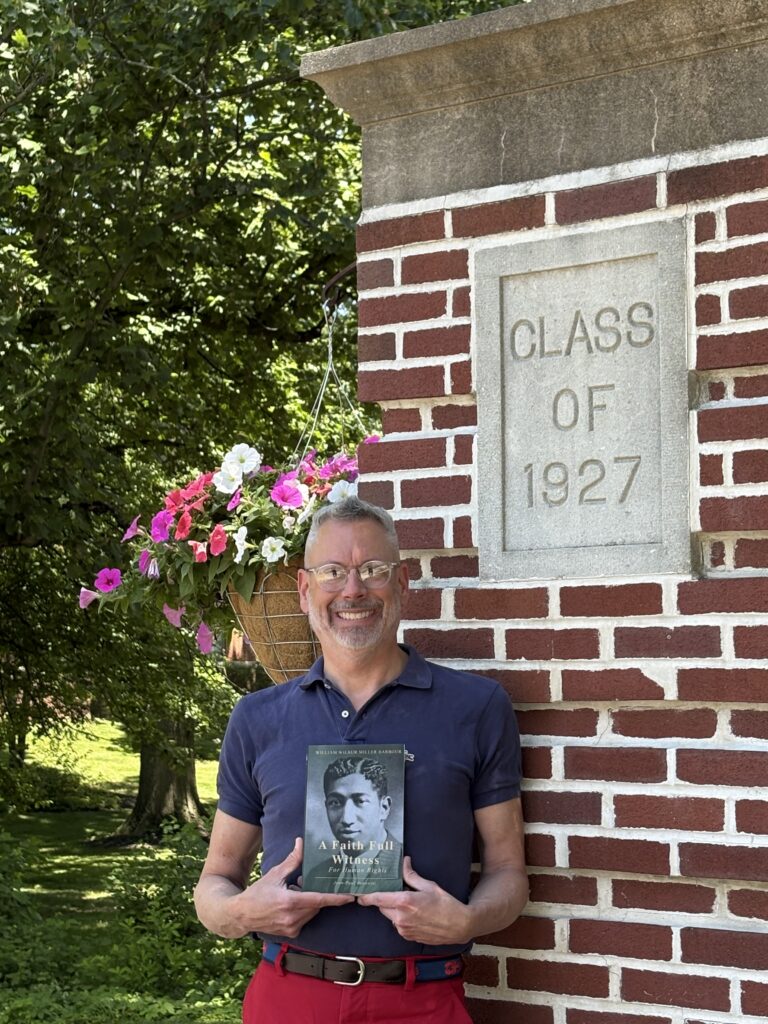
On Friday, June 19, 2026, Juneteenth, the Mount Gretna Area Historical Society will host a screening of my documentary film, The Prospect for Freedom: W. Miller Barbour’s Human Rights Journey, and the launch of my biography of Barbour at the Pennsylvania Chautauqua Hall of Philosophy, 212 Gettysburg Avenue, Mount Gretna, beginning at 10:00 AM. The documentary is an official selection of the Hollywood International Indie Film Festival and has screened under the sponsorship of the Governor’s Advisory Commission on African American Affairs and the Greater Harrisburg Area NAACP.
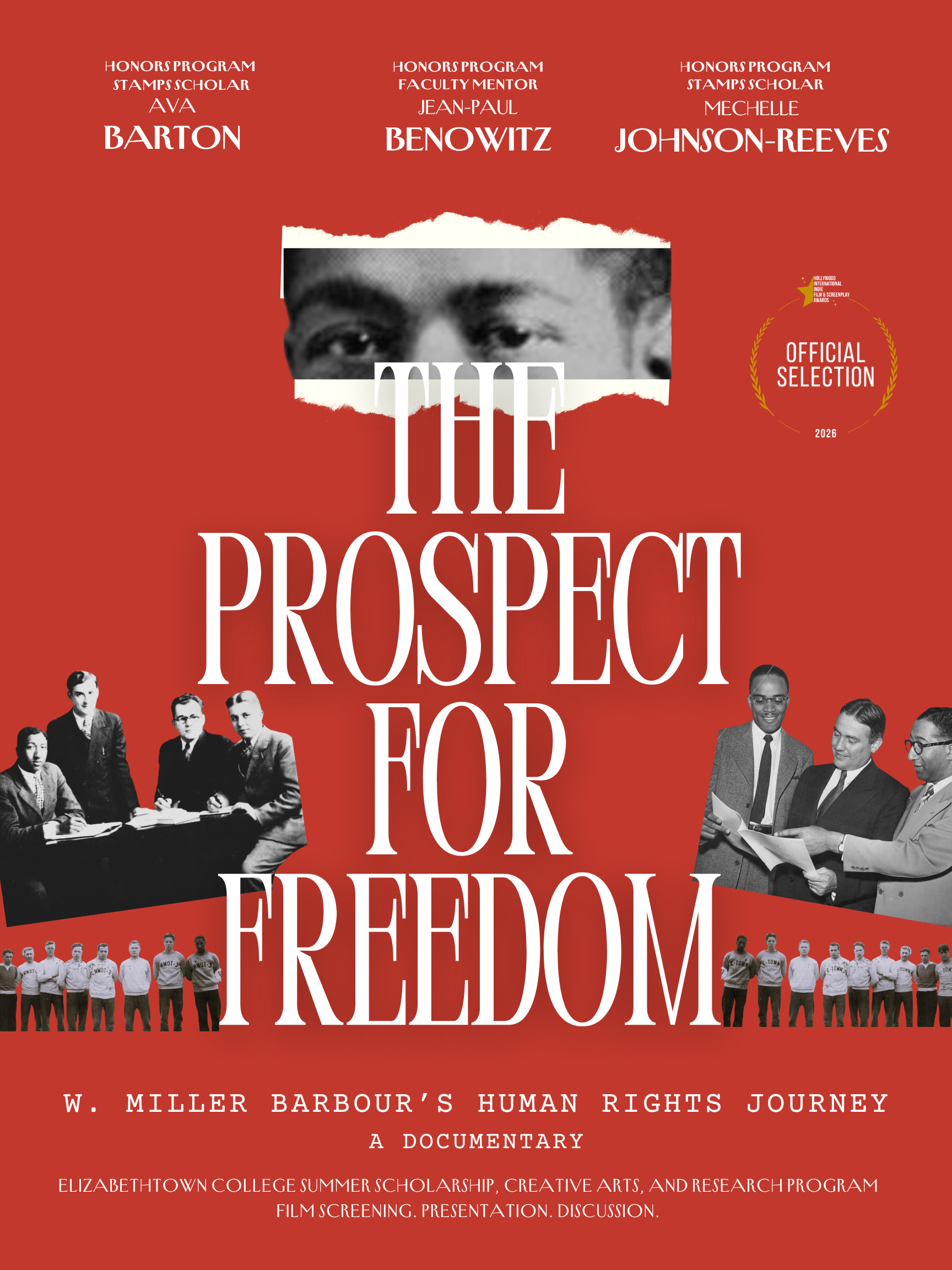
Juneteenth is a holiday about the distance between declaration and delivery. Barbour spent his life closing that distance. Lebanon County neighbors are welcome to come and meet him.