This column was submitted to LebTown. Read our submission policy here.
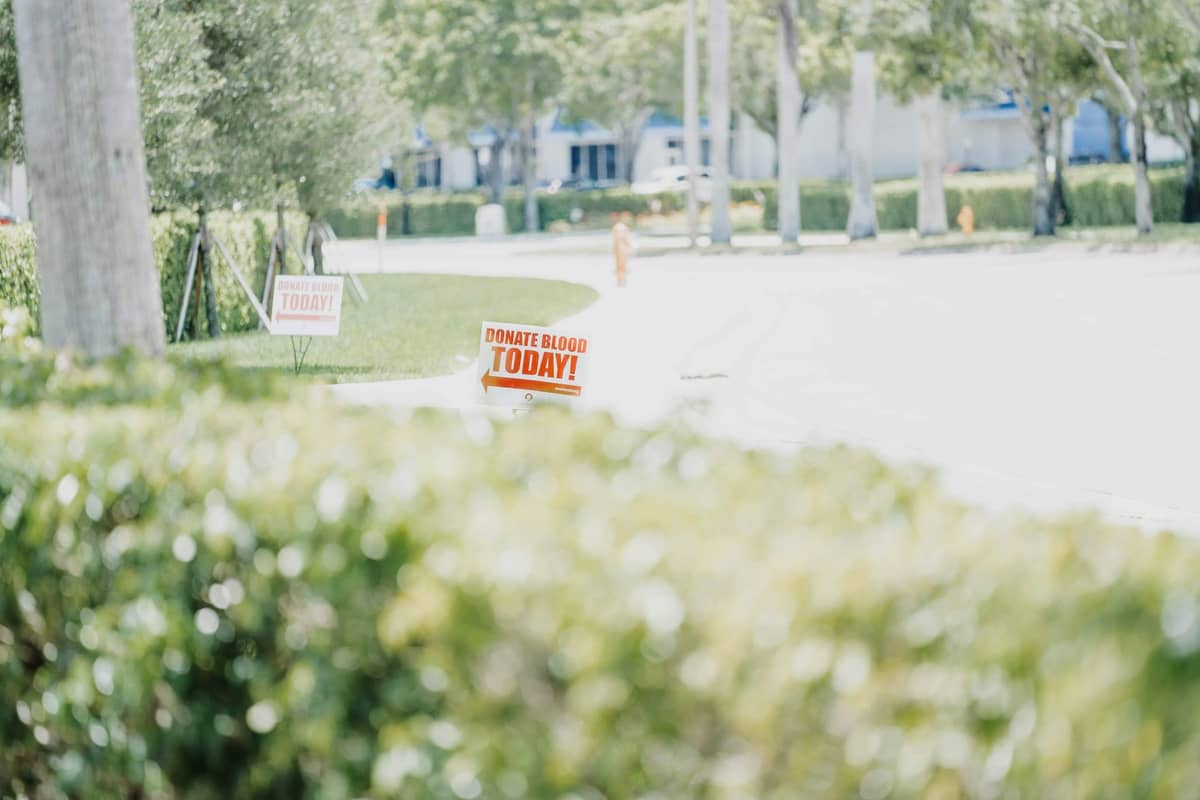
We have all heard the appeals: Donate blood. Save a life.
They are critically important reminders of one of the simplest acts of service available to us. In a matter of minutes, at virtually no cost other than a little of our time, we can give something that another human being desperately needs.
I have donated blood for more than 40 years, interrupted only by military service, deployment restrictions and other circumstances. I always thought I understood why I was doing it.
I was wrong.
I thought I was donating blood solely to help someone else. I never imagined that donating blood might someday help save me.
After returning from active duty in Iraq in 2005, I was unable to donate for several years because of restrictions related to my deployment. Later, I mistakenly believed I had become too old to donate.
Then, in 2015, my friend Magisterial District Judge Dave Warner posted on social media that he was donating blood. I complimented him on his kindness, and he asked whether I donated.
“Not anymore,” I told him. “I’m too old.”
Dave corrected me. There was no age limit preventing me from donating.
That simple conversation got me back into the donor’s chair. I resumed donating regularly and eventually settled into a routine of giving about every 57 days.
Then came a registered letter I never expected.
Testing performed after one of my donations detected evidence of Babesiosis, a tick-borne illness. The blood donated could not be used, and I was advised to contact my health-care provider immediately.
Until that moment, I had no idea I was infected.
I contacted WellSpan, where Dr. Gaughen of Cornwall Family Medicine saw me promptly. The fatigue I had been experiencing—but had not thought serious enough to seek treatment for—suddenly had an explanation.
Dr. Gaughen was thorough, reassuring and compassionate as she explained what was happening and how it would be treated.
For the first time, I understood something about blood donation that had never occurred to me.
I had gone there hoping to help save someone else’s life. The process had alerted me to something important about my own health.
After the required waiting period, I returned to donating.
Years later, another seemingly routine donation produced another unexpected warning.
Steph and Teri at the WellSpan Blood Donation Center in Lebanon noticed that my blood pressure was elevated. I had never had significant blood pressure issues and seldom checked it. They encouraged me to have it evaluated.
Not long afterward, while having dinner with my family, I suddenly experienced severely diminished vision in my right eye.
I went immediately to the emergency department at WellSpan Good Samaritan Hospital in Lebanon. The possibility of a serious medical event was considered, and the team responded quickly and professionally. I was instructed to follow up promptly with my primary-care physician and eye-care provider.
That brought me to Dr. Anwar at WellSpan.
Once again, what stays with me is not simply the medical care I received. It is the attentiveness, professionalism and compassion of the people providing it.
And that brings me to the lesson I hope others will take from my experience.
Blood donation is a remarkable chain of people caring for people.
The person donating blood usually does not know who will receive it. The recipient may never know the donor. Yet for a few minutes, their lives become connected by one person’s willingness to help another.
But I discovered that the circle of caring can extend even further.
The safeguards designed to protect blood recipients alerted me to an illness I did not know I had. Years later, two attentive professionals at the donation center noticed something that I might otherwise have ignored. And physicians who entered my life because of those events treated me not simply as a patient, but as a person.
That is why I want to publicly thank Dr. Gaughen, Dr. Anwar, Steph and Teri.
Health care is filled with technology, laboratory testing, procedures and protocols. All are essential. But sometimes the difference is made by something much more basic: a professional who pays attention and cares enough to say something.
These four people did that for me.
There is another reason I tell this story.
We frequently hear that someone else should solve the problems facing our communities. Blood donation gives each of us an opportunity to do something ourselves.
You don’t have to know whose blood type matches yours. You don’t have to know whether your donation will help an accident victim, a surgical patient, someone battling cancer, or a person you will never meet.
You simply have to show up.
I began donating blood because I believed it was a small way I could help another person during perhaps one of the most difficult moments of his or her life.
More than four decades later, I still believe that.
But now I understand something else.
Sometimes when we reach out to help a stranger, life has an extraordinary way of reaching back.
Please consider donating blood.
The life you help save will probably belong to someone you never meet.
But as I learned, the life touched by that simple act may also be your own.
Frank Ryan is a CPA, retired U.S. Marine Corps Reserve Colonel, former member of the Pennsylvania House of Representatives, and former Vice Chair of the Pennsylvania Public School Employees’ Retirement System (PSERS).