Some of the six local public school districts and services provided by Lebanon County government, which all rely heavily on state funding, are feeling the financial crunch from the state budget impasse.
State leaders are supposed to pass a new budget for the fiscal year, which begins July 1 annually, by June 30. That didn’t happen this year, and the budget stalemate is beginning to impact the finances of school districts, including those in Lebanon County.
Also at risk are the state’s 67 county municipal governments, according to the County Commissioners Association of Pennsylvania (CCAP).
Lebanon School District
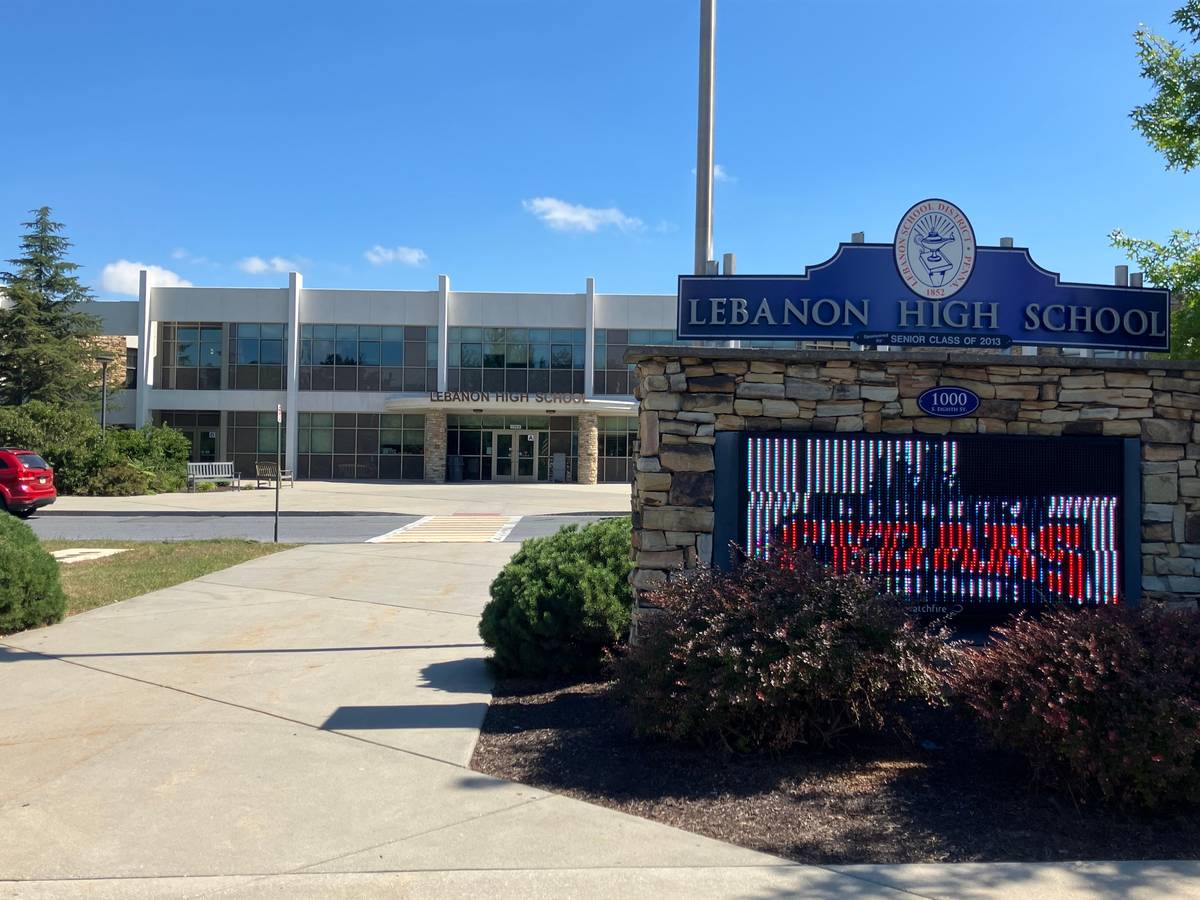
Nicole Malinoski, superintendent of Lebanon School District, said the financial crunch is hitting especially hard in that district, which receives over 70 percent of its budget through state funding.
“The financial situation is becoming increasingly critical. We are heavily reliant on state and federal funding, and with the ongoing budget stalemate, our district is under significant strain,” she wrote in an email to LebTown. “To manage expenses, we have already placed critical positions on hold, but these are only temporary measures. The uncertainty about whether the projected funds we budgeted for will actually come through makes the situation even more challenging.”
She said some programs have been halted temporarily due to the impasse.
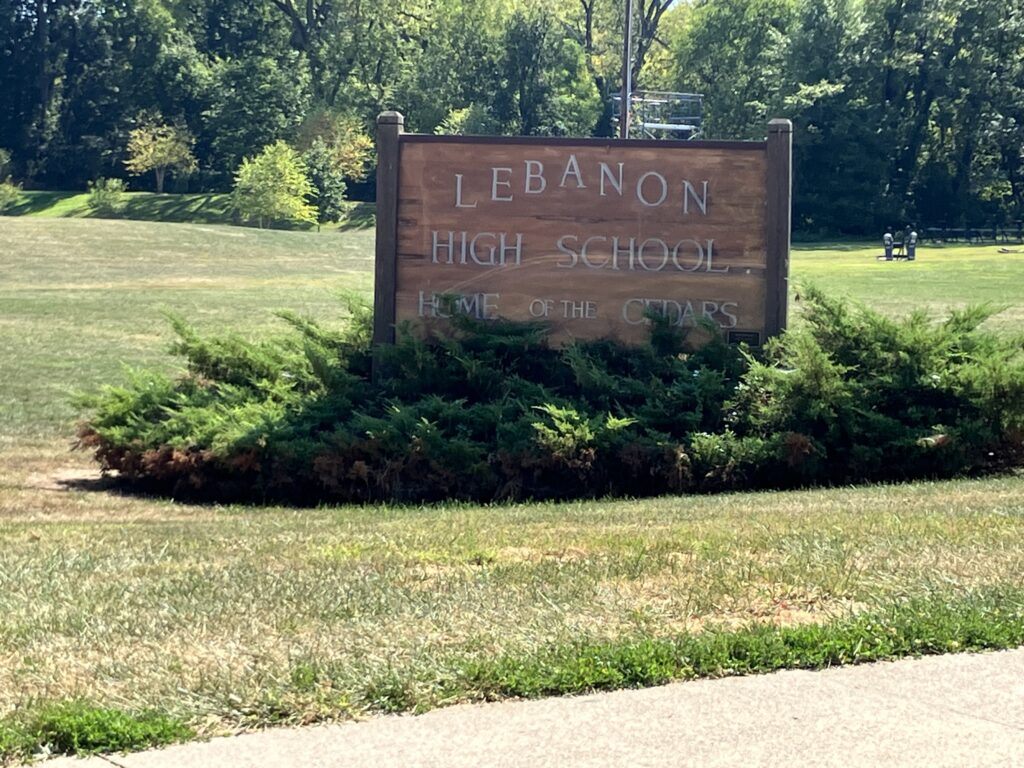
“The district has had to pause both our in-school tutoring program and our after-school program until the budget is approved,” she added.
State Rep. John Schlegel (R-101), who is a former school administrator and whose legislative district includes Lebanon city, said he was unaware that Lebanon School District had paused their tutoring programs.
When asked for his reaction as a former school administrator to the news, Schlegel reiterated that he was unaware of the pause, that the school year was only a week into the academic year, and that federal funds are being sent to school districts.
“I haven’t had any discussions with anyone at Lebanon School District but I think tutoring is a good program and it is good to hear that Lebanon School District has intended to have that in place for the start of the year,” Schlegel said during a telephone interview. “Also, tax bills have already gone out and people are already paying them to get the discount or they are in the process of paying them since on or around July 1st – which is another source of revenue.”
In Lebanon School District, about 30 percent of annual revenues come from tax receipts.
Malinoski said federal funding is not flowing to LSD.
“It’s important to note that districts like ours – those that depend most on state and federal dollars – are disproportionately impacted by the delay in passing a budget. Unlike wealthier districts that can rely more heavily on local tax revenue, we do not have the same flexibility,” she wrote. “73% of our total revenues comes from state funding, and an additional 3% comes from federal funds which are also being held up at the state level until the budget is passed. Each day that passes without a budget puts our students and staff in a more precarious position. Our priority is to maintain stability and continue serving our students, but that becomes increasingly difficult as this stalemate continues.”

Christopher Litlenthal, spokesman for the Pennsylvania State Education Association, shared a graphic with LebTown totaling the missed payments to the county’s six public districts and the Lebanon County Career and Technology Center for July and August.
All together, the public school districts and LCCTC are down about $35 million for those two months, according to PSEA data, and the Lancaster-Lebanon IU13 is missing over $5.37 million in payments. The spreadsheet notes that PSEA Research is “based upon proposed appropriations (2025-26) when available and school annual financial reports (2023-24) published by the Pennsylvania Department of Education.”
Notations with the graphic state that the “estimates include the state subsidy payments due to school districts, career and technical centers and intermediate units in July or August for the following state subsidies: basic education, special education, early intervention, state property tax reduction, ready to learn block grant, pupil transportation subsidy, school employee social security, Intermediate Unit (IU) special education transportation, IU core services, secondary career and technical education subsidy.”
The graphic shows that all state subsidies for Lebanon School District have averaged 61 percent of all of the district’s revenue over the past five years.
Malinoski said Lebanon SD is reliant on the commonwealth for financial support to operate its schools. The district has missed over $16.5 million in revenue the past two months, according to PSEA data.
“At this point, the Lebanon School District has enough funds to continue operations until the end of October. Beyond that, without state funding, we would need to make tough decisions to provide essential services to students,” wrote Malinoski.
Schlegel said that while he’s not at the negotiating table nor a member of leadership, he has no doubts the budget will be passed before the end of October.
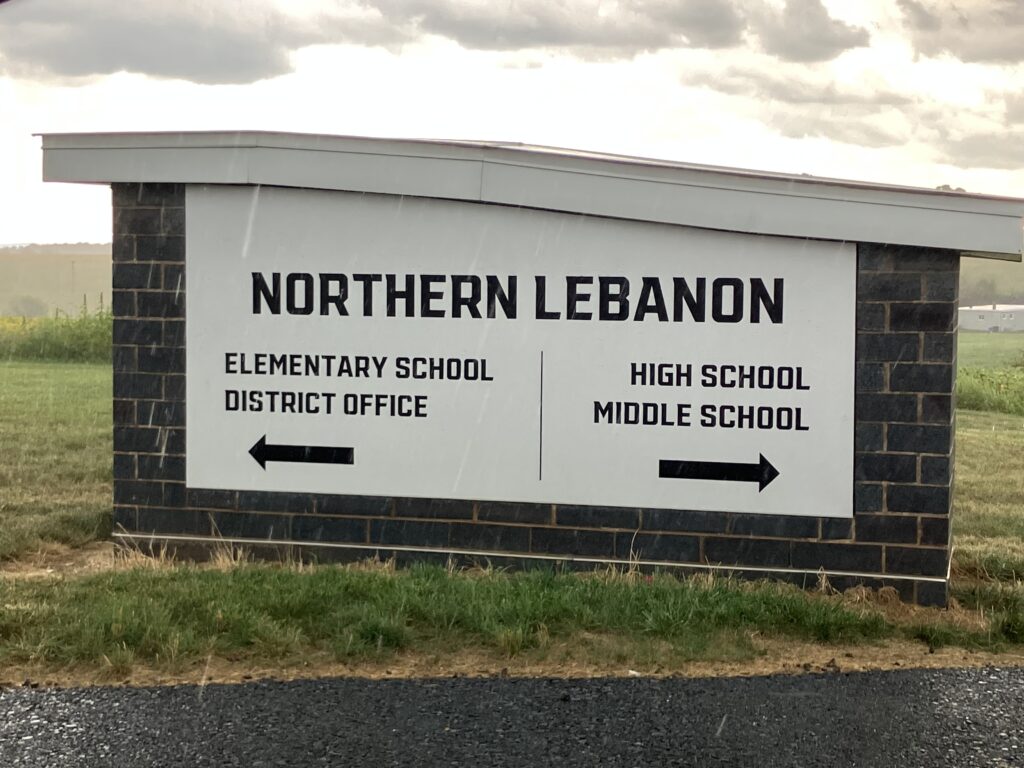
Northern Lebanon School District
Gary Messinger, superintendent of Northern Lebanon School District, said the district would start hurting financially by the start of calendar year 2026. All state subsidies as a share of all revenues over the past five years, on average, is at 36 percent in NLSD. The district’s two missed payments for the summer total over $3.6 million.
“While we are currently able to operate with the local revenue that we are bringing in, once we get closer to the New Year, we will be greatly impacted if no budget has been approved,” wrote Messinger. “We are frustrated that once again our government is unable to approve a state budget in a timely manner.”
He said the district has been fortunate to be able to operate within local revenue.
“This local revenue makes up 62% of our budget so the payments that are received are enough to pay all expenses this fall. In addition, the state has made some relief available if needed such as: one, making bond payments on behalf of districts in need and 2, not requiring districts to make the full PSERS (Public School Employees’ Retirement System) payments. (We’re) only required to pay the districts 50% until the state pays,” he wrote.
Annville-Cleona School District
Krista Antonis, superintendent of Annville-Cleona School District, said the district is situated financially to weather any storm caused by the budget impasse.
“The Annville-Cleona School District is financially stable, and the budget impasse has yet to impact the district,” she wrote in an email to LebTown. “At the moment, the budget impasse is not critical to our financial operations. Our district should be able to operate for the entire school year.”
She noted why the district is currently in fine fiscal health.

“The Annville-Cleona School District is not suffering financially because we have begun planning for the future. Our district is growing; we have a number of housing developments being built. Administration and the school board have been working together to ensure we are financially stable and have our sights set on the future.”
She also provided some insight into the district’s financial numbers.
“The district has a $36.4 million budget for the 2025-26 school year and receives $12.4 million in state and federal funding, so the district relies heavily on local sources. The district also has $11.3 million in fund balance that could be used to offset the $12.4 million in funding being held up. The district is currently going through the 2024-25 financial audit and the $11.3 million in fund balance should be increasing.”
She added that their fund balance “is being earmarked for future projects in the district, but can be used in the interim, if needed, until the budget passes.”
Eastern Lebanon County School District
Julia Vicente, superintendent of ELCO School District, echoed similar sentiments as her counterpart in southern Lebanon County.
“The Eastern Lebanon County School District remains in a stable financial position despite the ongoing state budget impasse, which has delayed a significant portion of state funding. Local revenues, which account for approximately 70% of the total budget, continue to be received steadily and without interruption. As of the end of August 2025, the district has $23.5 million in liquid funds on hand, consistent with our regular real estate tax collection cycle,” Vicente said via email.
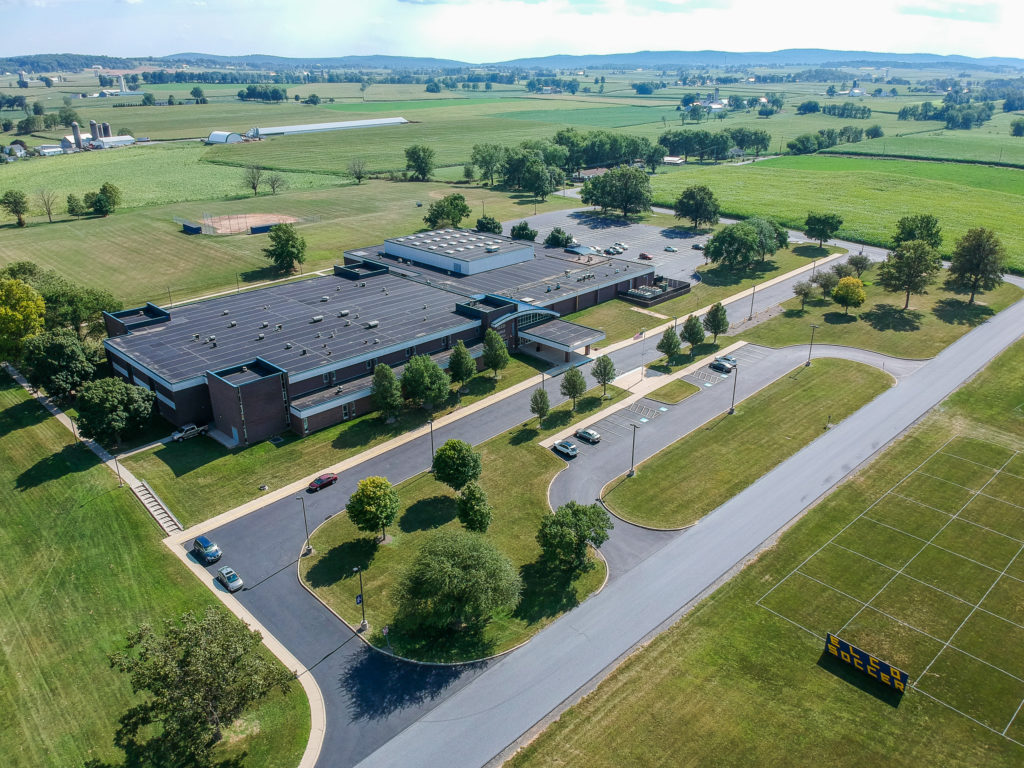
Tax receipts are helping to ensure a strong fiscal picture in the district.
“Because of this strong and reliable local revenue base, ELCO SD is not facing an immediate financial crisis. Our cash flow analysis indicates that the district will be able to meet payroll and cover expenses through February 2026, assuming no unforeseen circumstances arise. If the budget stalemate extends significantly beyond that point, we would need to evaluate options to ensure continued operations.
“While the impasse presents challenges, ELCO SD is actively and strategically navigating the situation. Our financial reserves, including a $6.5 million fund balance, provide a cushion during this time. Still, a significant portion of state funding remains on hold until a budget is passed, making a long-term resolution essential.”
That means school services will continue as normal in the district.
“ELCO SD is well-positioned to continue operations in the near term thanks to steady local revenues, careful financial planning, and prudent reserve management. A timely resolution to the state budget impasse is crucial for sustaining long-term stability and ensuring that Pennsylvania school districts can continue delivering high-quality educational services. We remain hopeful that state leaders will reach an agreement that provides predictable funding for schools across the commonwealth.”
Palmyra Area School District
Palmyra Area School District superintendent Bernie Kepler said in an email that the district’s finances are fiscally fit into next spring.

“At this time, the Palmyra Area School District’s local revenue will sustain the district into the early spring of 2026. As one of the school districts in Pennsylvania who has been determined to be grossly underfunded by the state budget, we rely heavily on our local tax base. During the budget stalemate in Harrisburg, this is helpful for us in Palmyra.”
He noted the timing on tax payments is critical for revenue flowing into the district.
“With local school tax revenue being paid largely in July/August during the discount period, the greatest source of revenue is received at the onset of the school year. This revenue will carry us for months, whereas districts who more heavily rely on state revenue feel the burden much earlier in the fiscal year. Should the budget impasse stretch into the spring of 2026, we certainly would need to dip into our fund balance to continue operations.”
Lebanon County Career and Technology Center
Chuck Benton, administrator of the LCCTC, said since most of its funding comes from its six public school members, their operations should be “fine into the winter months.” That is contingent, however, on one thing.
“The Lebanon County CTC is primarily funded through our six sending school districts,” Benton wrote in an email to LebTown. “As long as those districts continue to make their payments, we remain stable. Our largest expenditure is salaries, and at this time, we are in a solid position to sustain operations into mid-winter.”
Benton noted that direct state funding represents only a very small portion of the LCCTC’s budget.
“Where the state does contribute is typically through specific grant programs, such as equipment grants, and those application windows have not yet opened for this year,” he wrote. So, while we are certainly monitoring the situation in Harrisburg closely, the immediate financial impact on LCCTC is limited. We are not experiencing the same level of strain that some districts are currently facing.”

Cornwall-Lebanon School District
Dr. Philip Domencic, superintendent of Cornwall-Lebanon School District, provided the following response to LebTown’s questions:
“State funding accounts for about one-third of the Cornwall-Lebanon School District budget. Because of the state budget impasse, we have and will continue to miss receiving our regularly scheduled subsidies. If the impasse continues for a protracted period of time, then it would possibly impact our budget.”
School vouchers to blame?
A local teacher said districts that rely more heavily on state funding will feel it first.
Jimbo Lamb, an Annville-Cleona math teacher, spoke at an Aug. 26 PSEA press conference at the state Capitol, noting there’s anxiety and worry within the teaching profession over the budget impasse.
“Our educators and support professionals are worried about what it means for our schools and our students now and in the weeks to come if our state legislators do not resolve this budget impasse,” Lamb said. “Right now, public schools across the commonwealth are waiting on $1.75 billion in missed state funding payments during the months of July and August.”
Lamb blamed the school voucher issue as a reason the impasse continues, noting that “$1.75 billion in school funding … should be flowing to school districts across the commonwealth but it is not because some legislators are trying to hold our students hostage as part of a private school voucher plan.”
State Rep. Russ Diamond (R-102) said he’s not heard any discussions about vouchers holding up the budget deal, adding that he’s not sure when it will be done since he doesn’t sit at the negotiating table.
“I await the Democratic speaker’s call for us to come back to Harrisburg and vote on something, so I can’t speak to the timing of it,” Diamond said. “Apparently the fight is over SEPTA, the transportation system in Philadelphia … how we’re going to fund that, whether we’re going to fund that.”

Lebanon County government
In late August, CCAP officials sent a letter in late August to Pennsylvania Gov. Josh Shapiro expressing their concerns over the ongoing inability of the state Legislature to pass a budget in a timely manner.
“It is unacceptable that counties, school districts, and municipalities must pass timely budgets while the Commonwealth has missed at least a dozen budget deadlines in the last 25 years. We cannot continue to normalize the state’s inability to pass a budget on time, which perpetually pushes counties to the brink of fiscal disaster,” the letter reads.
Lebanon County administrator Jamie Wolgemuth said the county is fiscally sound, with tax revenues having come in to pay its bills. As of Thursday, Aug. 5, the county’s balance was around $936,000, as announced at a County Commissioners meeting.
“We are making payroll, we are able to pay our obligations, payables and so on. Unlike some counties, we are paying our providers to the social service agencies. Some counties have a policy that when the state’s not paying, they’re not paying – which is their prerogative if they want to operate that way,” Wolgemuth said. “While we don’t necessarily have a policy on it, historically we have paid our providers for their services just as we do employees for their time.”
Wolgemuth noted that the county’s Children & Youth Services (CYS), which relies on state payments, has experienced a “significant reduction” in payments from state coffers.
“That’s the biggest number that we feel,” he said, adding that those payments are around $1 million each month. “Right now, we’re able to absorb that but eventually it catches up because we’re still paying the bills, paying salaries and benefits to providers and so on. So, basically, we are fronting out of pocket for our social service agencies. The biggest impact for us is missing those reimbursements.”
Wolgemuth said the county has not dipped into its reserves, which sit at around $7.5 million. He said the reserves are used around the first of every year and for about three months until tax revenues begin to come in. He said the county shouldn’t have to tap its reserves until possibly late November or early December if the budget remains unpassed.
Still, at this time, the biggest pinch is for those mandated social services that the county must provide by law, which is the case for CYS. That department’s budget is subsidized at around 80 percent, he said.
“Some of them are court-ordered services, if we’re placing children out of their home and we have to place them in foster or residential care,” Wolgemuth said. “Children & Youth’s budget also includes juvenile probation. Those are some of the really big expenditures. We’re experiencing double digit growth, and we’re going to have to address them and we have to front those. We don’t have any choice.”
That’s because they are mandated services.
“It’s not like we can take a court-appointed juvenile placement and hit pause or cancel it. These are people who are being placed for crimes that, if the same crimes were committed by an adult, they would be in jail. So, yeah, we have no choice but to make those placements,” Wolgemuth said.
As reported at a past commissioners meeting, court-appointed juvenile placements in secure facilities can cost as much as $800 per day.
“If it is a juvenile sex offender or a juvenile arsonist, it can be very costly,” Wolgemuth said. “Those facilities that will accept a juvenile who has committed those kinds of crime are few and far between and when you do find them, they’re expensive.”
Questions about this story? Suggestions for a future LebTown article? Reach our newsroom using this contact form and we’ll do our best to get back to you.

Support Lebanon County journalism.
Cancel anytime.
Monthly Subscription
🌟 Annual Subscription
- Still no paywall!
- Fewer ads
- Exclusive events and emails
- All monthly benefits
- Most popular option
- Make a bigger impact
Already a member? Log in here to hide these messages
Trustworthy local news is built on facts. As Lebanon County’s independent news source, LebTown is committed to providing timely, accurate, fact-based coverage that matters to you. Support our mission with a monthly or annual membership, or make a one-time contribution. Cancel anytime.
Questions about this story? Suggestions for a future LebTown article? Reach our newsroom using this contact form and we’ll do our best to get back to you.
Support Lebanon County journalism.
Cancel anytime.
Monthly Subscription
🌟 Annual Subscription
- Still no paywall!
- Fewer ads
- Exclusive events and emails
- All monthly benefits
- Most popular option
- Make a bigger impact
Already a member? Log in here to hide these messages
Trustworthy local news is built on facts. As Lebanon County’s independent news source, LebTown is committed to providing timely, accurate, fact-based coverage that matters to you. Support our mission with a monthly or annual membership, or make a one-time contribution. Cancel anytime.