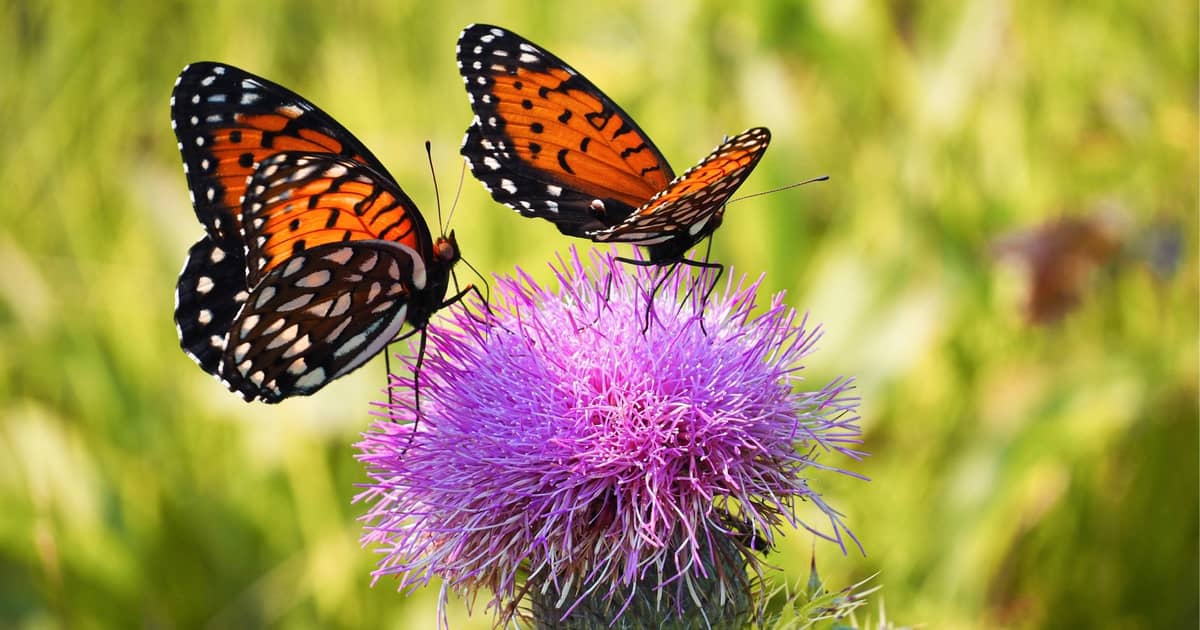

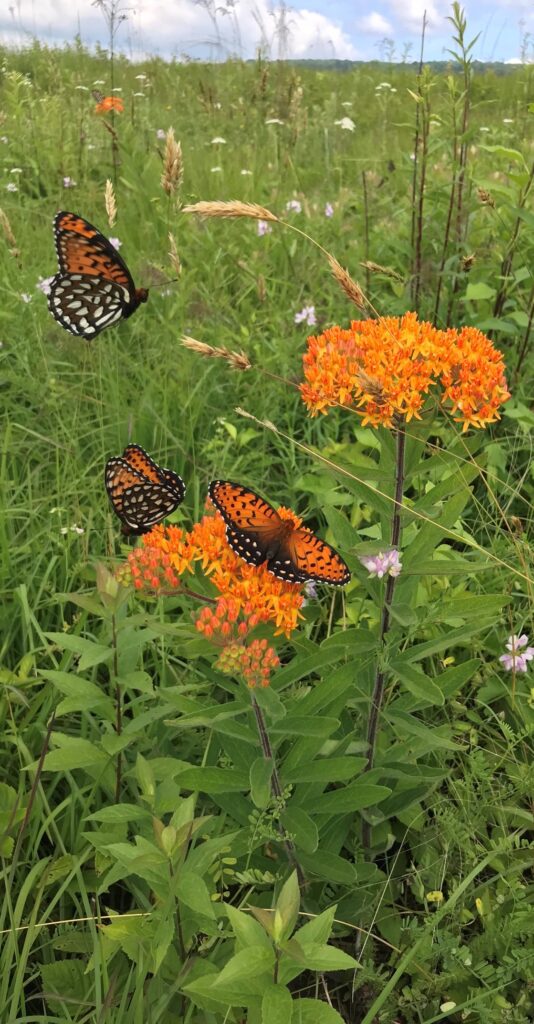
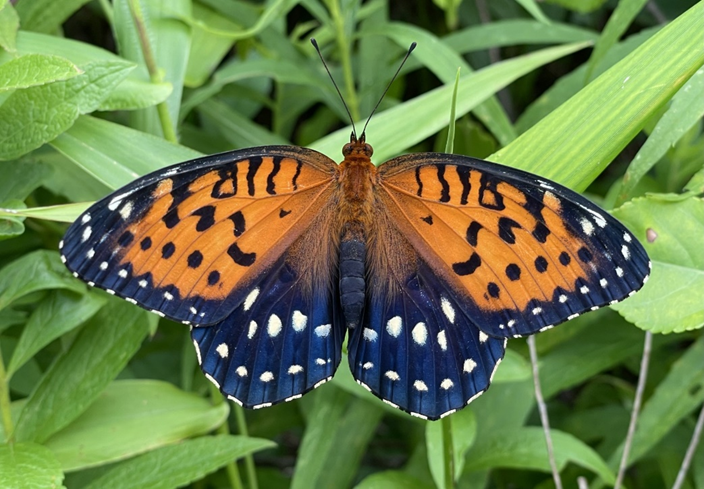
A thin strip of paper holds a row of tiny, cream-colored eggs laid by a butterfly almost as large as a monarch but far rarer — the eastern regal fritillary (Argynnis idalia idalia).
Those eggs will be incubated and, if fertile, caterpillars no bigger than a grain of rice will emerge. Then they will go into specialized salt tubs to be stored at temperatures near freezing in a laboratory at ZooAmerica.
Last year, wildlife biologists from Fort Indiantown Gap and ZooAmerica collected more than 10,500 eggs from 14 butterflies. About 65 percent of them survived and were returned as caterpillars to the Gap in May.
For more than a decade, the Gap and ZooAmerica have partnered to keep the only known population of the eastern regal fritillary from extinction. Once common east of the Mississippi River, the butterfly is only found today in the grasslands maintained by the Gap.
“We are focused on ecosystem restoration,” said Virginia Tilden, wildlife biologist with the Gap who has been working on the eastern regal fritillary conservation project since 2011. “The work we do keeps common species common and protects rare species.”
Rearing program mimics butterfly’s life cycle
Ensuring the population of the eastern regal fritillary in the Gap’s grasslands is a months-long process that begins each year in mid-August.
This year, the biologists collected about a dozen female butterflies. These were brought to ZooAmerica to lay their eggs on strips of paper that resemble the dead vegetation the butterfly would use in the wild.
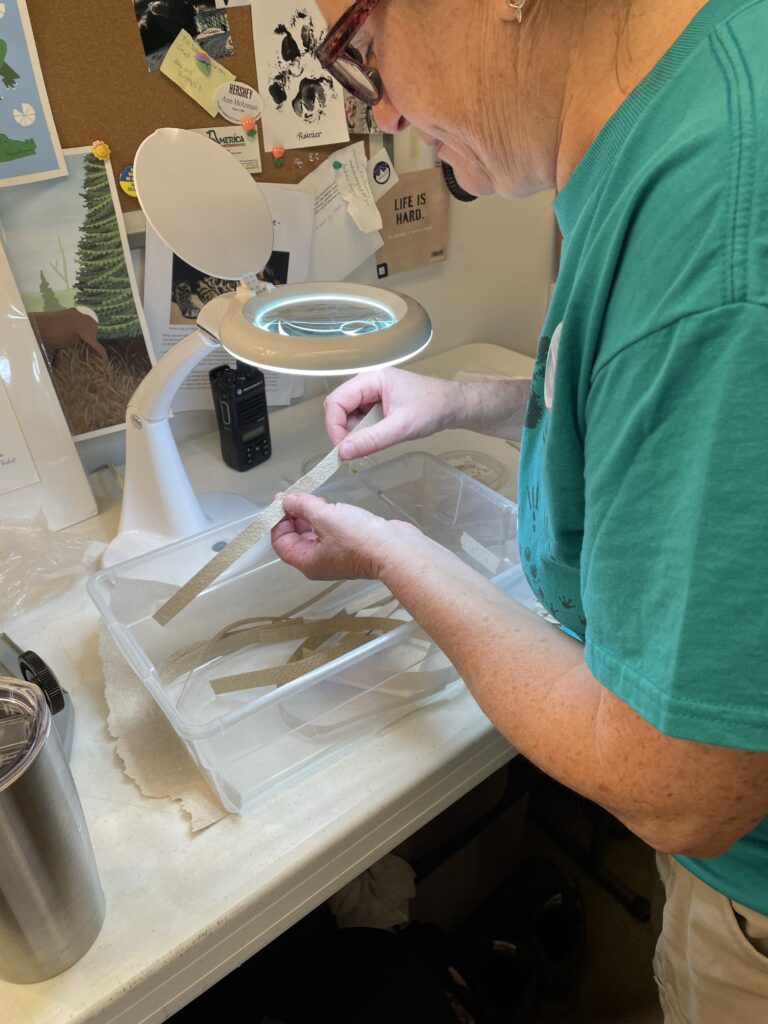
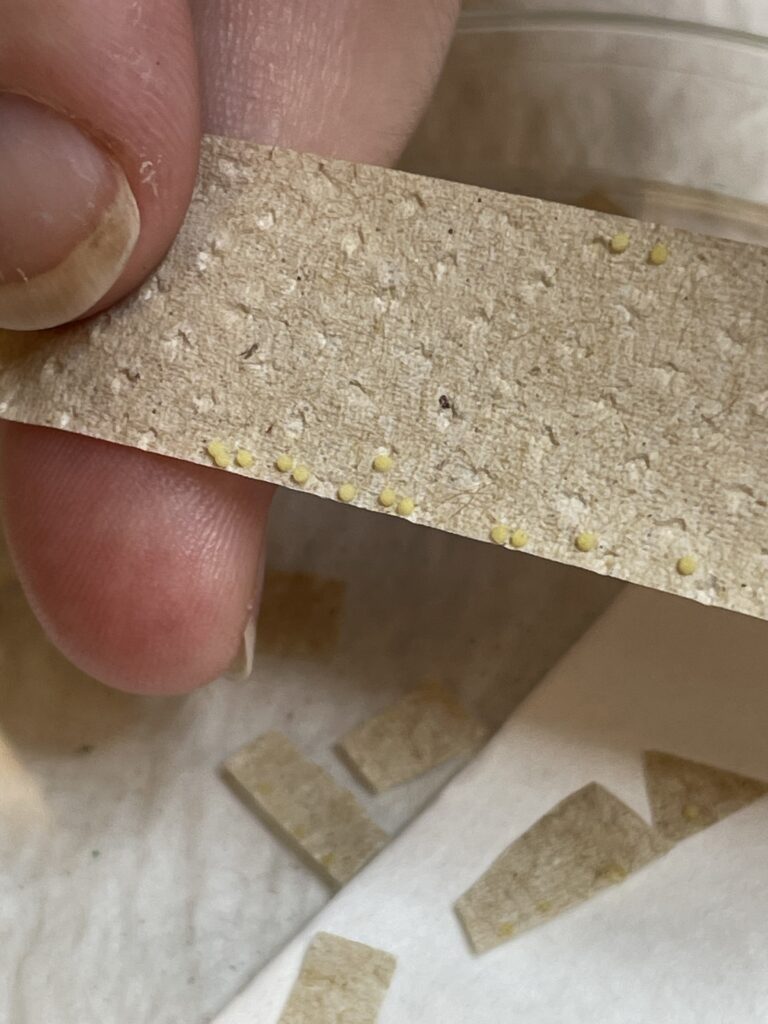
Once eggs are laid, they are separated and placed in petri dishes
Within seven days, the biologists determine if the eggs are viable, and unfertilized eggs are discarded. As the tiny, grayish caterpillars start to emerge after about 20 days, they go into condiment cups filled with more paper strips.
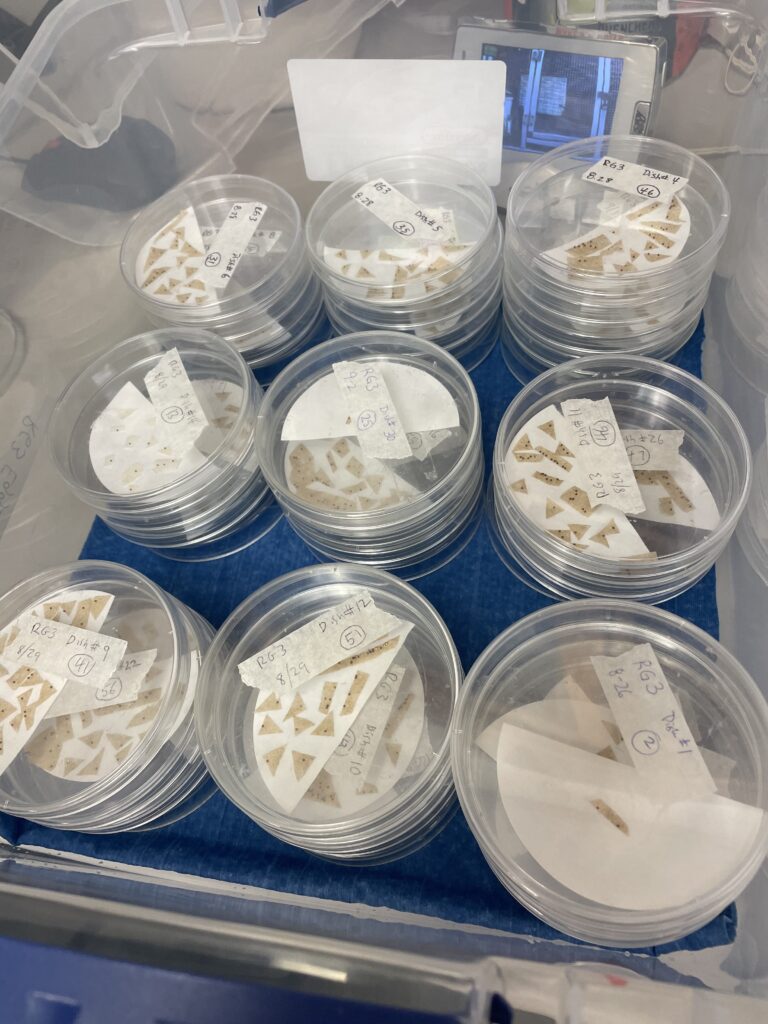
“These strips are crinkled so as to allow the caterpillars to nestle into them for their winter diapause,” said Kayli Barben, wildlife biologist with the Gap.
The condiment cups are fitted into salt tubs along with water to keep internal conditions at 97 percent relative humidity. Then the tubs go into environmental chambers set near freezing that mimics the caterpillars’ overwintering in the wild, Barben said.
In May, the stored caterpillars are woken up and taken back to the Gap’s grasslands.
They seek out arrowleaf violets, the only food the caterpillars will eat. As they feed and grow, they go through a series of molts, shedding and growing new exoskeletons. Each molt is known as an instar.
When the caterpillars reach their sixth instar, they pupate. Depending upon temperature, humidity and precipitation, they stay in their chrysalises for between two and three weeks as they transform or metamorphose from caterpillars to butterflies.
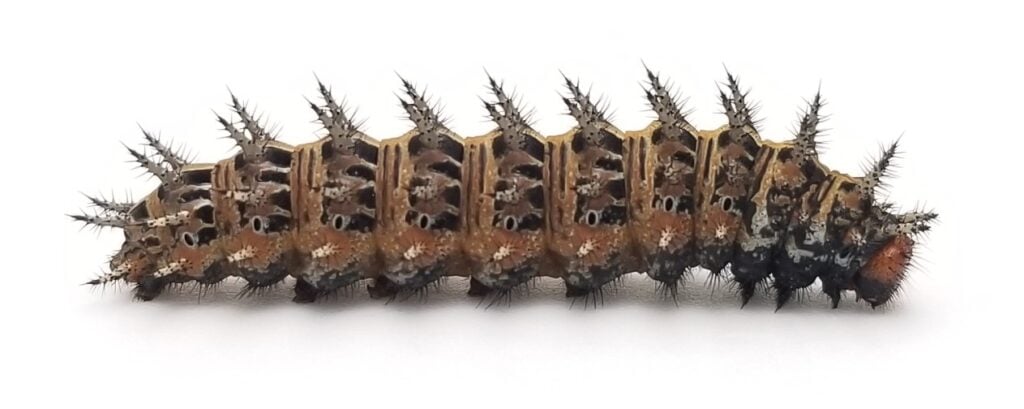
Males emerge first typically in mid-June. About two weeks later, females join the males, and mating begins. Fritillary butterflies are unusual because, after mating, the females enter a period of reproductive diapause as they lay eggs only on vegetation that is dying or dead. This doesn’t occur until August.
While individual monarchs and other butterfly species can lay up to 400 eggs in a season, fritillaries average about 2,000 each. One of the females in the rearing program laid 3,700 eggs, said Erika McKinney, wildlife biologist with the Gap.
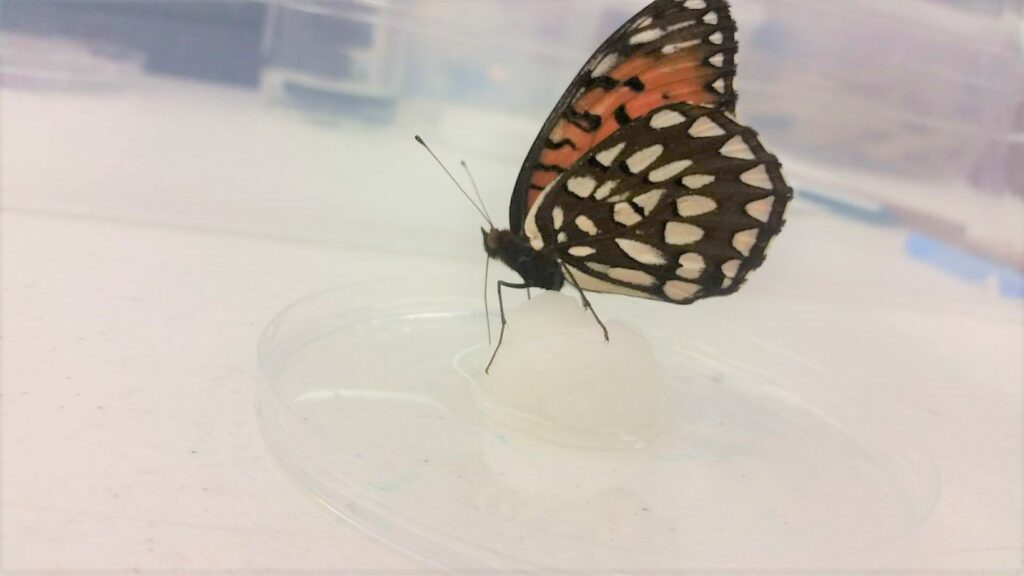
But only a fraction of those survive to become butterflies. Caterpillars, the longest stage in the regals’ life, are protein sources for spiders and small reptiles as well as for many birds that depend on caterpillars to feed their young. Weather conditions and human activities also affect survival.
Once egg laying ends, the butterflies are returned to the Gap.
Warm season grasses provide key habitat
Grasslands — open areas with native grasses such as the big and little bluestems — are a unique ecosystem.
They are characterized by warm season grasses that grow basically from June through August. These tall grasses have deep and extensive root systems that stabilize soil and help filter rain and flood waters.
The grasses also are home to a diversity of animal species including birds, small game, turtles and deer as well as a variety of plant and insect species.
For the eastern regal fritillary, warm season grasses are essential to its lifecycle. They offer females a landscape of dried vegetation on which to lay eggs and leaf litter in which first-instar caterpillars can overwinter.
The grasses also support the caterpillar’s only food source, the short, clumping arrowleaf violet. This native perennial begins flowering in April about when the caterpillars start emerging from their winter diapause. Research has determined that larvae need to eat several leaves — from three to 10, depending upon leaf size — a day.
Without adequate stands of violets, the caterpillars cannot survive.
Adult butterflies require different food sources such as milkweed, coneflowers, goldenrods, clovers and ironweed.
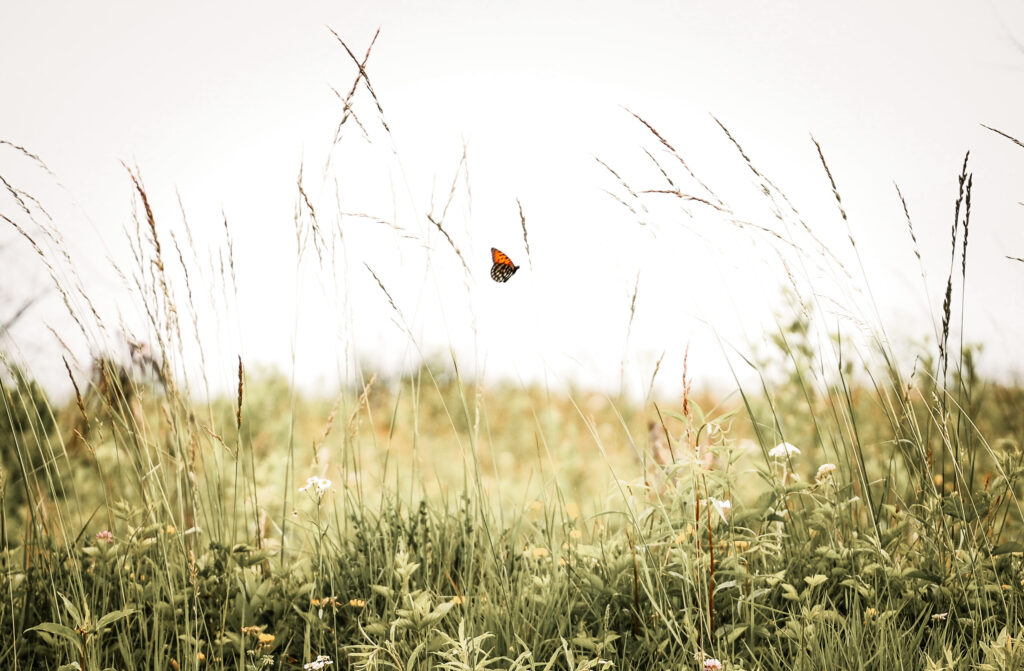
Historically, grasslands were plentiful in the Mid-Atlantic, but over decades they have been lost, first to agriculture and more recently to housing. Cultural attitudes also have factored into grasslands’ decline.
“It’s easy for people to look at a grassland and see a mess of what they think are weeds,” Tilden said.
Further complicating their survival is that grassland ecosystems must undergo periodic disturbance such as grazing, mowing and fire. These keep the forest from encroaching into the open areas, control invasive species and create space for new plants. Fire also adds nutrients to the soil.
Burning is part of the reason the habitat has survived at the Gap as military exercises sometimes result in fires.
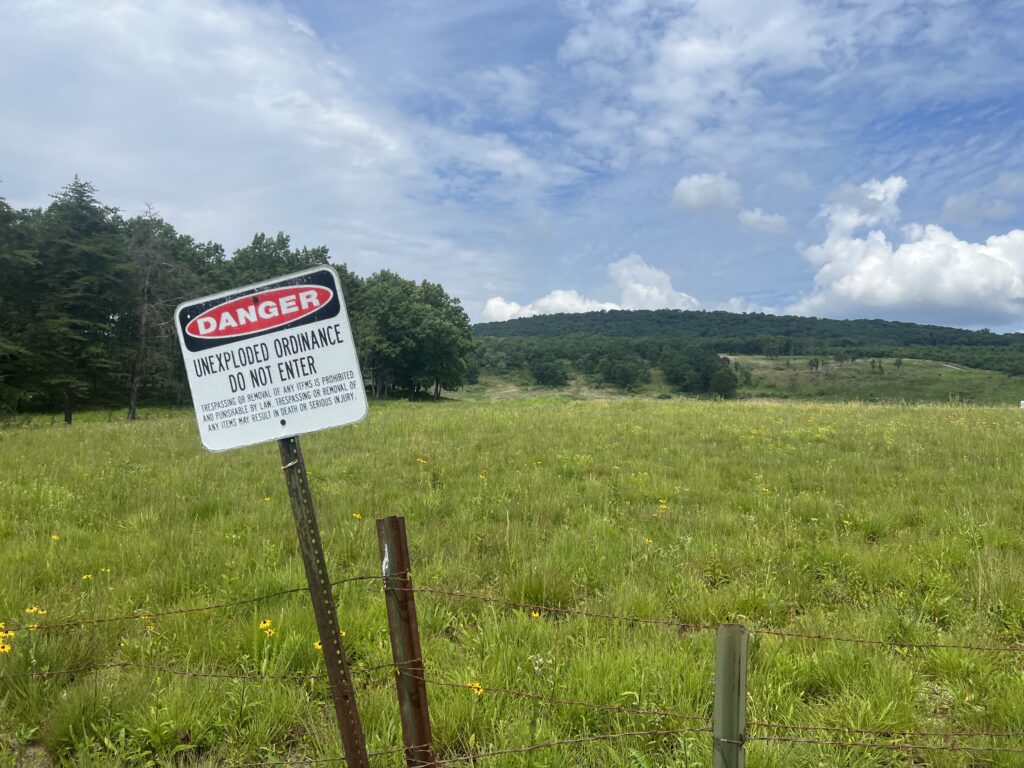
Read More: Fort Indiantown Gap wraps up 2022 tours of regal fritillary butterfly habitat at base
The loss of grassland habitat is the primary reason behind the population collapse of the eastern regal fritillary. Grasslands are more common in portions of the Midwest and central and northern Great Plains, home of the western regal fritillary. Some of the western populations are more stable than others and certainly more stable than the eastern regal fritillary with its single habitat.
In August 2024, the U.S. Fish and Wildlife Service proposed listing the eastern regal fritillary as “endangered” and the western regal fritillary as “threatened” under the Endangered Species Act. That proposal awaits federal approval.
Read More: U.S. Fish & Wildlife Service moves to protect butterflies at local military base
“Currently, there are no legal protections specifically for the eastern regal fritillary,” according to the 2023 U.S. Fish and Wildlife Service’s Species Status Assessment (PDF) on the regal fritillaries.
An indicator of ecosystem health
Ecosystems have been compared to a Jenga’s tower, with every species providing essential support in some way.
Each time a species or block is removed, stresses emerge on the system. Taking a single block away — a plant, insect or animal species — may not cause the ecosystem to give but may make it less stable and more vulnerable to other stressors.
For regals, stressors include local weather conditions such as drought and high temperatures and human activities such as grassland conversion, pesticide use and drift and the introduction of non-native species. These are particularly deleterious as they outcompete native species, thereby reducing food sources for insects and animals.
“The eastern regal fritillary is one species, but even one species is important in ecosystems,” said Ann Holzman, zoo supervisor for welfare and conservation with ZooAmerica, who also works on the project. “While we are still learning the intricacies of an ecosystem’s biodiversity, we know each species is piece of a complicated puzzle.”
Conservation efforts like that of ZooAmerica and the Gap’s rearing program increase the odds of egg, larval, pupa and butterfly survival. So does the Gap’s maintenance of open areas and grasslands vegetation as part of its Integrated Natural Resource Management Plan.
Long-term, the wildlife biologists hope to increase the eastern regal fritillary population by reintroducing the butterfly into habitats where it once flourished. Discussions are ongoing with potential partners of sites inside and outside of Pennsylvania.
“It’s a big commitment for a site to take on a reintroduction project especially due to the potential regulatory issues if the species becomes listed as ‘endangered,’” Tilden said.
But promoting the regal fritillary has benefits beyond the butterfly. Increased attention to conserving grasslands benefits not just the sites but also all of their insect, plant and animal communities.
And a rich biodiversity of species means a high-quality habitat and a more resilient ecosystem.
“We have fundamentally altered nature, so that grasslands and grassland species will not survive without our help,” Tilden said. “So isn’t it our responsibility to do the best we can to conserve this species and help biodiversity?”
Questions about this story? Suggestions for a future LebTown article? Reach our newsroom using this contact form and we’ll do our best to get back to you.
Support Lebanon County journalism.
Cancel anytime.
Monthly Subscription
🌟 Annual Subscription
- Still no paywall!
- Fewer ads
- Exclusive events and emails
- All monthly benefits
- Most popular option
- Make a bigger impact
Already a member? Log in here to hide these messages
Trustworthy local news is built on facts. As Lebanon County’s independent news source, LebTown is committed to providing timely, accurate, fact-based coverage that matters to you. Support our mission with a monthly or annual membership, or make a one-time contribution. Cancel anytime.
Questions about this story? Suggestions for a future LebTown article? Reach our newsroom using this contact form and we’ll do our best to get back to you.
Support Lebanon County journalism.
Cancel anytime.
Monthly Subscription
🌟 Annual Subscription
- Still no paywall!
- Fewer ads
- Exclusive events and emails
- All monthly benefits
- Most popular option
- Make a bigger impact
Already a member? Log in here to hide these messages
Trustworthy local news is built on facts. As Lebanon County’s independent news source, LebTown is committed to providing timely, accurate, fact-based coverage that matters to you. Support our mission with a monthly or annual membership, or make a one-time contribution. Cancel anytime.