This article was funded by LebTown donors as part of our Civic Impact Reporting Project.
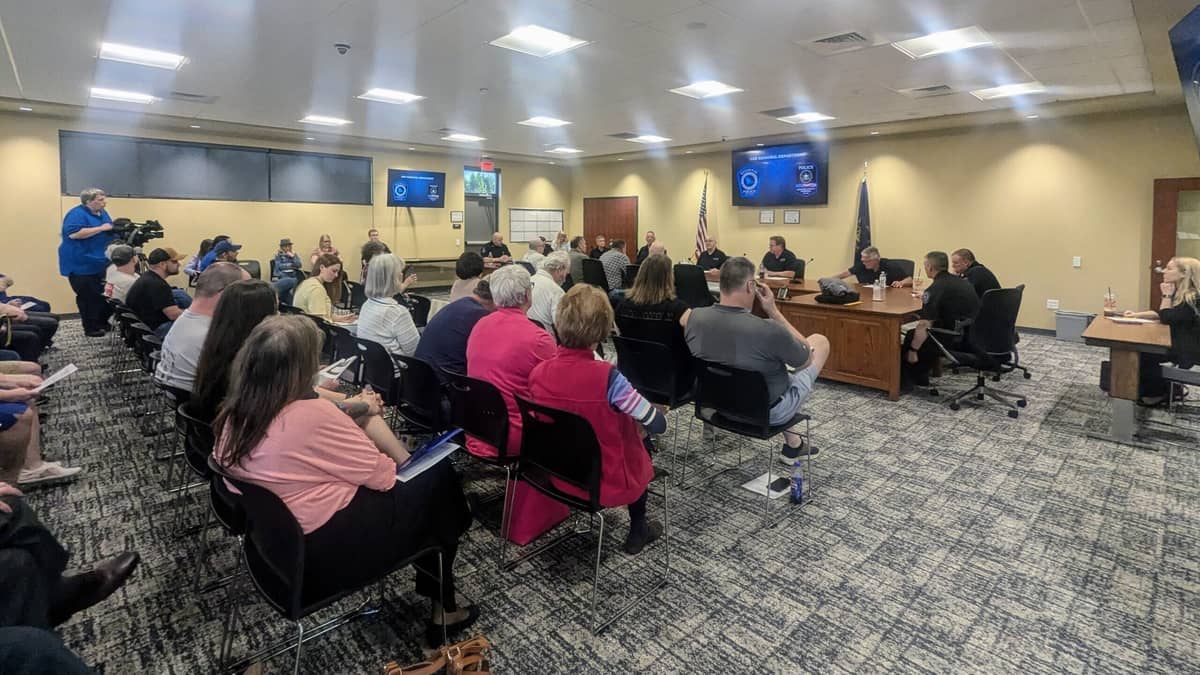
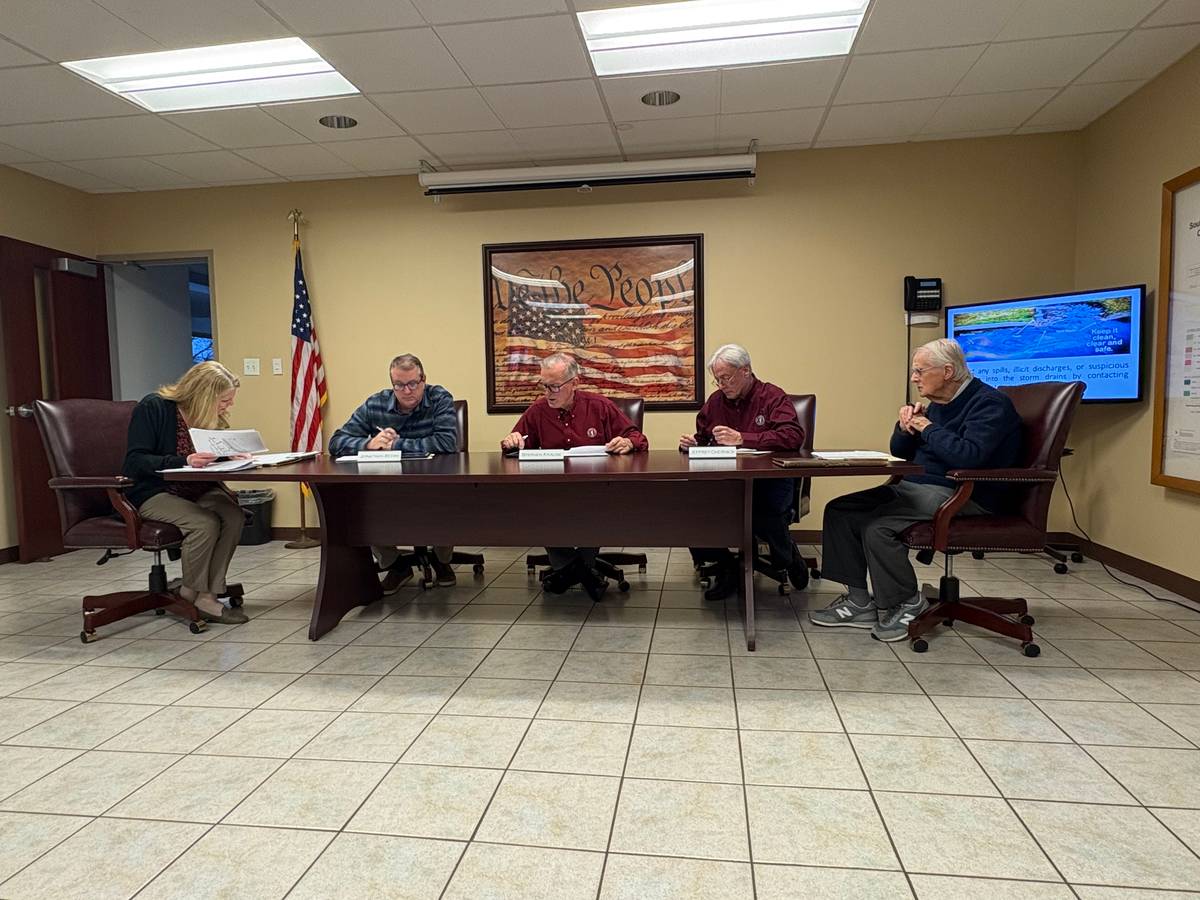
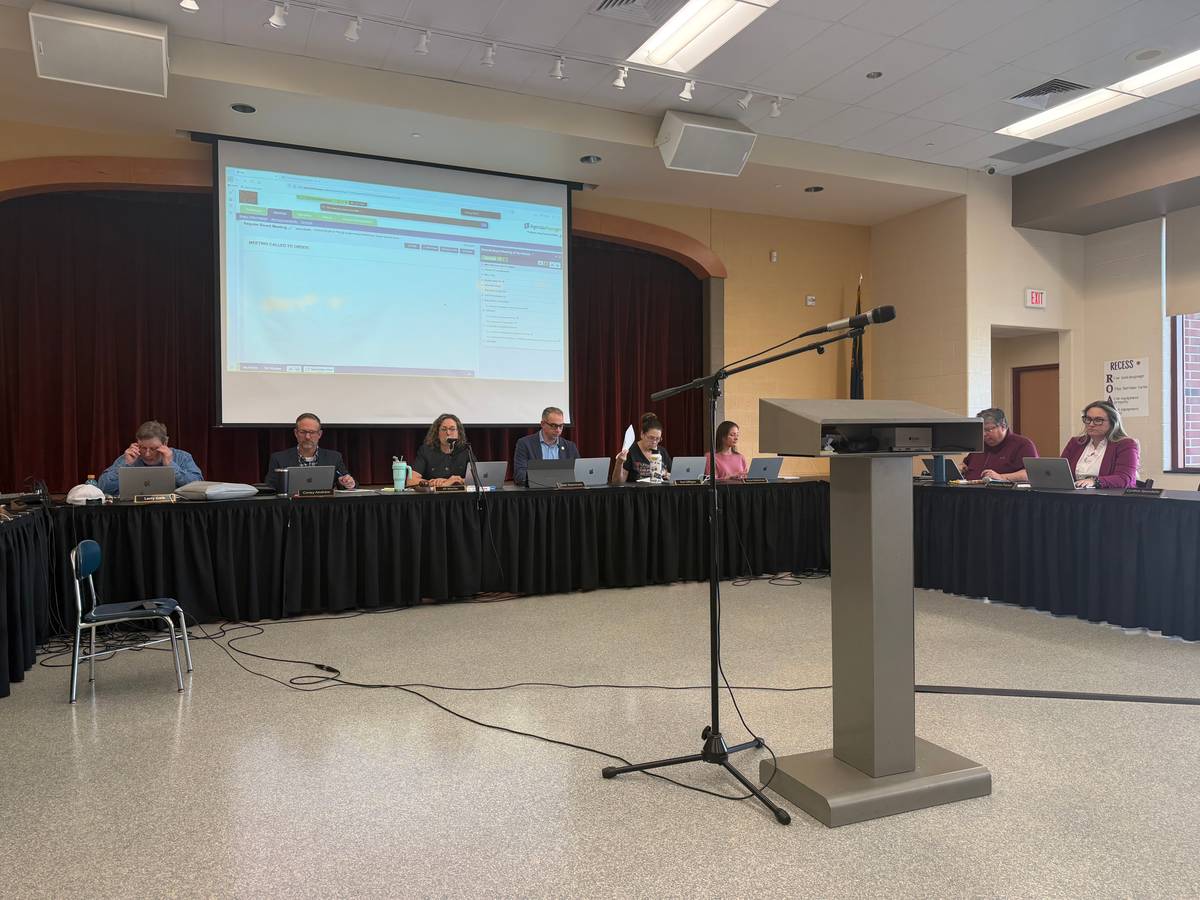
During a three-hour meeting at 10 a.m. Monday, Cornwall Borough’s Planning and Zoning Commission discussed multiple drafted ordinances.
- Ordinance concerning uses not accounted for by borough code
- Blasting ordinance
- Warehousing ordinance
Draft ordinance concerning uses not accounted for by borough code
The P&Z unanimously agreed to pass a zoning amendment laying out rules for lawful uses otherwise not permitted in zoning districts along to council.
The commission recommended that council advertise the ordinance for adoption and send it to county planning for review, either at its Monday night meeting or its December meeting depending on whether they could add it to Monday’s agenda.
The ordinance concerns rules for plans for legal uses that are not already accounted for by borough code. Right now, this includes uses like data centers and solar farms (though the P&Z is also working on guidelines for these types of development). When a use is legal but not accounted for by borough code, a developer may try to push through the use in unexpected zoning districts.
“This ordinance is going to be the catch-all; we don’t have the definition for data centers and we have some of these things we’re going to work on that we don’t have the definition for,” explained alternate engineer Josh Weaber. “This is a relatively quick catch-all to make sure someone proposing a data center can’t come in and say, ‘Hey, I’m going to put it out in the middle of an agricultural field.'”
This amendment specifies that such residential uses only be permitted as conditional uses in residential village (the highest density residential district), institutional, office, commercial, retail, or service uses only be permitted in general commercial, and industrial or recreation uses be permitted only in general industrial. This only applies to uses that are not already addressed by borough code.
The ordinance also specifies that such development comply with other government agencies and establish a buffer area, with details decided by council leading up to conditional use approval.
Conditional uses are uses that are guaranteed by right, but which require a developer to meet certain standards before council (or municipal governing body). In this case, council is to determine what level of buffer is necessary “to protect the surrounding area from objectionable effects of the proposed use, including but not limited to, noise, dust, vibration, odor, illumination, public safety, and visual effects,” according to the draft ordinance.
“We’re talking about something that might come in that we don’t have a definition for that buffer, then it says council will decide what the buffer is for that particular use, am I correct?” P&Z and council member Bruce Conrad asked Weaber. “You can’t be that specific in something like this or you’re gonna miss something. It would be better to keep it vague, then the council then decides what the buffer is for that use.”
Council will also examine whether the use complies “with the lot, area, dimensional, and design criteria of the district in which it will be located” and direct developers to comply with the PA Department of Environmental Protection and other commonwealth and federal governmental agencies.
Draft blasting ordinance
Next, the commission discussed a blasting ordinance, which they ultimately opted to refine and discuss with water and sewer officials before recommending approval by council.
The ordinance, recently drafted by borough solicitor Josele Cleary based on the blasting ordinances of Red Hill Borough and Upper Frederick Township, was requested by council following multiple resident complaints regarding recent blasting by Cornwall Properties.
Read More: Cornwall Borough narrowly approves E-town water authority discussions
P&Z began review of the ordinance during its regular meeting last month.
Read More: Cornwall planning and zoning workshops new blasting, updated zoning ordinances
The ordinance establishes requirements for a contractor looking to blast, including the following:
- Contractor must submit detailed plans of blasting locations and a list of property owners within 1,000 feet or as recommended by a geologist based on the location and blasting details (whichever is greater) in order to obtain a permit.
- Property owners within that radius will be offered property inspections at the cost of the contractor prior to blasting (to provide a baseline for if homeowners allege property damage caused by blasting), and will be notified before each instance of blasting. The requirements for notification are also heavily detailed.
- Contractor must hire a qualified independent professional (with the ordinance specifically listing engineers and geologists) to perform inspections.
- Seismic monitoring implemented according to DEP guidelines.
- Contractor must provide a copy of its Pennsylvania Blaster’s License.
- Permit will be valid for 90 days, with a contractor able to request an extension.
- Council will establish a blasting permit fee by resolution.
- Blasting is to be limited to 8 a.m. to 5 p.m. on weekdays, except federal holidays.
In review Monday, the P&Z requested that the ordinance’s language be changed to define notification requirements based on distance from the blasting site rather than the edge of the property. They also said the ordinance needed additional language concerning inspections requested by nearby homeowners, adding that independent professionals other than geologists and engineers may be approved by the borough.
Cornwall Properties representative Mike Swank asked if it would be possible to find a geologist willing to perform this work, which P&Z said should be looked into further. Swank also added that complaints do not mean malpractice, noting that DEP has visited the blasting site several times in response to neighbor complaints and issued no violations.
P&Z unanimously approved a motion recommending council consider establishing an internal borough policy to notify residents when blasting permits are issued, including residents outside of the established radius.
Right now, the draft says the contractor is to inspect by video all borough sanitary sewer system parts within 500 feet of the blasting. P&Z recommended that this be updated to apply to the sewer system within 1,000 feet.
The commission also discussed the possible effects of blasting on the borough’s water facilities, noting the borough could take water readings weekly before and while blasting is taking place to identify leaks.
With regards to effects on water and sewer, Conrad suggested P&Z talk with borough employees overseeing these departments to determine if more changes need to be made. The commission also plans to iron out minor items related to the language of the ordinance at a future meeting.
Draft warehousing ordinance
Around two hours into the meeting, the commission opted to discuss an ordinance concerning warehouses and truck terminals, though they plan to go into more detail in the future.
An earlier version of this ordinance, which defines warehousing and moves it as an allowed use from limited industrial to general commercial, was first brought to the borough by Citizens United 4 Responsible Development in October 2023. The ordinance was discussed alongside a Cornwall Properties proposed amendment to allow manufacturing uses in the general industrial district.
However, the latter amendment was fast-tracked to accomadate a PRL Industries manufacturing space, and the former was not acted upon. For a time, it was combined with the Byler-proposed Lake Resort Community text amendment, though it was eventually separated out and considered on its own.
Read More: Cornwall Borough Council advances amendment to move warehouse zoning (2024)
The ordinance, also drafted by Cleary, provides definitions for truck terminals, warehouses and logistic uses, and differentiates small and large warehouses. It defines both truck terminals and warehouses/logistic uses as permitted by special exception, meaning they are permitted by right but require the zoning hearing board to grant permission based on the completion of certain requirements.
It lays out specific spacial, access, and building requirements for both truck terminals (a part of most warehousing uses) and warehousing.
It also describes buffer areas required for large warehouses, with 25,000- to 99,999-square-foot structures requiring a 50+-foot buffer, 100,000- to 250,000-square-foot structures requiring a 100+-foot buffer along certain existing properties, and larger structures requiring a 150+-foot buffer along those properties. All require a 50-foot buffer yard along other property lines.
The ordinance goes on to describe berm requirements, as well as the type of landscaping required within buffer areas.
Existing borough regulation on warehouses and other uses, chairman Ray Fratini said, was last updated 18 years ago. Since then, the definition of warehouses has changed and grown to include large Amazon-style warehouses, explained councilwoman Julie Bowman.
“When it was written, public warehousing had a set definition,” said Bowman, adding that definitions and regulation could help to “protect the borough” from developers looking to exploit gaps in regulation. She later specified that she was not referring to Cornwall Properties, but noted that properties now owned by the developer could change hands at any time.
Commission members debated whether this ordinance, if passed, would apply to Cornwall Properties, which has submitted sketch plans but no completed plans for its LI parcel.
Weaber said it would apply, as no plan has been submitted, but Fratini said he was concerned about possible legal repercussions. Conrad suggested they confer with Cleary for guidance.
In addition to these topics, the agenda also listed ordinances concerning data center, solar and wind farms, EV charging stations, and beauty strips. However, the commission opted to have these discussions at a future meeting.
Commission member and councilman John Karinch suggested discussion on regulation encouraging developers to complete building projects as well as prevent homeless encampments. Conrad added that the P&Z should consider allowing but regulating Airbnbs, which were previously banned by council.
This comes after council directed P&Z to undergo a review of the borough’s zoning ordinance in September.
Read More: Cornwall Borough Council directs P&Z to work with solicitor on zoning review
In addition to P&Z’s monthly meeting the first Monday of the month at 6:30 p.m., the commission also tentatively plans to meet at 10 a.m. Dec. 8 to continue discussions.
Questions about this story? Suggestions for a future LebTown article? Reach our newsroom using this contact form and we’ll do our best to get back to you.
Support Lebanon County journalism.
Cancel anytime.
Monthly Subscription
🌟 Annual Subscription
- Still no paywall!
- Fewer ads
- Exclusive events and emails
- All monthly benefits
- Most popular option
- Make a bigger impact
Already a member? Log in here to hide these messages
You know us because we live here too. LebTown’s credibility comes from showing up, listening, and reporting on Lebanon County with care and accuracy. Support your neighbors in the newsroom with a monthly or annual membership, or make a one-time contribution. Cancel anytime.